Author: xerkss

  • America! Disney, Rockwell, Pollock, Warhol

    America! Disney, Rockwell, Pollock, Warhol

    American myths and icons

    America! Disney, Rockwell, Pollock, Warhol is on view at Bucerius Kunst Forum, Hamburg. A unique appointment with four of the most notable American artists of the XX century. 

    Through 170 exhibited artworks, the show has one specific purpose: underlining the impact of these artists on American culture. The four protagonists are together for the first time.

    Disney, Rockwell, Pollock, and Warhol represented twentieth-century America in impressive pieces of art. Their vision shaped the perception of a whole generation. Besides, they were pioneers in their respective artistic fields.

    America according to Disney, Rockwell, Pollock Warhol
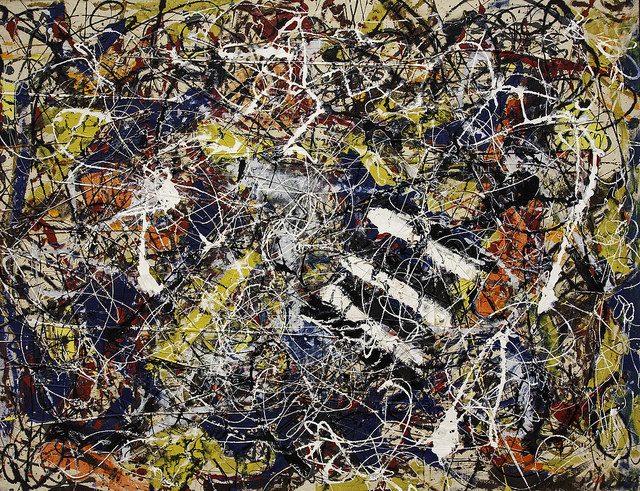
    Jackson Pollock, Great American Artist
    Jackson Pollock, N17A, 1948

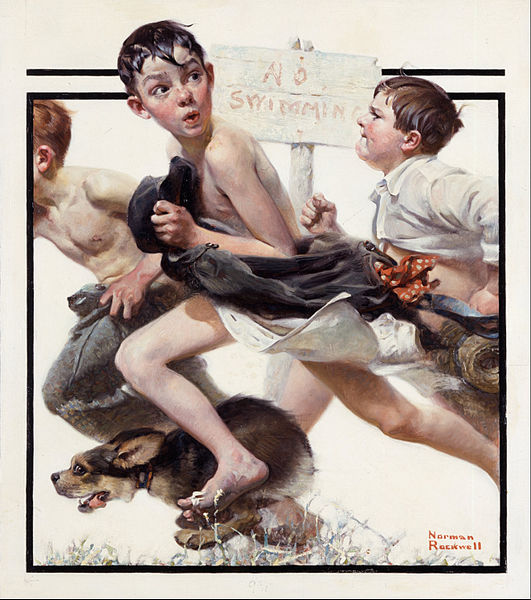
    The artists’s depiction of America is imprinted in the collective memory. Walt Disney (Chicago, 1901 – Burbank, 1966) created an imaginarium of characters destined to astonish kids of the whole world. Norman Rockwell (New York, 1894 – Stockbridge, 1978) illustrator par excellence, depicted the “American way of life” with realism and often, satire. His works adorned the covers of major US magazines for more than 30 years.

    Jackson Pollock (Cody, 1912 – Long Island, 1956), the founder of the Action painting, is among the most affluent artist of his time. Moreover, his drip paintings made him a legend already in his lifetime. At last, Andy Warhol (Pittsburgh, 1928 – New York, 1987) broke the confines between art and commerce, becoming an icon with his Pop Art portraits of Hollywood stars such as the one picturing Liz Taylor, Silver Liz.

    America! Disney, Rockwell, Pollock, Warhol at the Bucerius Kunst Forum
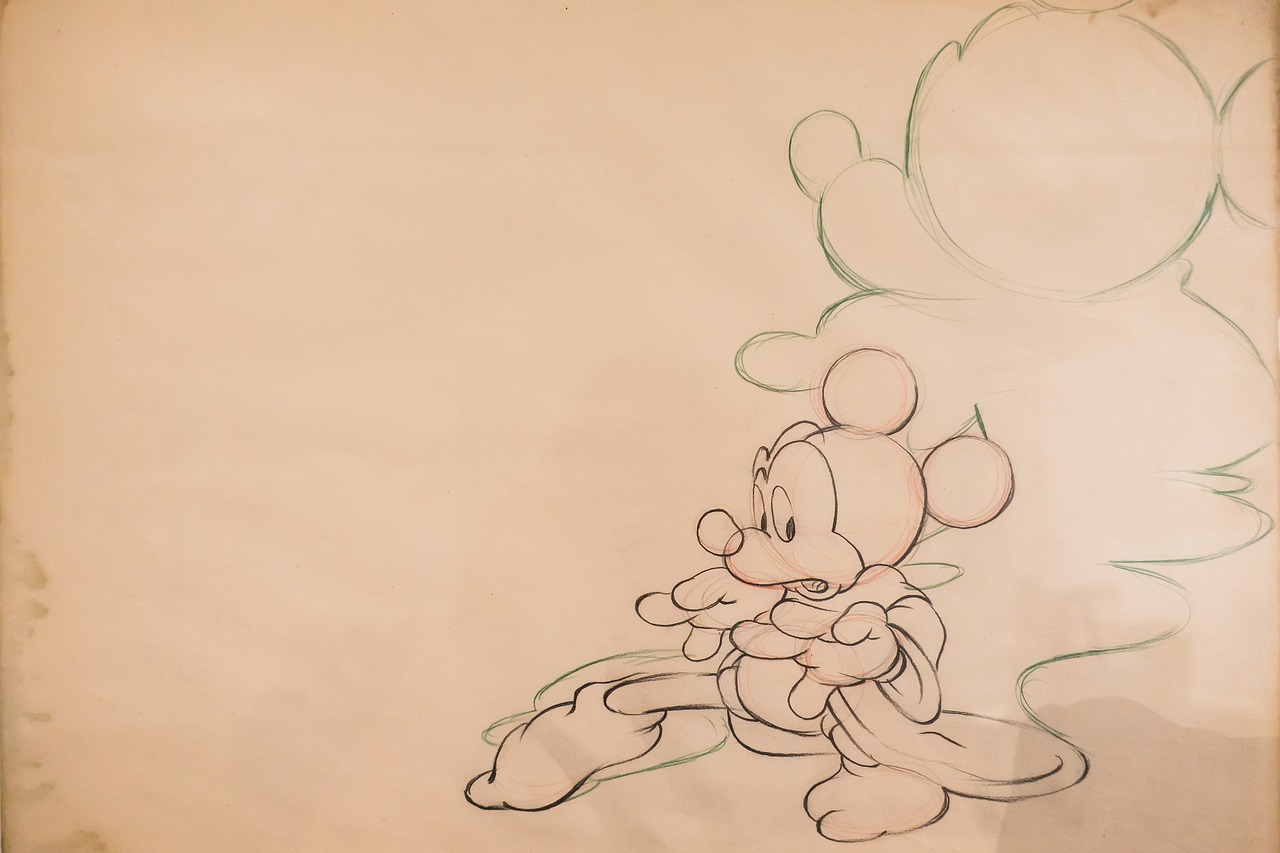
    walt disney drawings
    Walt Disney drawings

    The show brings together one hundred and seventy pieces among paintings and drawings.  The artworks are loaned from leading international collections such as the Tate in London, the Stedelijk Museum in Amsterdam, the Louisiana Museum of Modern Art in Humlebæk, the Israel Museum in Jerusalem, Museum Ludwig in Cologne, and Museum Brandhorst in Munich.

    The exhibition puts together four giants of the last century unraveling the diverse approaches and styles of their art. From Rockwell’s realistic chronical of American life, and Pollock’s Abstract Impressionism, to Disney’s impressive fantasy and Warhol’s controversial commercial images. 

    The Bucerius Kunst Forum presents these four artists for the first time under one roof. Besides the aesthetic influence Disney, Rockwell, Pollock, and Warhol determined for the art to come, their representations shaped the visual culture of an entire nation.

    andy warhol art
    Andy Warhol, Campbell’s Soup Cans, 1962

    In other words, the four artists are key characters in the definition of American identity. Each of them seems to follow a different purpose in his art. Still, their work portrays all the main features of American culture. From the effects of industrial growth, and the glittering Hollywood life, to the capacity of creating dreams and new ways of expressing art. 

    As a result of the importance of these personalities, America! Disney, Rockwell, Pollock, Warhol will be on view until 12 January 2020 at Bucerius Kunst Forum in Hamburg. Located next to the Hamburg City Hall, the Bucerius Kunst Forum stands out for showing high-quality art in new contests. Like in this case, the exhibitions focus on particular topics, allowing the viewer to find unraveled meaning in the most famous artworks.

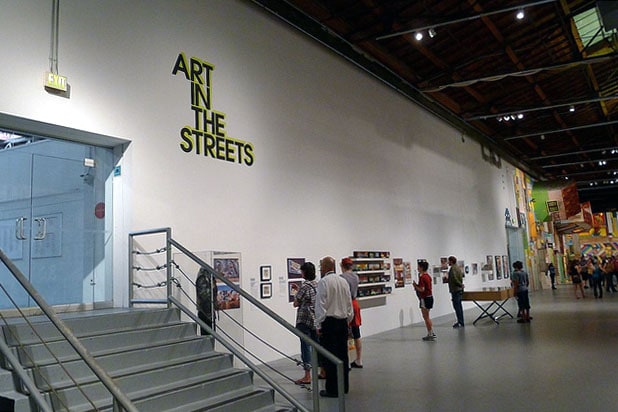
  • MOCA announces changes for the Geffen Contemporary

    MOCA announces changes for the Geffen Contemporary

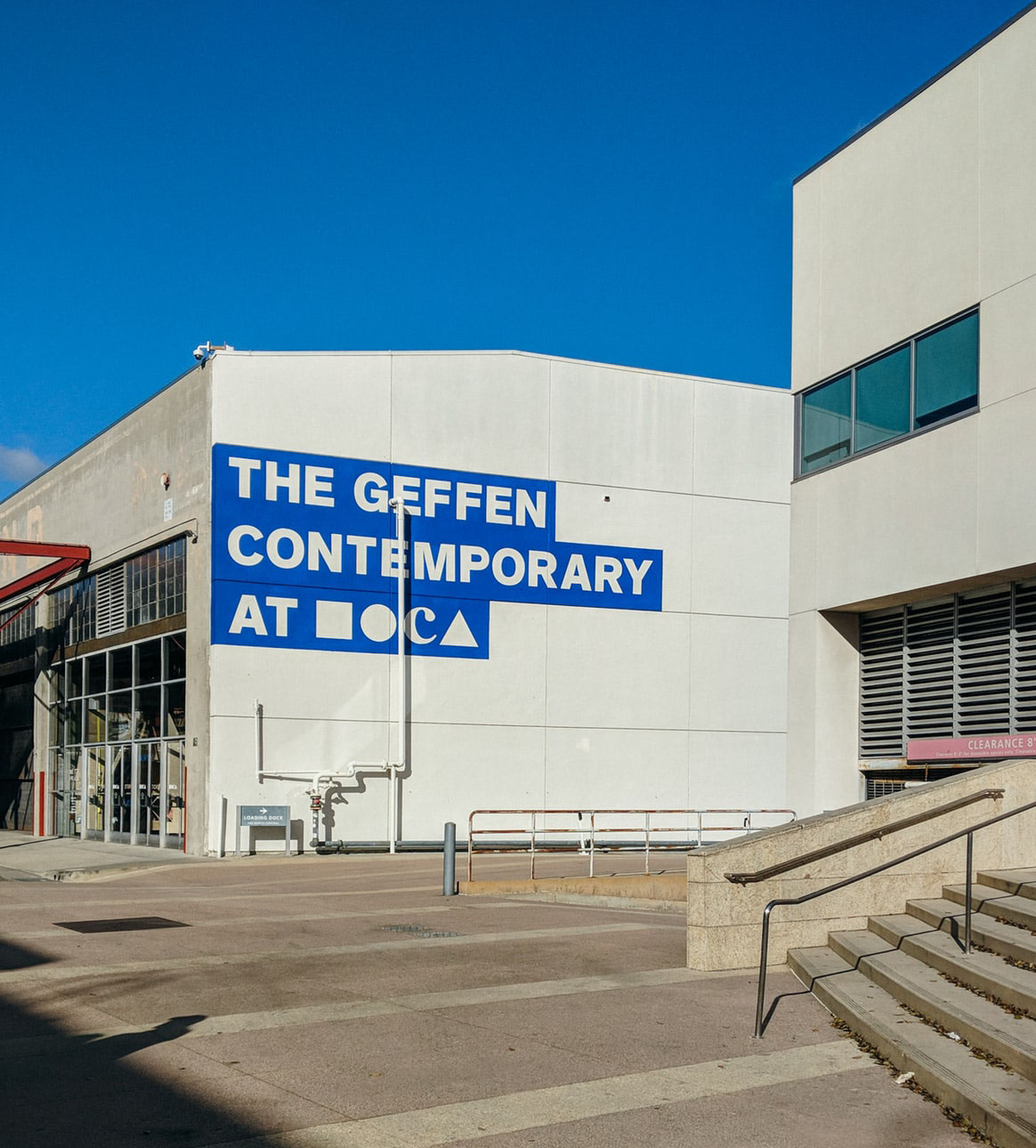
    The Los Angeles Museum of Contemporary Art, MOCA recently announced changes for the area hosting the newest expressions of contemporary art, the Geffen Contemporary. 

    Located in the neighborhood of Little Tokio, it opened in 1983 with the name of “The Temporary Contemporary” as a temporary exhibition space during the construction of the MOCA Grand Avenue. Once a warehouse for police cars, the building was renovated by Canadian-American architect Frank Gehry and renamed Geffen Contemporary in 1996 following a substantial donation from the David Geffen Foundation. With over 3,700 square meters of exhibition space, the Geffen is the largest of the MOCA locations. 

    geffen contemporary art

    The Geffen Contemporary In Little Tokyo

    Since the beginning MOCA adopted a multidisciplinary approach to contemporary art. The museum exhibits consist mainly of contemporary American and European art created after 1940. 

    If the MOCA Grand exhibits renowned artists’ collections, the Geffen is home to the most innovative forms of contemporary art. Thanks to its wide spaces it permits to host large-scale works and multimedia installations.

    Nevertheless, it seemed to need a conceptual modernization. The long periods of closure between exhibitions encouraged Director Klaus Biesenbach to think of renewed purposes.

    Redefining the Geffen Contemporary

    On this Thursday MOCA announced that $5-million will be used to transform the space for more performances. 

    redefining geffen contemporary

    This comes as a reply to a social need for authenticity. In this period, where social media redefined the usages of communication, people look for what’s real. The new Geffen Contemporary will emphasize artistic performance. The area will be hosting artist rehearsals, concerts, readings, experiential installations and screenings, among other events.

    As Biesenbach said:

    “It’s an open and free space to be filled with ideas to come,” he said. “That’s what we mean when we talk about the cutting edge — anticipating artists and inspiring artists to develop something for this new format.”

    Innovation and interactivity seem to be the artistic challenges of the renewed area of ​​the MOCA. For now the renewal plan has only been announced, but the expectations are already high.

    The reconfiguration of the museum will include theatrical lighting and the installation of audiovisual systems for artistic performances. Furthermore, there will be a new bar and restaurant alongside the square. About 14,500 square feet will host Wonmi’s Warehouse Programs, while the other 27,000 square feet will house more traditional exhibitions.

    A new artistic concept

    Visited by millions of people each year, the MOCA is undoubtedly one of the most renowned and important global museums of contemporary art. Over the years it has become a great example of museum architecture with its pyramids and its red sandstone cladding.

    Now the museum opens up to a new phase of artistic exploration that will see Geffen Contemporary as protagonist. The popular sightseeing spot in Los Angeles is preparing to become an artistic pole destined to grow in importance. Even if it might be too early to announce a programming lineup, the Geffen Contemporary is on the road leading to a redefinition of the artistic expression in Los Angeles.

  • Artist we love: Nnenna Okore

    Artist we love: Nnenna Okore

    artist we love nnenna okore

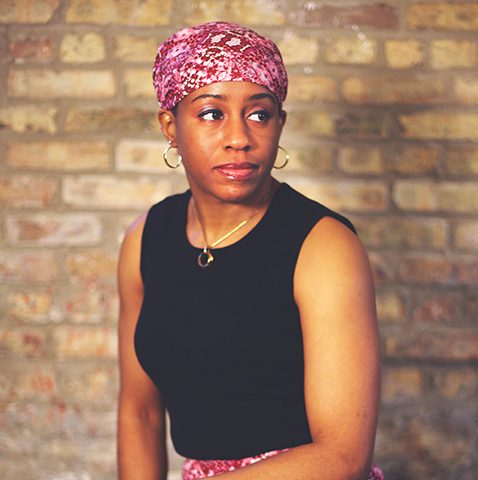
    Class 1975, born in Australia and raised in Nigeria, Nnenna Okore is an artist we love!

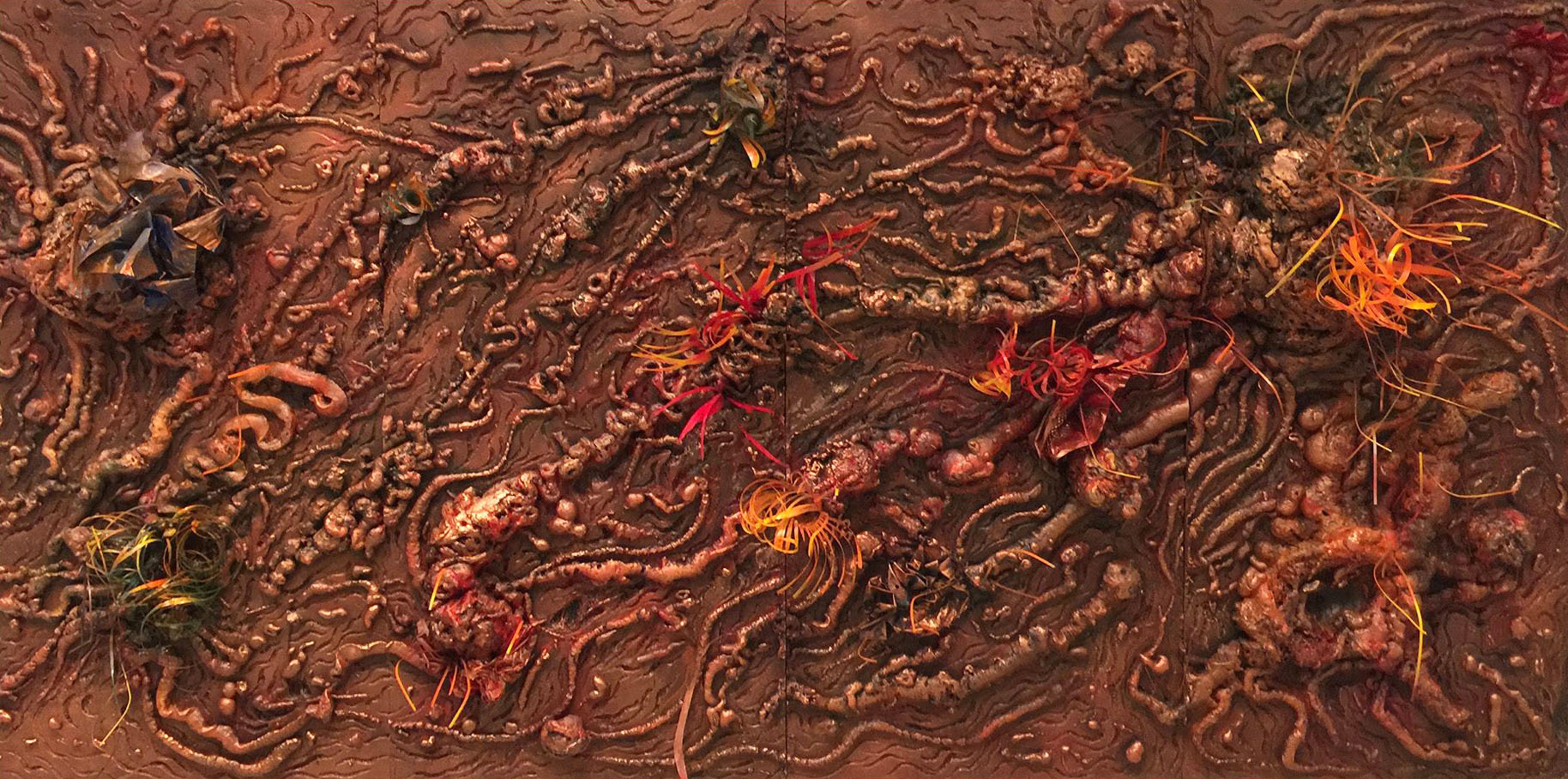
    Nnenna Okore creates suggestive abstract sculptures and paintings reminding of natural primordial shapes. Graduated in Art at the University of Nigeria, she then received the Master of Art and the MFA title at the University of Iowa. Currently, Okore teaches Art at Chicago’s North Park University.

    The artist uses a combination of biodegradable materials for her artworks. Paper, ceramic, fabric, hessian are the tools to represent her figurative imaginary.
    The natural world seems to be the true heart of her inspiration. Even though her representations remind of the planet’s flora, her artworks are vibrant, and appear to encapsulate time and space.

    Nnenna Okore’s Education and Career

    The artist moved from Australia to Nigeria at the age of four. Her parents worked as academics at the University of Nigeria, Nsukka. She spent there most of her childhood.

    After secondary school, she moved to Swaziland for her high school studies. Actually, already during primary school, Okore showed a significant interest in visual art, achieving even in her young age awards and recognitions.

    nnenna okore career

    At the beginning of her university course she tended to use oil and acrylic paint as her artistic medium. By the third year, she implemented atypical materials in her creations. Her path toward sculpture began. She started using leather, jute, photographs and leaves, among others, to mark an expressive urgency.

    Her interest flew into a vivid passion that pushed her to experimentations. Still today, her inspiration underlines a different artistic purpose, that goes in the field of the world’s origins.

    In spite of being still a university student, she soon chose to focus on inventive recycling. The environmental issue started to pierce her works. Her art soon became a medium of protest and denounce. This intent, related to the Nigerian experience, never left her.

    In 2001 Nnenna Okore moved to the United States for a master of Fine Arts at the University of Iowa. She started her academic career in 2005 at North Park University, teaching three-dimensional design, sculpture and drawing.

    Okore’s artworks have been exhibited in over 80 solo and group shows in Africa, Europe, Asia and North America. Her artistic influence caught international press attention. She received enthusiastic reviews in publications such as The New York Times, Art South Africa, Sculpture Magazine and Financial Times.

    As a result of her innovative sculpture and environmental commitment, she won many art recognitions. Among others, she received the Artist Full Fellowship nominee at Global Art Village in Delhi, India, the Artist Residency, Jean Paul Blachere Foundation in France and the Teaching Fellowship at the Skidmore College in New York.

    Nnenna Okore’s paintings, to the origins of the Earth

    “My inspirations derive from varying organic forms in nature, especially captivated by the ephemeral passage of time”

    nnenna okore paintings

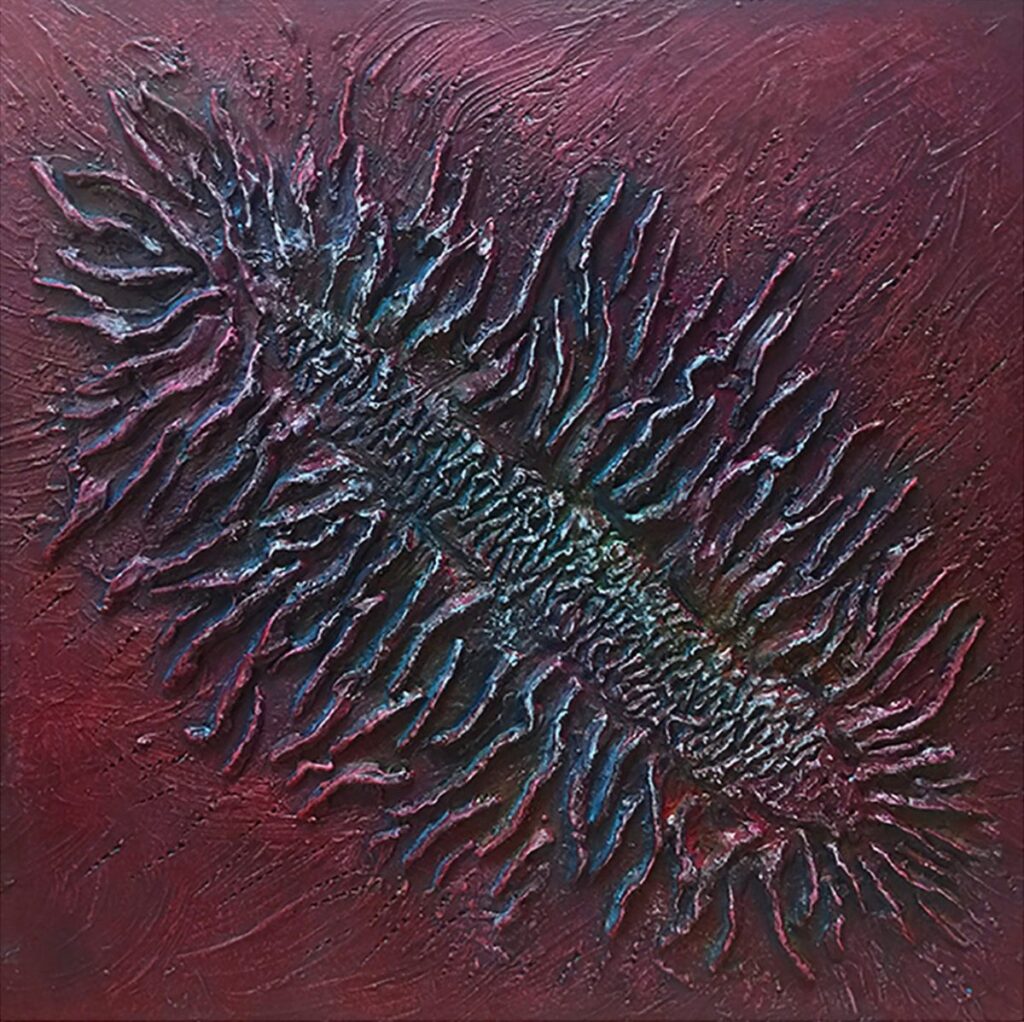
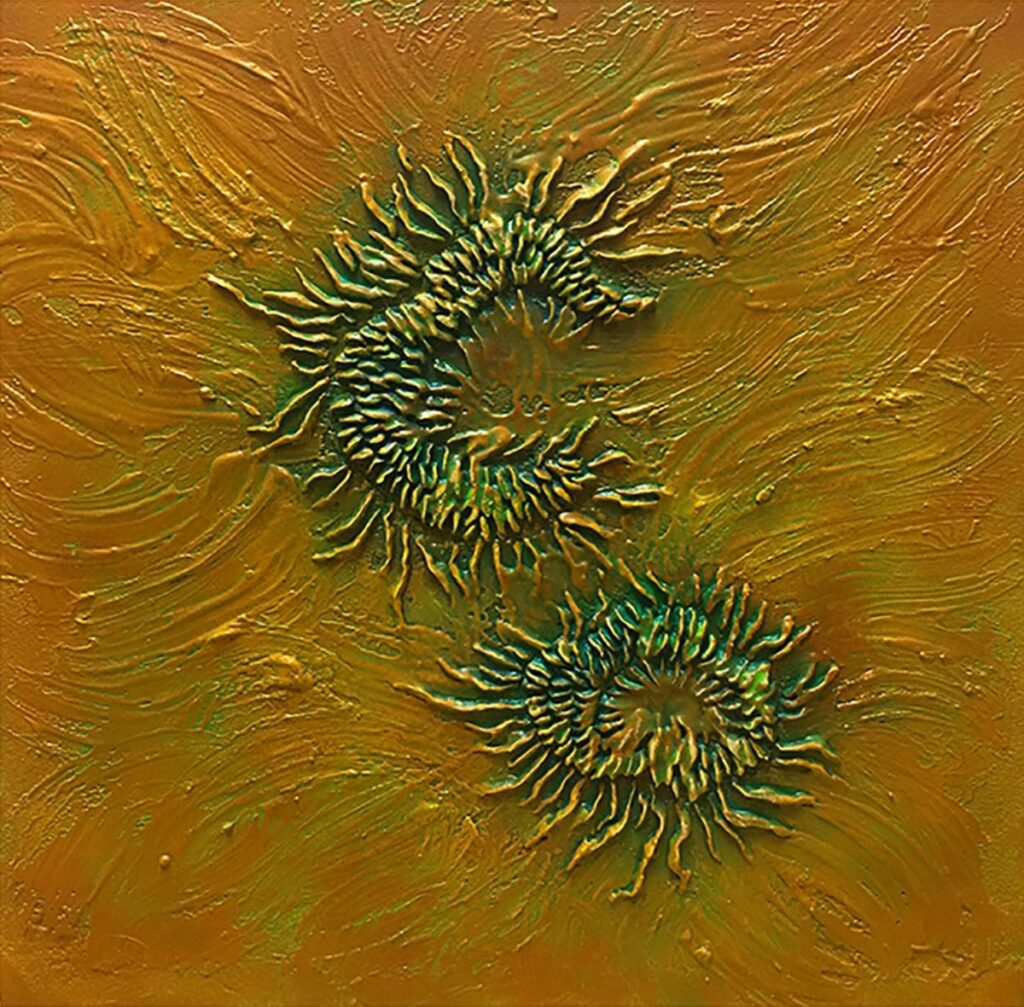
    The artist celebrates nature at its primordial stage. Her artistic imaginary tells about birth and decay, life and death. In her artworks is possible to find a note a melancholy but the ode to Mother Earth is loud and clear.

    The organic forms of nature are crystallized in their apex. It almost seems like they are going to perish in the exact following moment captured by the artist.

    Okore underlines how much we still depend on nature, how much we rely on Earth’s resources for living, for surviving. This is why the artist focuses on the important task to preserve the planet. She represents nature’s fragility as a way to inspire human awareness.

    “I strive to celebrate the beauty of life while it lasts. Even after it fades away, another bloom will come in the form of a new birth”

    The ability of Earth to regenerate is what impresses Okore the most. While exploring diverse artistic possibilities, she keeps dedicating her art to nature. 

    Art we love

    nnenna okore art

    Nnenna Okore’s art ranges from sculpture to painting. Her stylistic approach puts nature in the first place, from the choice of using recycled materials, to the subjects of her creations.

    She takes inspiration directly from Nigeria for some of the techniques she uses. The daily activities of weaving, sewing and dyeing observed in childhood, find application in the artistic field.

    In her artworks, there is the eco of the African world she knew as a child. The warm colors and typical materials tell about her background, nevertheless, the delicate beauty pervading her works involves the entire humanity!

    Visit the artist’s gallery on RDN Arts: Nnenna Okore’s gallery

  • Florence Biennale 2019, celebrating Leonardo Da Vinci

    Florence Biennale 2019, celebrating Leonardo Da Vinci

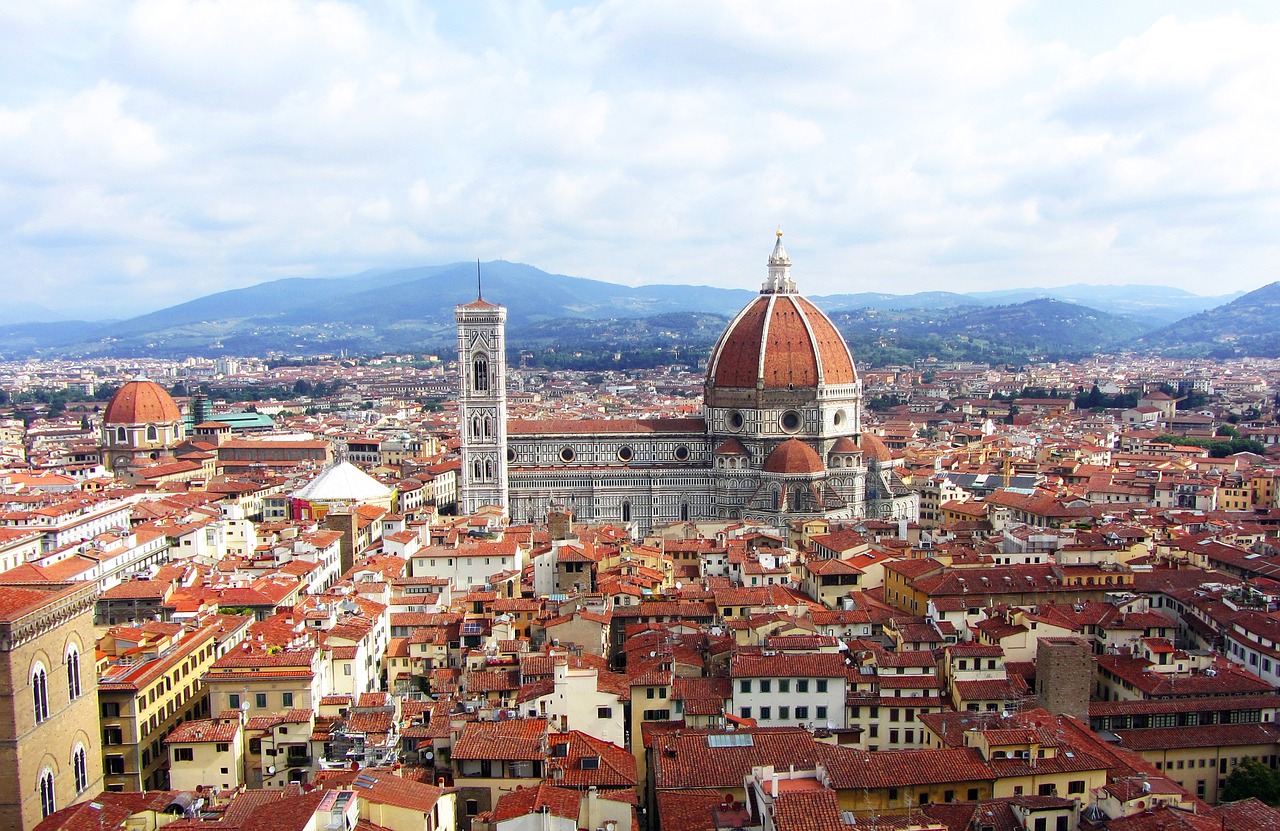
    An incredible appointment with art. The twelfth edition of Florence Biennale is taking place at Padiglione Spadolini. Until October 27th pieces of contemporary artists and designers will be displayed in the suggestive frame of Fortezza da Basso.

    This year the international exhibition takes inspiration from Leonardo Da Vinci’s genius. It will be the 500th anniversary of the death of the great Italian artist and inventor. 

    Florence Biennale 2019, Ars et Ingenium

    Because of the multiform soul of Leonardo’s artworks, the theme for this year reflects Da Vinci’s ability to overcome the border between art and intelligence, Ars et Ingenium.

    florence biennale leonardo da vinci

    Even if is considered one of the most talented painters of all time, Da Vinci devoted himself to diverse disciplines. Everything concerning human nature fascinated him. Inspiration could come from art, but more often from the observation of what surrounded him.

    He studied comparative anatomy, botany, the laws of physics, geology, cosmology, and more. His curiosity spaced in the field of the unknown. It’s his primal intuition to combine art with scientific research that Florence Biennale wants to celebrate.

    If he could break the distinction between artes mechanicae and artes liberales, contemporary artists have the duty to keep exploring this approach.

    At the Florence Biennale the challenge this year is not easy. The multidisciplinarity of art has to pursue harmony as an aesthetic value. Just like Leonardo used to do.

    The curator Melanie Zefferino suggests a reflection on how knowledge and creativity are linked. These two elements are the foundations of every artistic language. 

    Florence Biennale and the Lorenzo il Magnifico Award

    In spite of the passing of time, this year Florence Biennale passes Da Vinci’s heritage to contemporary artists. How will they interpret his vision in their artworks?

    The international exhibition counts this year 747 exhibitors of which 484 artists and 263 designers. Coming from 78 different countries, they bring on the scene innovative art. 

    Joanna Hoffmann, special guest of the exhibition, displays a project that combines scientific research, art, and technology. She offers a multisense experience in a space that includes virtual reality. Guided by a “Vitruvian woman”, the visitor explores an imaginary labyrinth.

    In addition, the whole calendar is plenty of interesting events. Among these, the projection of L’Architecte Textile by Mika’Ela Fisher and the workshop History of jewels/Archivio Bulgari by Paolo Torriti. 

    The American artist Anthony Howe will receive the Lorenzo il Magnifico Award. Howe caught the world’s attention with his dynamic artworks. Using wind and nature at his favor, Howe’s creations become living, transforming entities. His sculptures astounded the audience at the 2017 Academy Awards, as well as at Rio 2016 Olympic Games.
    On the occasion of the Florence Biennale, the American artist presents a new project, never displayed in Italy. 

    Among the most intriguing installations, there is Gustavo Aceves’s one. He’ll receive the Lorenzo il Magnifico Career Award. His horses show a perfect knowledge of anatomy, and his experimentations remind of Leonardo’s creative approach.

    The interpretation of nature and the use of science for artistic purposes give the artist a powerful creative expression. That’s what this year Florence Biennale is about. That’s why artists from all over the world continue to be inspired by Da Vinci’s vision.

  • Banksy’s store in London closes forever

    Banksy’s store in London closes forever

    The mystery of Banksy’s store

    Blinds are down: Banksy’s store, The Gross Domestic Product merchandise shop closed on October 13th. 

    Based in London between Church Street and Frith Road, “the store that never opens” appeared just on the first day of October. After only thirteen days, the shop windows are empty. However, the street artist’s aim to continue surprising is achieved!

    The latest installation by the peculiar artist, emerged literally from nothing, during the night in the Croydon neighborhood. It took the place of a former carpet shop.

    Came out of nowhere, and without a single clue being given about it, The Gross Domestic Product merchandise store quickly attracted the art world and international press’ attention.

    Not a shop: The Gross Domestic Product

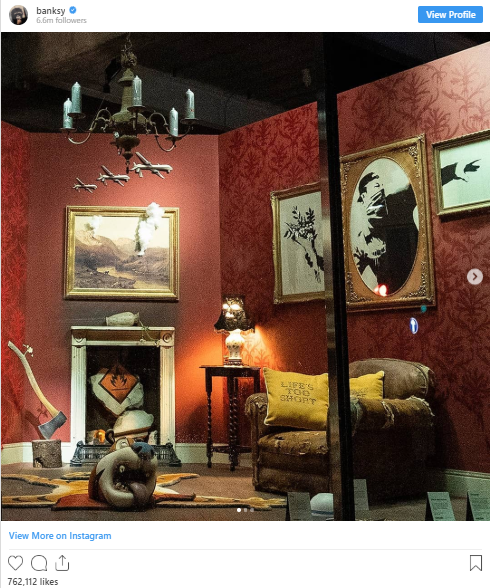
    The store consisted of a large window displaying some of the Bristol street artist’s works. Banksy’s store was a candidate to be the newest iconic store in London. With its design and jazz music in the background playing, it had the chance to become a symbol of the city.

    banksy s shop

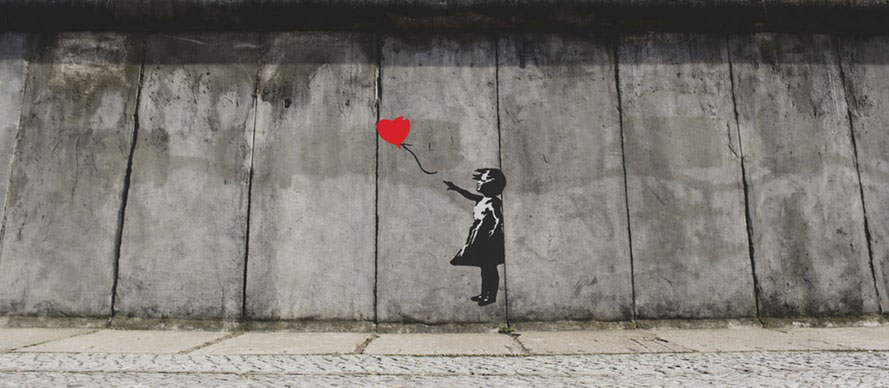
    Among the products, there were a ruined cash register and various clocks with the iconic mouse.  Particularly catching the two signs saying “life is too short” and “to take advice from a pillow”. The living room decorated with a broken sofa was impactful. Moreover, dominating the scene, there was a carpet with the appearance of Tony the Tiger, the animated character in Kellogg’s cereal commercials.

    Banksy’s art, as expected, is in all the products on display. His aversion to the system manifests in every detail, even in the idea to open a shop where buying is forbidden!

    As the artist explains on his Instagram profile: “This showroom is for display purposes only. I’m opening a shop today (although the doors don’t actually open). It’s in Croydon. Probably best viewed at night”.

    Actually, all this turned out to be his latest idea to protect his brand, without giving up on provocation and mystery.

    Behind The Gross Domestic Product

    While encouraging people’s interest, Banksy revealed the world the issue and the true reason behind The Gross Domestic Product.

    “A greetings cards company is contesting the trademark I hold to my art, and attempting to take custody of my name so they can sell their fake Banksy merchandise legally.”

    So, the opening of Banksy’s store, according to the English press, would serve to protect its brand. To begin, it seems that the idea grew on Mark Stephens’s advice. The lawyer, also the founder of the Design and Artists Copyright Society, explained that if the owner of a trademark does not use it, this can be transferred.

    That is why Stephens proposed Banksy to start a store as the most efficient resolution to his problem. Above all, the artist, who always rejected commercial and market logic, was forced to choose a decidedly different approach. The ruined cash register stands as a symbol of this condition, giving us another witness of the faceless great artist’s imaginary.

  • Artist we love: Ghizlane Sahli

    Artist we love: Ghizlane Sahli

     ghizlane sahli’s bio

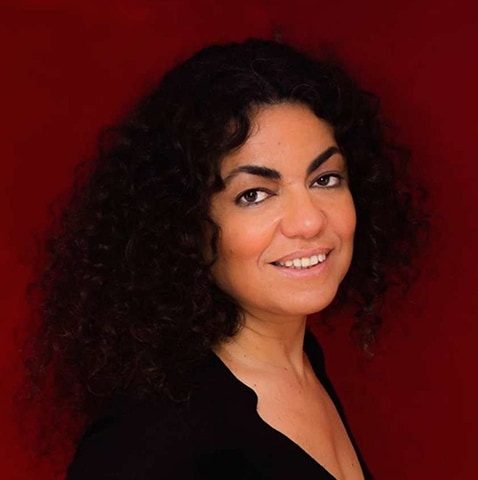
    Born 1973 in Meknes, Morocco, Ghizlane Sahli is an artist we love!

    She studied at the École d’Architecture de Paris-Tolbiac and the École Nationale Supérieure d’Architecture de Paris-Belleville. Afterwards she came back to Morocco, this time to move to Marrakech. 

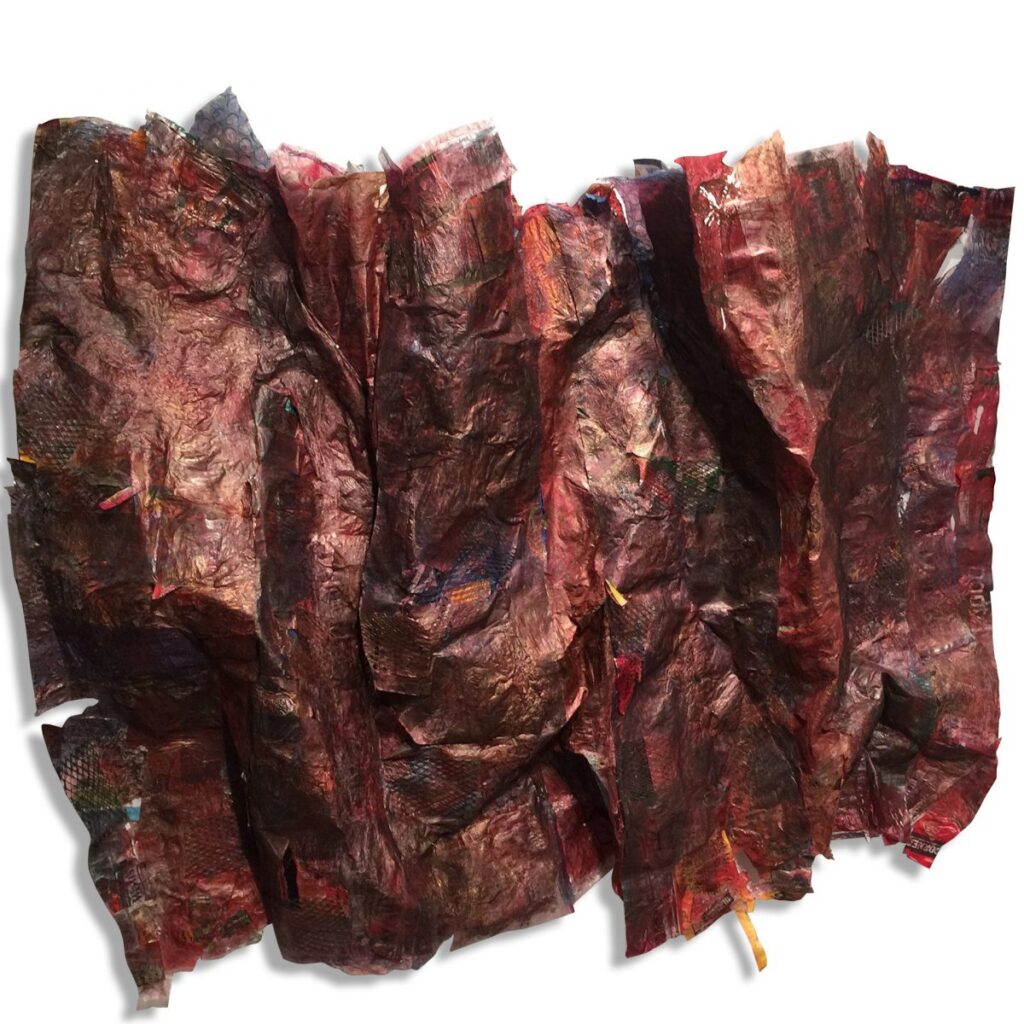
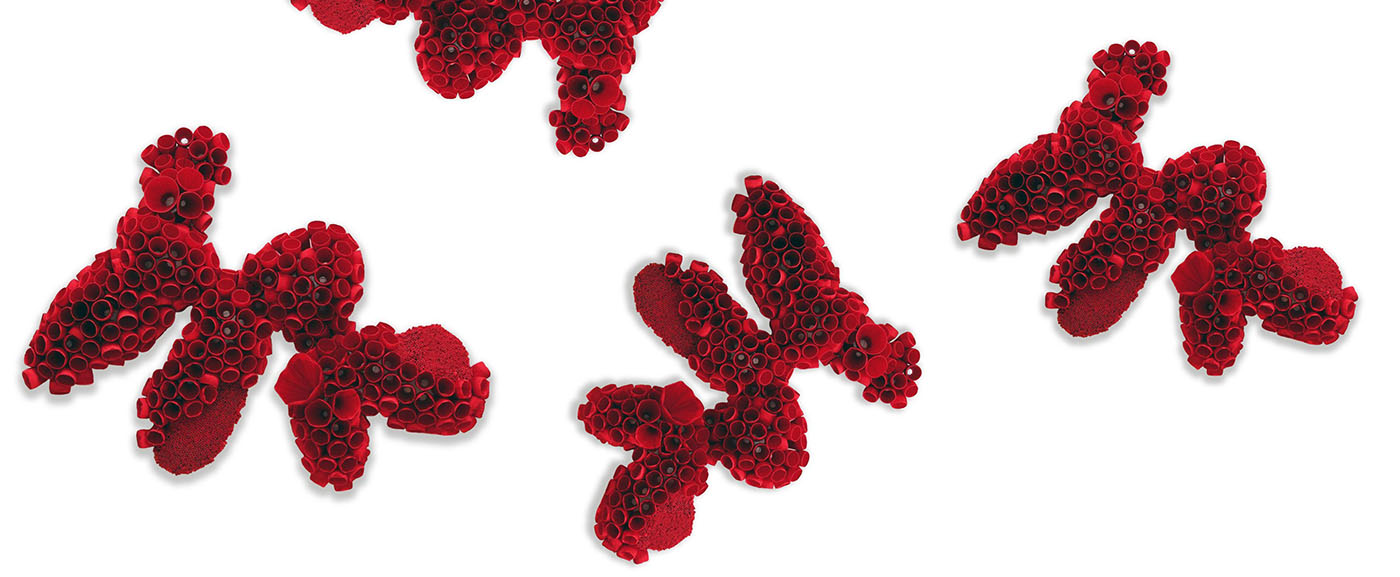
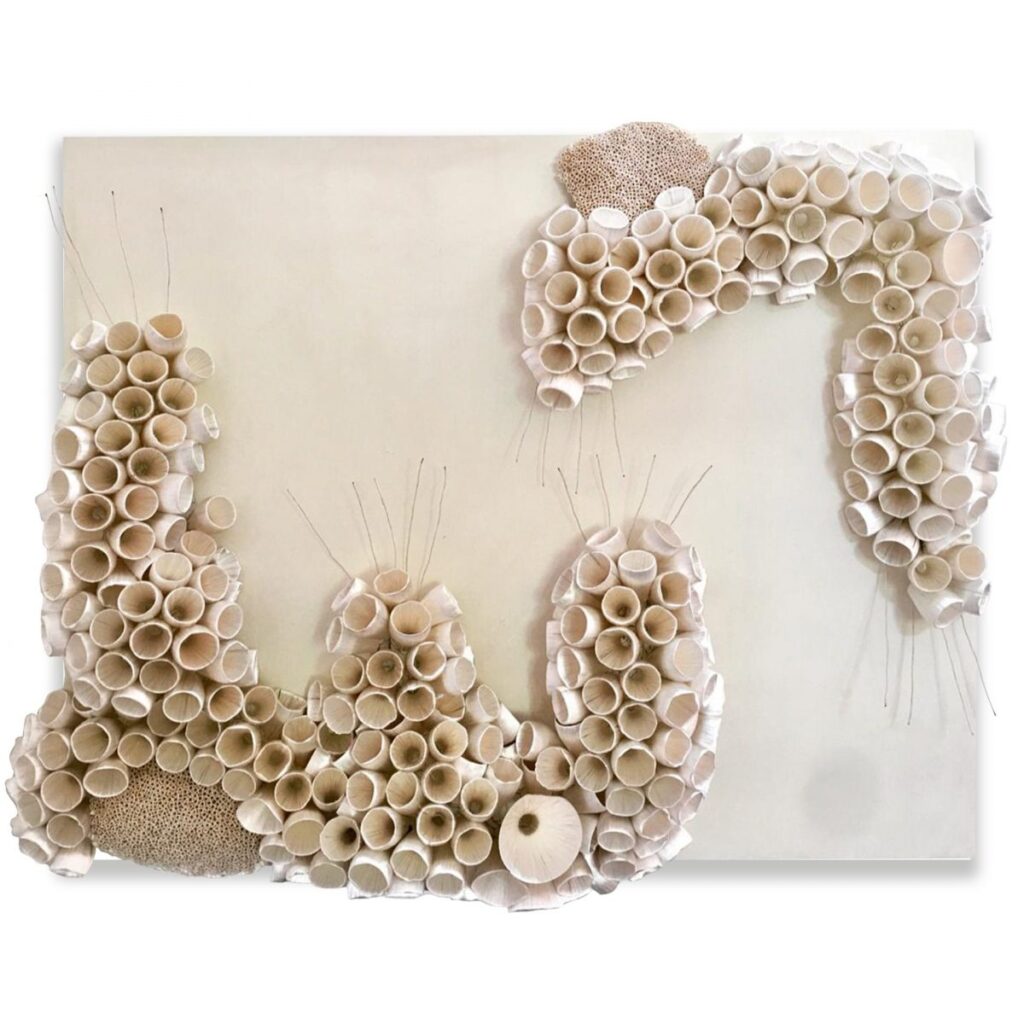
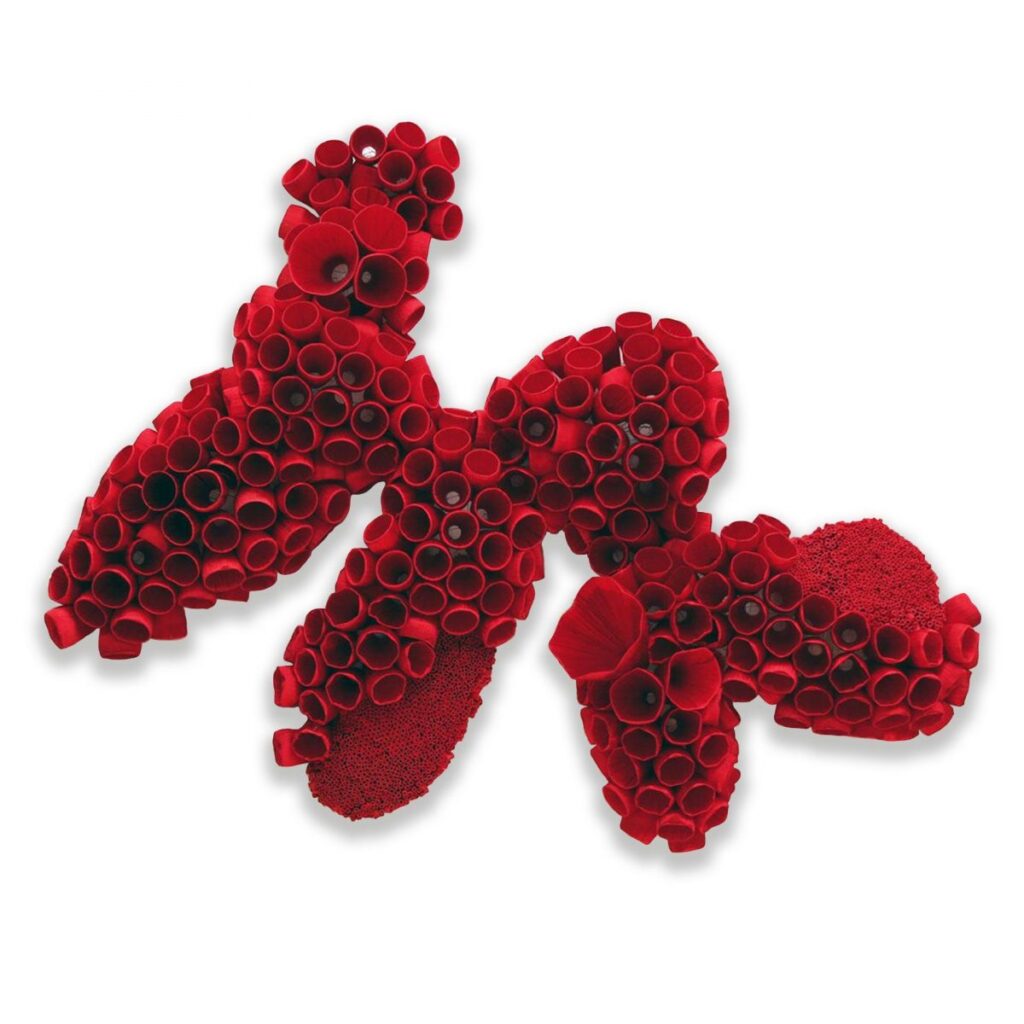
    The artist works primarily with waste and repurposed materials. She uses her interdisciplinary knowledge, ranging from architecture to embroidery, to create pieces of art from plastic bottles and silk.

    Her inspiration comes from coral reefs, the human body, and hives. In her artworks the perfect shapes of nature, the scheme behind each entity, meet a sense of integration. Everything seems connected, alive.

    Ghizlane Sahli’s career

    Ghizlane Sahli combines the love for architecture with her enthusiasm for textiles. This particular union of arts made her win the Prize for Creation at the Trophée Couleurs in 2009. 

    As a result of her multidisciplinarity, she co-founded in 2012 the artist collective Zbel Manifesto, born from an environmental need. Its aim was to use repurposed materials in art creation. The collective participated at the Marrakesh Biennale in 2014, with an artwork called “Pimp My Garbage”.

     ghizlane sahli’s career

    From there, Salhi’s artistic recognition grew fast. She exhibited her artworks at David Bloch Gallery, Marrakech (2018) and Genesis, Institut Français, Rabat (2017).

    Furthermore, her works were in The Body, Abla Ababou Gallery, Rabat (2018), L’or, Musée des civilisations de l’Europe et de la Méditerranée, Marseille (2018) and The Black Sphinx II, Primo Marella Gallery, Milan (2018).

    Among this year’s participation, there is Africa now – MO.CA, Brescia, 1.54 Contemporary African Fair – Primo Marella Gallery, London, Africa Universe -Primae Noctis, Lugano, Quintessense, Not a Gallery, Paris and BISO Biennale de Sculptures de Ouagadougou, Ouagadougou.

    Nowadays Ghizlane Sahli works with local artisan women. While creating, they constantly reinvent the ways to integrate silk into art.

    Sahli transforms the material, giving it a new reason to be, a new meaning. That is why her three-dimensional “Alveoles” appears so dynamic, as it could change under the spectator’s eye.

    Sahli’s solo exhibition “Histoires de Tripes” (2019) is her more recent work, displayed in London, Paris, Marrakesh, Milan, and Germany.

    Ghizlane Sahli’s artworks made from recycled materials

    For the artist, in the process of creating her cellular forms, everything starts with the recollection of plastic bags. Thanks to the artist’s architectural background, the plastic is sinuously integrated with a metal frame and then covered in silk threads.

    Salhi’s ability to unify diverse materials so elegantly gives her a unique touch, a very personal vision of art. She gives expression to human form, showing what we are all made of.

    Ghizlane Sahli uses intricate designs to create something that recalls coral reefs. ”Histoires de Tripes” includes sculptures and drawings. These represent perfectly the idea of integration the artist expresses in her pieces.

    Art we love

    Salhi’s artistic concept is universal. Everything suggests universality in her work: from the materials used, mostly plastic and silk, to the shapes of her pieces. 

    ghizlane sahli's artworks

    As a matter of fact, she doesn’t focus on society or belonging issues. While the man tries to give himself a definition, Ghizlane Sahli denies any social, religious or racial distinction. She focuses on a way wider issue: the origins. 

    Identity can create barriers, it can be an alienating concept. However, once there is no filter left, identity starts to embed everything that surrounds us. It becomes an exploration, an adventure.

    Ghizlane Sahli thinks of the “Alveoli” as cells. These accumulate until something grows. 

    “I wanted to work on a subject that was just pureness, the inner part of us and the human body was the best subject for that. Using garbage was also for me something really universal because it concerns all of us. I wanted something that was like a tribute. This work is the exploration of the human body. Each artwork is zoomed into different parts of the body.”

    So, environmental sustainability and the bridge between body and mind are two sides of a medal.

    Ghizlane Sahli uses diverse media to convey her message: drawings, installations, and sculptures. Passing through them, it is certain: a sense of inclusion pervades all her art, and anyone, looking at her artworks, can feel being part of the universe.

    Visit the artist’s gallery: Ghizlane Sahli’s gallery

  • Inside the New MoMa: change is here

    Inside the New MoMa: change is here

    Redefining Modern Art: the new MoMa

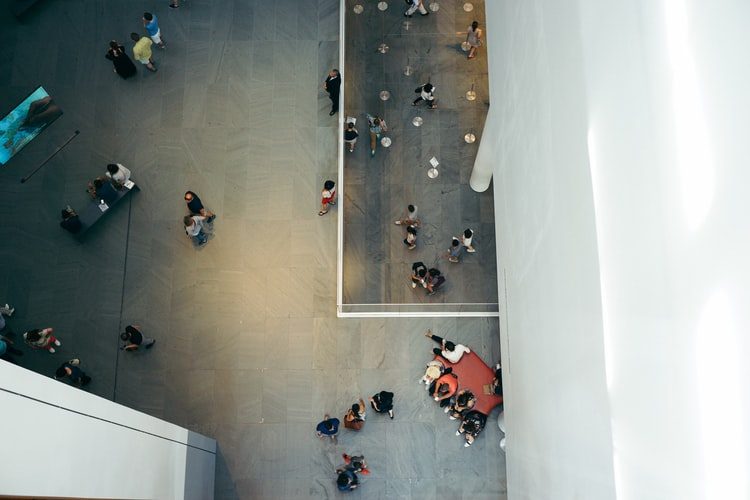
    Wait and expectations are high, not just in New York but internationally: on the 21st of October the newly expanded Museum of Modern Art in New York will reopen.

    After all, it has been only 15 years from last MoMa expansion. That one, cured by Yoshio Taniguchi cost about 858 $ million.

    Today it’s Diller Scofidio + Renfro turn. The interdisciplinary design studio integrates visual and performing arts with architecture. Today, after over five years of analysis in collaboration with Gensler, global design and architecture firm, the studio is ready to let the world discover the new MoMa!

    What to expect from the new MoMa

    The goal of the project was to reorganize the artworks in a newer and more approachable style. There was the intent to create a better experience for the audience. With more than 166,000 square feet of gallery area, the new MoMa is now prepared to receive its about 3 million visitors per year.

    moma reopening

    After the four-month-long closure and 450 $ million spent, the new Museum of Modern Art dedicates the fourth floor to experimental and life works.  That is to say that along with the ’40s-’70s collection showcasing artworks by Jackson Pollock, Andy Warhol, Robert Rauschenberg, and many more, this area will house works ranging from music to movies.

    The reconfiguration of 15,000 square feet on the third floor allows to install diverse and special collections.

    On the second floor, MoMa exposes incredible artworks dated from the ’70s to today.  Actually, here the museum chooses to concentrate on female artists such as Louise Lawler, Cecilia Vicuña, Maren Hassinger, and Senga Nengundi, among others. Furthermore, there will be educational programming and artmaking stations to encourage visitors in the process of creation.

    The first floor keeps emphasizing American artists’ work, with a special focus on Abstract Expressionism. In addition, the new lounge on this floor will be facing The Abby Aldrich Rockefeller Sculpture Garden.

    Among the most impressive news, there is the Flagship Museum Store’s reconfiguration in a double-height space. The lobby visually connects to the street. It seems to break the confinement, representing a more accessible and open-spaced architectural idea.

    MoMa reopening

    In spite of all the changes, there are parts of MoMa that haven’t been altered, such as the sculpture garden.  The suggestion here is remarkable. The garden, suspended in the middle between East and West worlds, it’s a kind of outdoor room, an oasis in Midtown. It keeps showcasing incredibly important sculptures.

    The Museum played a decisive role in the promotion of Modern Art in the world. It is universally recognized as one of the most important museums on the planet.

    The collection inside the museum is an unparalleled anthology of modern and contemporary art. MoMa collections range from architecture to design, passing through screen printing, photography and multimedia art. The Museum of Modern Ar will reopen to the public on October 21, so get ready to explore the redefined concept of Modern Art in one of New York’s great treasures!

  • Artist We Love: Sokari Douglas Camp

    Artist We Love: Sokari Douglas Camp

    Artist We Love: Sokari Douglas Camp

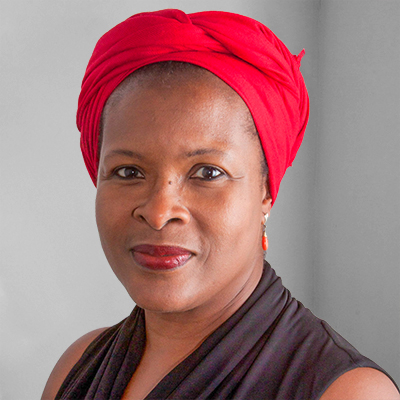
    Born in Boguma, Rivers State, Nigeria, Sokari Douglas Camp is an artist we love!

    sokari douglas camp steel sculptures

    Class 1958, Sokari Douglas Camp grew with her brother-in-law, anthropologist Robin Horton. She moved to England as a child, but she often returned to Nigeria to visit her family and participate in the traditional activities of the Kalabari tribe.

    She studied at the Central School of Art and Crafts in Oakland, California, earned her BA degree at the Central School of Art and Design in London and the Master of Arts title from the Royal College of Art.

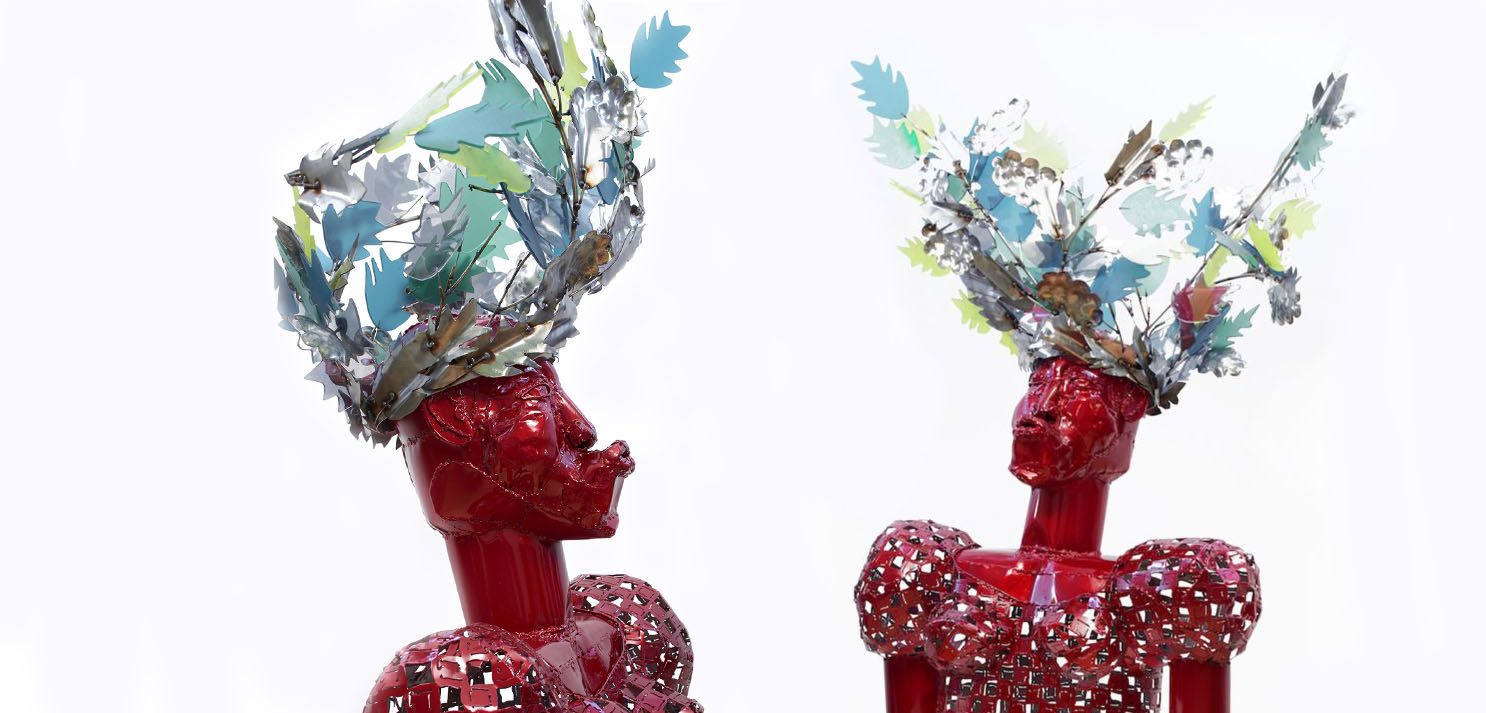
    The artist’s work includes many sculptures in steel inspired by the two cultures that forged her: African and Western cultures. In her art the echo of Kalabari rituals is strong. At the same time, there is fierce criticism of colonialism and gender inequality. It comes with passionate participation in environmental issues. Above all, the one concerning the pollution in Niger Delta.

    Sokari Douglas Camp’s perspective unites the two cultures without duality; the two worlds are welded in a daring message full of expressive freedom.

    Sokari Douglas Camp’s Career

    Sokari Douglas Camp’s international reputation grew fast, converging in more than 40 solo shows worldwide.

    Her sculptures are part of the permanent collections at The Smithsonian Museum in Washington  D.C., at the British Museum in London and at Setegaya and Tokyo Museums.

    Many international galleries in France, Japan, Italy, Spain, United States, Netherlands, Germany, Austria, Cuba, South Africa, and Britain exhibited her art.

    sokari douglas camp blue thinking

    Among her most important personal exhibitions, there is certainly “Spirits in Steel – The Art of the Kalabari Masquerade” at the American Museum of Natural History in New York.

    This exhibition integrates sculptures, photographs, and videos inspired by masquerade practices in Buguma. The life-sized sculptures installed in one long gallery give the impression of entering in a progress area of the masquerade. She observes the complexity hidden in the concept of identity. She seems to consider how distant is the perception of masqueraders from the way they present themselves.

    Sokari Douglas Camp received important awards for her artistic vision and her commitment to representing social and global themes within her sculptures.

    In 2005 she received the title of Commander of the Order of the British Empire in recognition of her services to art, in 2008 the one of Governor at University of the Arts and in 2017 the title of Honorary Fellowship of SOAS, University of London.

    Sokari Douglas Camp’s Sculptures

    Alongside these works, Camp created important public memorial sculptures. Among these, there is the “Battle Bus”, The Living Memorial to Ken Saro-Wiwa, Nigerian writer, and environmental activist.

    primavera artwork sokari douglas camp

    It is the artist’s ability to represent contemporary concerns through matter, folklore, dances, and rituals that stands the perfect artistic synthesis between African and Western worlds.

    Despite the criticism of both societies, the compromise succeeds, and the two realities merge into a harmonious but outlined whole.

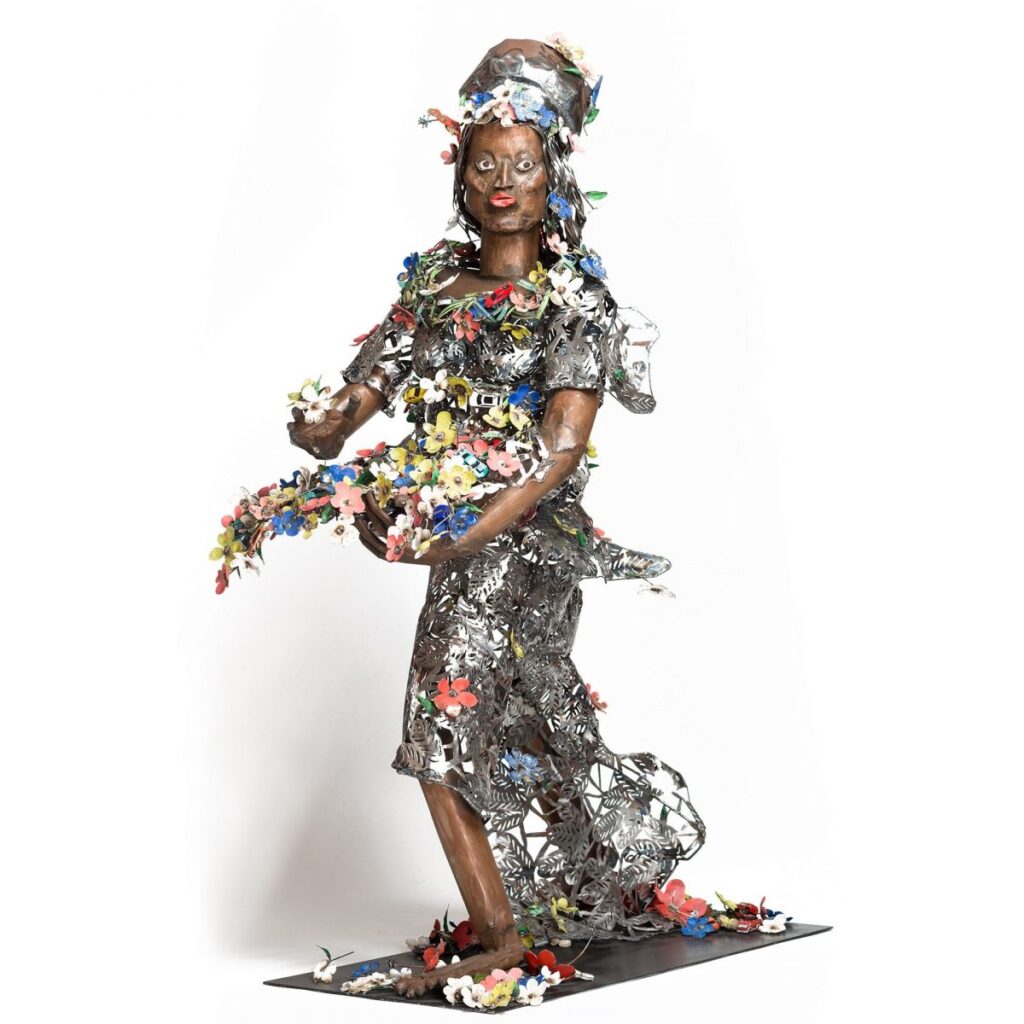
    Actually, this compromise is the basis of works such as “Primavera”, the wonderful steel sculpture. In this artwork, European classicism and Kalabari themes come together but the interpretation can come from different perspectives.

    On the other hand, in works like “Europe Supported by Africa and America” the relationship between the two worlds is different. The work includes three female representations of Africa, America, and Europe and is inspired by William Blake’s drawing.

    Art We Love

    Irony and playfulness have an important role in Sokari Douglas Camp’s work, making her art even more fascinating. The foundations of her work continued their evolution with a surprising development. 

    green leaf barrel sokari douglas camp

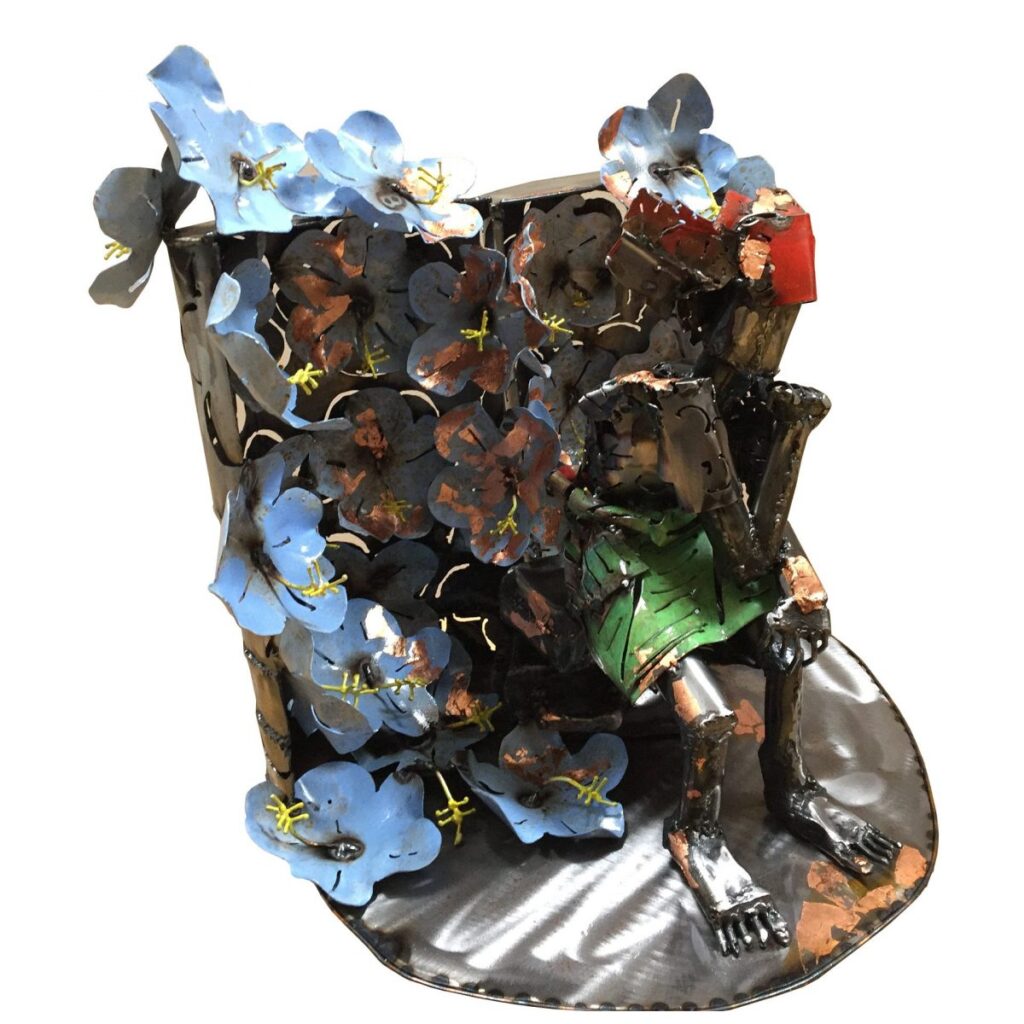
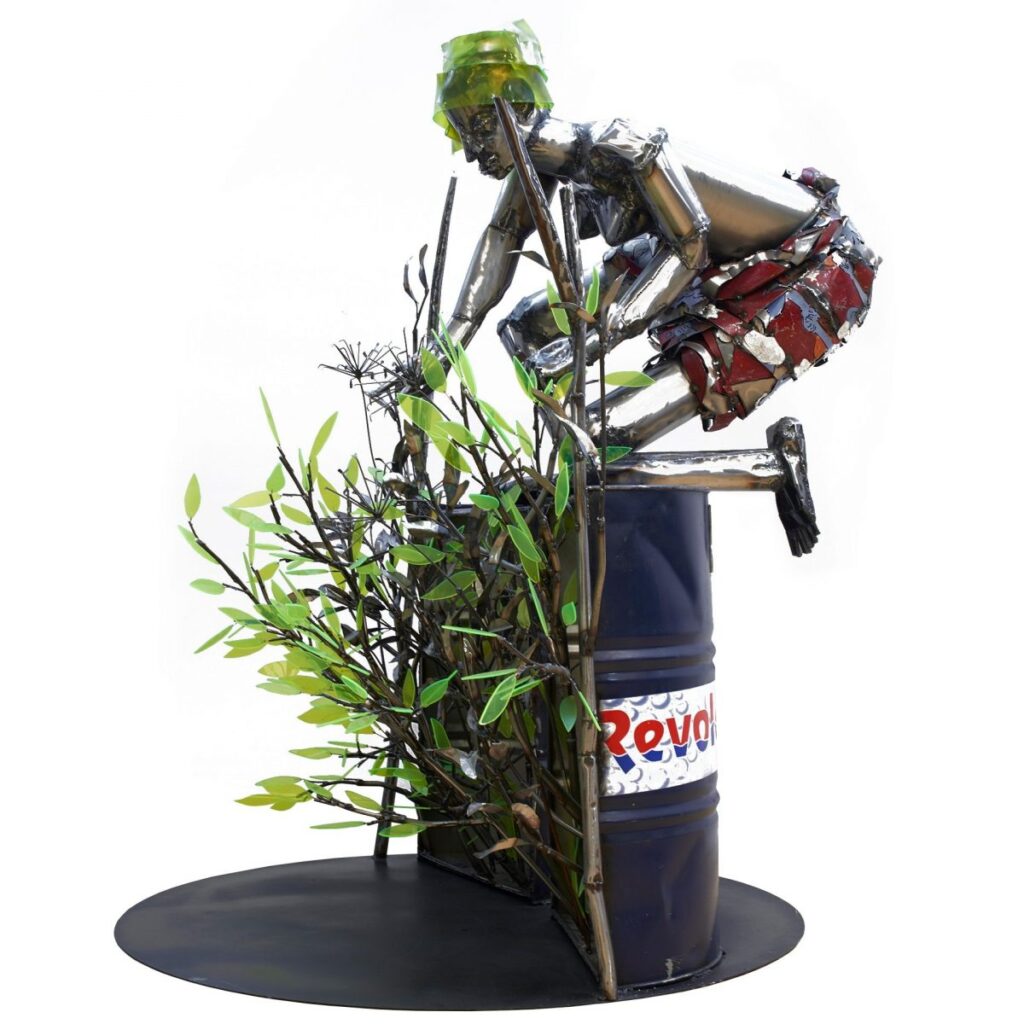
    Among her most appreciated works there is “Green Leaf Barrel”, an iconic expression of her Nigerian roots and British education. The artwork represents a woman goddess creating growth from an oil barrel. Green Leaf Barrel is inspired by the condition in the Nigeria Delta, polluted and overcrowded. With this artwork, Camp focuses on the positive sides of life itself confirming her irony once again.
    The path of this artist is remarkable and her art continues to result exuberant and mysterious, daring and aware. Sokari Douglas Camp is definitely an artist we love!

    Visit artist’s gallery on RDN Arts: Sokari Douglas Camp

  • Art Market vs Stock Market

    Art Market vs Stock Market

    Back in 2002, a monumental art heist took place at Amsterdam’s Van Gogh Museum. Two priceless paintings were stolen by master thieves in a daring, almost cinematic operation. The paintings were recovered from the Camorra organized crime group in Naples in 2016 by Italian law enforcement.

    Despite the near impossibility of selling the paintings on the open market, such priceless works of art are invaluable to figures high up in the shadowy world of organized crime. They simply do not lose value and are therefore used as an underworld currency, an easy form of collateral or an easy way to transfer vast wealth internationally. Art theft is a horribly sordid matter, but it is a testament to the value of art as an investment.

    S&P 500 and Recession

    Knowing how to invest in the leadup to or during a recession can be tricky. Despite the sweeping shorthand of economists, every recession is unique. There have been nine recessions since the establishment of the S&P 500 in 1957. Unfortunately, when it comes to investing, the past is no indicator of future results. The index has responded differently to each recession, and analyzing Art Market vs Stock Market correlation is not always easy. Every sector responds differently to each recession as well. For example, a Homebuilding company may have gained consistently over the last five recessions. However, the 2007 recession was sparked by a housing bust, laying waste to the otherwise robust homebuilding sector. Over the past five recessions, the S&P 500 has declined an average of 4.4%.

    The worst impact on the stock market can come three to six months prior to a recession as investors anticipate the recession and price it in. This means it can be hard to time the impact that a recession will have on stocks in a given sector. To be fair, in the last five recessions, the stocks of about a dozen S&P listed companies both beat the market and posted average gains. Consumer staples tend to be safe bets, with Walmart shares rising an average of 42.4% during the last five recessions. However, If you want to do better than ‘safe’, the art market could be what you’re looking for.

    Art Market out-performance

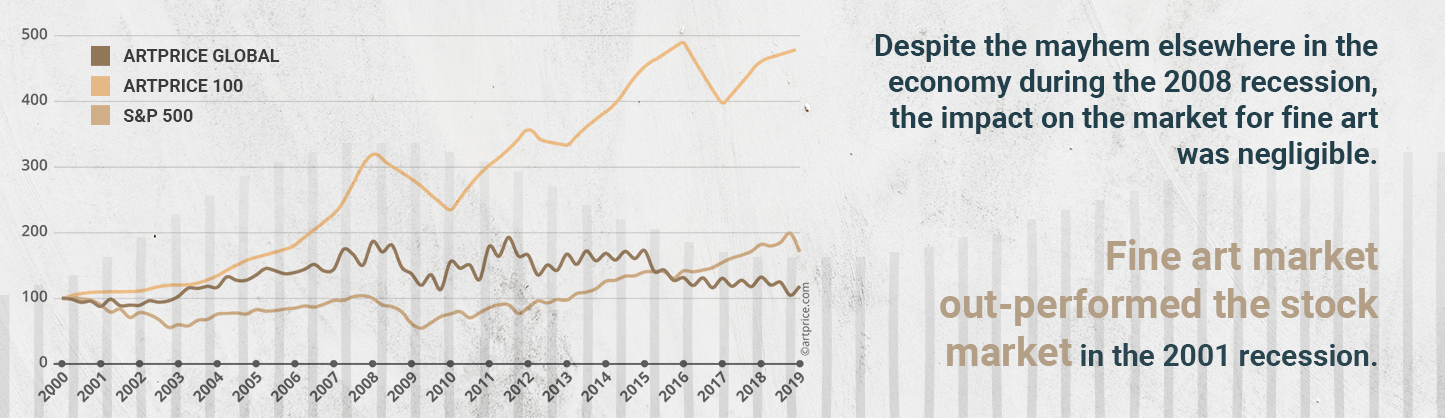
    Despite the mayhem elsewhere during the 2008 recession, the impact on the market for fine art was negligible. The fine art market also out-performed stock market in the 2001 recession, if we analyse Art Market vs Stock Market. Financiers have reacted to the outstanding performance of the fine art market by creating art investment funds. These funds offer a diversified art portfolio, are readily available to anyone ready to drop a quarter-million dollars or so. The existence of such funds is an indicator of the confidence that the smart money has in this market. However, besides the high entry barrier, art investment funds deny the investor the tangible, personal thrill of investing in art directly.

    Fine art as an investment is tracked in indices such as Sotheby’s Mei-Moses index. No index is completely without bias. Mei-Moses only tracks works of art that have been sold at auction more than twice. Artwork that has been privately sold or that has failed to sell at auction is excluded.
    This can lead to selection bias, but frankly, the S&P 500 is hardly innocent of similar issues itself.

    The performance of Mei-Moses tends to rival that of stocks, which are generally the best performing asset. Art indices can outperform stocks at times, especially in recessionary periods. In fact, recessions can push the art market up, as money runs to a relatively safe haven. Compared to stocks, fine art as an investment is distinguished by its low volatility. It may not be the most liquid asset in the world, but art offers a great option for diversifying your portfolio; especially if you have an eye toward a coming recession.

    Art Market, Long-term investment opportunity

    We never know exactly when the next recession will hit. We can only be dead sure that it is coming, sooner or later. When it does come, it will offer an excellent opportunity to invest for the long term. Buying and holding for the long term has a far greater success rate than jumping in and out of stocks at a quick pace.
    Art is a perfect example of long-term investment. Rarity is the mark of value in the art world. If you are lucky enough to snag an early work by an up-and-coming artist, it could reap serious rewards five to ten years down the line.
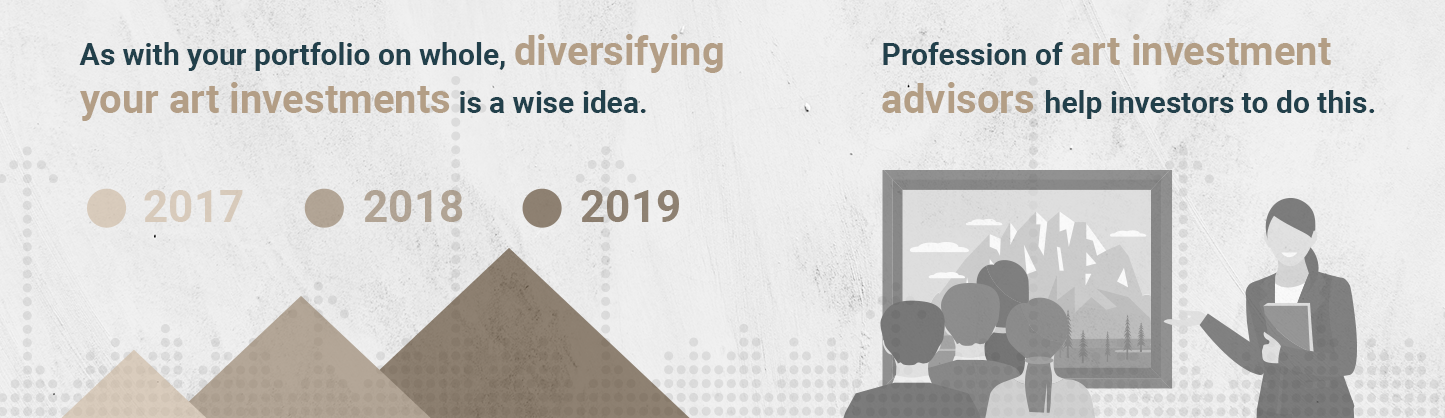
    Playing the art market, oddly enough, is more of an art than a science. You will have the best success if you listen to your taste and sentiment rather than approaching it strictly as an investment opportunity. As with your portfolio on whole, diversifying your art investments is a wise idea. Recently, a whole profession of art investment advisors has sprung up to help investors to do this. 

    However you choose to get into art, you will have diversified into an excellent, low-volatility, recession-beating, long-term investment opportunity.

    Buying art online can be a daunting experience. Be sure to check our brief recap of the five costly mistakes people often make when buying artworks online!

  • Confronting  the Collapse

    Confronting the Collapse

    Confronting Disaster

    Art, like the march of time, is ceaseless. However, when it is faced with disaster, natural or not, the first priority overwhelming is to survive. It is in the wake of destruction that an artist is able to create. There at that moment before the dust has settled and the wave of grief is at its crescendo; is where art leaves a physical response to the catastrophe and offers some kind of explanation. What good can this do? Is the question to which artists have to respond to.

    The world as of late is dealing with one impending disaster after another. Every day it seems like an aspect of cultural and political life is being threatened. From the tragedy of war, the migrant crisis and, the global crisis of climate changes; we are waking to an ever-changing world. In this global climate, artists are taking a stand and responding to current issues and anxieties in increasingly direct ways.

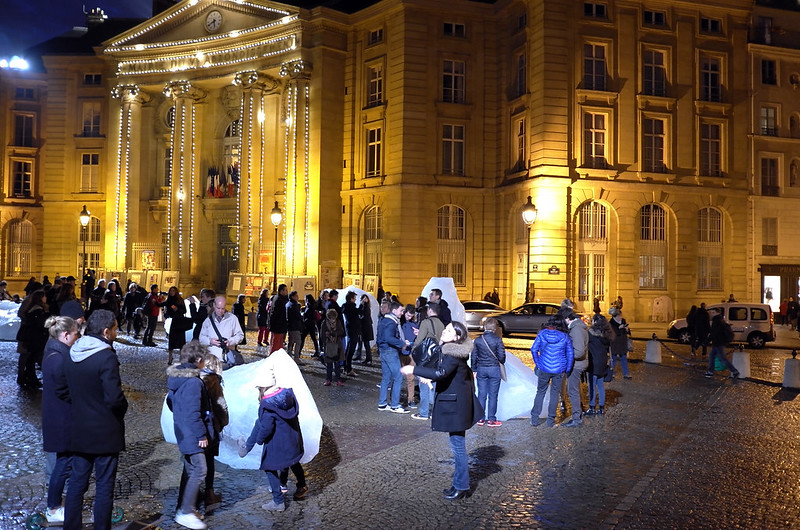
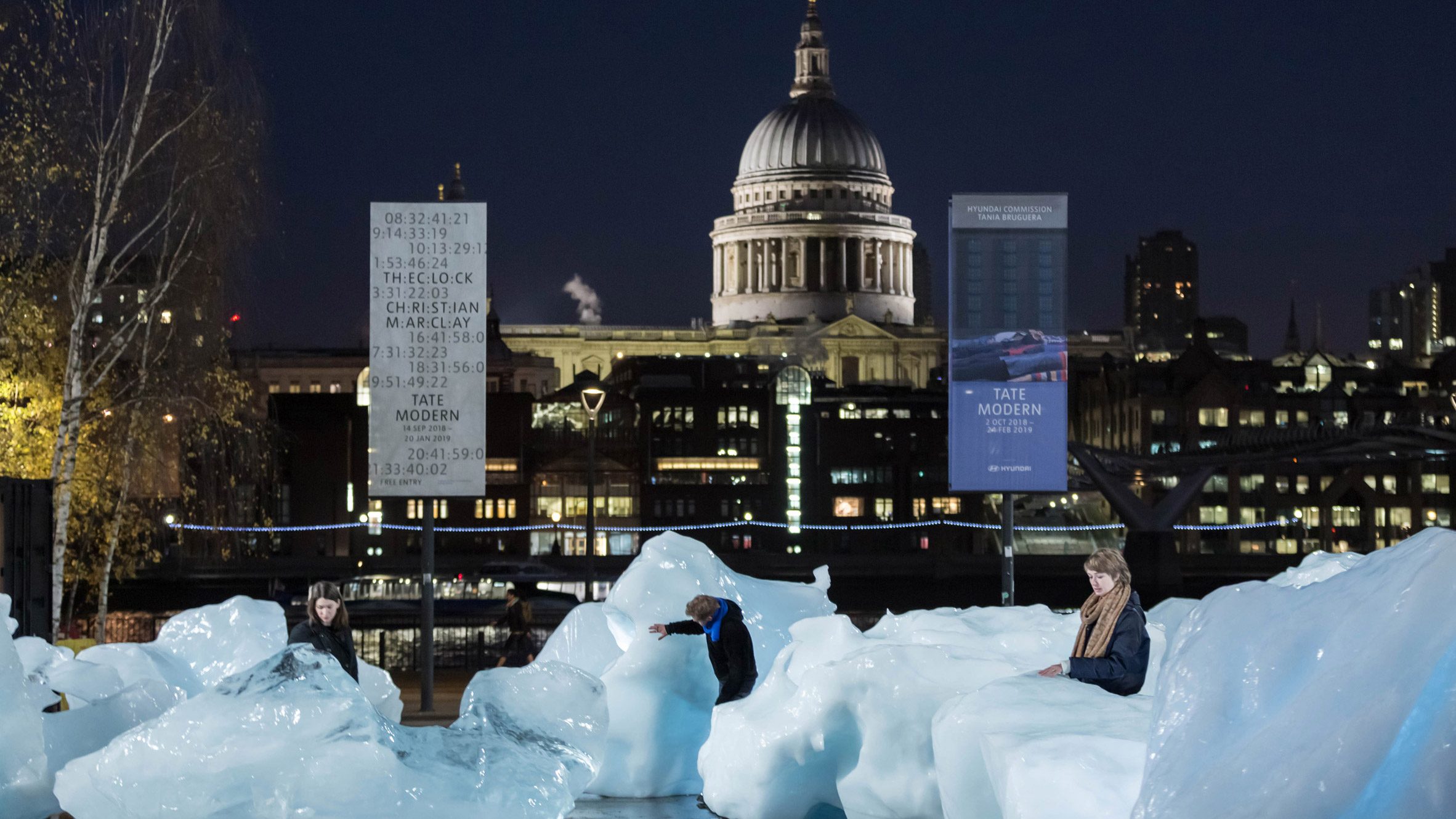
    Ice Watch, Olafur Eliasson

    Many artists are taking direct action. Making a stand against corporations that would misalign them and their artworks. From the controversy surrounding the Whitney Biennial this year to Facebook being protested at its headquarters – the rallying cry is being heard all across the world.

    Last December, the Icelandic-Danish artist Olafur Eliasson, transported 30 icebergs from a Greenland fjord to the doors of London’s Tate Modern. The installation aptly named Ice-Watch brought the fight for climate change right to the heart of London – calling even more attention to the urgent threat of climate change. Even more, controversial, this year’s Venice Biennale was Christoph Büchel’s “Barca Nostra (Our Boat),”. The wreck of a ship that sank in the Mediterranean in 2015, killing an estimated 800 migrants attempting to make their way to Europe.

    Displaying the Fallout

    The second world war brought with it devastating blows to the art community. Much of which we’re still recovering from. Paintings and works of art are finally making their way back after years of hiding in plain sight.

    Art allows us perhaps some insight these catastrophic experiences. Aiming to review them unbiasedly. Consequently providing clarity to those who suffer them and those who come after. The processing of the human experience in the wake of catastrophe is the underlying theme in a number of key works from Western art history. In the documentary “The Rape of Europa” for instance, in which the film memorializes the victims of the Nazi plunder. Consequently following the story of how allied forces lessened damages throughout the continent.

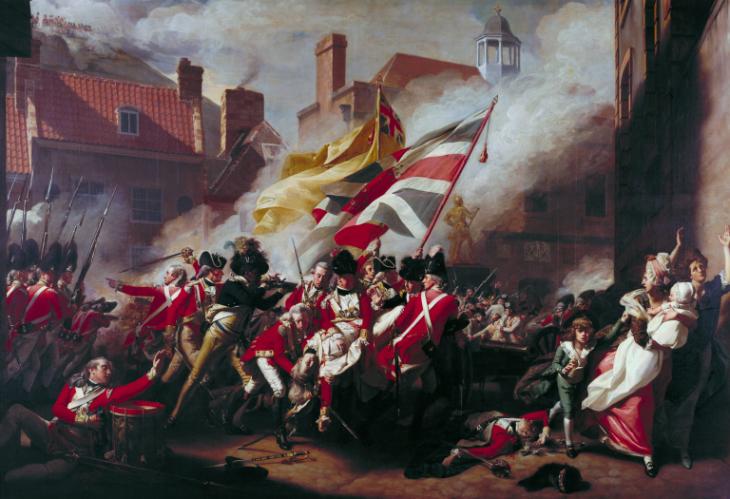
    The Death of Major Peirson, 6 January 1781 1783 John Singleton Copley 1738-1815 Purchased 1864

    In earlier centuries artists used their medium as a reminder of the wages of war. John Singleton Copley’s legendary piece “The Death of Major Peirson” (1781 – 1783) reflects the conflict between what is now the United States, and England. It remains a horrific, bleak and resounding example of art’s power to confront the horrors of war. Throughout time its unyielding depiction of his execution is profoundly shocking.

    Singleton clearly captures this misfortunate affair. Insisting that we look at, and accept the truth of this moment. It is here we face a heavy burden — while simultaneously admitting that looking can be unbearable. We can not look away from the image in which a group of men and women flee in terror before a relentless squad marching towards them.

    The Purpose of Art

    No one can say for sure what the purpose of art is. However, in the face of disaster, we use art to help us deal with the residual effects of that moment.

    “Art has no other purpose than to brush aside… the conventional and accepted generalities, in short everything that veils reality from us, in order to bring us face to face with reality itself” Henri Bergson

    Ice Watch, Olafur Eliasson

    Collectively we have always attempted to connect to one another. Our shared experiences are what binds us. We move and therefore thrive in the community around us. The purpose of art is an indispensable part of being human, it transcends the individual. In this sense, Art, as creativity, is something humans must do by their very nature. It is therefore beyond utility. Art is the reflective surface in which we must face ourselves. Artwork specifically compositions are an unspoken language we all understand.

    It is within here, at this moment, that art uses the painful reminder of a disastrous moment. Art has always been a great unifier. It stands up in face in place of the few to challenge the many. It is the voice of the voiceless. With its power to convey ideas and emotions more strongly than words alone, art inherently has the power to influence. Art becomes a tool for challenging the status quo, a voice for thoughts on politics, war, social inequalities, and the human condition. In the face of adversity, it guides us and gives us hope. While subtlely serving as a reminder of the past.

Our Content.
Your Inbox

Join thousands of art lovers

Receive art news, market analysis and updates about new artists on the website

By subscribing you agree to receive RDN Arts emails. Unsubscribe at any time. Privacy Policy.