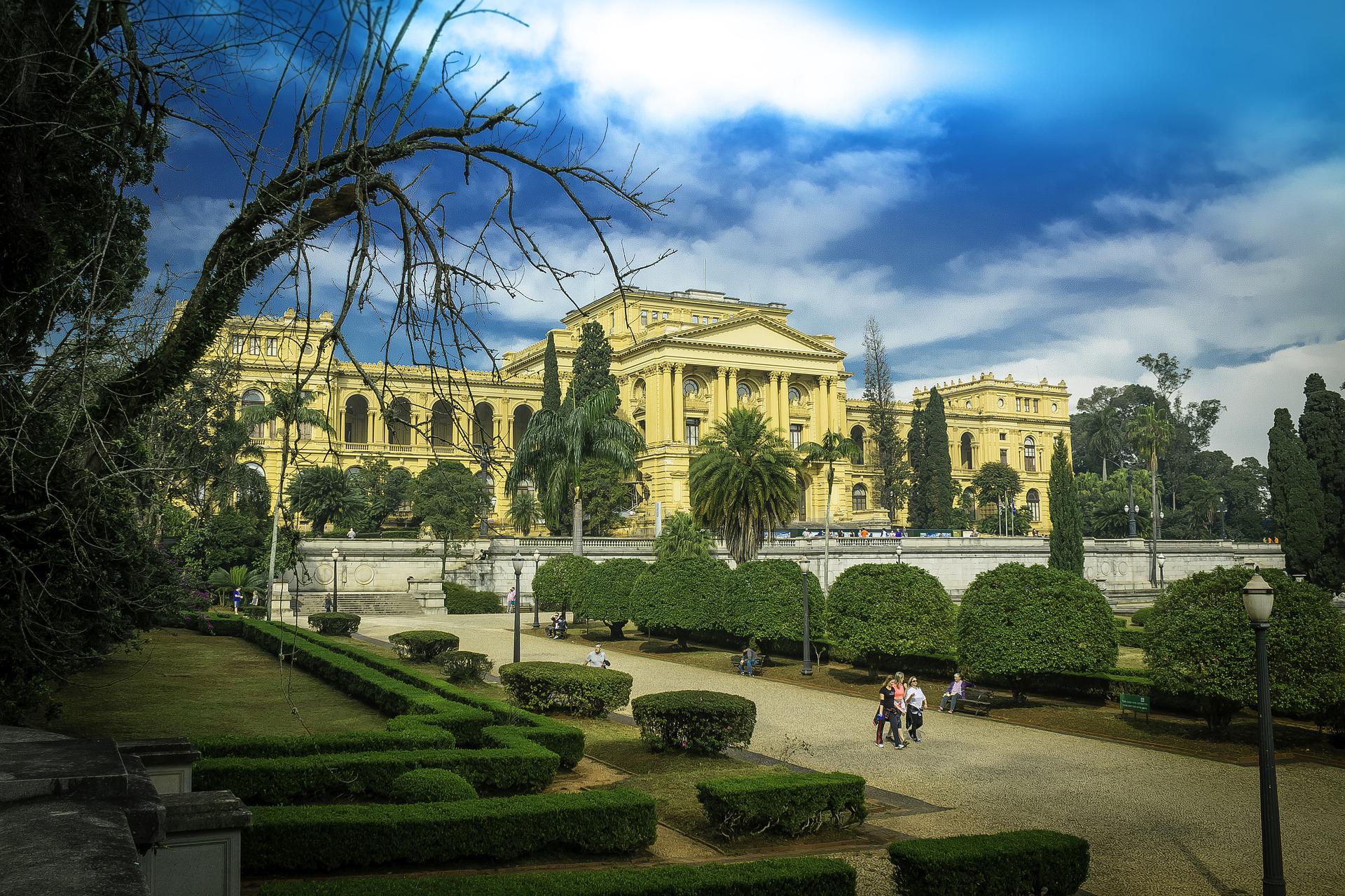
During a freak accident, in 2018, the oldest and most significant historical and scientific museum in Brazil was set ablaze. While the damages were great, however, from the ashes the museum is being rebuilt.
Now, a year after the tragedy, the National Museum of Brazil is announcing plans for a partial reopening. Their aim: to open its doors in three years.
The news comes from a press conference held last week, at the Brazilian Academy of Sciences with Denise Pires. The head of the Federal University of Rio de Janeiro, which is in charge of the site.
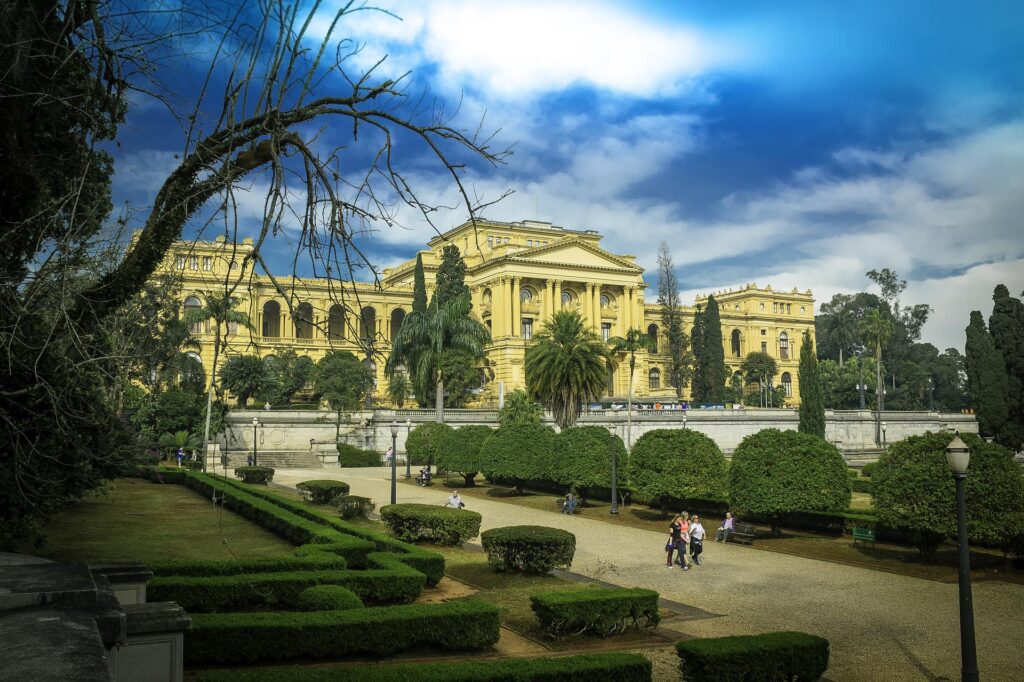
The National Museum of Brazil,
“Our intention is to inaugurate a part of the reconstructed palace in 2022. With expositions that let us celebrate the bicentennial of Brazil’s independence,” she told the press, according to La Vanguardia.
Currently, $2.7 million has gone into addressing the damage to the museum. Pires announced at the conference that the museum had raised $16.4 million for reconstruction. The lions share of funding has come from the Brazilian government. However, donations have come from international organizations. Such as UNESCO. In addition, help from foreign governments, most notably Germany has made contributions. However, the exact sum of the total restoration of the institution will cost is still unknown.
A New Start
Initially, the fire, caused by a malfunctioning air conditioner seemingly wiped out the museum’s collection. Reports initially indicating as much as 90 percent of the museum’s collection lost. However, the final toll was not quite so devastating; the extent of the loss is still great. 17 of its 34 collections completely or partially destroyed, amounting to about half of the museum’s holdings.
These range from its entomology collection. Featuring a unique catalog of 5 million insect specimens, to its collection relating to native cultures. One indigenous researcher compared the destruction of those artifacts to “a new genocide.”
After an extensive effort, recovery crews were able to boost the number of recovered items from 1,500 to 2,000. According to a report from the AFP. Such as the 11,500-year-old skull of “Luzia,” the oldest human ever found in the Americas. And the Bendegó meteorite, the largest ever found in the country.
The press conference revealing that some new objects that had been saved. Including a 19th-century samurai mask and a bronze statue of the Egyptian goddess Bastet.
Reconstruction of the facade of the historic building is scheduled to begin for September.
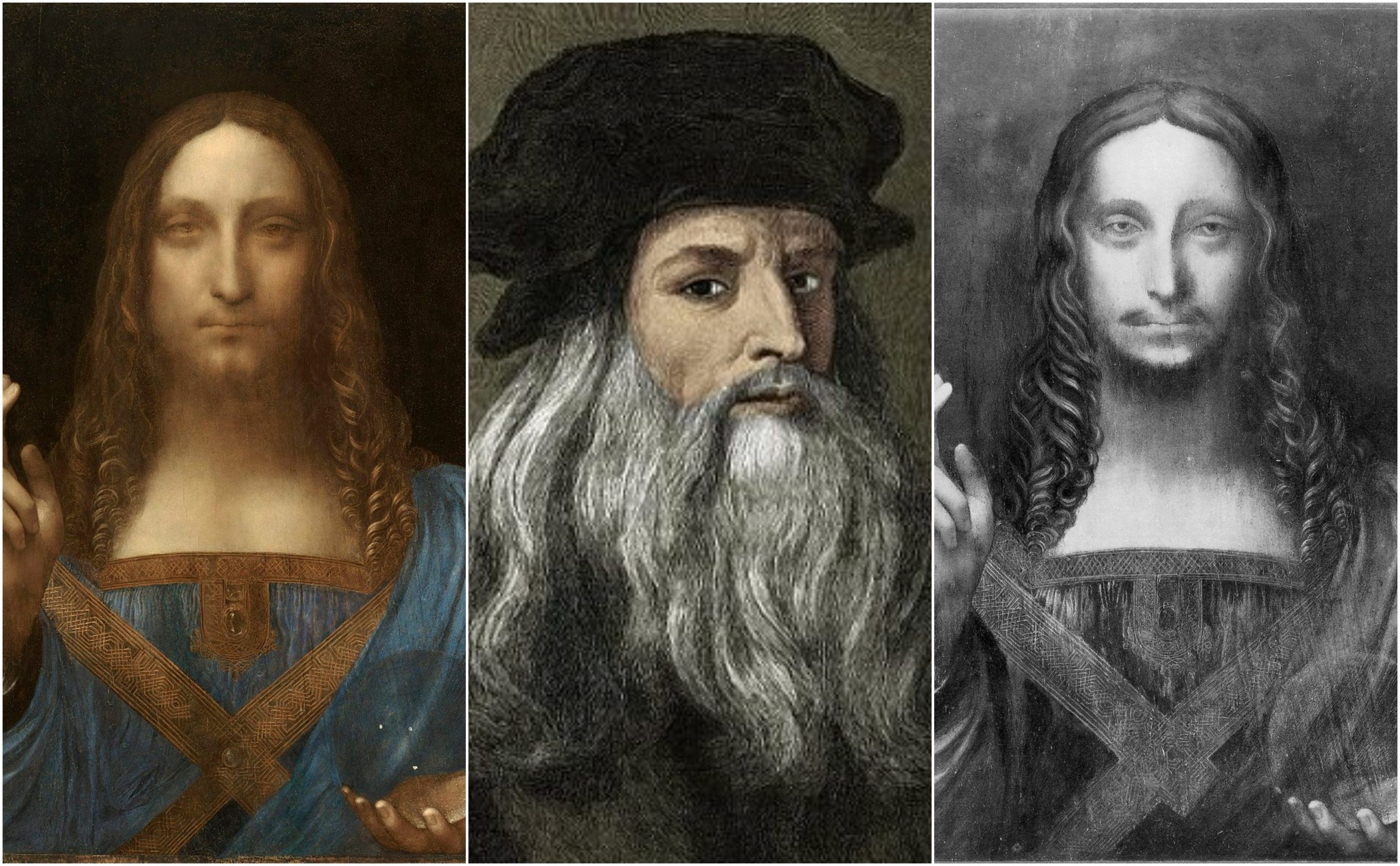
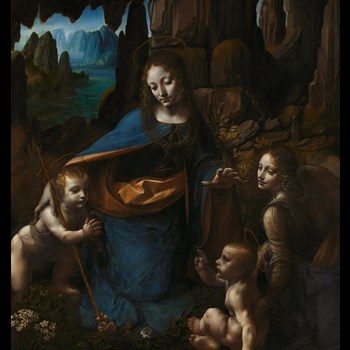
Hidden Images underneath “Madonna of The Rocks” Leonardo Da Vinci 1495-1508
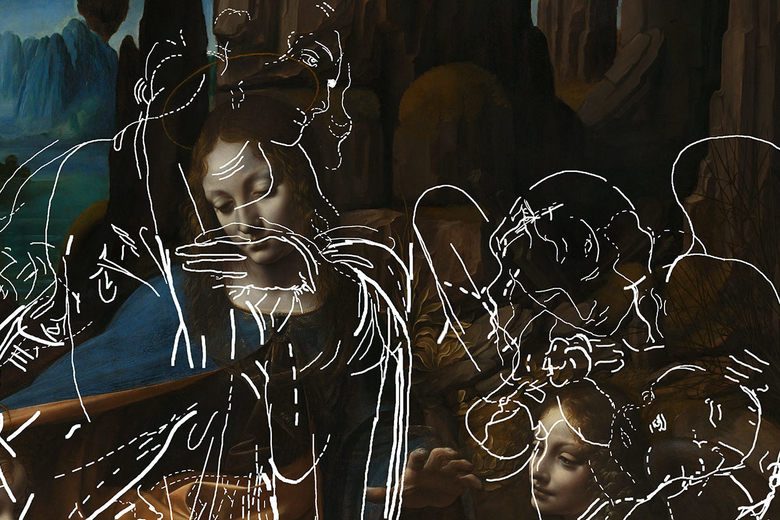
Leonardo Da Vinci is continuing to make his mark in 2019. Underneath one of his most famous paintings, something new has revealed itself for the first time after five hundred years. Handprints and sketches by the old master have made their way into modern history. Scientific analysis of “The Virgin of the Rocks,” is on display at London’s National Gallery. It shows the original composition Leonardo started and then abandoned. The sketches he left behind in place of the painting we’ve admired for centuries. Initial designs for the angel and Baby Jesus in the painting have been uncovered by the process. As well as handprints where the artist or an assistant patted down paint on the canvas, London’s National Gallery said.
The angle of the infant Christ’s head shows the profile. Removing parts of the angel’s curly hair. Positioning the figures higher up in the discarded composition. The angel is facing out, looking down on the Infant Christ. The found Da Vinci sketches paint a slightly different image. “It appears to be a much tighter embrace,” the gallery explained in a press release.
Leonardo 500 years later
“These new images were found because the drawings were made in a material that contained some zinc. So it could be seen in the macro x-ray fluorescence (MA-XRF) maps. These maps show where this chemical element was present. In addition to the new infrared and hyperspectral imaging,” it explained. The experts at the National Gallery made the revelations. During the announcement of the new exhibition on the artist, titled “Leonardo: Experience a Masterpiece,” which will run from November.
Madonna of The Rocks, Leonardo Da Vinci, 1495
The commemoration of the 500-year anniversary of Leonardo’s death took place earlier this year. The artist, scientist, and inventor remains one of the most enduring figures in Western history.
His surviving body of work as a painter is slim, however. His portfolio expands for no fewer than 20 artworks. Although two of them — the “Mona Lisa” and “The Last Supper” — are easily among the most famous in the world. Leonardo painted two versions of “The Virgin of the Rocks”. Both pieces look similar overall but have crucial differences in the composition. The earlier, dating to around 1483, is on display at the Louvre in Paris. The version in The National Gallery is dated sometime between 1495 and 1508.
The summertime fun shows no sign of stopping in the art community. Visiting our favorite museums can feel daunting with the hoards of tourists visiting your favorite cities. In the spirit of new experiences, we’ve gathered 7 smaller museums that will help you beat the summer heat while taking in some of the best artworks around the world.
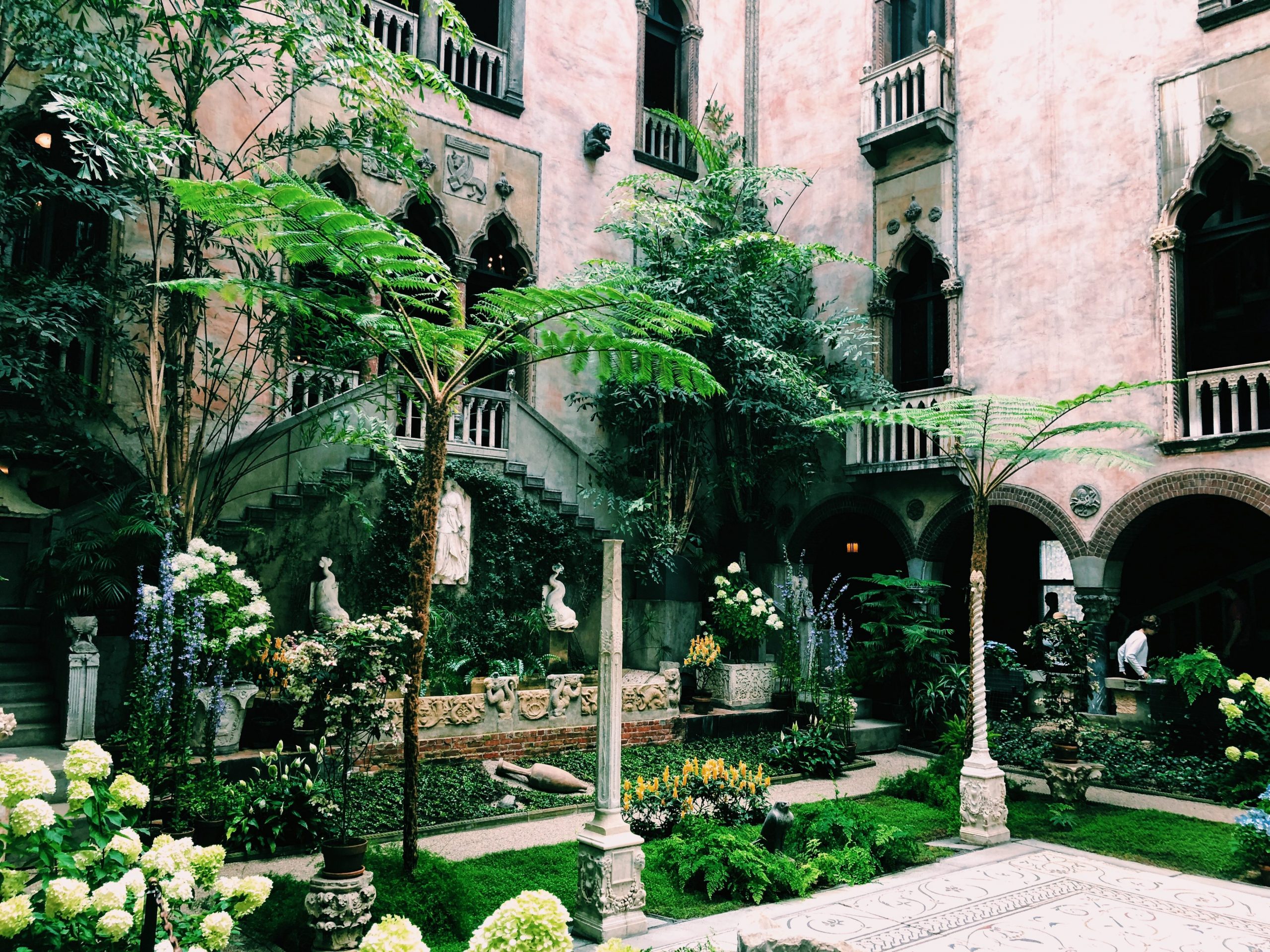
Isabella Stewart Gardner Museum: Boston
Isabella Stewart Gardner Museum
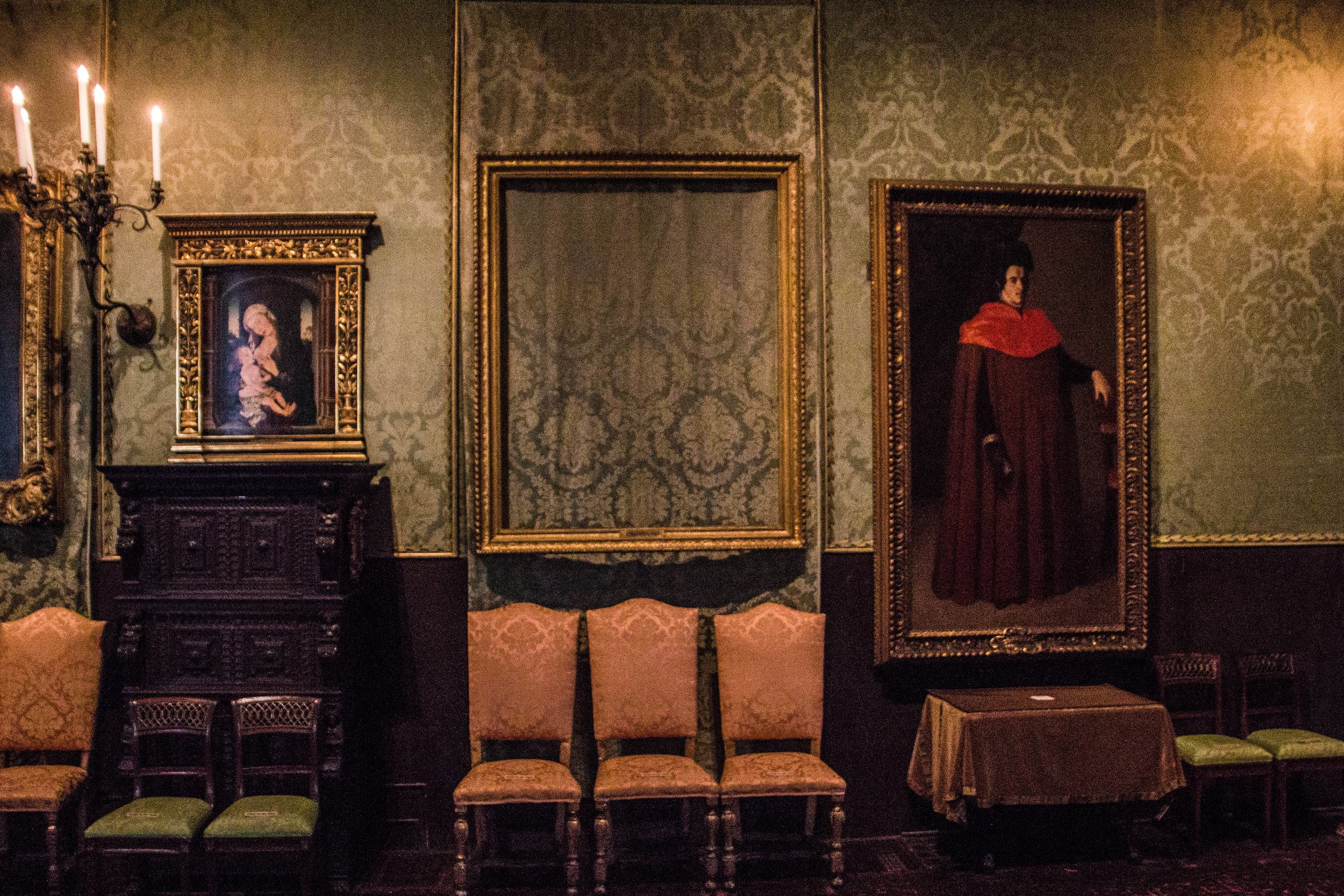
One of the most remarkable things about this museum is its venue: a 15th-century Venetian-style palace located in the heart of Boston. Inside, there’s a peaceful courtyard surrounded by three stories of galleries. Titian, Raphael, Rembrandt, and Matisse are all represented on these walls. This museum was also home to the biggest art heist in history; the thieves made off with works by Degas, Rembrandt, and Vermeer. The frames of these pieces still empty marking the places where the paintings once hung. Even without the stolen masterpieces, this is still home to one of the best art collections in the world.
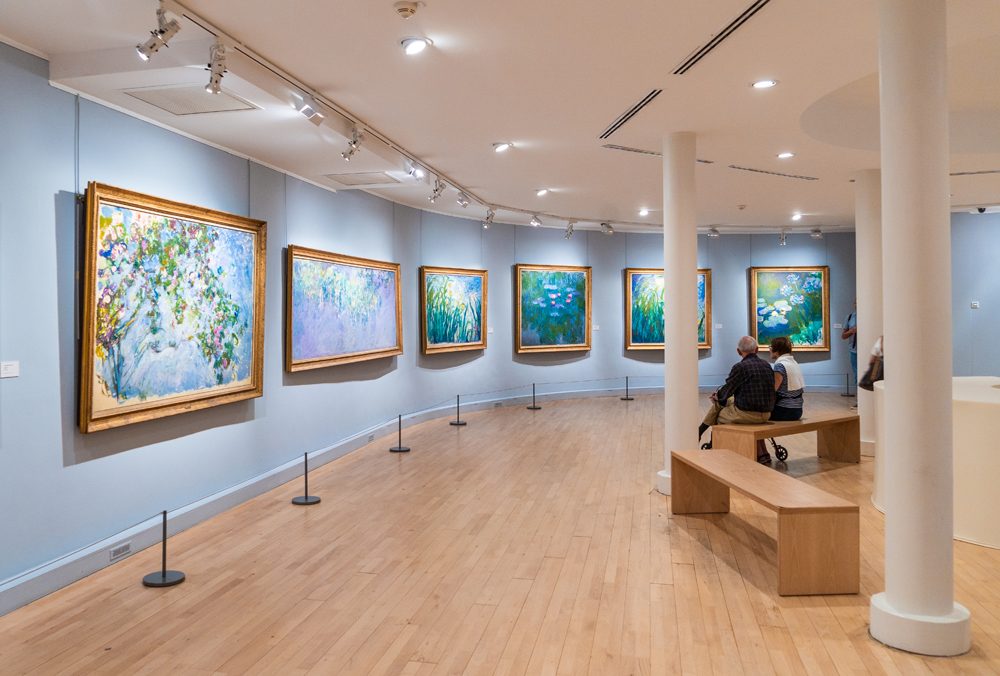
Musee Marmottan Monet: Paris
Musee Marmottan- Monet Museum
Paris is an unyielding powerhouse of museums. Home to two of the most famous museums in the world, the Louvre, and the Musee D’Orsay. However, if you head out to the Musee Marmottan and you might just find their match. The obscure tiny museum packs a giant punch of culture. Home to some of the most famous impressionist works in the world such as paintings by Renoir, Degas, Berthe Morisot, and Monet’s Impression: Sunrise, the painting that gave the Impressionists their name.
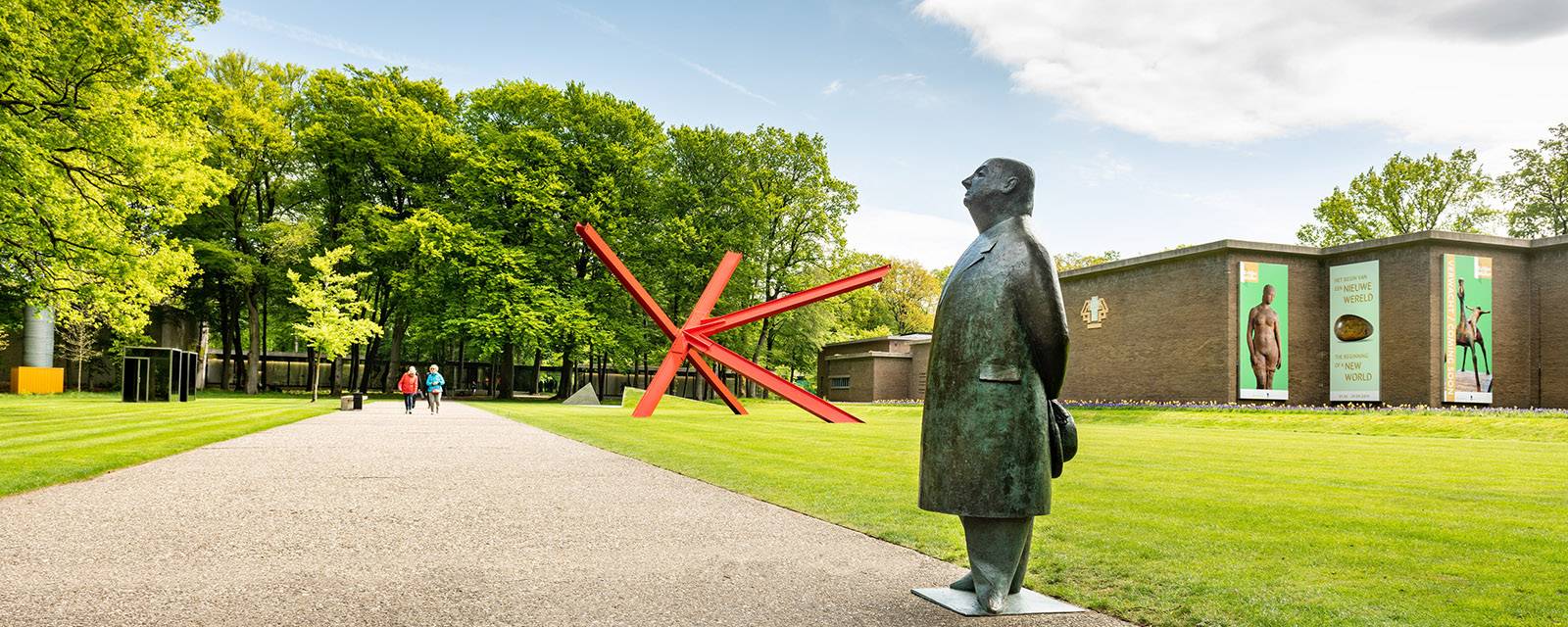
The Kröller- Müller Museum: Netherlands
The Kröller-Müller Museum
You’d be hard-pressed to find yourself in a city without a Van Gogh Museum. The largest of these museums is the Van Gogh Museum in Amsterdam. However, one of the best — and often unsung hero — is the Kroller-Muller Museum in Otterlo, the Netherlands. Located roughly an hour outside of Amsterdam, this museum holds over 100 Van Gogh paintings As well as more than a few Seurat’s, Mondrians, and Picassos. In addition, this museum is home to one of the largest sculpture gardens in all of Europe.
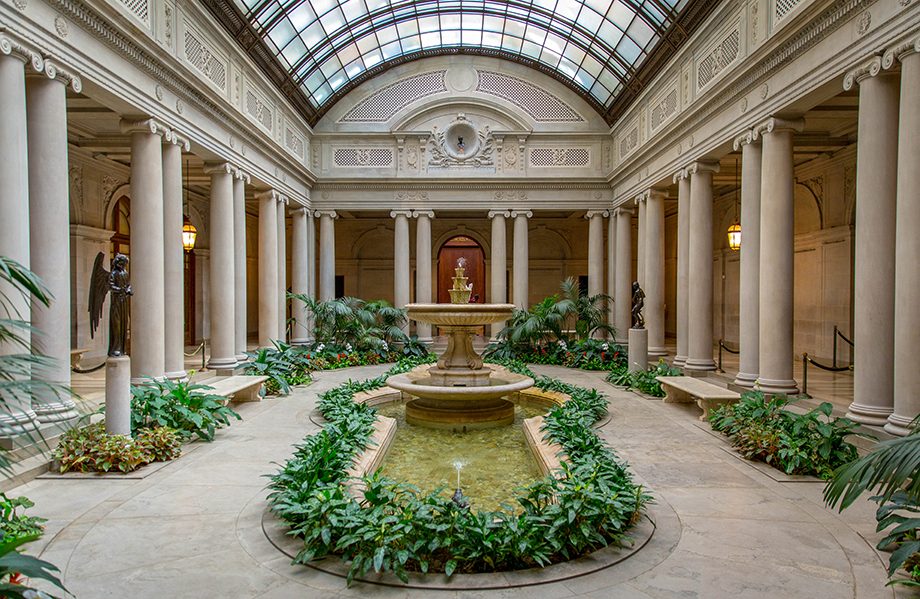
The Frick: New York City
The Frick Collection
Frick is located in the opulent residence of Henry Clay Frick (1849–1919). According to the website, it’s “one of New York City’s few remaining Gilded Age mansions”. The mansion itself is a piece of art. In addition, it also happens to be home to masterpieces by Rembrandt, Vermeer, Goya, Whistler, Ingres, and Bellini. Amid the city that never sleeps, this is a tranquil spot to travel back in time and admire great works of art.
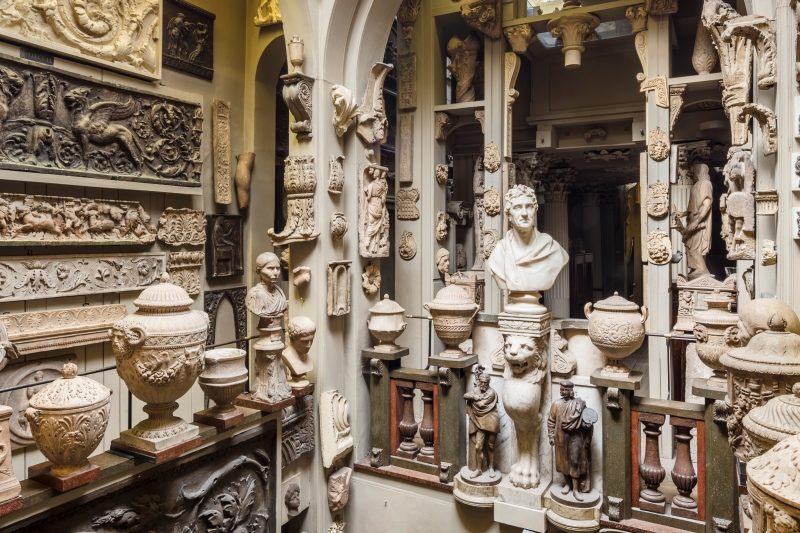
Sir Johns Soane’s Museum: England
This is one of the greatest finds in all of London. Here you get a glimpse into the daily life of one the 19th century’s greatest architects: neoclassical maven Sir John Soane. An unconventional genius who directed that his home be left untouched after his death. His home, partly historic, part library, part art collection, is one of the most surprising and intriguing museums bursting with unique pieces from ancient marble sculptures to paintings by Hogarth and Turner.
Sir John Soane’s Museum
For nearly 200 years, the historic domicile has been authentically preserved and exhibits his myriad collections and personal objects. Soane began to amass objects from books to casts and models that he felt would benefit them in their studies. Today, guests can view these items in the Model Room. Home to many of the world’s famous monuments and busts. In addition, the museum is always free of charge.
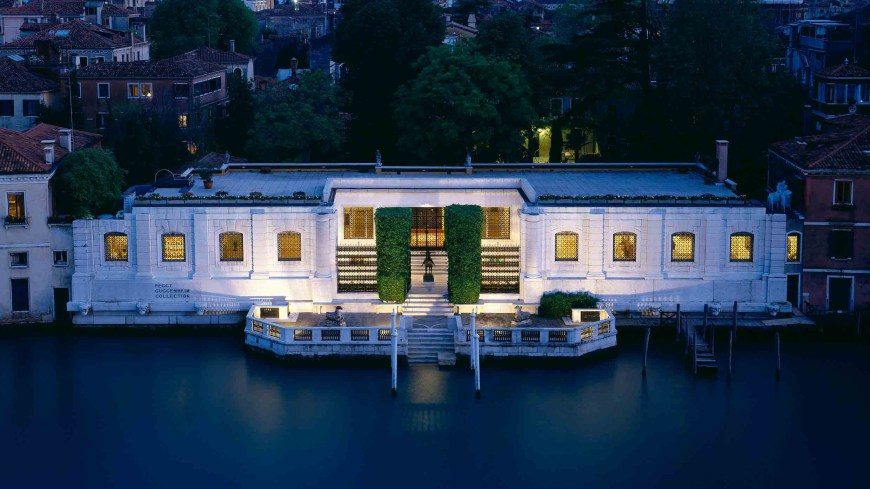
Peggy Guggenheim: Venice
Peggy Guggenheim Museum
When you think of the Guggenheim, you think of the New York mainstay or Gehry’s architectural masterpiece in Bilbao. However, there is another noteworthy addition to their collection. A stellar gallery on the canals of Venice. This museum shows off the personal collection of Peggy Guggenheim. Pollocks and Picassos, Duchamps and Dalis, Mondrians, Miros, and Magritte’s — in a city rich with Italo-Byzantine architecture and Renaissance art, this jewel on the canal is an escape into some of the best modern art in the world.
Museum of New and Old Art: Australia
Museum of New and Old Art
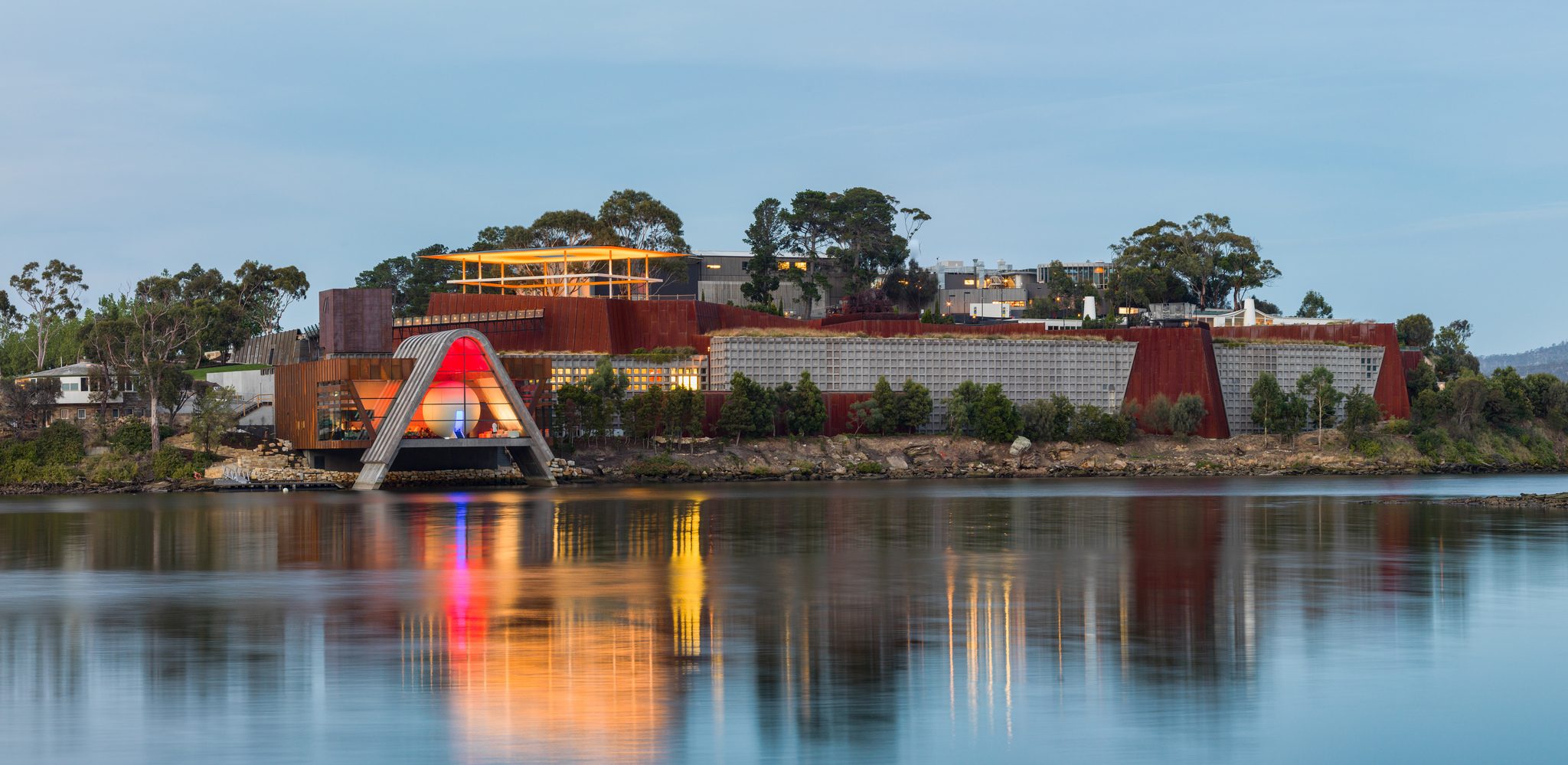
Possibly the world’s edgiest museum, abundantly addressing themes of sex and death, is the Museum of New and Old Art (MONA). This stylish museum showcases the audacious and precarious collection of Tasmanian millionaire David Walsh. Mona is the largest privately funded museum in the southern hemisphere. The museum itself is an eclectic mix of ancient, modern, and contemporary art in subterranean, mazelike rooms. The artwork is displayed in no particular chronology and has no labels; a far cry from most modern museums. Viewers are guided through headphones and hear a variety of interpretations for each piece. In addition to curator’s perspective on the artwork as well as Walsh’s own views. Designed by Fender Katsalidis Architects of Melbourne as an all-encompassing experience. It is a thrilling experience and invites visitors to descend down a spiral staircase, then work their way back up the surface, the journey as surreal as the artwork.
To summarize, if you are hoping to experience the arts without the crowds there is no better place than visiting a smaller local museum. They are no doubt they are home to some of the greatest artworks all while avoiding the hoards of people. Beyond that, they are an experience worth having.
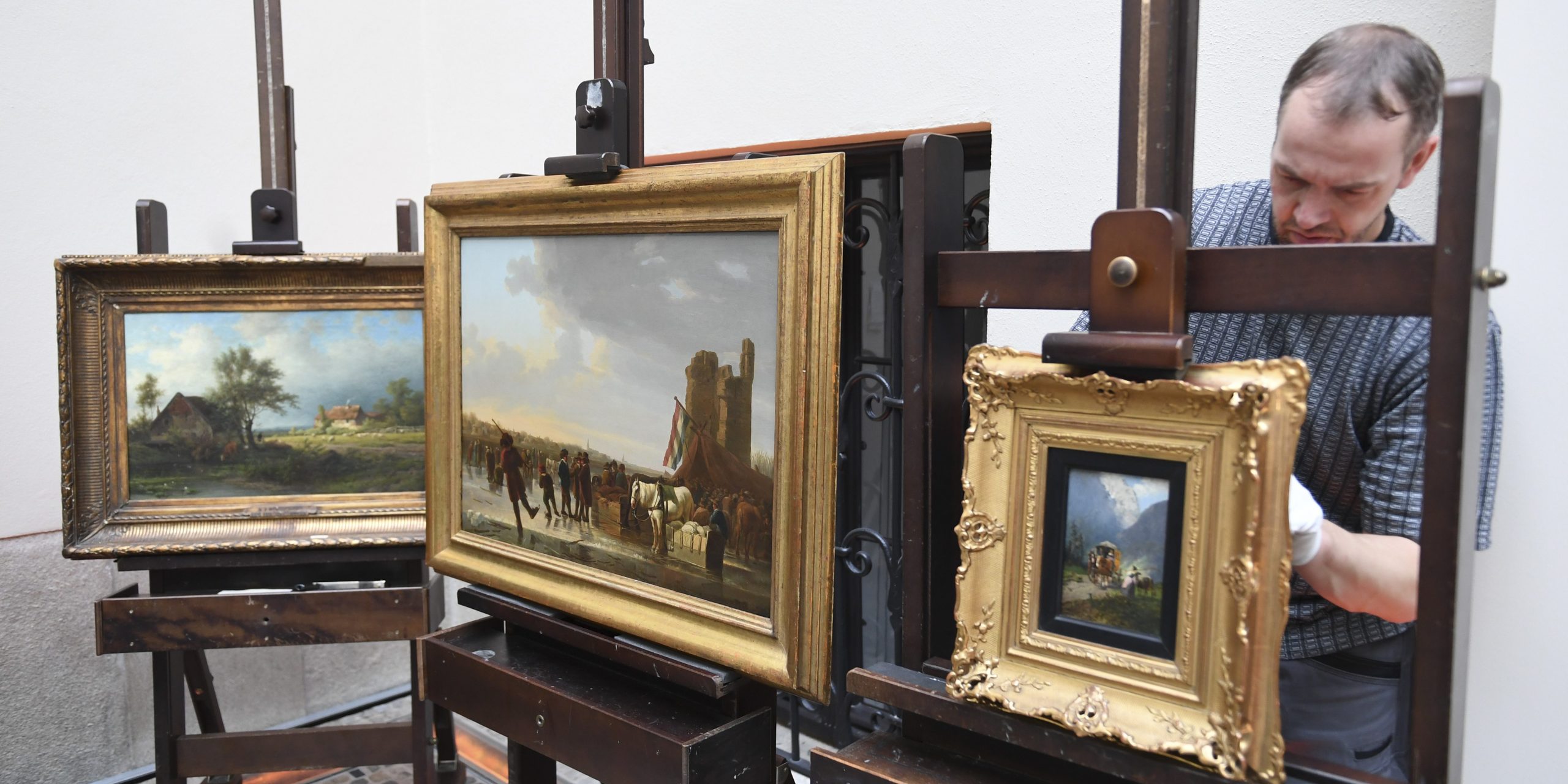
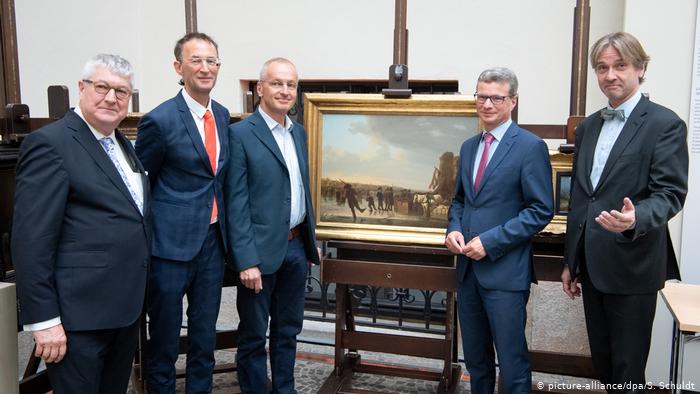
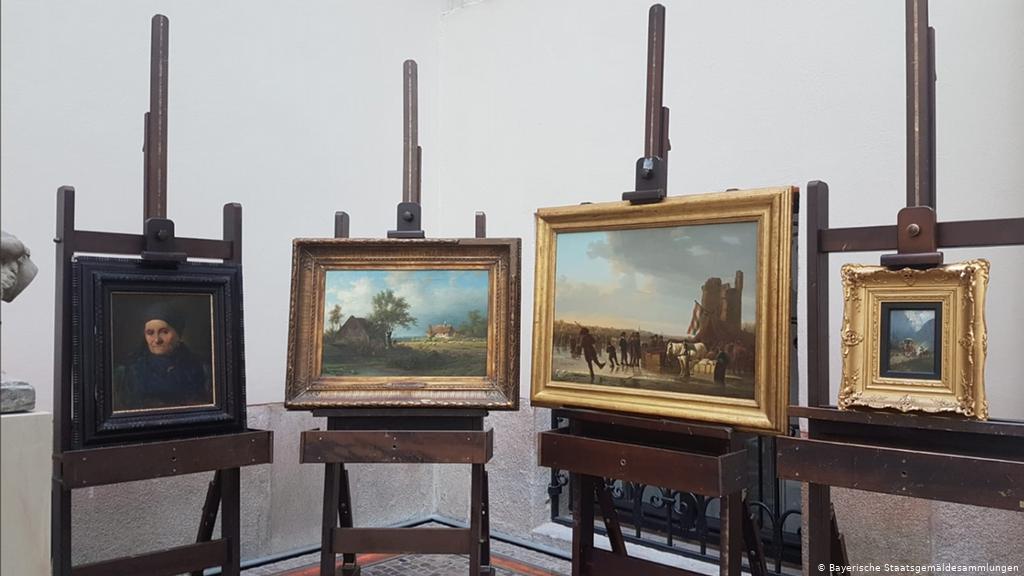
3 Museums in Munich returned 9 Nazi-Looted Artworks to the heirs of a couple victimized by the Gestapo. During the second great war, Jewish art collectors Julius and Semaya Franziska Davidsohn became victims of Nazi art theft. The couple falling prey to the Gestapo in the fall of 1938 in Munich. Arresting the childless couple and moving them to a concentration camp. Seizing their possessions as apart of the process. However, Munich returned 9 artworks to the Davidsohns’ heirs as they gathered in the southern German city. Three of Munich’s state museum were in charge of the paintings, casts, and engravings. Until recently new research revealed the artworks’ dark history.
Descendants of a Jewish couple were reunited with nine works of art.
Continuous research shed light on the tainted provenances of the works. The research revealed the theft of each painting from the Davidsohns’ apartment in Munich. Then their removal to one of the National Socialists’ collecting points in Munich’s Königsplatz. Five of the paintings date from the 16th to early 20th centuries. Three 19th-century color engravings and an intricate wooden panel with ivory reliefs stayed there until the end of the war. Consequently, In 1955, each work found its way into the Bavarian State Painting Collections. And also the Bavarian National Museum, and the State Graphics Collection.
The Surviving Art
The research team tracked the Davidsohns’ heirs to London, Zimbabwe, and Tel Aviv. Provence research has increased in Munich in recent years. Representing the three museums, Bernhard Maaz, the director of the Bavarian State Painting Collection, described the research process as “long and difficult. However, he pointed out that its outcome showed how provenance research methods and tools have become “mature.”
Part of the collection stolen from the Davidsohn’s
The raid resulting in the deportation of the Davidsohns to the Theresienstadt concentration camp. Consequently, the death of Julius Davidsohn on August 1942 and Semaya on April 1943 left very little leeway for the artworks. Unfortunately, “Because of the Holocaust, no children were found. Raising the question of who was entitled to inherit the works,” said the Bavarian arts minister Bernd Sibler. He said there were “difficult legal disputes” in the process. Admitting, that the restitution of artworks looted during World War II held in public collections has only recently been seen more seriously in the past two decades.
“Provenance research is more than just a duty of our museums. It is our ethical duty, to deal with the provenance of museum inventories thoroughly, profoundly, and conscientiously, and to make it transparent,” Sibler said in a statement. “Past events cannot be undone. However, we can send a visible sign for our deep and serious interest to process the inhuman crimes of National Socialism.”
Above all, “It is very illuminating for the community of heirs to find out about the fate of the former Davidsohn family. And to be able to commemorate them,” said a spokeswoman for the heirs.
The act of plein air painting is leaving the four walls the studio behind. Artists experience painting and drawing in the landscape. The practice goes back for centuries. However, French Impressionists’ initiated the revival of the platform in the 19th century turning it into a trend. Their desire to paint light and its changing and ephemeral qualities brought nature back to the forefront. This coupled with the invention of transportable paint tubes and the box easel—the precursor to the plein air easels of today—allowed artists the freedom to paint “en plein air,”.
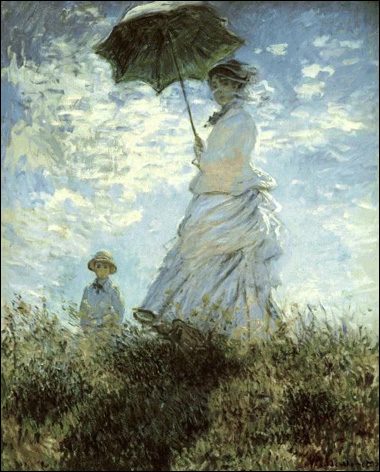
La Promenade, Claude Monet
Plein air painters use different techniques to capture the essence of the landscape. Blueprints or sketches allow painters to improve the overall design of their paintings. They also help the artist quickly capture color notes in the landscape. Often an open-air painter can use photography to help design a painting. However, they usually come into play after the artist has left the outdoor site for the studio. An artist often utilizes photographs to capture details. Much like the particular texture of grass or the shape of a river bend. However, most painters stay away from using photographs for color and value indicators.
Today, Plein air painting is a flourishing trend in the art world. Considering that the overall landscape of our world is changing rapidly. Landscape painters are finding that painting in the open as a rewarding and powerful experience. Much like the plein air painters of the past.
The first instance of painting outdoors in the 19th century was In 1830, the Barbizon School in France, inspired by John Constable. This school of thought and art enabled artists like Charles-François Daubigny and Théodore Rousseau to more accurately depict the appearance of outdoor settings. Doing so in various light and weather conditions. Incorporating the Impressionists’ style during much of the late 1800s. Artists such as Claude Monet, Pierre-Auguste Renoir, and Edgar Degas began creating their work outdoors. The movement quickly took root all around the world and swiftly took ground in America. The movement in the United States began in California however, hurried across that states to other locales notable for their natural light qualities. Including the Hudson River Valley in New York.
During the second half of the nineteenth century, The Macchiaioli group of Italian painters active in Tuscany continued the tradition. Breaking with the antiquated conventions taught by the Italian academies of art they took to the outdoors to practice their craft. Doing so in order to capture natural light, shade, and color. While this practice is closely related to the French Impressionists who came to prominence a few years later, the Macchiaioli used their art for slightly different purposes. This movement truly took hold in Florence in the late 1850s.
Artists then v. Now
Olivier Masmonteil, Bulgarie N275
French impressionist painters such as Claude Monet, Camille Pissarro, and Pierre-Auguste Renoir were the master of the plein air movement. Consider how much of their work was done outdoors in the diffuse light of a large white umbrella. Claude Monet was an avid en plein air artist who deduced that to seize the closeness and likeness of an outside setting at a specific moment one had to be outside to do so rather than just paint an outside setting in their studio.
Today the plein air movement is the biggest it’s ever been. Surely, artists are inspired once again by the beauty that is outside. Especially throughout the calm richness of the summer months. Capturing the lavishness around us. Artists are choosing again to abandon the confines of the studio to search out imagery around them.
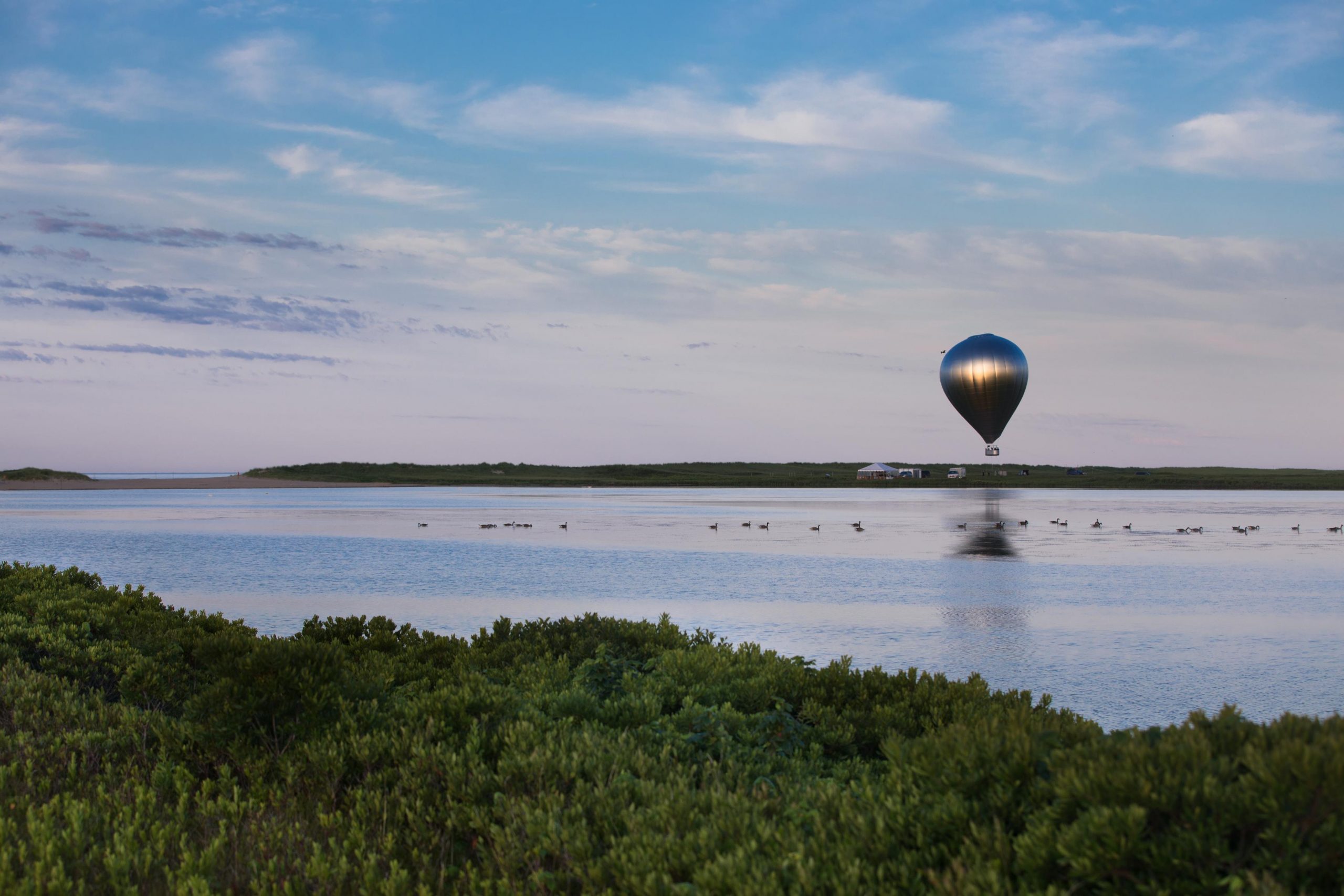
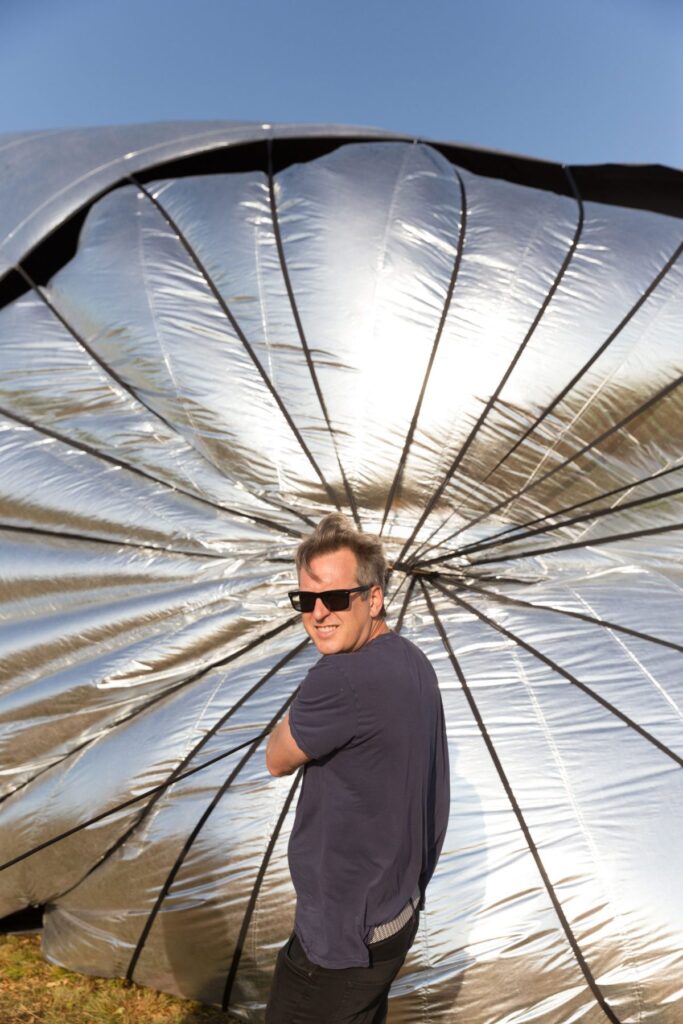
In his new installation, Doug Aitken, American artist, and filmmaker unveiled a 100-foot-tall, mirrored hot air balloon. The balloon will fly across Massachusetts. Its surface will reflect everything in its path as it touches down along across the spirit of America.
While this isn’t Aitkens first time working with mirrors. The artist is known for creating installations that blend film and architecture. These interventions and experiential productions are site-specific. They often encourage people to actively participate in the work. His recent works include an installation of mirrored houses. Which popped up not only in the desert outside Palm Spring but also on the snow-covered mountains of Gstaad, Switzerland. In 2016, he lowered three mirrored sculptures into the sea off the California coast as “pavilions” for divers to explore.
Doug Aitken, New Horizon, 2019. Courtesy of Doug Aitken Workshop and The Trustees
“I love that idea that the viewer can seek out something. That you can discover something which is time-based. Which is in one place at one moment at a time and then it disappears again,”. In his latest work, titled “New Horizon,” Aitken found expert insight from the likes of NASA. And also from a community of hot air ballooners in New Mexico. Throughout its journey, the balloon will touch down at different cultural and natural points of interest throughout the state.
Temporary Works: Modern Art
The hot air balloon sojourn is an enormous and creative adventure. Requiring an impressive amount of engineering and coordination talent. However, at the end of its two-week run, it will cease to exist. And while impressive to say the least, it is hard to describe the project on a whole. Aitken himself has described the project as an “experience” or “happening”. A term rooted in the late 1950s. Linking it to when pathbreaking artists added lights, sound, and performance to installations that frequently involved audience participation. Which subsequently only existed temporarily.
Aitken’s “New Horizon” is not altogether dissimilar to these works. The balloon its self is not the essence of the artwork. However, it’s the journey that he’s inviting the public to take that is the true crux of the experience. After Aitken’s mirrored balloon touches down, the only reminder of its maiden voyage will be the images taken by the artists and the people who participated in its journey. Alonzo one of the curators on the piece says there are no plans yet to recycle or repurpose the balloon. However, he doesn’t plan to say goodbye to it permanently, “I’m sure it will pop up somewhere else and live on, somehow.”
The dog days of summer are here. What better way to beat the heat than spending some time in our favorite places. Whether you’re in Paris or Pawtucket there are a few good museums in your city. Here is a list of the 7 best Museums in the World.
The Smithsonian (United States)
Did you know that the Smithsonian museum is actually a collection of museums? There are 19 world-class museums within the collective. Offering eleven galleries museums and zoos on the national mall in Washington, D.C. Included in this a collection are the American Art Museum, African Art Museum and the Archives of American Art to name a few. If you happen to be in the DC area, any of the Smithsonian museums would be a great way to spend a late August afternoon.
Hero Lincoln Gallery, The Smithsonian Museum of American Art.
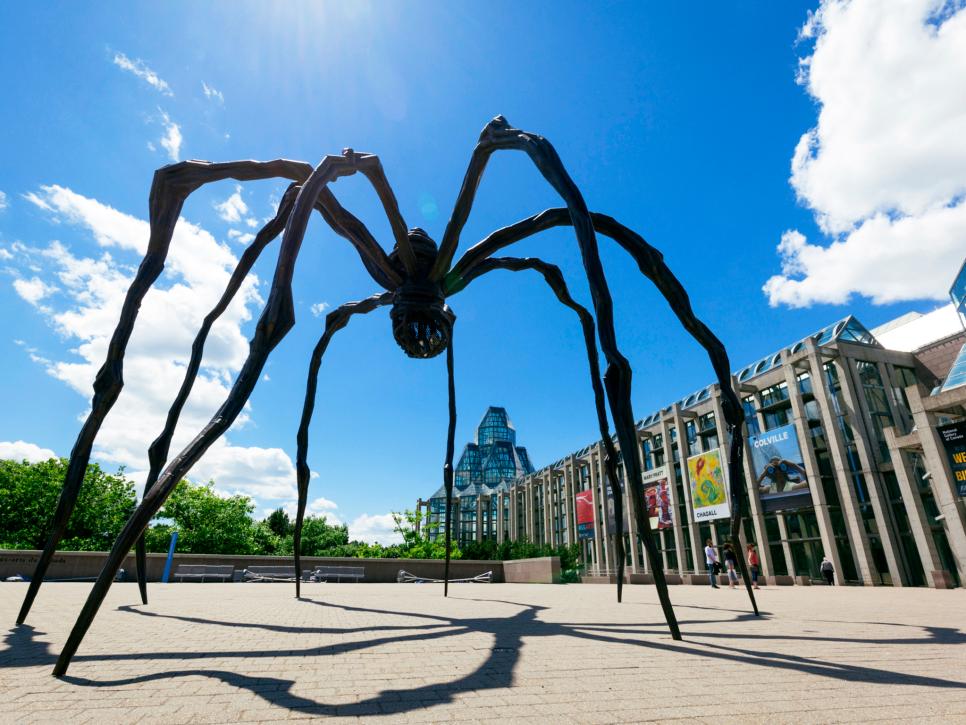
National Gallery of Canada: Ottawa
The National Gallery, Ottawa
This museum has a great collection of art spanning the Middles Ages to the present day. The museum has sections including American, Indian, European, Inuit and Canadian works. It offers a unique, near-complete overview of Canadian art! From early Quebec religious work, through Inuit work from the 1950s, to avant-garde contemporaries. Including the well-represented Group Of Seven. Their passion in the early 20th century was to create art that derived exclusively from Canada and its sublime landscapes. The successful fruits of their labor captured the spirit of a country, and are now displayed on these walls.
Mauritshuis (Netherlands)
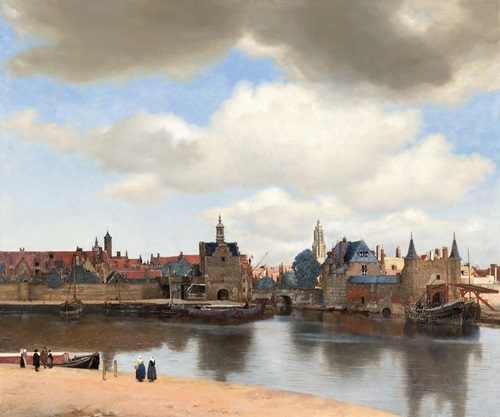
Johannes Vermeer, View of Delft, c. 1660 – 1661
With the Rembrandt and Van Gogh museums with the capital city. It is hard to just pick one great museum from the Netherlands. And while the Mauritshuis may not have the encyclopedic scope of many of those other great museums. It does play exceptionally well to its strengths. At the Maurithuis you will find, pictures from the 17th-century Dutch Golden Age. Three pieces, in particular, have ripened in this palace on the pond. For example, Vermeer’s “View of Delft”. Which miraculously handles real light and atmosphere in paint. While conveying an overwhelming sense of rest.
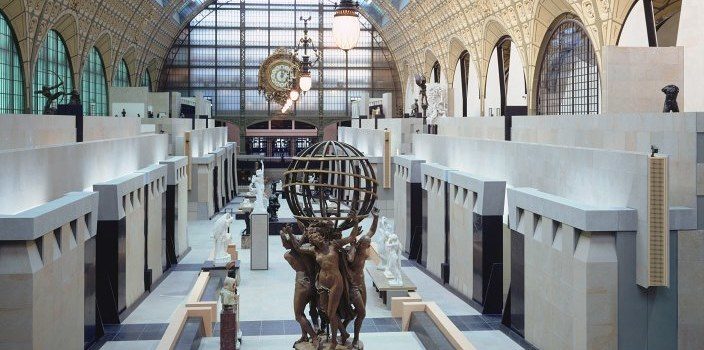
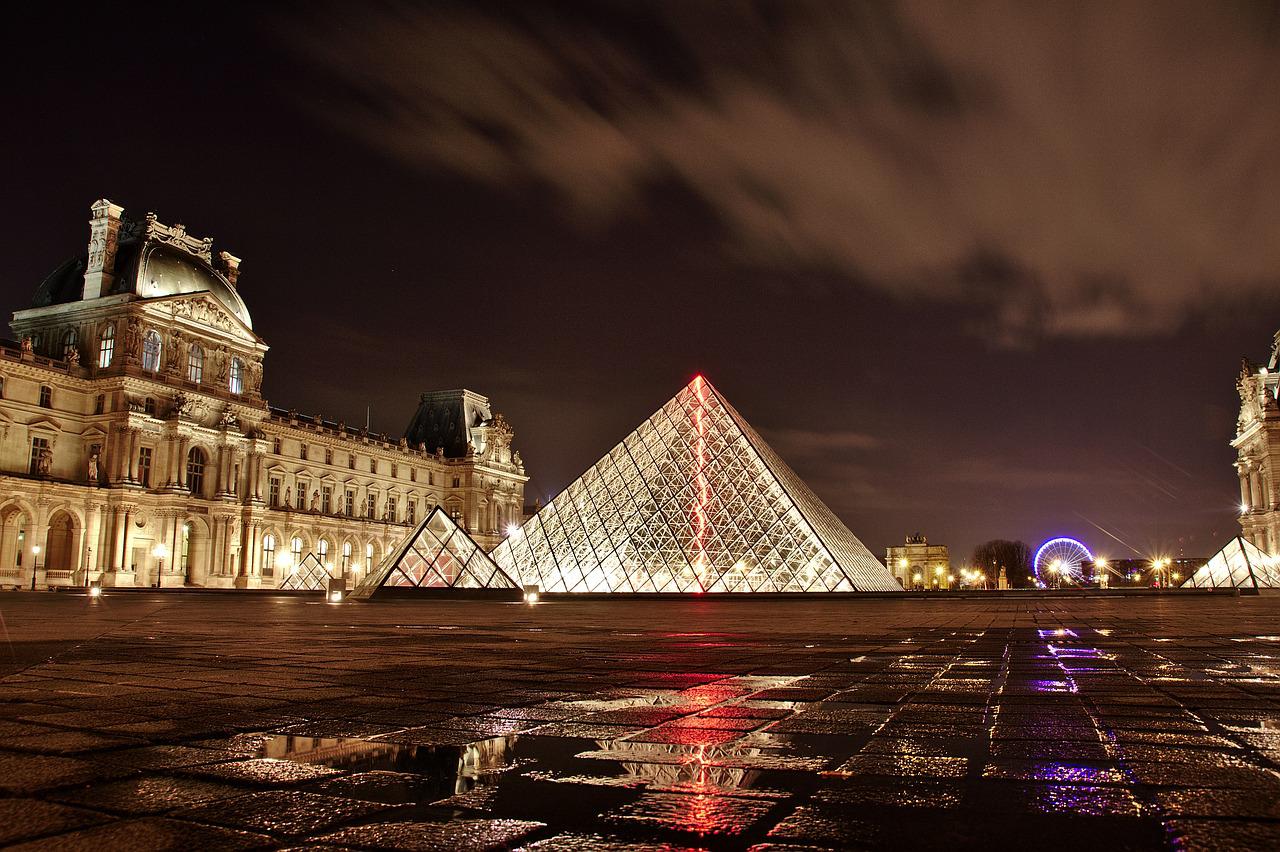
The city of lights, Paris is home to some of the best museums around the world. In fact, within France’s capital city there are over 100 museums. The biggest and brightest among them is, of course, The Louvre. However, just a short 9-minute walk away is the Musee D’Orsay. Formally the Gare d’Orsay a Beaux-Arts, a railway station which was constructed in the late 19th century. Musee D’Orsay is home to paintings from the impressionist era, and it is much smaller and easier to navigate than some of its neighbors.
Tokugawa Art Museum (Japan)
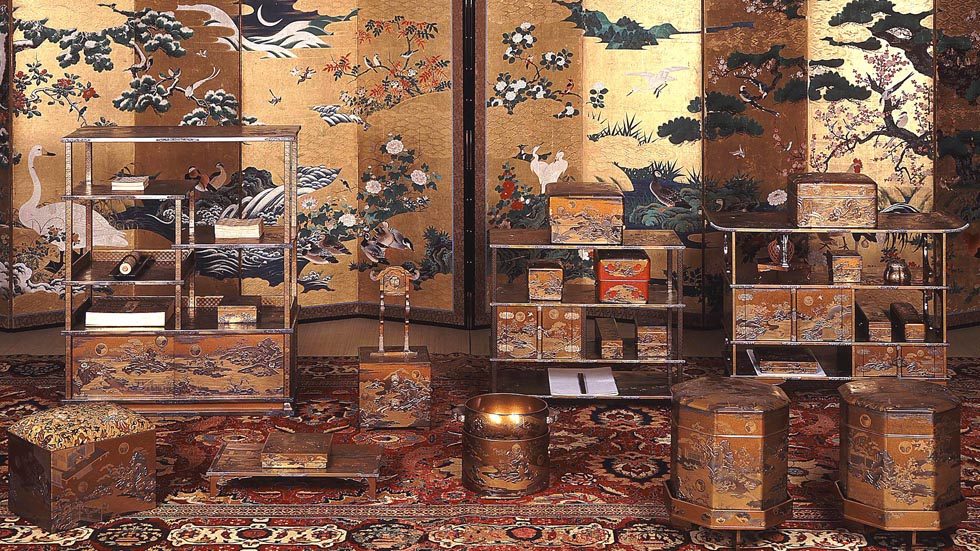
Nagoya Station, Tokugawa Art Museum
Under the reign of The Tokugawa family from 1600 to 1868, Japan enjoyed the longest periods of peace and creativity in the countries history. The Edo period, as it is known, resulted in a Japanese renaissance in which the arts flowered. Due to this enormous influence art from this period directly influenced Western masters. Familiar names such as Manet, Gauguin, and Whistler which have since gone on to become household names. Other exhibits at the Tokugawa Museum, effectively present and contextualize, aspects of Japanese life at the time. They include exquisite samurai swords and armor, pottery and clothing.
The Egyptian Museum (Cairo)
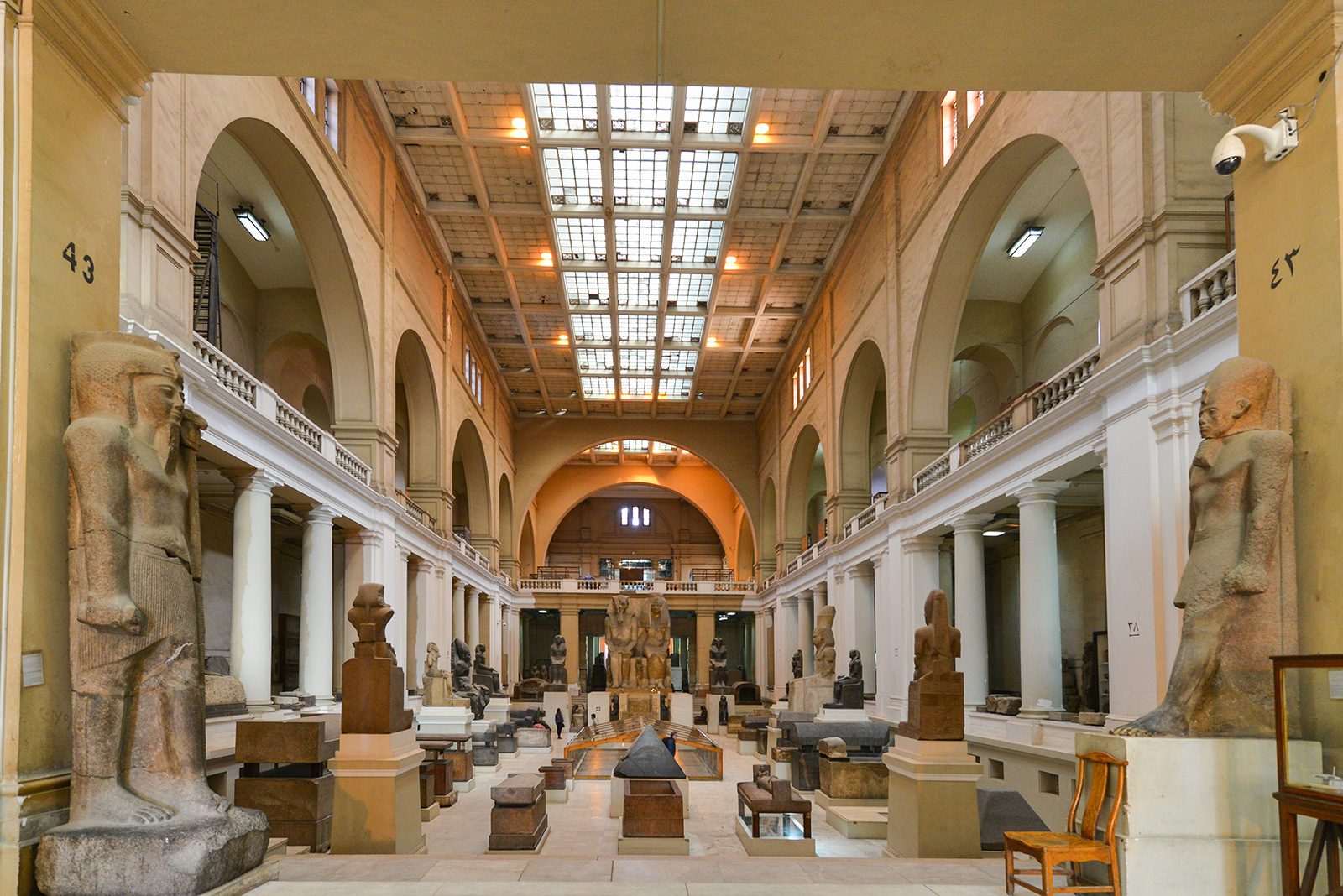
Main Gallery, Egyptian Museum, Cairo
The Egyptian Museum in Cairo is undoubtedly home to some of the finest archaeological finds from all Egypt. This museum also provides a rare opportunity to simply pop in and within minutes stand tete-a-tete, with Tutankhamun’s golden mask. One of the greatest works of mankind. This portrait is of unbelievable quality, craftsmanship, and beauty. The highly polished gold face — at once a god, a king, and a teenager is worth the trip alone.
Zeitz Museum of Contemporary Art Africa ( South Africa)
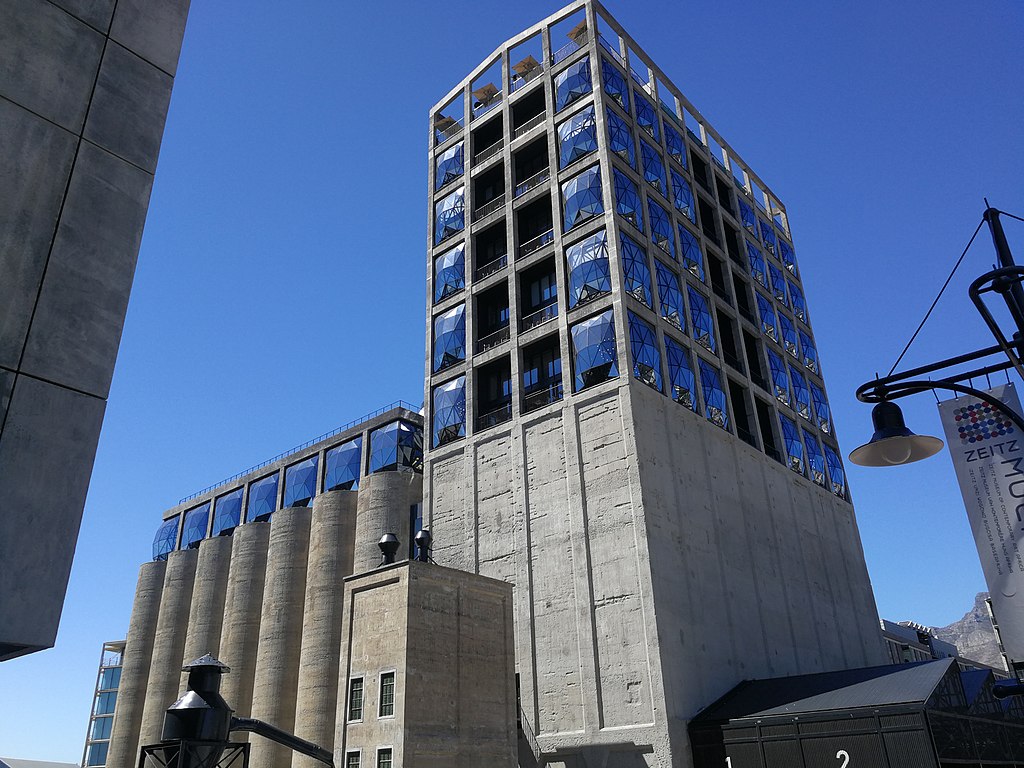
The Zeitz Museum of Contemporary Art Africa aptly known as Zeitz MOCAA is a contemporary art museum located at the V&A Waterfront in Cape Town, South Africa. Which houses the largest collection of contemporary African art in the world. The museum was commissioned through a public/private partnership between the V&A Waterfront and German businessman, Jochen Zeitz. The museum building was constructed from the conversion of the 57m tall historic Grain Silo, built originally in 1921. Considered by many to be one of the world’s leading collections of contemporary art from Africa and its Diaspora, Zeitz’s collection includes works by artists like Chris Ofili, Kudzanai Chiurai, Kehinde Wiley, Glenn Ligon, Marlene Dumas, Wangechi Mutu, and Julie Mehretu.
Homer once wrote, ” The world is wide, and wonderous is the ways of man”. Lucky for us, some of those wonders are in art museums near us. And while this list doesn’t scratch the surface of all the wonderful museums around the world hopefully it has inspired you to visit those in your neck of the woods.
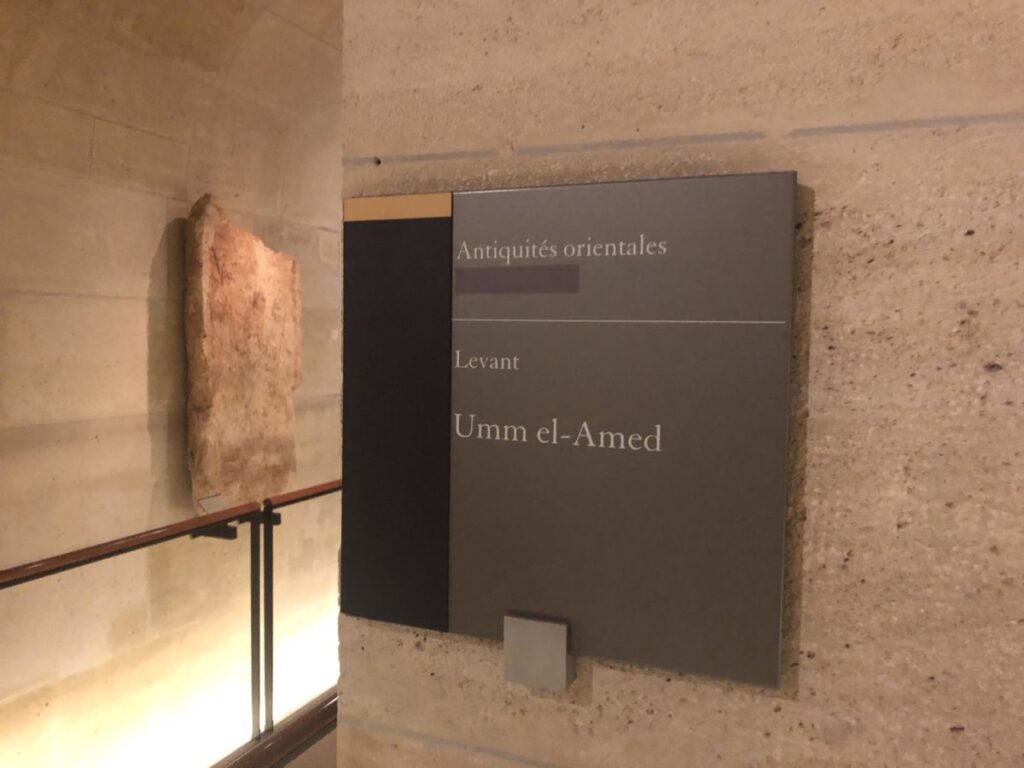
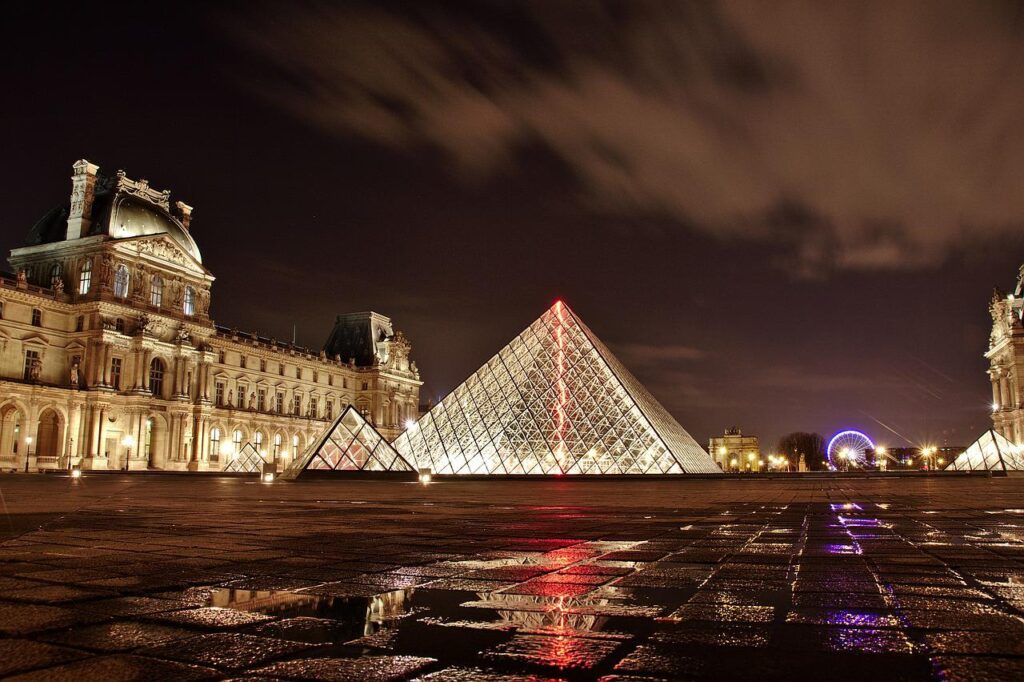
The Louvre has removed the Sackler name from the walls of the historic museum. The Sackler family are owners of OxyContin maker Purdue Pharma. Recently, a growing scandal over the Sackler family’s alleged connection with the US opioid crisis has made the Louvre take action. As of Thursday, masking tape covered the Sackler name. The family name was previously in the Paris museum’s Sackler Wing of Oriental Antiquities. The wing, which houses Persian and Levantine artifacts, bore the family’s name since its induction in 1997. Shortly after the billionaire philanthropists sponsored its renovation.
Formally the Sackler Wing of Oriental Antiquities – The Louvre Museum
Currently, the company, Purdue is receiving criticism for its aggressive marketing of the drug OxyContin. This opioid painkiller is at the center of a dependency crisis in the US. Several members of the Sackler family are facing lawsuits. These lawsuits allege that they boosted their wealth by pushing highly addictive and consequently, deadly painkillers. In an interview with Vanity Fair published in June, David Sackler insisted his family had nothing to do with the crisis. Stating, “We feel absolutely terrible. Facts will show we didn’t cause the crisis, but we want to help,”.
Opioids are a class of pharmaceuticals that include but are not limited to prescription painkillers like OxyContin, morphine, and fentanyl. As of 2017, an estimated 1.7 million individuals in the US suffered from substance use disorders. Reports show that this type of substance abuse is primarily related to prescription opioid pain relievers. With a family fortune estimated by Forbes at $13 billion, the Sacklers have made donations to museums and galleries around the world. Including the Metropolitan Museum of Art in New York and the Royal Academy of Arts in London.
The Sackler Donation
However, criticism has grown over the Sacklers’ alleged link with the US opioid crisis. Several art galleries have said they are no longer accepting donations from the family. Including the British gallery group, Tate. Who said in March 2019 that it will no longer take financial contributions from the Sacklers. However, they have accepted about $5 million in the past. In May, New York’s Metropolitan Museum of Art followed this rising trend. A spokesperson from the Louvre claims that the Sackler name removal from the rooms in the wing because the naming period had expired. However, the Louvre has not made any comments as to why the Sackler name has stayed for the last 3 years. “The Theresa and Mortimer Sackler Foundation supported the renovation of rooms devoted to Persian and Levantine artifacts in 1996-1997. Since then, there have been no other gifts from the Sackler family,” the spokesperson said.
Continuing, “On October 10, 2003, the Board of Trustees of the Museum decided to limit the duration of the naming of the rooms to 20 years. This patronage is more than 20 years old. The naming is legally finished and these rooms no longer bear the name of Sackler.” Furthermore, on the museum’s website, references to the “Sackler Wing of Oriental Antiquities” have been removed.
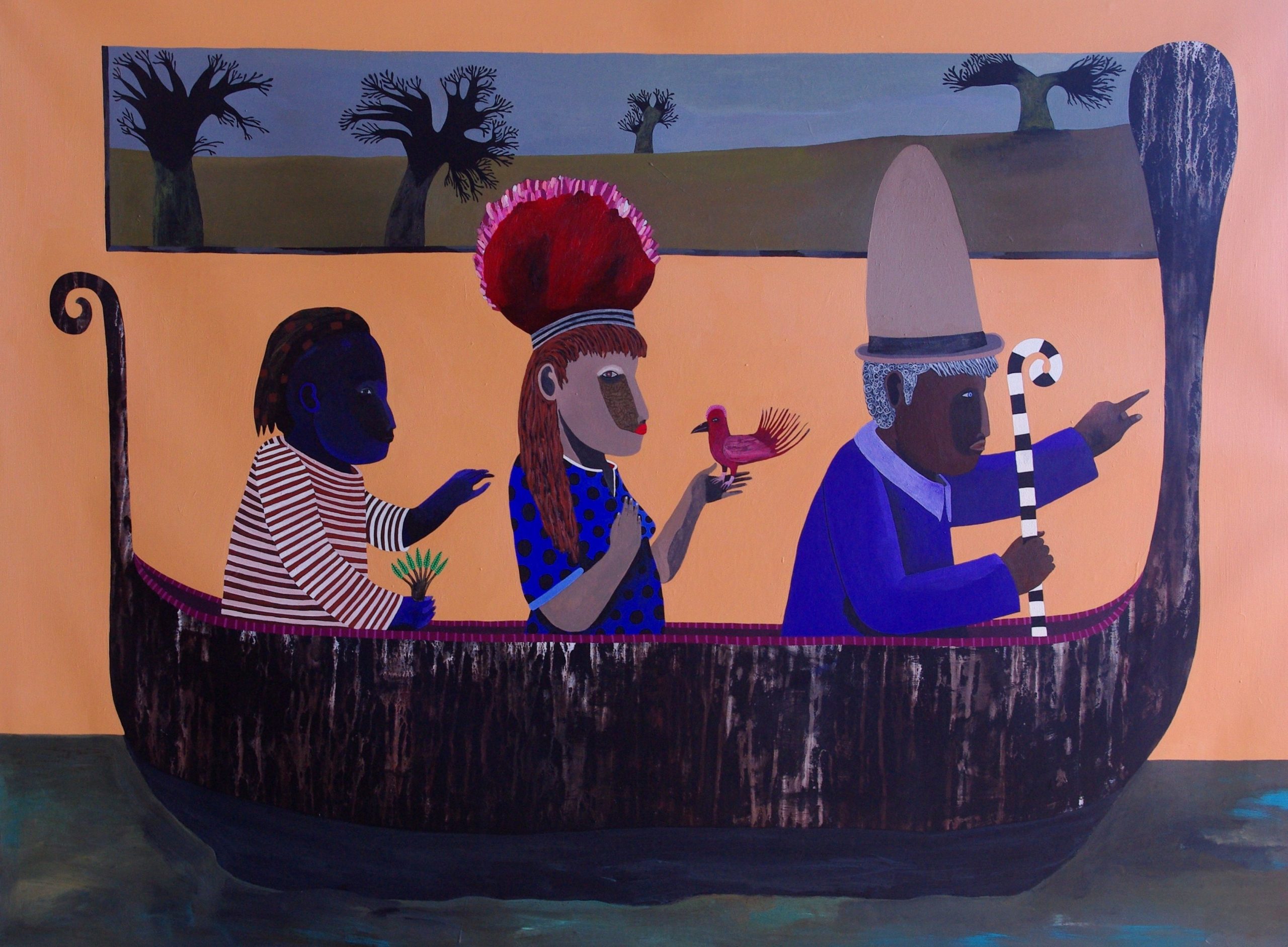
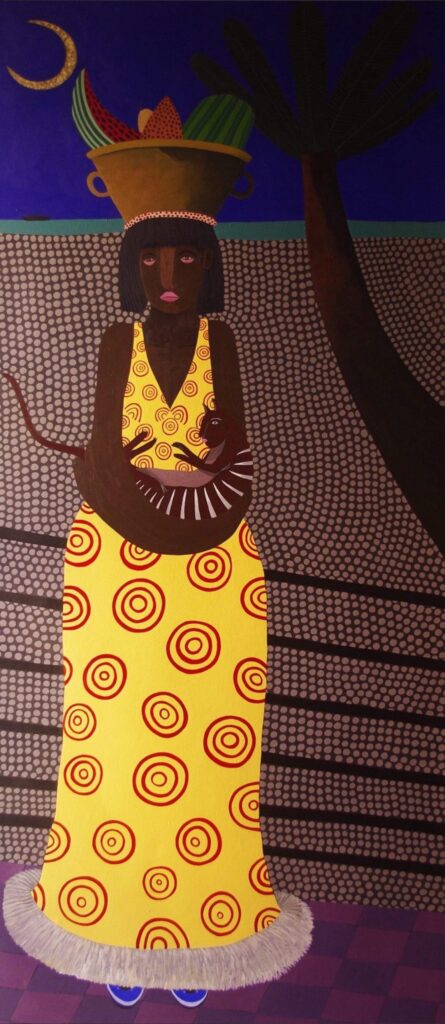
Chilean born, Francisco Sepulveda is an artist we love. He is an exuberant, mysterious and magical artist. His multifaceted work is a fusion of his Latin-American, Native American and European roots. This unique perspective, combined with his incessant trips and exposure to different cultures, creates a unique and fascinating universe. Art critics speak of the “Sepulveda galaxy”. Heralding it as a telescope of cultures and a palette of the gods. Seeing through him a historical reference to his diverse heritage. His strange characters masked with animal heads undertake improbable rituals. Here, Sepulveda reaches out to the heavens and plunges to the depths of hell. He has been compared to an ogre. His artistic appetite, voracious and, his artistic focus is an insatiable need to devour worlds. However, all this in order to remodel his own unique, fascinating, and stunning universe.
Francisco Sepulveda, LA OFRENDA. 2016
Education & Career
His premiere exhibition dating back in 1995. Sepulveda, now regularly displays his works in France, Germany, Switzerland, and the United States of America. His education began at the School of Fine arts Santiago where he studied drawing, painting, and engraving. Continuing his education at the Atelier Wilfredo Lam. Where he explored the experimental techniques of engraving. His latest shows include his 2017 showing at Galerie Claudine Legrand, in Paris and; at the Galerie Le Soleil Sur La Place, Lyon in 2014. Sepulveda’s Public collections can be found at The New York Public Library; Museo Nacional del Grabado, Buenos Aires; Instituo de Artes Gràficas de Oaxàca, Mexico. They are also on display at Bibliothèque Royale de Belgique, Brussels; Bibliothèque de Catalogne, Barcelona; Musée du dessin et l’estampe original, Gravélines; Musée Jenisch-Vevey-Suisse. Finally, now at Louise Gallery since 2018.
Art We Love
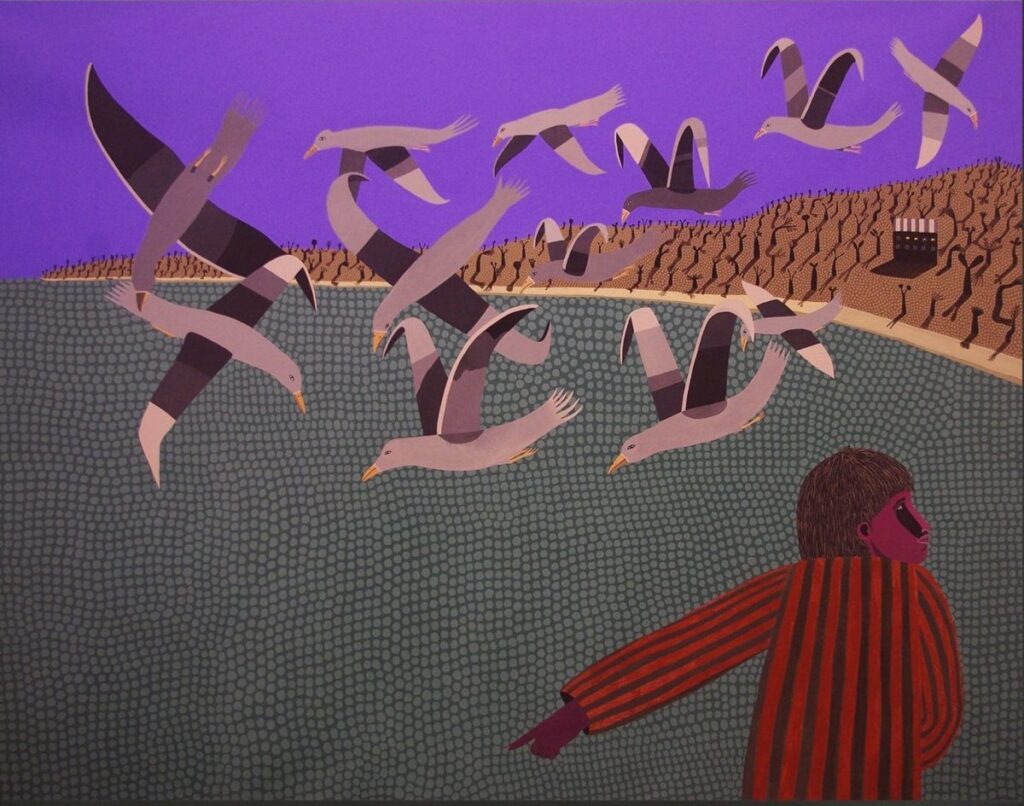
The work of Francisco Sepùlveda is essentially an open book. While none of the paintings reflect the artist himself, the audience, however, is represented within them. Every inch of the canvas calls to the viewer. The singular figures are in stark contrast to the rest of the tableau as they sit at the front and are the main focus of the canvas. The physical and mental elements, dance around the central figure and are an essential part of the artists work. Consequently, these elements are crossed by a magnetic wave. Essentially, drawing the viewer in closer. This effect manifests an unyielding charm. Each canvas is a planet. That ultimately gravitates within the “Sepulveda galaxy”. Which is overall, an astonishing universe of his own creation. Every piece is designed to reach the viewer almost instantaneously.
Francisco Sepulveda, El Descubrimien, 2016
Furthermore, it is here, in the pleasure of the eyes and almost inferno like engulfing of the senses where Sepulveda makes his strongest impact. For Sepulveda, the most important point of impact is the initial shock. This primary perception and how it affects the senses is irrefutably strong. Consequently, it is the vibrant prolongation of this initial, and intriguing contact that is necessary for the audience and the artist. Providing a glimpse into the beginning relationship between graphics and paintings. This correlating relationship between figure and background. The integration of the old world and the new.
Here, Sepulveda’s technical control and mastery of imagination are at its strongest. Consequently, the spontaneity and the randomness, integrate a strong capacity of free improvisation. Indeed, this constructive rigor and this freedom of improvisation are both necessary. This polarizing dichotomy is a force that is necessary for the magic of Sepulveda’s artwork to manifest.
Artist we Love
Currently, Sepulveda lives and works between France & Mozambique. His work is full of poetry and surrealistic characters. These themes question history and contemporary society where he lives. International Painting Magazine nominated Sepulveda as Artist of the year in 2009 for Azar. Undoubtedly, he is one of the youngest and most influential representatives of the Latin American pictorial scene in Europe. His mastery of melding two very contradicting worlds, old versus new, challenges archaic stereotypes. Even more so, his surrealistic images have an extraordinary sense of whimsy and magic. He uses all that he has learned from his surroundings and history to bring together an amalgamation of his imagination to the forefront of his artwork.
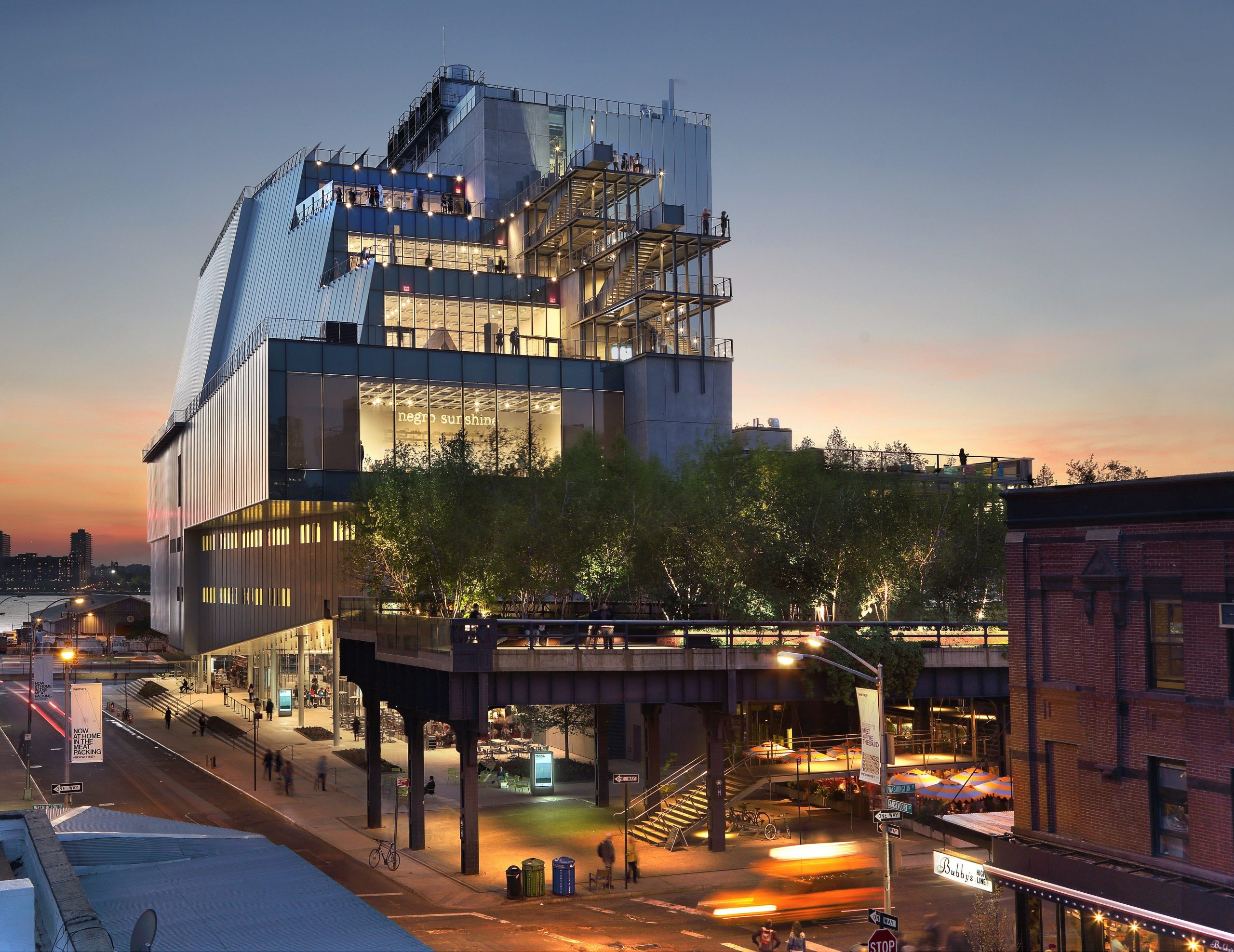
Over the weekend seven artists have asked that the Whitney Museum remove their works from the current Whitney Biennial. No stranger to controversy, this year’s biennial began with protestors from the DTP movement. Panetta and Hockley two curators from the Whitney visited over 300 studios. Assembling one of the Whitney Biennial’s most diverse rosters of emerging and mid-career American artists. However, some of these artists feel the Whitney’s handling of the ethical controversy surrounding the board vice chairman Warren Kanders as a source of contention. Kanders is the chief executive of the company Safariland, which manufactures tear gas canisters. Artists including Korakrit Arunanondchai, Meriem Bennani, Nicole Eisenman and Nicholas Galanin addressed a letter to the curators explaining their decision.
The letter comes just days after artists and writers Hannah Black, Ciarán Finlayson, and Tobi Haslett posted an essay, titled “The Tear Gas Biennial,”. Both essay and letter are available on Artforum’s website. Requesting that the pair present the letter to the board “to let them know the seriousness of the situation”.
Consequently, the Whitney agreed to remove the works. “The Whitney respects the opinions of all the artists it exhibits and stands by their right to express themselves freely,”. The museum’s director Adam Weinberg said in a statement over the weekend. “While Whitney is saddened by this decision, we will, of course, comply with the artists’ request.”
Letter to the Biennial
“We were angry when we learned of Kanders’ role as CEO of Safariland. A company that manufactures teargas and other weapons of repression. At the time, we had already accepted your invitation to participate in the Whitney Biennial and some of us were well into the fabrication of major pieces for this show,” Arunanondchai, Bennani, Eisenman, and Galanin say in the letter. “We found ourselves in a difficult position: withdraw in protest or stay and abide by a conflicted conscience. We decided to participate.”
“But the Museum’s continued failure to respond in any meaningful way to growing pressure from artists and activists has made our participation untenable,” the artists continue.
“The Museum’s inertia has turned the screw, and we refuse further complicity with Kanders and his technologies of violence,” Arunanondchai, Bennani, Eisenman, and Galanin say.
The Chicago-based artist Michael Rakowitz’s withdrew from participating in the biennial in February, three months before it opened, “in solidarity with the [museum’s staff]” over what he called “toxic philanthropy”. Consequently encouraging other artists to do the same.
Our Content. Your Inbox
Join thousands of art lovers
Receive art news, market analysis and updates about new artists on the website
By subscribing you agree to receive RDN Arts emails. Unsubscribe at any time. Privacy Policy.