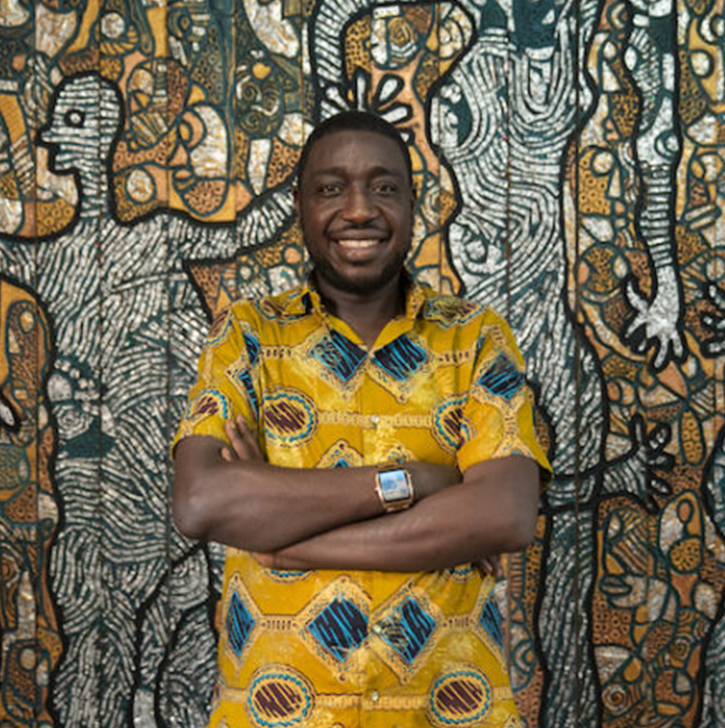
Author: xerkss

  • Artist we love: Gerald Chukwuma

    Artist we love: Gerald Chukwuma

    Gerald Chukwuma remarkable African artist from Nigeria

    Gerald Chukwuma, astounding Nigerian contemporary artist was born in 1973. His artistic perspective leads him towards creations unseen before, confirming his strong personality and artistic imaginary. The distinctive trait of his production stands in intricately crafted wood-slate artworks.

    In particular, his approach to the artistic creative process is remarkable. Chukwuma oversteps the boundaries of the known, burning, chiseling, and painting common and waste materials. Through his art, the material acquires new personal and political meaning.

    His work distinctly recognizes Uli and Nsibidi symbols as a fundamental feature of his identity as an artist. The Nsukka art tradition is a way to display the Nigerian socio-political environment. That is why Chukwuma often references in his work to migration. He sees it as a constant process of transformation and renewal. 

    Chukwuma integrates different elements and mediums creating a uniform emotional painting. However, in reaching the homogeneity, he preserves the inner essence of each medium. Above all, the result is spiritual and primordial. His quest is anthropological, social and human.

    Gerald Chukwuma career and education

    Chukwuma’s commitment to art is remarkable. He is one of those artists who have a vocation since their childhood. 
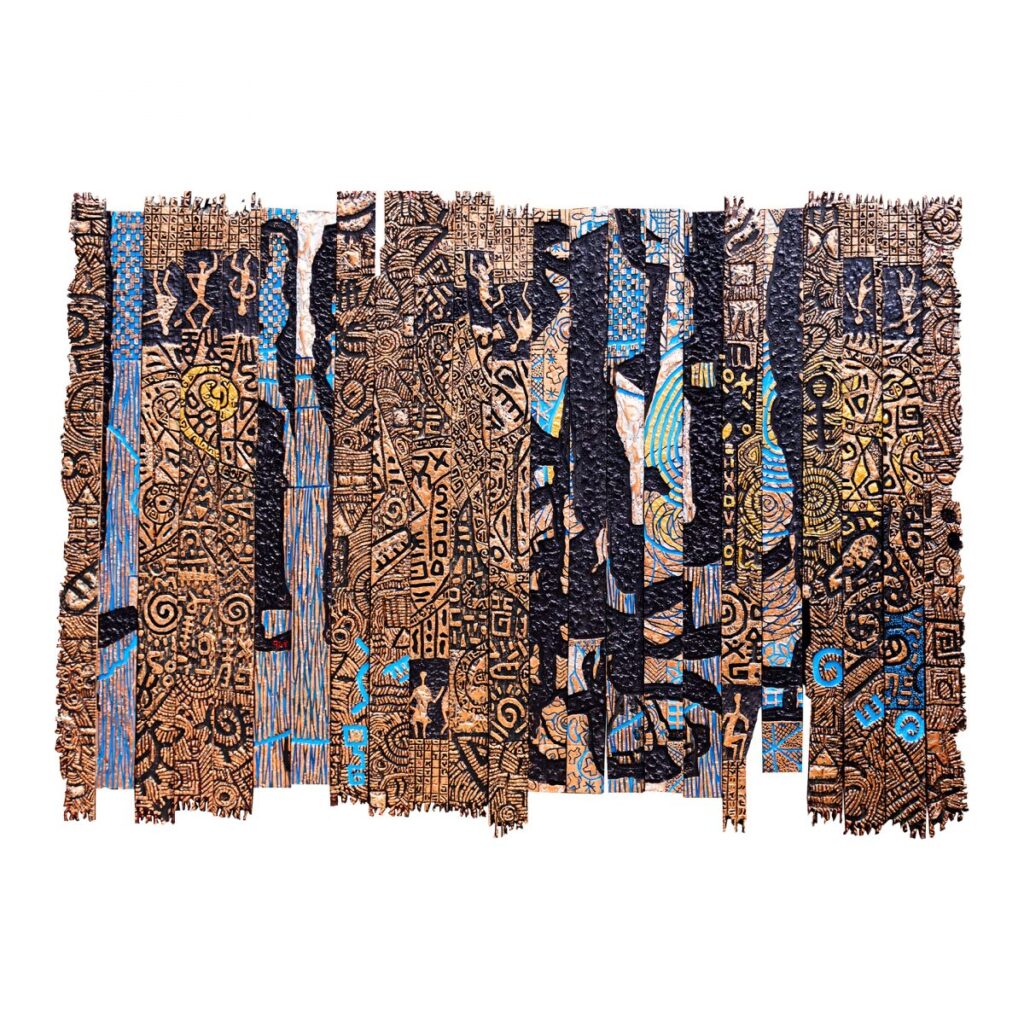
    art on wood by Nigerian artist Gerald Chukwuma
    BLACK GOLD. 2018

    Even if without the support of his family, the artist attended the prestigious University of Nigeria, Nsukka. Already during his studies, Chukwuma distinguished himself for his remarkable works. That is why he received First Class Honours when he graduated in 2003. 

    Particularly relevant for his career are the 2008 and 2012. Chukwuma emerged as one of the top three winners of eminent national art competitions. Soon after, he featured a CNN  program where he showcased his artworks.

    Another important moment was when he received a commission from the University of Nigeria. Chukwuma had to create two monumental pieces for the university library and the vice Chancellor’s complex.

    Since then, the artist participated in more than 20 exhibitions in the last decade. His shows brought his creations in Nigeria, France, Cameron, Holland, Denmark, and the United States. In addition, his works become auction favorites.

    Gerald Chukwuma exhibitions

    Chukwuma has participated extensively in group and solo shows across Nigeria and internationally.
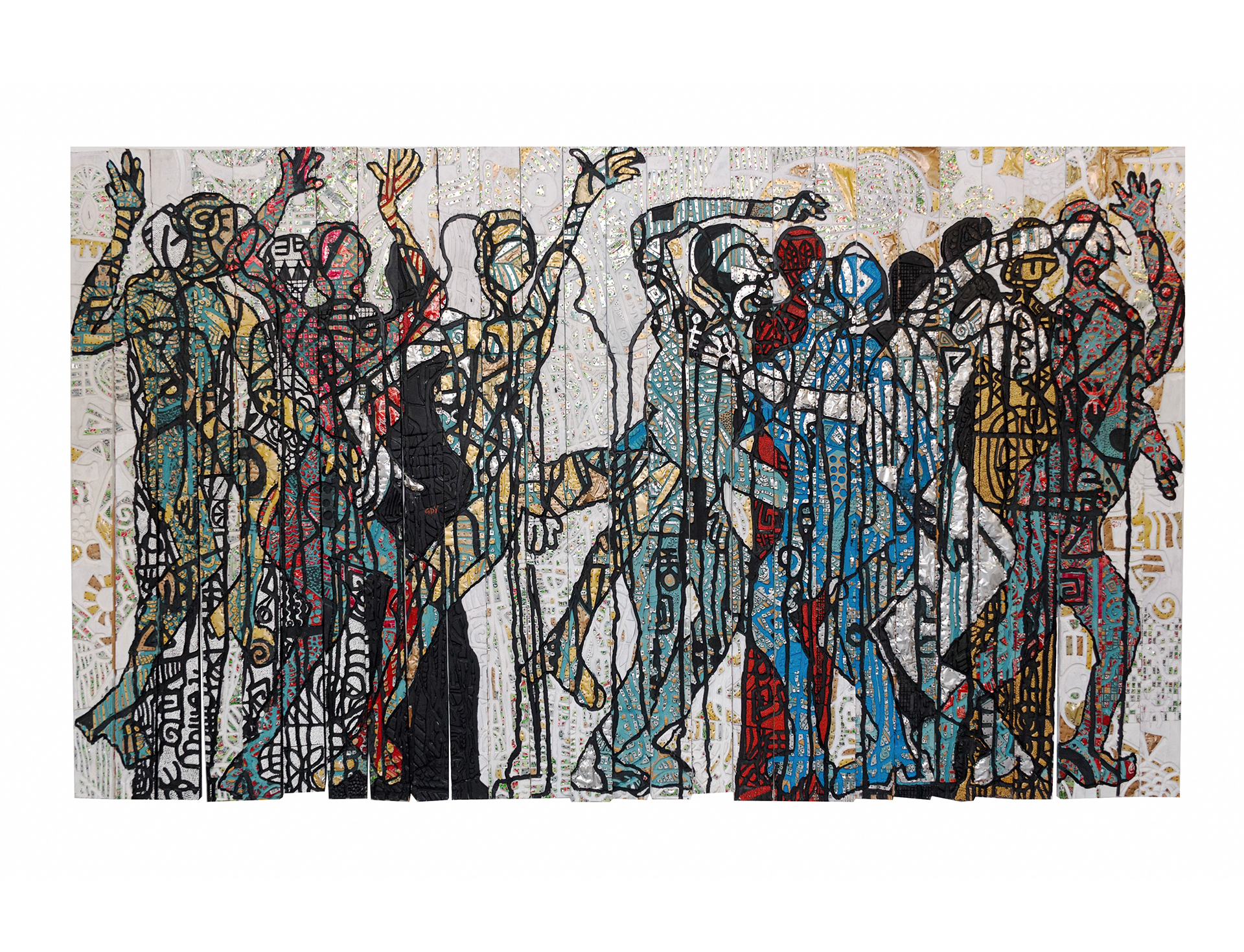
    DANCING IN THE SUN. 2019

    Among his most remarkable first solo exhibition, there is the one at Gallery 1957, Ghana, in 2017. His solo shows include: Highlife II, Ethnocentrique, Lagos (2013); Soaking Up Beauty, Constant Capital, Lagos (2014); People’s Paradise, Temple Muse, Lagos (2016); Standing Ovation, Gallery 1957, Accra (2017); and Wrinkles, Kristin Hjellegjerde Gallery, London (2019).

    Group exhibitions include: The Unbreakable Nigerian Spirit, Galarie 23, Amsterdam (2008); 1-54 London with Kristin Hjellegjerde Gallery (2019); Kubatana, curated by Kristin Hjellegjerde, Vesfossen Kunstlaboratorium, Norway (2019); Reclaiming Africa, Goethe-Institute, Lagos (2009); In Pursuit of Knowledge, Civic Centre, Lagos (2009); Essentials, Alexis Galleries, Lagos (2015); and The Art Story, Cartoon Art Gallery, UAE (2018).

    Art we love: Chukwuma’s carefree darkness

    Gerald Chukwuma’s artistic visual is unforgettable. Above all, this artist has the capacity of using African symbols and giving them new freshness. Surely, he is rising as a remarkable contemporary artist internationally.  His art is characterized by earthy colors laid out on etched wooden panels. In particular, his chromatic palette includes as well touches of bright tinctures. These give his works an uncatchable profoundness.

    Wood has a prominent role as an artistic medium. Chukwuma not only combines it with other materials but uses as well different types of wood for his paintings. 
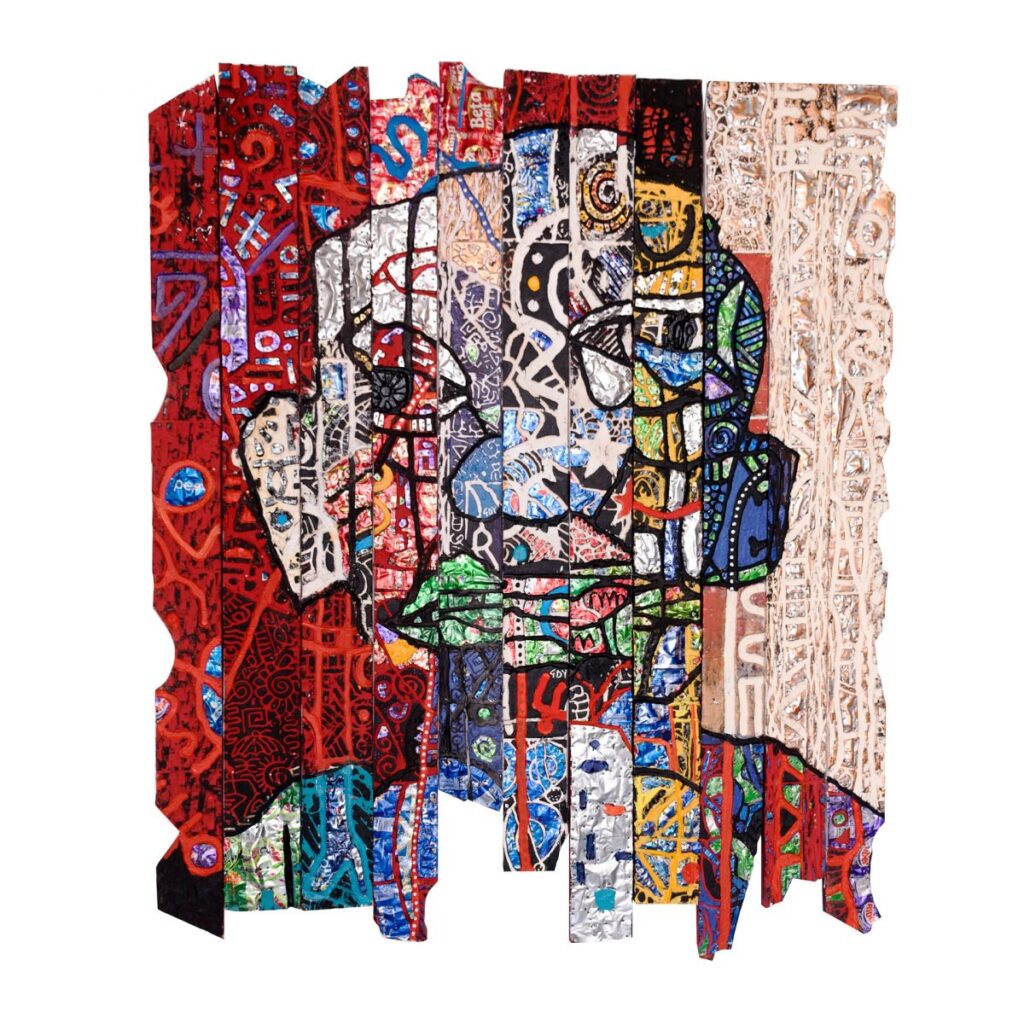
    contemporary African artist Gerald Chukwuma career
    THE HERO’S STORY. 2018

    “I never use one wood for one work. It is like a piano. They all have their notes.”

    The focus of his production concerns cultural and social issues, particularly those related to Nigeria. The carefree darkness of his production conveys powerful messages. Not last, he incites the viewer to reflection.

    Chukwuma’s art is immediately recognizable, suggesting a powerful expressive need and fervid inspiration. The same effect inspired to the viewer is immediate and deep. The artist defined the process of creation as something tempestuous and passionate:

    “I don’t think art should be organized because thoughts are not organized. They erupt like a volcano. You cannot tell the lava where to go.”

    Gerald Chukwuma is an incredibly interesting figure in the contemporary art panorama. Growing in fame incredibly fast, he will be soon displaying his work in Berlin, Netherland, and Washington D.C.

    Visit artist’s gallery on RDN Arts: Gerald Chukwuma

  • Van Gogh’Sunflowers leaves the National Gallery after 100 years

    Van Gogh’Sunflowers leaves the National Gallery after 100 years

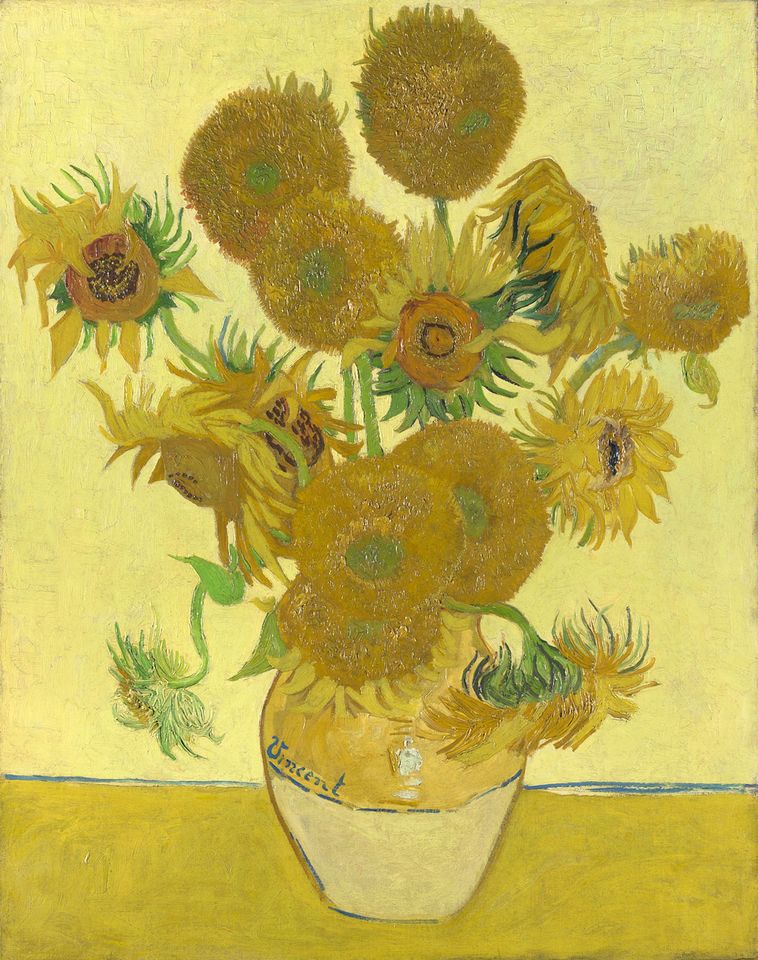
    Van Gogh’s celebrated Sunflowers, kept at the National Gallery in London, is about to travel beyond the borders of the United Kingdom! The iconic painting, together with other illustrious artworks of the museum, will arrive in Australia and Japan with the Botticelli to Van Gogh exhibition: Masterpieces from the National Gallery, London. This is an unmissable appointment with some of the most remarkable paintings of European art.

    Surely, the painting is one of the most visited attractions of the National Gallery. However, to leave the British capital there will also be Botticelli’s artworks and other flagships kept in the famed museum.

    Since its acquisition, Van Gogh’Sunflowers has only been lent abroad three times. The first in 1955 to Paris and to Amsterdam in 2002 and 2013.

    Van Gogh’Sunflowers: the history

    Van Gogh’Sunflowers are a series of oil paintings produced between 1888 and 1889.

    Sunflowers are a series of oil paintings on canvas realized between 1888 and 1889. Already in Paris, in the late summer of 1887, the artist painted some cut sunflowers, part of a series now divided between the Metropolitan Museum of New York, the Kröller-Müller Museum in Otterlo, the Van Gogh Museum in Amsterdam and the Kunstmuseum in Bern.

    The Dutch post-impressionist painter loved sunflowers for the vibrancy of their colors. However, Van Gogh loved these flowers also because they were not elegant and refined, but strong and sturdy.

    The series of Van Gogh’Sunflowers in pots, the most famous, was born a period of vitality and optimism, during the summer awaiting the arrival of his friend Gauguin. The letters to the younger brother Theo speak of feverish activity, in anticipation of the arrival of the guest.

    Vincent hoped to surprise his friend and convince him to move to Arles, sanctioning a life and artistic partnership. In October 1888, finally, Gauguin arrived in Arles. However, he never considered it a possible home, completely disregarding the hopes of his artistic partner. A prolific period of activity began but characterized by quarrels. These led to a final breaking in December of the same year, with the departure of Gaugin for Tahiti.

    Botticelli to Van Gogh Masterpieces from the National Gallery, London

    Among the artists featured in the Botticelli to Van Gogh show: Masterpieces from the National Gallery, London there will also be works by Tiziano, Turner, Cézanne, Goya and Gauguin himself. Among the key works will be Rembrandt’s Self-portrait at the age of 63 (1669) and Vermeer’s A Young Woman Seated at a Virginal (1670-72).

    This detailed exhibition explores illustrious periods in Western European art. On review, there will be the most impressive testimonials of the Italian Renaissance and the Dutch painting of the Golden Age. In addition, there will be a focus on Van Dyck and British portraiture. On display also the Spanish art from the seventeenth century.

    This is the largest group of artworks that the National Gallery has ever loaned. In London, the paintings will be off view for over a year.

    The collection will go on view at the National Museum of Western Art in Tokyo in March (3 March-14 June 2020) and Osaka’s National Museum of Art (7 July-18 October 2020). There is already a great fervour for the two Japanese exhibitions since it’s expected to have around one million visitors.
    The third and final stage of Botticelli to Van Gogh: Masterpieces from the National Gallery, London will be in Australia. The show will reach Canberra in November at the National Gallery of Australia.

  • Celebrating 200 years of the Prado Museum with Google

    Celebrating 200 years of the Prado Museum with Google

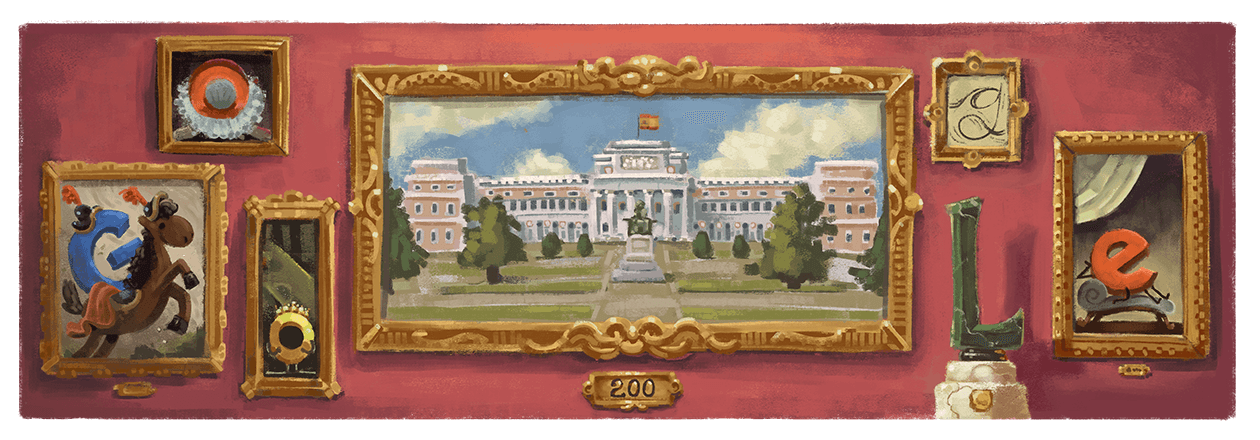
    The Prado Museum of Madrid celebrates its 200th birthday! The special anniversary has certainly not gone unnoticed, in the world of art as in the digital world. Indeed, for the occasion, Google has dedicated a Doodle designed by cartoonist Nate Swinehart to the historic Prado. A certainly original way to honor the grandeur of the Spanish museum for its bicentennial.

    Museo del Prado Doodle by Google for the 200th anniversary of the Spanish Museum

    An illustrious bicentenary for the museum of Madrid

    The Museo Nacional del Prado welcomes the works of incredible Italian, Spanish and Flemish artists, including Andrea Mantegna, Beato Angelico, Raffaello Sanzio, Rogier van der Weyden, Hieronymus Bosch, Pieter Paul Rubens, Titian, Diego Velázquez, and Francisco Goya.

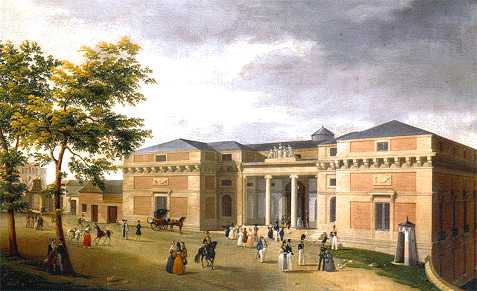
    panoramic view of the north facade of the Prado Museum according to its original appearance

    Although its history is very ancient, the iconic museum of Madrid initially had a scientific purpose. The building was constructed at the behest of Charles III of Spain along with a series of scientific institutions included in the re-urbanization project called Salón del Prado. At first, it was the Gabinete de Historia Natural. Interesting fact, if one considers that years later this will be an emblematic place for visual arts.

    The author of the monumental building was Juan de Villanueva, also the architect of the botanical garden. However, the Gabinete de Historia Natural reached almost total destruction just after its completion. The arrival of French troops in Spain and the following war of independence left heavy traces.

    Only thanks to the interest shown by Ferdinand VII and his wife, the retrieval of the structure started in 1818. This fact will lead to the realization of a work that will be at the summit of Spanish neoclassicism!

    Prado Museum: at the top of the European art scene

    The first name of the museum, Museo Real de Pinturas, was attributed on 19 November 1819. At that moment, some of the best works of the Royal Spanish Collection were on display.

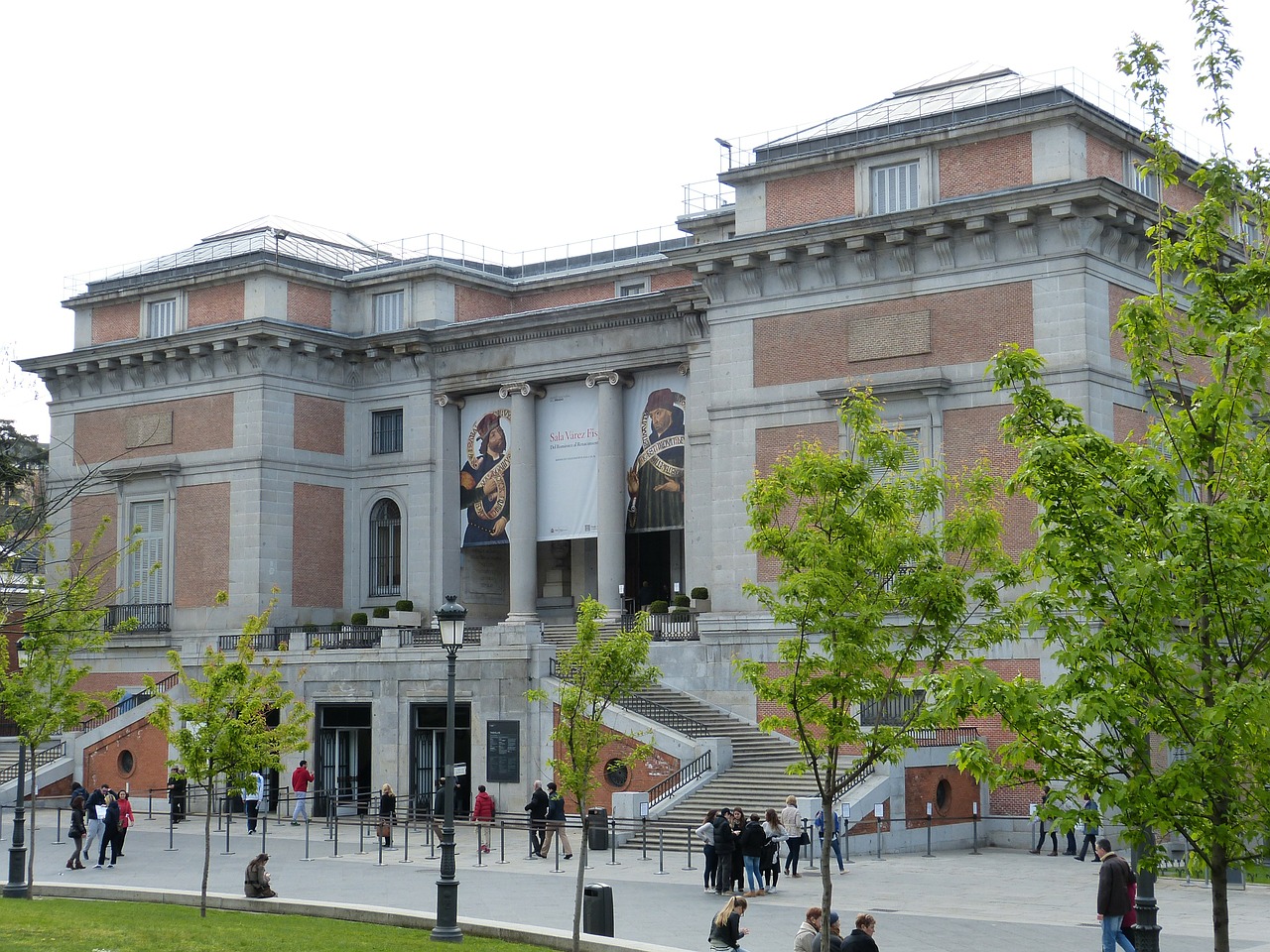
     It has been 200 years since then and the Prado Museum has conquered the top of the artistic panorama in Europe. Today it houses a fine collection of 8,600 paintings and over 700 sculptures.

    In the museum, among other incredible artworks, there is La Gloria, by Tiziano, painted for Charles V. There are also paintings by Goya, Caravaggio and the works of numerous other international artists, especially Dutch and Flemish. The Museo del Prado is today the most important and most visited museum of art in Spain with artworks ranging from the twelfth to the twentieth century. 

    Next projects and exhibitions 

    On the occasion of its 200 years, the Prado embraces diversity as a value. Throughout the year the museum exhibited works from Latin America such as Matrimonios de Martín de Loyola con Beatriz Ñusta y de Juan de Borja con Lorenza Ñusta de Loyola.

    Prado museum of art in Spain, Madrid

    On the occasion of the bicentennial, a special program has been set up to host numerous exhibitions and activities related to the museum. Among these, the exhibition that celebrates its anniversary, “Museo del Prado 1819-2019. Un lugar de memoria ”. The show traces the history of the museum, illustrating the development of the institution and how it represented the historical evolution in Spain.

    In addition, there will be a project, “Memoria audiovisual” that will recover the image of the Museo Nacional del Prado in the last hundred years through the contribution of over 400 digitized documents.

  • Canvas by Artemisia Gentileschi auctioned for € 4.8 million

    Canvas by Artemisia Gentileschi auctioned for € 4.8 million

    Canvas by Artemisia Gentileschi auctioned for € 4.8 million
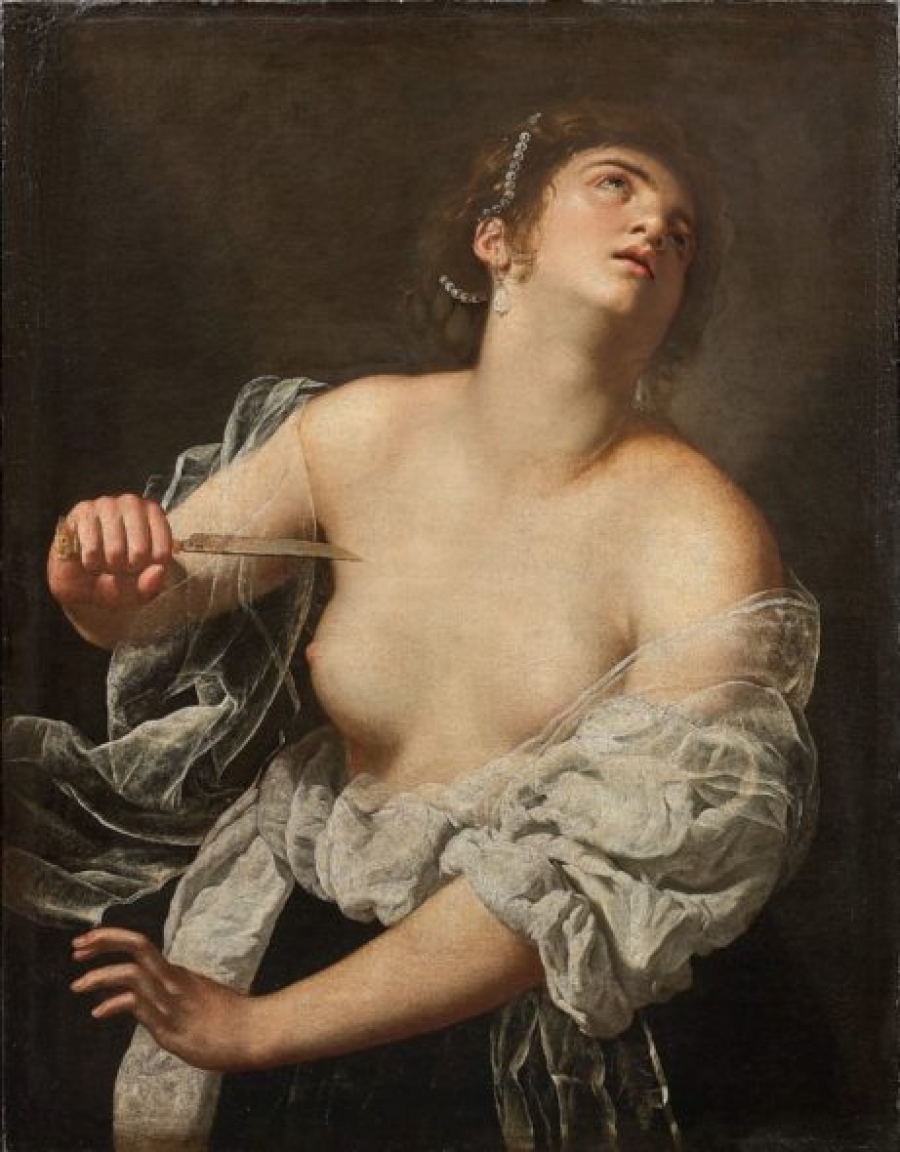
    Lucrezia by Artemisia Gentileschi,

    A newly discovered canvas by Italian Baroque painter Artemisia Gentileschi was sold for almost €4.8m.

    The dramatic work exceeded the base estimate of between €600,000 and €800,000.

    Actually, the work had remained in a private collection in Lyon, France for the last forty years. ‘Lucrezia’, ​​painted between 1630 and 1637, dates back to the Neapolitan residence of Artemisia. The artist remained in this city until her death.

    The artwork exemplifies a typical subject of Artemisia: that of strong and courageous women, such as Giuditta, Susanna or Salomè.

    The figure of Lucrezia stands out half-length against the black background. In particular, the elements of Caravaggio’s ancestry are evident, even if mediated by her father Orazio Gentileschi.

    Artemisia Gentileschi, feminist painter

    Artemisia Gentileschi was the first painter to bring the abuse of women in the art of the seventeenth century. Thanks to her courage and skills, Artemisia Gentileschi challenged the customs of her time. In addition, Artemisia Gentileschi was the first female member of the Accademia di Arte del Disegno in Florence. Today she is remembered also as a symbol of feminism capable of transforming violence into beauty.

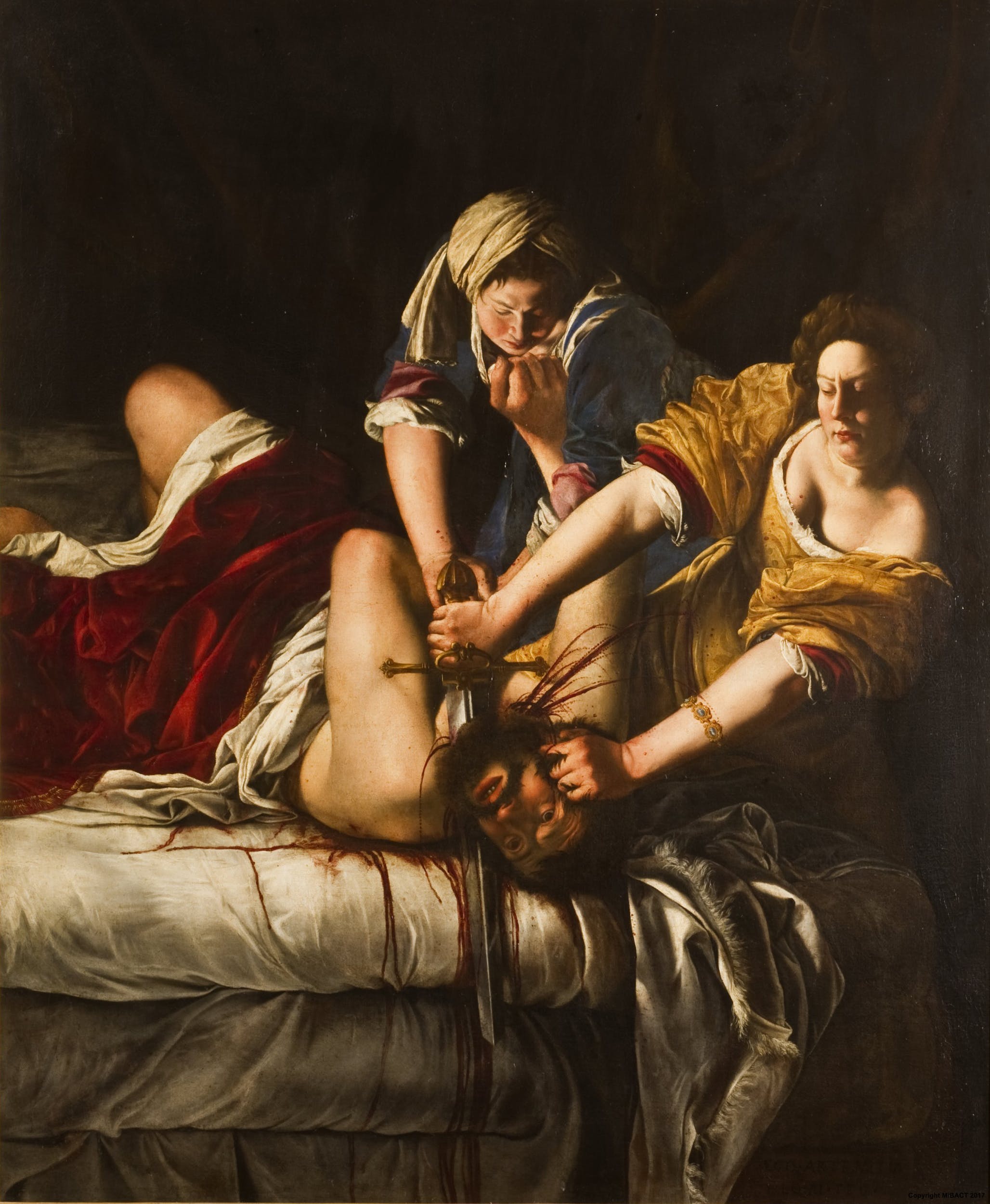
    Judith slaying Holofernes by Artemisia Gentileschi, 1614–18
    Judith slaying Holofernes by Artemisia Gentileschi, 1614–18

    After many years in which the production of the artist was in the shadow, a renowned, surging interest is now growing around the baroque painter. Actually, it is extremely rare for Gentileschi’s works to come to the art market. In particular, never before one of her creations was auctioned for this amount. Finally, after centuries, Gentileschi is now recognized as one of the greatest painters of the post-Caravaggio era. 

    However,  Artemisia was not only an innovator in the artistic field, but she also had the courage to denounce Agostino Tassi for rape, winning a trial during which she was even tortured. After this dramatic episode of her life, Artemisia specialized in mythological and Biblical scenes. These include representations of sexual assault and women enacting violence against men.

    In particular, her most famous painting ‘Judith Slaying Holofernes’ (1620), shows the scene of Judith and her maidservants beheading the Assyrian general Holofernes. The artist’s work shows also an evolution in the role of women: from submissive to strong, and able of revenge over men. ‘Judith Slaying Holofernes’ also appeared in the 2018 Xenofeminist Manifesto.

    The desire for revenge in ‘Lucrezia’ by Artemisia Gentileschi

     ‘Lucrezia’ depicts an episode from the Old Testament. The canvas was painted immediately after the rape trial in which Artemisia accused Agostino Tassi. For this reason, some art historians believe that the violence expressed by the episode represented is the result of Artemisia’s desire for revenge. 

    The half-length portrait of Lucrezia and the black background are elements of Caravaggio’s heritage. In particular, the figure almost emerges from the painting, creating a strong and suggestive result. The fate of Lucrezia, who kills herself after being a victim of rape, was particularly dear to Artemisia. 

    In a sign of Gentileschi’s growing importance in the art scene, the National Gallery in London will stage next year the first major exhibition of her work in the UK, collecting over 35 works from around the world.

  • Art Basel Miami becomes extra-large with Meridians

    Art Basel Miami becomes extra-large with Meridians

    The Miami Beach Conventions Center will host a new edition of the Art Basel Miami Beach Show from the 5th to the 8th of December. Expectations for this year are high. In particular, the ones concerning Meridians, the brand new section dedicated to monumental works, installations, and performances.

    Meridians at Art Basel Miami Beach Show 2019

    Curated by Magalí Arriola, the area is now ready to debut at the 18th edition of the Miami Beach show. Magalí Arriola, who cured as well Latin America at KADIST and Mexico’s participation at the 58th Venice Biennale, is thrilled to steer a project that will open new artistic possibilities for the show:

    ‘Meridians brings enormous possibilities to Art Basel Miami Beach, creating a vibrant platform for large-scale sculptures, installations, and moving image, as well as for performance – which did not have a dedicated space at the fair until now.’

    An exciting plus indeed, that will give this edition a renewed light.  Moreover, Meridians was conceived as the twin sister of Unlimited, the platform designed by the Swiss edition of Art Basel for large projects. Already successful, Unlimited allowed the show to transcend the limits of the traditional exhibition stand.

    For this reason, the Miami edition welcomes the new platform with innovative and astonishing artistic projects.

    art basel 2019 in miami

    Art Basel, not a classic exhibition

    In the beginning, Basel gallerists Ernst Beyeler, Trudl Bruckner, and Balz Hilt created an international art fair that took place in Switzerland back in 1970. The show has been successful from its first edition, with more 16,000 visitors and 90 galleries participating in the event.

    The distinctive feature of Art Basel was to expand the concept of artistic enjoyment. Through special attention to new artistic mediums, the event has kept over the years a prominent place among modern and contemporary art events.

    In 2002 Art Basel debuted in Miami Beach where it featured 160 galleries from 23 countries and attracted 30,000 visitors. Moreover, in 2015 there was its inaugural show in Hong Kong, another great success for Art Basel with over 60,000 visitors.

    Art Basel Miami Beach Show 2019

    This year’s fair sees the participation of 269 galleries, from 33 countries. In particular, the 2019 edition has numerous Asian galleries, including Magician Space (Beijing), ROH Projects (Jakarta),  10 Chancery Lane Gallery and Hanart TZ Gallery (Hong Kong).

    Among the new exhibitors in the main section “Galleries” there are Peter Blum Gallery, Hanart TZ Gallery, High Art, hunt kastner, Gaga, Catriona Jeffries, Karma, Maisterravalbuena, Galeria Jaqueline Martins, and Revolver Galería. On the other hand, the “Position” section dedicated to emerging artists will feature 14 galleries presenting solo projects. Among the scheduled exhibitions, there are Manal AlDowayan‘s Watch Before You Fall from the Sabrina Amrani Gallery and the Canadian artist Tau Lewis‘s sculptures from Cooper Cole.

    Other tree platforms characterize the Miami event. The “Nova” area which sees the participation of 25 galleries presenting a maximum of 3 artists; the “Survey”, dedicated instead to the works prior to 2000; and finally the “Edition” section dedicated to art prints.

    Meridians will provide the show with a unique opportunity to present ambitious projects, opening the path to monumental art in Miami!

  • Giorgio De Chirico’s metaphysical painting in Milan

    Giorgio De Chirico’s metaphysical painting in Milan

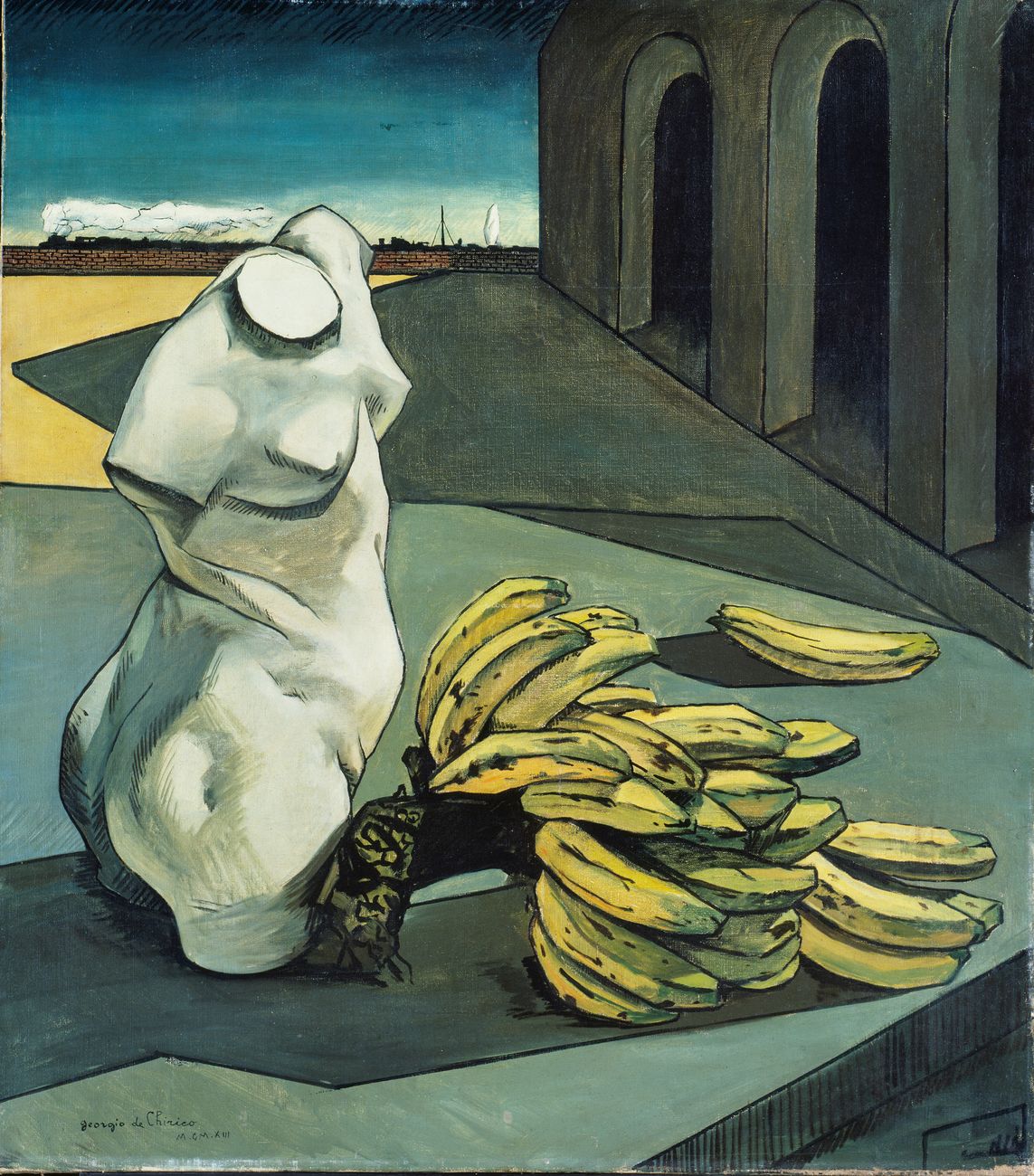
    Giorgio de Chirico, L’incertezza del poeta, 1913. Londra, Tate Modern © Tate, London 2018 © Giorgio de Chirico by SIAE 2019

    Almost fifty years after the personal exhibition of 1970, the rooms of Palazzo Reale in Milan return to host the work of Giorgio De Chirico.

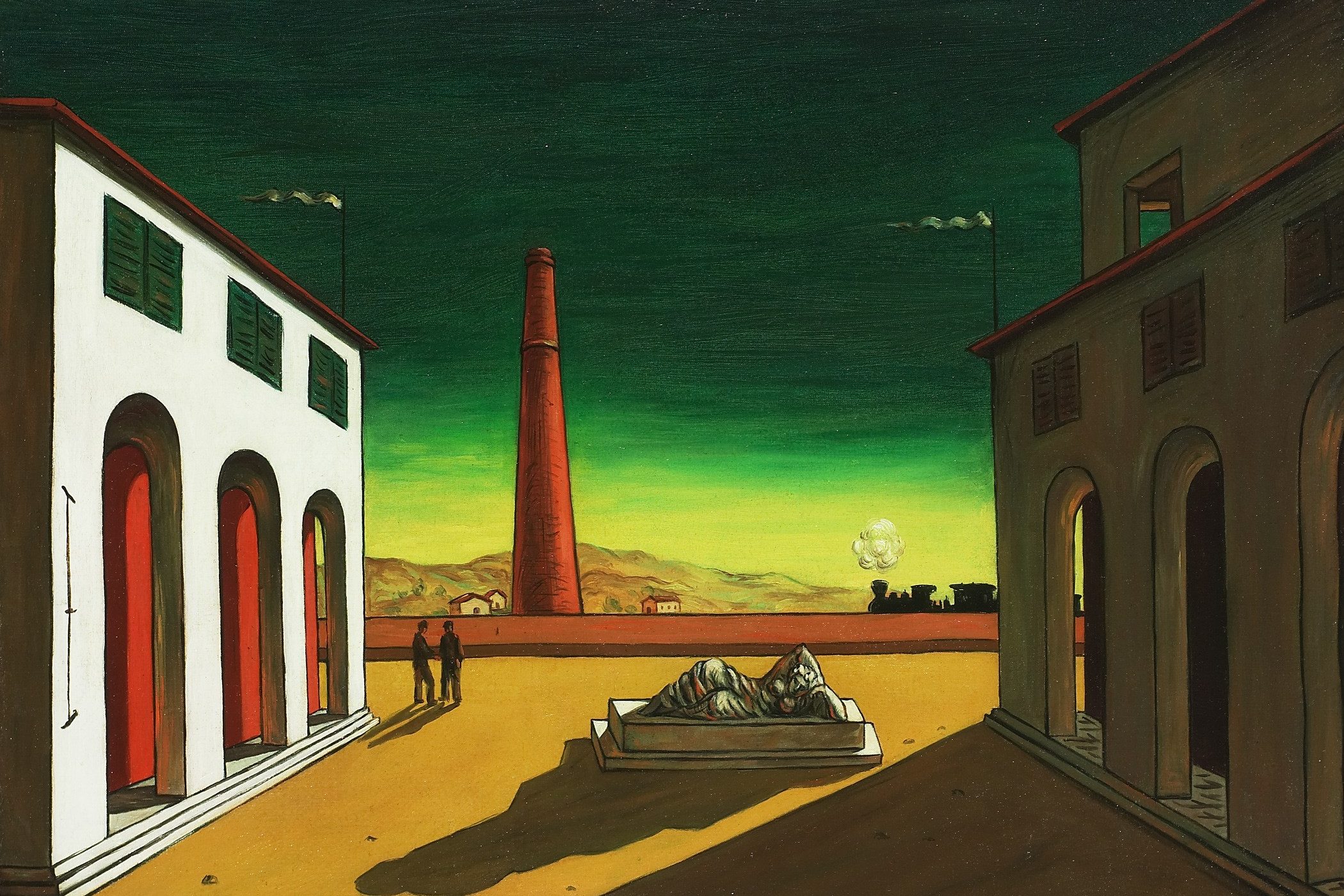
    The artist is undoubtedly among the main exponents of metaphysical painting. Born in Volos, Grece 1888, and grown up in Italy, De Chirico is a controversial and beloved artist, a visionary genius.

    Considered by Apollinaire the most surprising painter of his generation, he represented a unique alternative to cubism since the self-portrait of the Metropolitan in 1912.

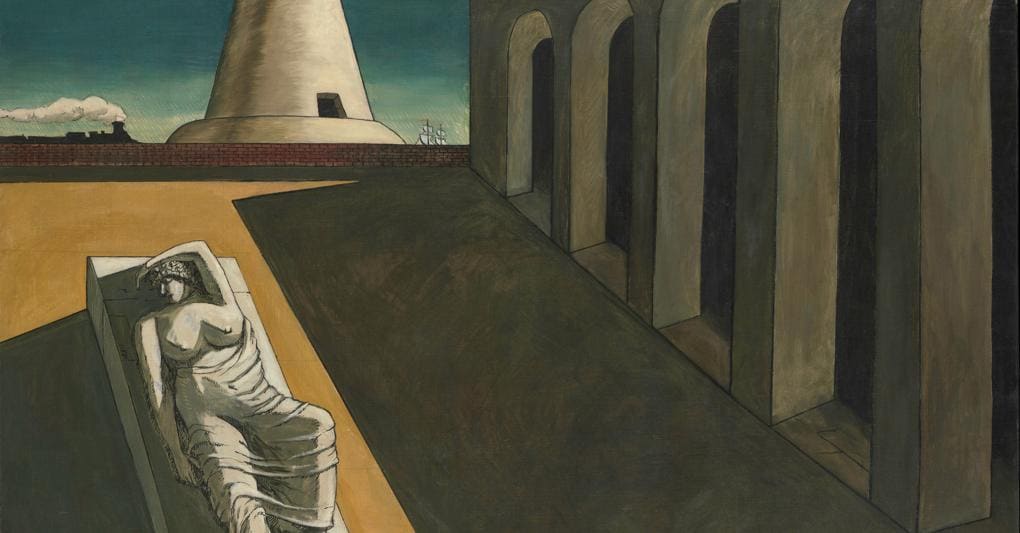
    Exceptional voice of his time, De Chirico is a creator whose art quest the connection between things. He removes timeless and spaceless settings from the contexts. The result is intriguing, mysterious. Today the retrospective on show at the Palazzo Reale in Milan allows an updated reading of the Pictor Optimus.

    Giorgio De Chirico and his metaphysical painting

    The exhibition clearly highlights the poetic-philosophical component in the artist’s works. Unlike other figurative painters, De Chirico is never didactic. He stays in a suspended dimension that sees the most profound mysteries in the simplest things. 

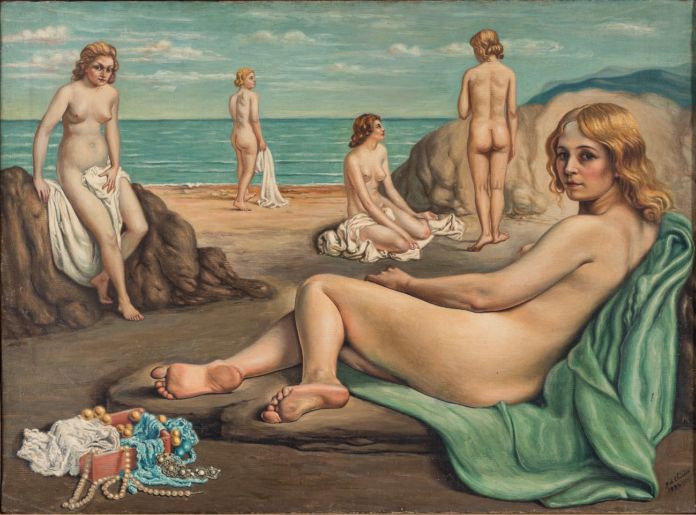
    Giorgio de Chirico, Bagnanti sopra una spiaggia, 1934. Roma, Collezione Valsecchi © Giorgio de Chirico by SIAE 2019

    The painter deconstructs the everyday elements, as well as the classicist monumentalism of the twentieth century. The sensitivity of the artist emerges from the chromatic choices to the play of light and shadows. Actually, everything in its artistic interpretation, from the subjects to the perspective, serves to represent emotions and metaphysical concepts.

    In addition, De Chirico manages to be extraordinarily theatrical, and not by chance, he also worked as a set designer. Everything through his paintings becomes a show full of charm and restlessness.

    The humanoid entities he represents, which often evoke mythological episodes, communicate pain, absence, and love, beyond every transcription of reality.

    Even if the artist’s style is immediately recognizable, his was an evolving path. De Chirico is an artist who reinvents himself. He doesn’t attribute to art a limited dimension. Pictorial styles and philosophical approaches are only mediums through which the idea takes shape. The style also becomes a mysterious divinity whose true essence stands in something that is uncatchable.

    De Chirico, painter-philosopher at Palazzo Reale

    The Palazzo Reale in Milan hosts around 100 works from the most important collections in the world. According to the criticism, the retrospective is one of the most interesting Italian proposals in recent years. Thanks to curator Luca Massimo Barbero, director of the Institute of Art History of the Cini Foundation in Venice, De Chirico returns to Milan as a protagonist.

    de chirico art

    Above all, the show immediately aroused enthusiasm even the youngest. Actually, the exhibit became an art phenomenon on social media. Eight rooms with a sober and essential layout, retrace the entire evolution of the controversial artist.

    Giorgio De Chirico is certainly a pioneer of art. From a solitary and different avant-garde, he represented an alternative imagination. Moreover, the great peculiarity of the artist lies in an enigmatic and often alchemic conception of painting.

    The Milanese retrospective dedicated to the artist is on stage until 19 January 2020.


  • Free flows at Lyon Biennale of Contemporary Art

    Free flows at Lyon Biennale of Contemporary Art

    The contemporary art exhibition created in 1991 by Thierry Raspail and Thierry Prat is ready to astonish the audience with notable changes. The Biennale de Lyon coming this year at its fifteenth edition, focus on emerging artists and new art spaces. Above all for this edition, the artistic direction chose an open and free approach. The theme is not by chance linked to the fluidity. This choice comes as a result of willing to represent an inclusive concept of art, one that embraces diversity and new ideas.

    Lyon Biennale of Contemporary Art 2019

    biennale lyon 2019

    This year the kermesse is taking place for the first time at the former factory Fagor and will be on display until January 5, 2020. However, this isn’t the only area dedicated to the exhibition. Official locations for the event are as well the Mac Lyon and the Street of Presqui’Île. Here, an urban vision of art brought to incredible creations that seem melt in the city. This year multi-site Biennale includes four complementary platforms located across the region: Veduta, Young International Artists, Associated Exhibitions and Résonance.

    Veduta favors the relationship between artists and residents while the Young International Artists is entirely dedicated to emerging creators. The Associated Exhibitions include a collection of shows from the Musée des Beaux-Arts, Villa du Parc, and Couvent de la Tourette, among others. Lastly, the Résonance proposes events that represent fully the region’s vibrant art scene, often inspired by artist collectives and cultural institutions.

    Actually, the most remarkable among the novelties is for sure the artistic direction of Isabelle Bertolotti and the curatorial team from the Palais de Tokyo in Paris (composed of Adélaïde Blanc, Daria de Beauvais, Yoann Gourmel, Matthieu Lelièvre, Vittoria Matarrese, Claire Moulène, and Hugo Vitrani).

    This year’s edition is unprecedented in scale to any other. The Fagor Factory added more than 29,000 sqm to the event. 

    The curators picked more than 50 artists coming from Buenos Aires, Johannesburg, Kostërrc, Lyon, Moscow, Saint-Étienne, Oslo, Mexico City, Rome, Paris, Zürich and many other cities around the world.

    XV Lyon Biennale, Là où les eaux se mêlent

    XV lyon biennale

    The exhibition formula of the Lyon Biennale favors harmonious fluidity. The works presented are set up seamlessly, leaving the viewers free to choose their path. Almost all the works have been created specifically for the spaces that house them.

    Even if it might be wrong talking about a main theme, surely the idea of ​​flow is at the base of the whole exhibition. The title of the event includes a quote from Raymon Carver, Là où les eaux se mêlent, (“There, where the waters mingle”). The flow is a free meeting of ideas, thoughts, matter, and cultures. It is happy chaos, in which each artwork finds an incredible expressive force!

    This year, the event will be spectacular. The works taking part in the event include works by Malin Bülow, Shana Moulton, Eva L’Hoest, Simphiwe Ndzube, and Minouk Lim.

    In conclusion, the purpose of this Biennale is to involve the viewer. The extra-large dimensions of the installations are aimed precisely at building a scenario of which the visitor is curious about. That’s the future of art in Lyon Biennale’s eyes!

  • Desire and censorship at Artissima 2019

    Desire and censorship at Artissima 2019

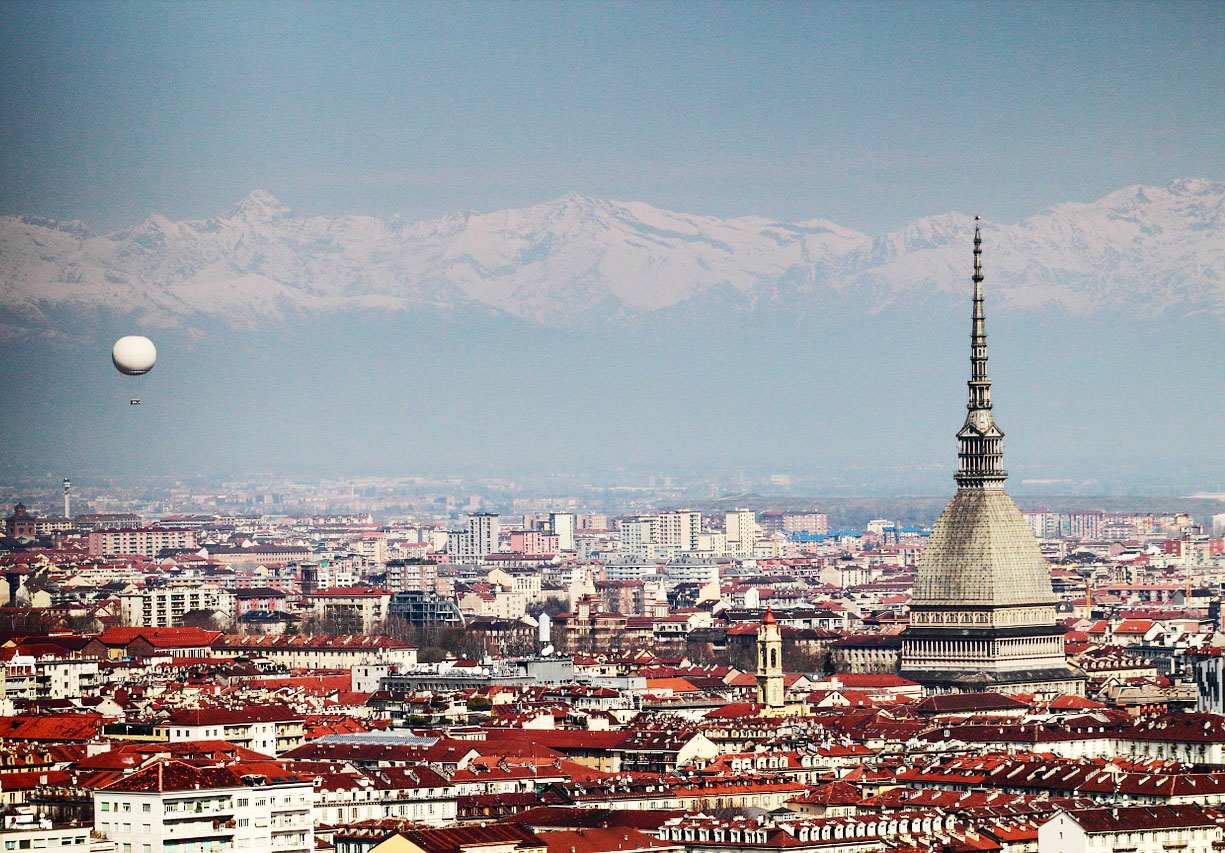
    Contemporary Art in Turin

    The art of desire is on stage in Turin. The evocative city in Piemonte hosted the 2019 edition of Artissima, Italy’s largest contemporary art fair, from 1 to 3 November.

    There are cities that, by history or vocation, tend to be more elitist and contemporary than others. Turin is among them. The city boasts museums like the Castello di Rivoli, that collects works of art among the finest preserved in Italy.

    Artissima reinterprets contemporary art. Over 190 galleries from all over the world participate in the event every year. This year, the special appointment surprised the audience with a truly challenging theme.

    Artissima 2019: between desire and censorship

    This year’s theme was the relationship between art and censorship. Ilaria Bonacosa, curator of the event, highlights the historical role of art in breaking down the boundaries of the unknown. Where a dilemma arises between an idea and society, art becomes a daring intermediary. By overturning the rules, art emancipates what is considered a taboo. The boundaries between normal and exceptional fade and creativity becomes a political tool.

    artissima 2019 desire censorship

    Actually, this unique ability of art must be protected and adapted in a modern key. This is the message expressed through the Turin art appointment. The director Ilaria Bonacosa underlines how the communicative expression has changed. If until ten years ago there was social opening and a sense of inclusion, now we live in a world where walls multiply. The curator wonders how art develops in light of these changes.

    Inviting at the discovery of contemporary art outside of traditional artistic paths, Artissima invites people to consider how social media has changed the use of art. While on the one hand, these platforms have made art more accessible, on the other, their ability to discern content is criticized. The art censorship itself takes on new connotations. The issue of nudes is particularly relevant. Classic images, considered legitimate for hundreds of years, are often obscured by social media. The censorship seems to be unable to filter the contents, not recognizing the cultural and artistic heritage of many works of art.

    The desire, theme of Artissima 2019, is therefore not to be understood in a sexual key; it is an artistic desire, desire for free creative expression. Through some of the works exhibited, further reflections on censorship come to mind. Actually, it doesn’t always apply to external impositions but sometimes is imposed by the creator. Self-censorship thus becomes another expressive filter to consider and analyze. However, the last message does not change: art is free, and when it is not, it must be released.

    Artissima 2019 exhibition projects

    Among the most notable works of this edition, there was “Abstract Sex: We don’t have any clothes, only equipment”. The project highlights how artificial means influence human identity. It represents a dystopian future where the same reproduction will be questioned to the advantage of cloning.

    This year’s appointment also stood out for the creation of a project entirely dedicated to families, Artissima Junior, in which children explore their creativity, painting a contemporary work together with artists.

    An area of ​​the event was dedicated to Berlinde De Bruyckere. The exhibition presented the sculptural works of the Belgian artist. The ancestral themes of pain and memory emerge, together with the need for transformation and evolution.


  • The National Gallery presents Paul Gauguin’s portraits

    The National Gallery presents Paul Gauguin’s portraits

    Paul Gauguin’s revolutionary portraits

    paul gauguin portraits

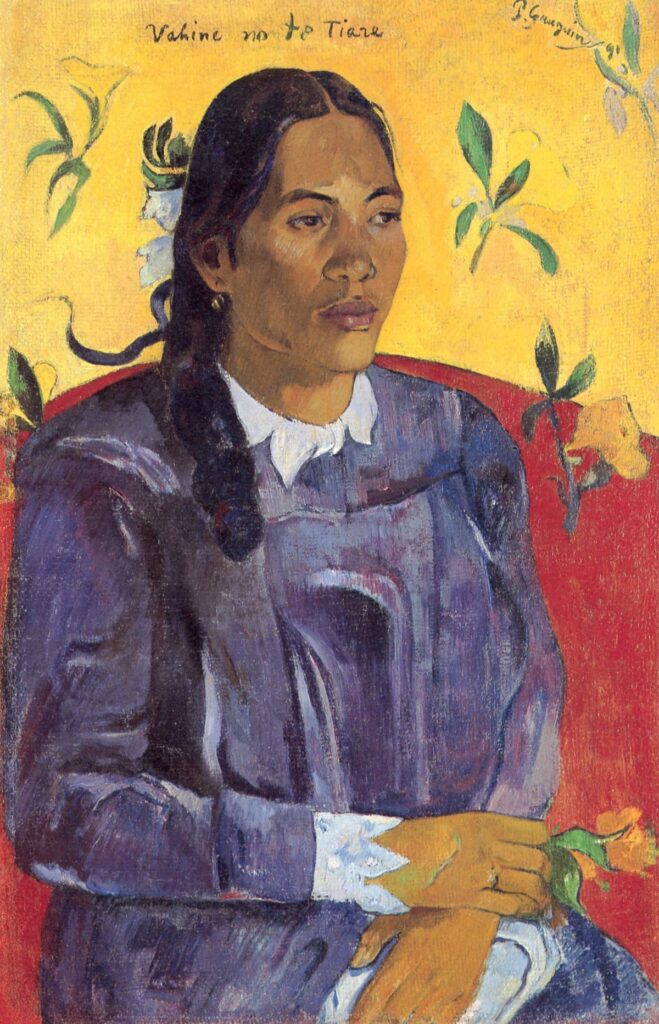
    Paul Gauguin is one of the major voices of French post-Impressionism. Public recognition of his talent came posthumously with an exhibition of his work in Paris in 1906.

    Appreciated by Pablo Picasso and Henry Matisse, in his art he used exaggerated body proportions and geometric designs, referencing the Primitive art of foreign cultures.

    He is probably the first European artist to prefer exotic subjects, his paintings of Polynesia are famous worldwide. However, the artist revolutionized the portrait painting as well, capturing the personality of his subjects with an unmistakable style.

    Currently, Paul Gauguin’s portraits are displayed for the first time at the National Gallery in London.

    Visionary art in Paul Gauguin’s works

    Gauguin reinvented the painting of his time with powerful and visionary images. As for his friend Vincent Van Gogh, the anecdotal aspect of his life sometimes dominates his work as an artist. 

    Today a major exhibition at the National Gallery highlights a less known aspect of his work, his portraits.

    In his artistic research, Gauguin reaffirms the fundamental values ​​of painting. His imaginative creativity places him in an opposite relationship with Monet and his supporters. For these, art is inspired by what is tangible and real. Literary and philosophical symbols are set aside for the benefit of what is concrete.

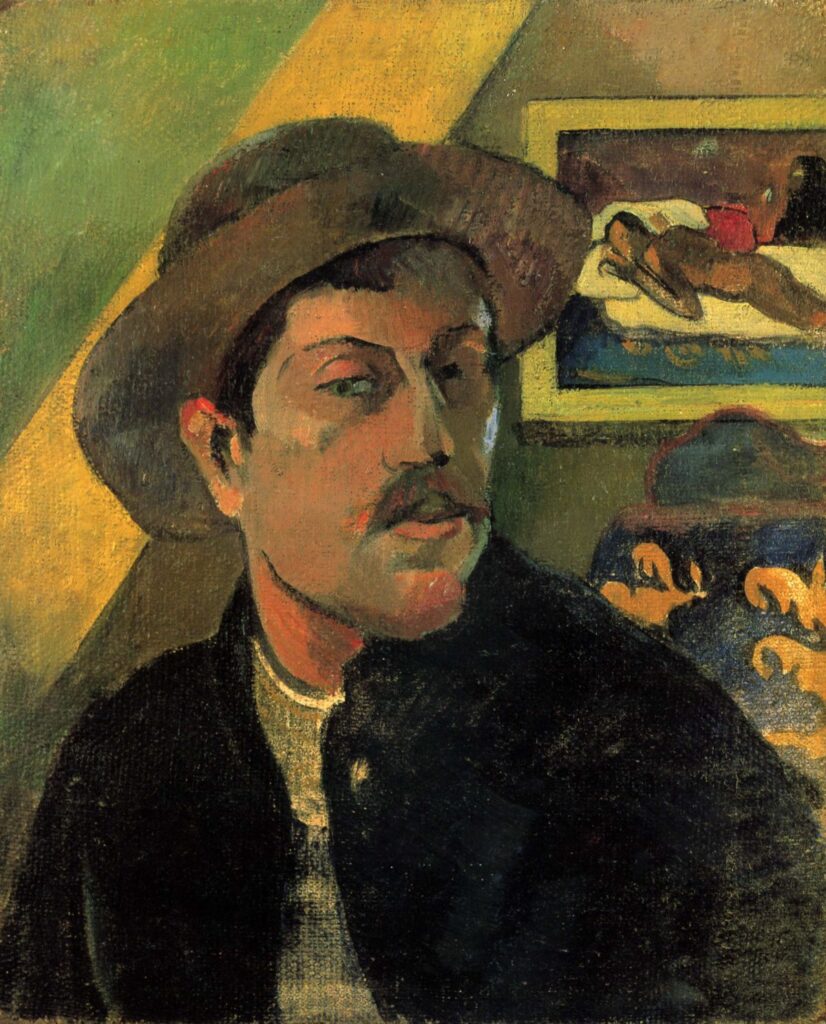
    On the other side, Gauguin is a conceptual portraitist. In his representations there is something wild, opposed to any form of academicism. The French artist is an outsider, whose portraits provoke the viewer. Above all, the artist often paints himself in front of his own creations. A narcissistic personality emerges together with a perception of art where the creator is at the center. In Christ in the Garden of Olives (1889), he represents himself as Christ on the eve of his betrayal.

    Paul Gauguin’s portraits at the National Gallery

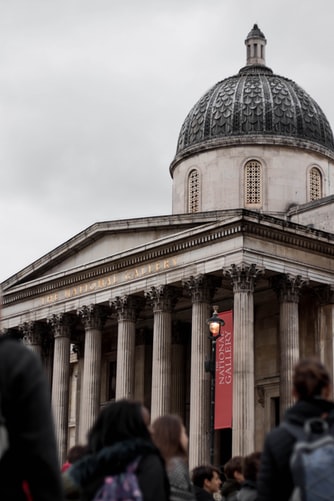
    The National Gallery, London displays the first-ever exhibition devoted to the portraits of Paul Gauguin until 26 January 2020. The show includes about fifty artworks among paintings, three-dimensional objects, and drawings from public and private collections worldwide.

    paul gauguin national gallery

    In addition, the exhibition highlights the variety of mediums used by Gauguin, emphasizing a particularly voracious expressive need. 

    This show goes beyond Gauguin’s definition of post-impressionist. Actually, it’s the first time that the French visionary artist receives such an important recognition for having revolutionized portraiture.

    The National Gallery in London, in collaboration with the National Gallery of Canada, Ottawa, brings together artworks from different collections. The loans come from major institutions including the Musée d’Orsay in Paris, the National Gallery of Art in Washington DC, and the National Museum of Western Art in Tokyo.

    Gauguin is one of those artists about whom people seem to know everything, except the essential. In order to give due recognition to his incredible talent, the National Gallery revisits the artist’s controversial image. 

    The depth hidden by the vivid colors used by the great French master confirms the historical significance of his imaginary. Gauguin is a precursor of his time. He represents a dreamy, visionary aesthetic destined to influence the most remarkable artists of later generations.

  • Artist We Love: Boris Nzebo

    Artist We Love: Boris Nzebo

    boris nzebo artist

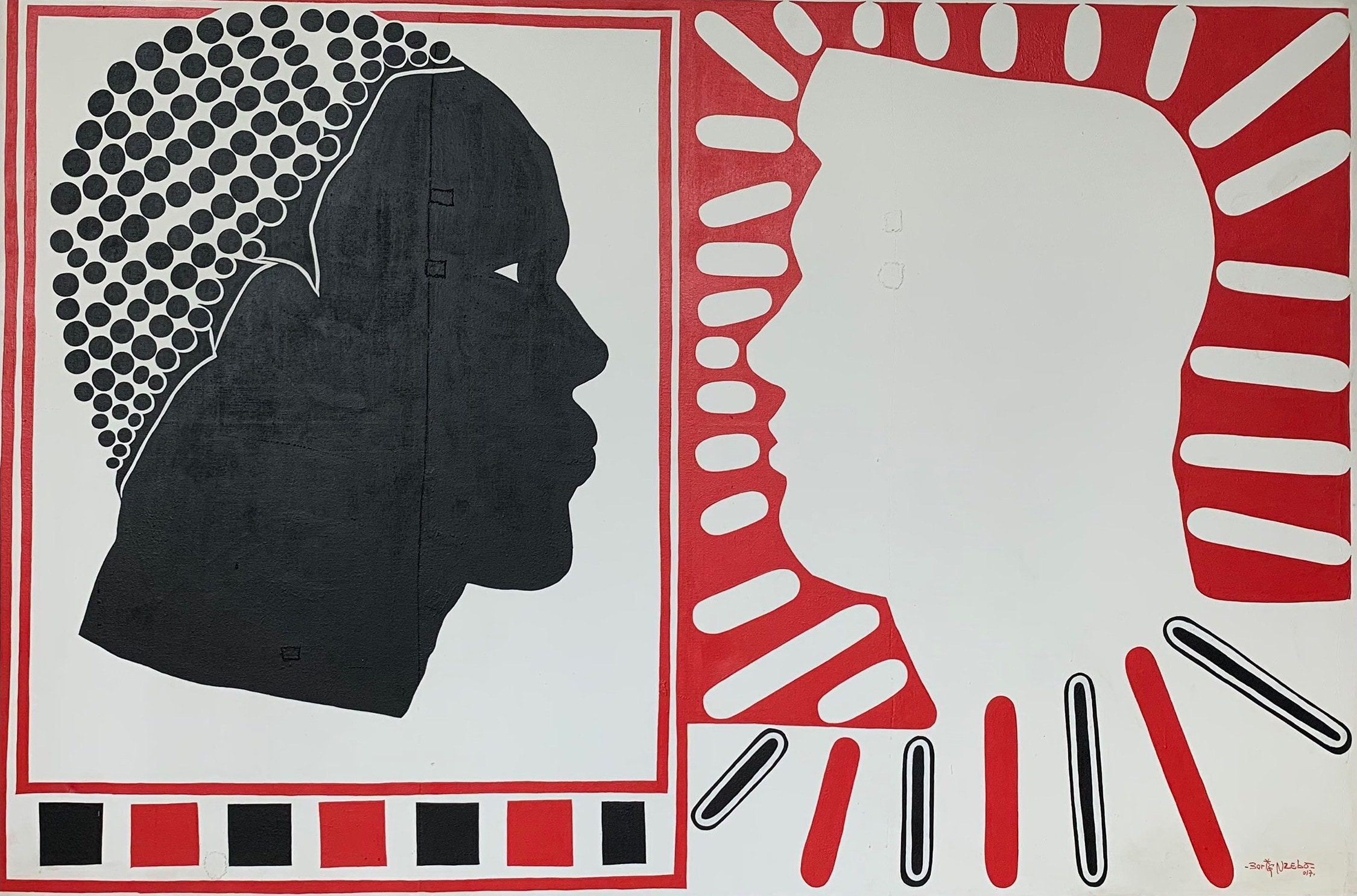
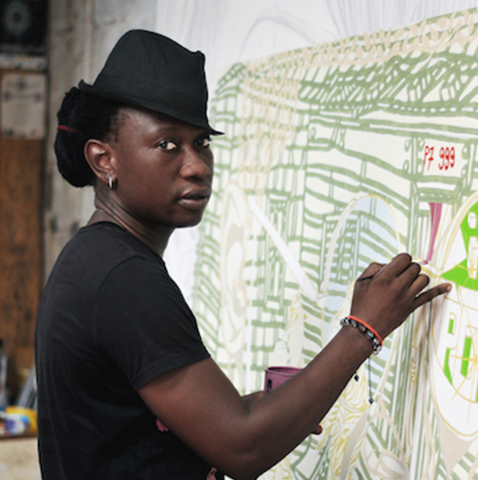
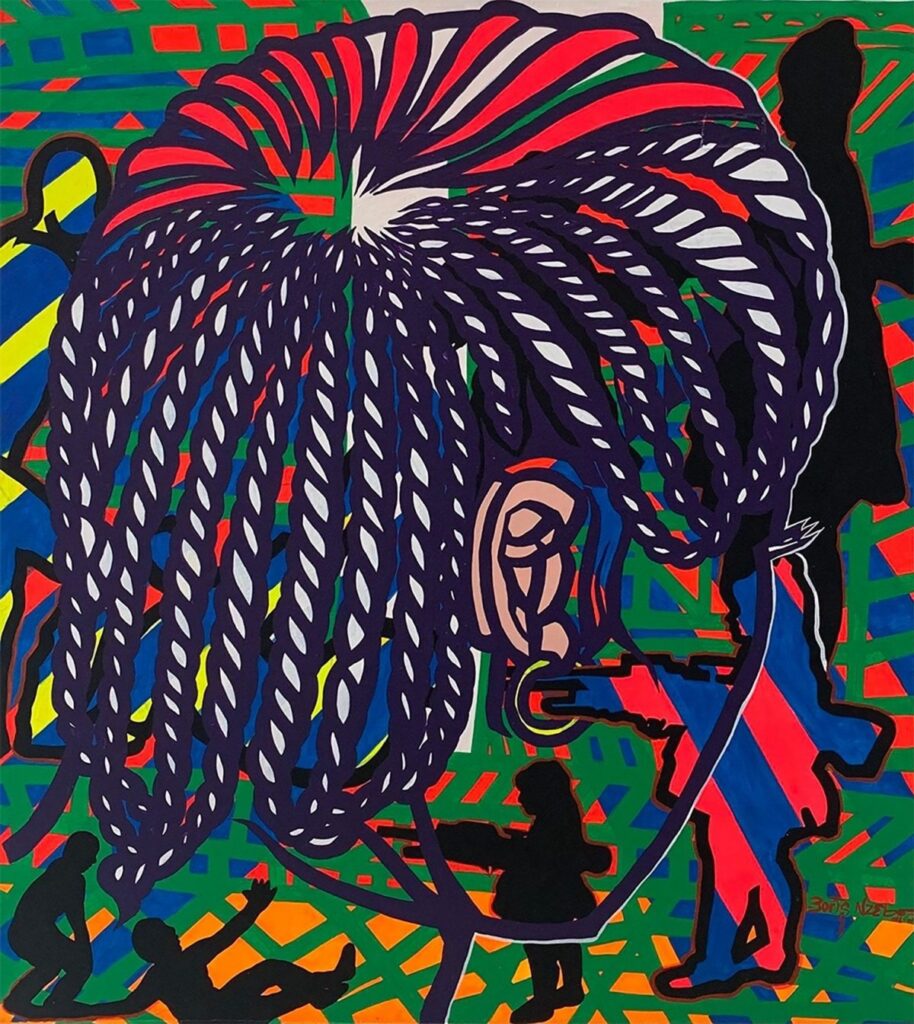
    Looking at Boris Nzebo’s colorful canvas means getting a portrait of social and political life in Douala, the biggest city of Cameroon. His art is urban and tells the tales of a city.  Nzebo’s art takes inspiration from the sounds, the lifestyle and the social conditions of Doula. The artist’s quest always starts from a peculiar element. Nzebo explores hairstyle in human life as a medium to show social rank and cultural belonging.

    The artist, class 1979 and born in  Port-Gentil, Gabon, lives and works in Doula. He began his journey in art by painting shop signs with his brother. Boris studied graphic arts, encouraged by his father to become an artist.

    Above all, inspiration came soon. His artistic education derives from direct contact with the most influent local artists. As a self-taught artist, he worked with artists such as Koko Komégné, Hervé Yamguen, and Goddy Leye.

    Boris Nzebo’ career

    The artist explored different mediums, mingling video, photo, and performance. In addition, artistic projects brought him to have exchanges with other remarkable voices of contemporary art. Among others, he assisted Faouzi Laatiris, Marocain artist whose creations range from sculpture, installation and public space. Furthermore, he worked with Alto Malinda, an eclectic creator whose striking performances are related to the theme of African identity and often focus on LGBT community issues. 

    In June 2009 the artist exposed his works at Jeunes Regards Urbains at doual’art with Cameroonian artists Man Faust and Landry Mbassi. His participation in this compelling show is yet another testimony of the artist’s commitment to representing West Africa’s urban identity.

    boris nzebo artworks

    Boris Nzebo participated in many group and solo exhibitions. Selected group exhibitions include Maison Revue Noire in Paris (2010), Savvy Contemporary in Berlin,  New Art from Africa and Latin America (2014) and Pangaea II: New Art from Africa and Latin America (2015). 

    The success of the artist’s multilayered paintings converged in two main important shows. First, In & Out of my head, in Douala at the SUD2010. The other, at the Institut Français in Yaoundé for the program Vil-Vissages. In addition, solo exhibitions include Urban Style at Manchester Art Gallery, Manchester (2016).

    During ART DUBAI, fair of contemporary art (2013) his canvas captured international interest. Above all, The Jack Bell Gallery of London recognized in his works an artistic flair full of communicative intent. For this reason, his art started to be displayed in several collective exhibitions in London and New York.

    Artist we love: Boris Nzebo’s Afropop

    Everything started with advertising painting. Even if this left a mark on his identity, the artist soon moved towards more exciting paths. His is an art in motion, continually renewed, every day richer in visual complexity.

    The Pop imprint in his works evokes the murals and the graffiti of the suburbs. All his subjects come from urban reality in his hometown. The elaborate hairstyles of the people he portrays incarnate the criterions of African beauty. Still, his purpose goes way beyond that. 

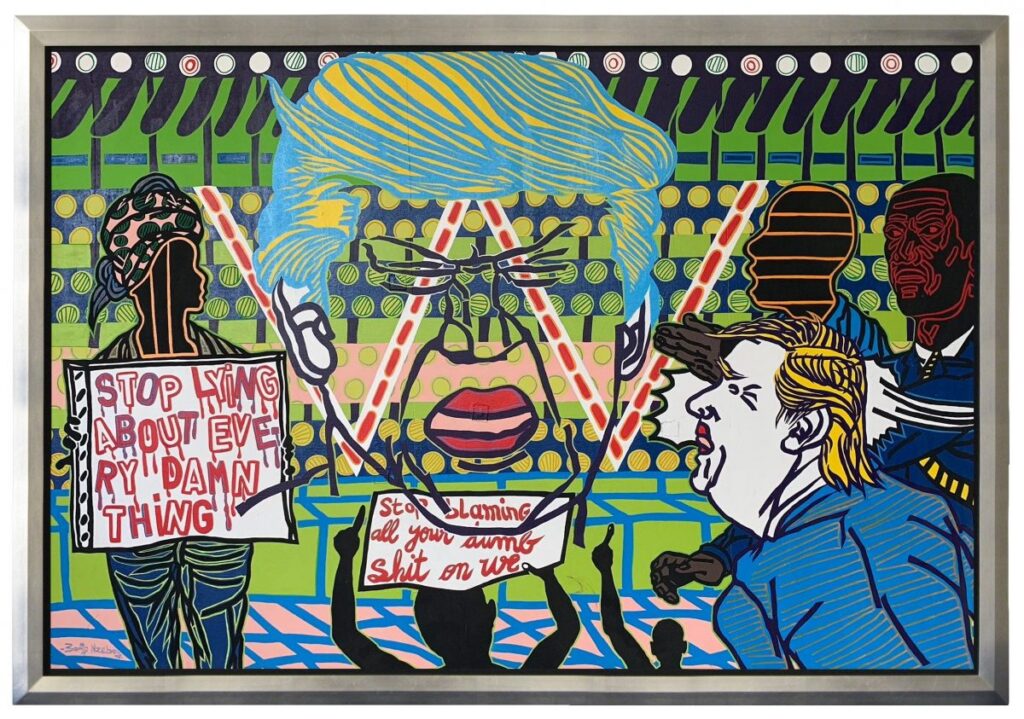
    boris nzebo trump

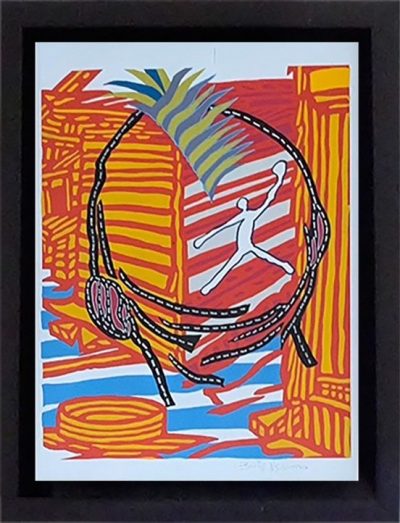
    Hairdressing for him is like architecture, a way to build and rebuild things. By insisting on the importance of hairstyle in his society, he underlines how we focus on the surface. While we think about our next outfit, we don’t care about bigger political and social issues. 

    Because of the situation he lives in, the Cameroonian artist often makes direct references to war and poverty in his artworks. Art serves as a conscience awakener.

    The symbiotic connection with the street allows the viewer to catch diverse readings in his canvas. The paintings are multilayered. The effect is almost psychedelic and the message must be broken down to be read in its entirety. Man and the road are complementary and become each other’s mirror.

    Art we love

    Boris Nzebo’s style is extraordinarily intense. The lines intertwine, overlap and suddenly distance themselves, revealing more representations in the same work. The pictorial and narrative complexity of his artistic imagination constantly evolves.

    In the same way, the use of strong colors aligns perfectly with the language of advertising. However, for the artist, this is the umpteenth way to give strength to his denunciation against violence and political instability. In spite of this, his scenes from daily life often show a world full of color, dynamism, passion. That’s where the main ability of the artist stands: while criticizing social issues and inequalities, he makes the viewer fall in love with the city and its inhabitants.

    It takes a vision to make art. That’s why Boris Nzebo is an artist we love!

    Visit artist’s gallery on RDN Arts: Boris Nzebo

Our Content.
Your Inbox

Join thousands of art lovers

Receive art news, market analysis and updates about new artists on the website

By subscribing you agree to receive RDN Arts emails. Unsubscribe at any time. Privacy Policy.