Author: xerkss

  • Interviews we love: Sokari Douglas Camp

    Interviews we love: Sokari Douglas Camp

    Since the true beginning of our interview, the incredible enthusiasm that passionates would already associate with this magnetic artist emerges. Her commitment to environmental and political issues and her extraordinary capacity to express her messages clearly put Sokari Douglas Camp in a privileged place among contemporary established artists. We had the pleasure to immerse ourselves in what’s behind her idea of Art and her unique artistic approach.

    How did you start doing Art

    In the first phase when I started art school, I started with paint, I was very excited about it, and I truly thought that I would be a painter, but what happened is that I didn’t really love any of my paintings! Today, I’m still highly fascinated by the idea of painting, but luckily I soon discovered that it was easier to express myself through sculpture to put my hands in something. It’s just that the two-dimensional approach wasn’t for me.
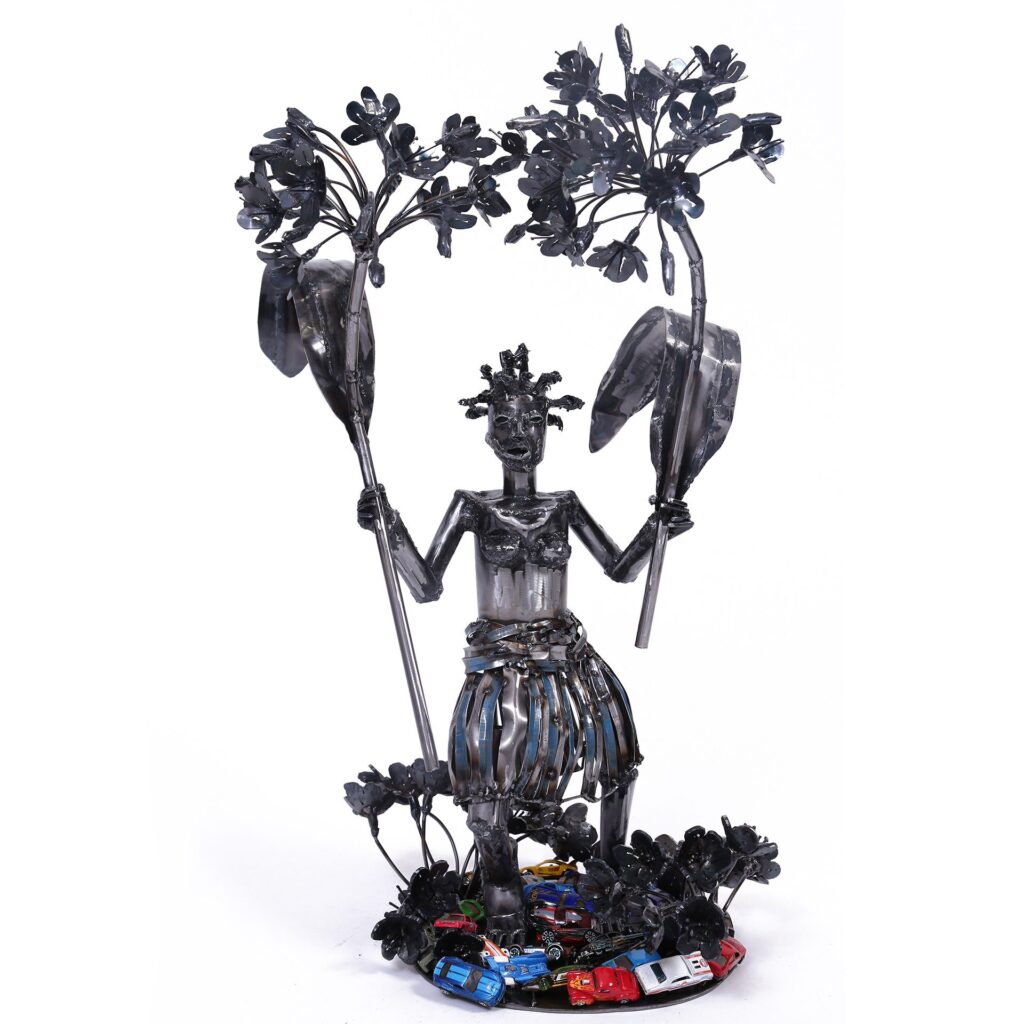
    African sculptures. The heritage of Kalabari culture meets the Western world
    Car Flower Pom Pom, 2019

    In which way does sculpture allow you to express yourself more than painting?

    It’s so different, and I think that was driven by it also because, in my culture, it was forbidden to women, so for me, it was almost like a statement.

    In your work, we always find a unique cross-cultural approach between the Kalabari and Western cultures. Your way to create an intersection between these apparently distant worlds is powerful and yet incredibly harmonious. Can you tell us more about how these two realities merge in your Art?

    It certainly has to do with my out bringing because I was brought up by brother in law, my sister’s husband. He lived in Nigeria, but he was English. He was an anthropologist and he was studying my people, Nigerian and Kalabari people. Since he was an anthropologist, I was soon exposed to incredible information about our cultural identity. I knew lot more than I normally would if it wasn’t for him. There were many people coming to discuss aspects of my culture. That gave me an expanded way of thinking. So, when I decided to live and work in England, I approached English or European culture in the same way I would think of Kalabari culture. It was almost like finding their differences together with their similarities. However, it was not an analytical approach, but more a life-enjoyment way.
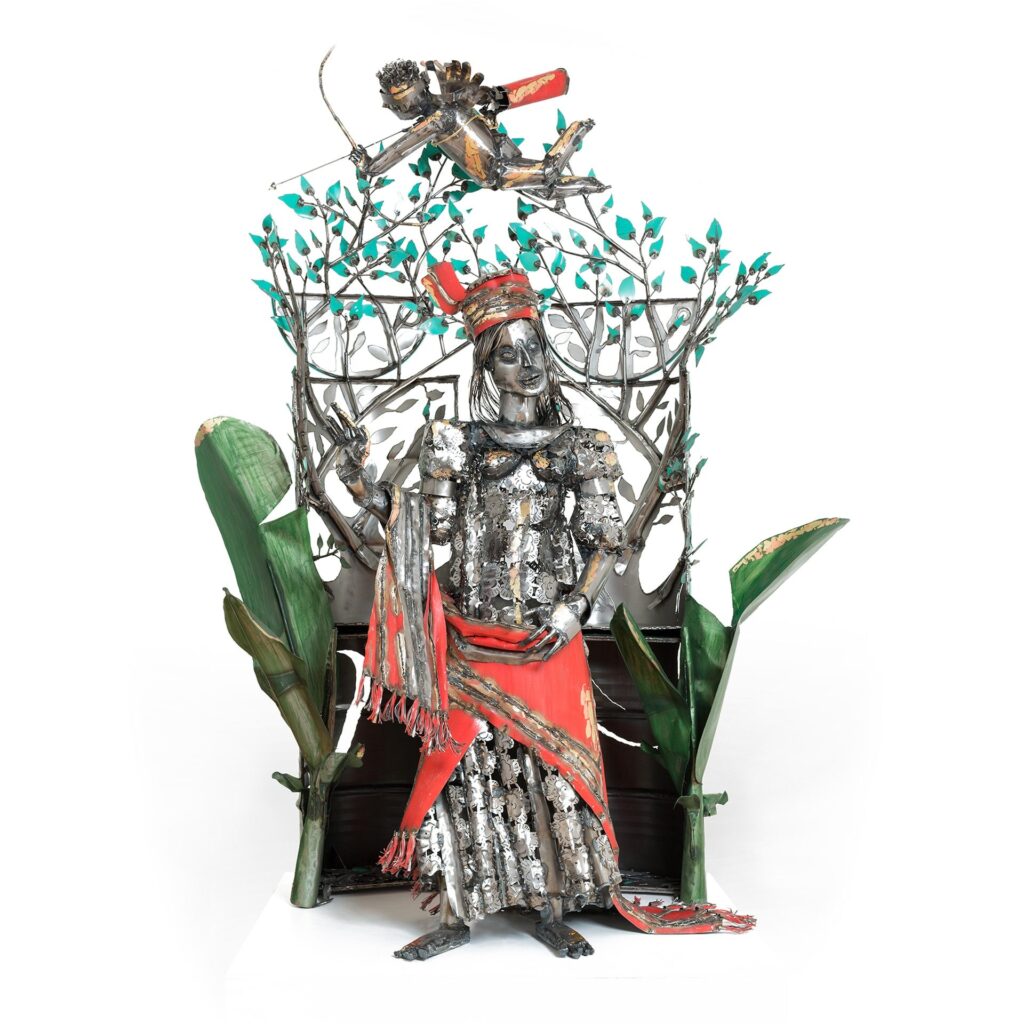
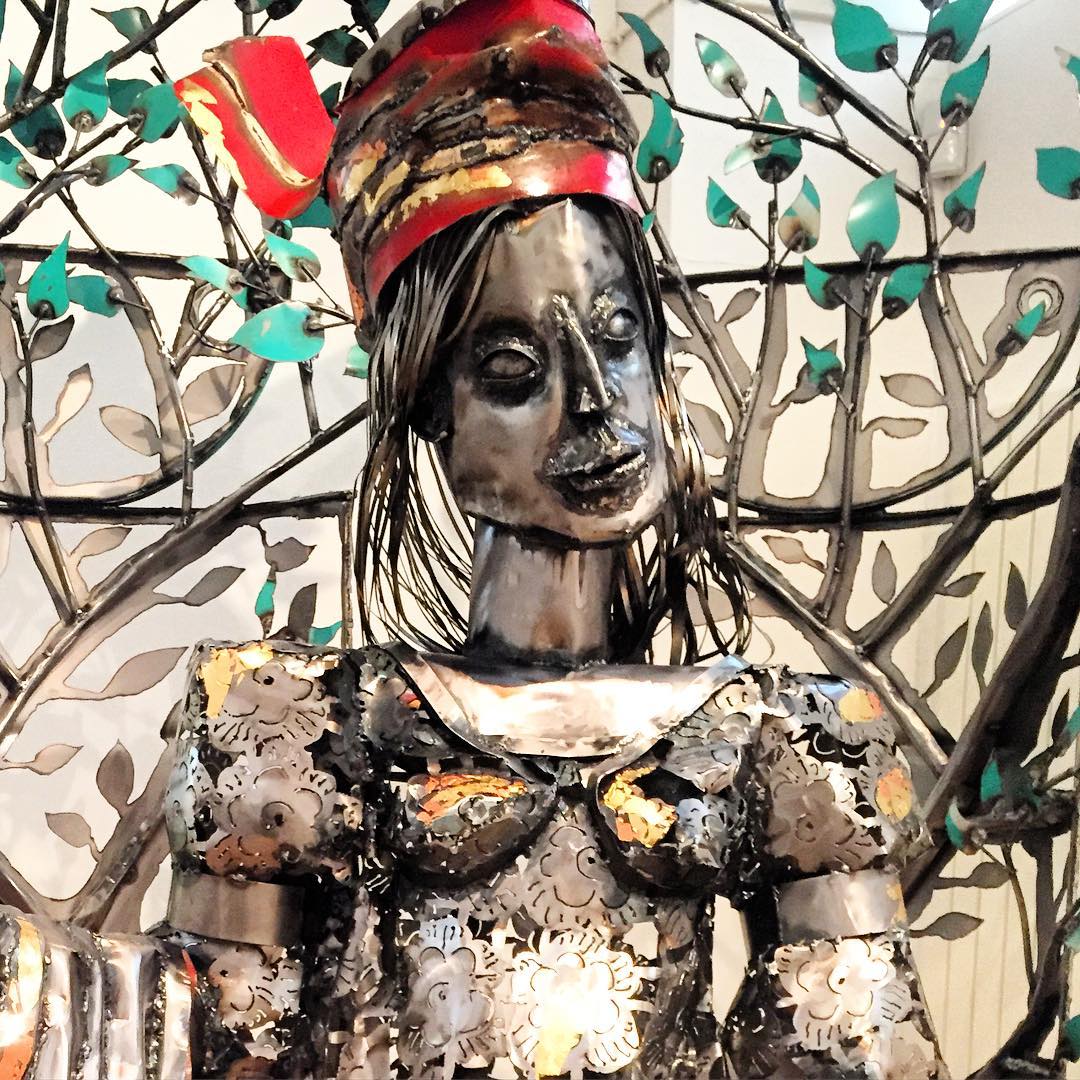
    Steel sculpture by African artist Sokari Douglas Camp. Two cultures collide perfectly in her creations. Read her interview with RDN Arts, contemporary Art Gallery
    Blind Love and Grace. 2016

    What are your artistic influences?

    They come actually from an older person that I met in my teen years. This person was a dance choreographer. She was taking traditional dances and putting them on the stage. She took very traditional aspects of her culture and choreographed them beautifully. The cultural influence was so strong that she brought theater on stage. It translated so well that I thought I could put traditional aspects of my culture in a gallery.

    In your work, there is a significant focus on environmental issues. You spend a whole deal of energy across the years in delivering the problems due to oil production in Nigeria and how it affected Nigeria Delta. What pushed you to embrace this purpose in your Art?

    In my lifetime Nigeria discovered oil. The place that I was born in has gas flaring. They used light gas to burn it off, a very unsustainable way that would have never been applied in Europe. However, they chose to do that in Nigeria. It made the air terrible, the situation was way worst than the one you could find in big industrialized cities, and we were a tiny, little island. My family is breathing that every day, and when I visit, I do too.

    In London, I read a National Geographic paper saying that gas flaring in Nigeria affected Australia’s ozone layer. When I read that, I sadly realized that it wasn’t just a Nigerian problem, it concerned the whole world, and it was right to have a conversation about it.
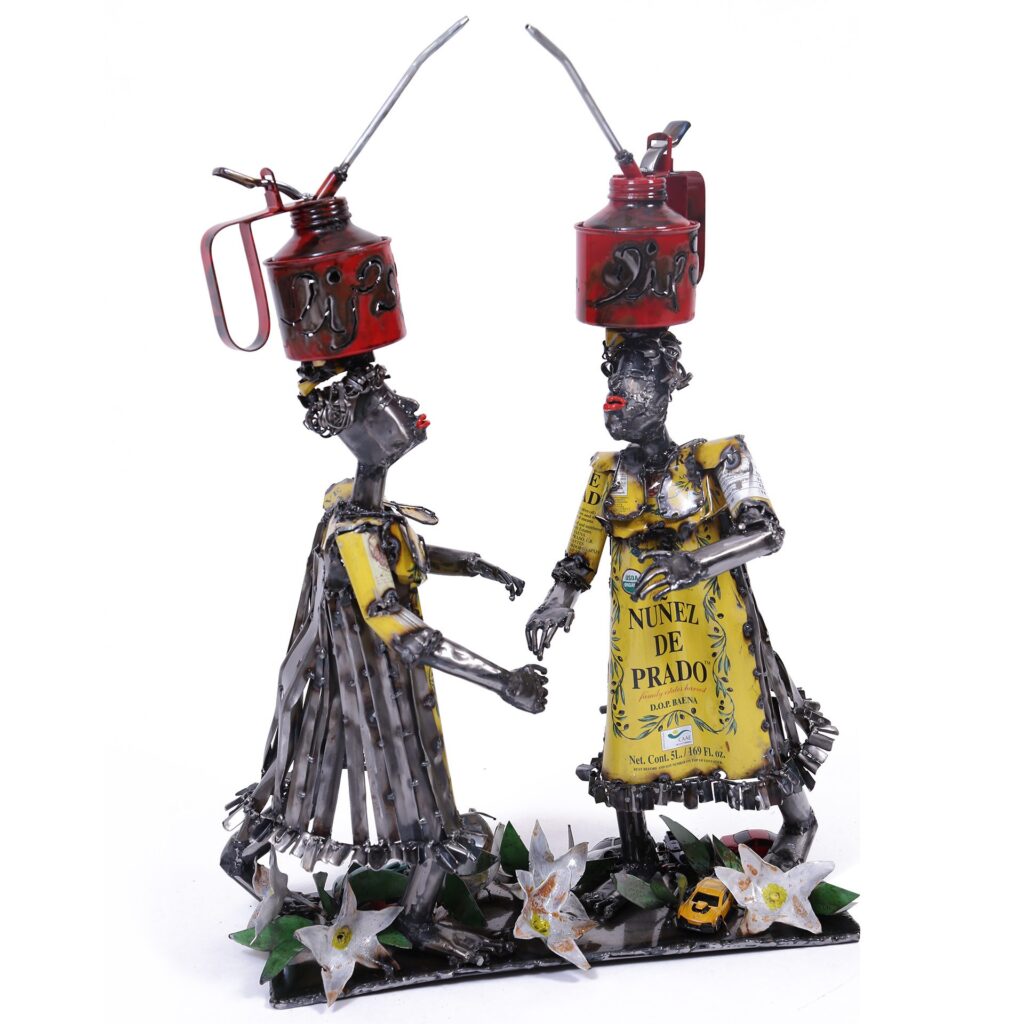
    Sculptures by Sokari Douglas Camp . The environmental issue of the Niger Delta in the eye of the African artist
    Lips Oil cans. 2018

    Other current topics of your work are colonialism and gender inequality. With the year passing, did you notice any positive or negative changes concerning these issues?

    I think we have become even more unequal. One time you could have a conversation about putting it right, but sadly today, a lot of it has still to do with money then since. Covid was a perfect chance to think about how we’re managing the world, how we are behaving, but we soon moved even further back before it started. Where we are is very painful right now

    You created many memorial sculptures; which one was the most challenging and why?

    I’ll say my memorial to Ken Saro-Wiwa. I made this bus to commemorate his work as an environmental activist, he was African first environmental activist and a writer killed in 1995. It was the most challenging piece that I ever did because of its history and because it was a public memorial. It gained a lot of notoriety, and many people wrote about it. It traveled England for about nine years with the idea to educate people about the situation in Nigeria.

    Speaking up about the Nigerian government and the colonial powers misbehaving, especially as a Nigerian woman, was quite a big move for me.
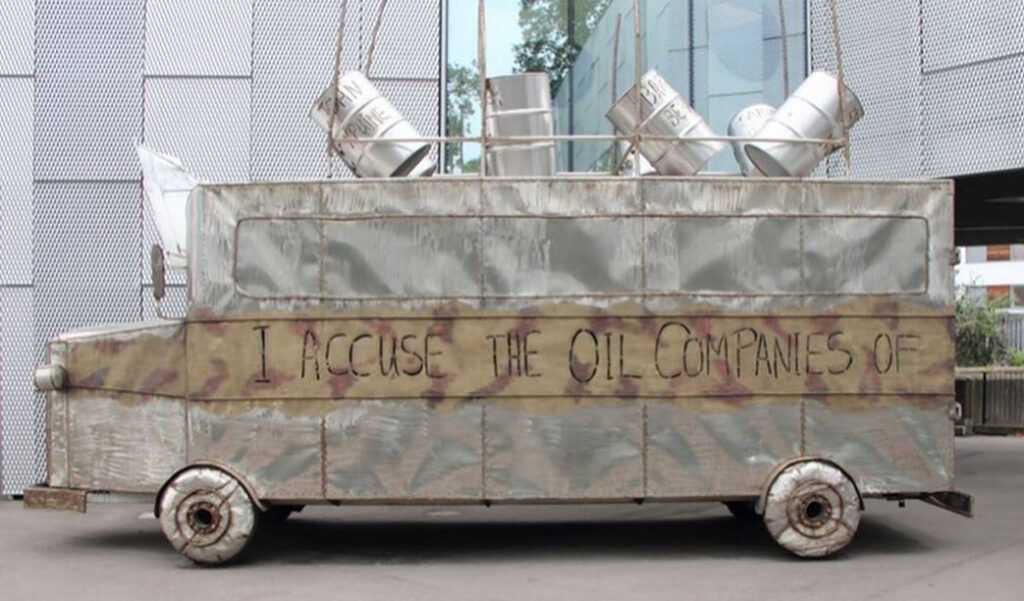
    Public Art by Sokari Douglas Camp. Her Battle Bus memorialize the executed environmentalist Ken Saro-Wiwa. Read our Sokari Douglas Camp interview
    Battle Bus – Memorial Art for Ken Saro-Wiwa

    Which part of your work do you most enjoy?

    Playing in my studio! It’s all about the making and the creation process! It’s a place that always gives you surprises because sometimes things don’t figure out as you imagined them

    This leads us to our next question: you said you like to be playful also with your Art. Do you think a playful approach is something artists should keep in his/her practice?

    Yes! It’s very hard to describe what you feel and what you see. When you try to couple it together and make a presentation, you attempt to catch something – and it’s kind of ironic -, you try to make something meaningful, but there can be flows. However, even when you are making an effort is important to have an open approach.
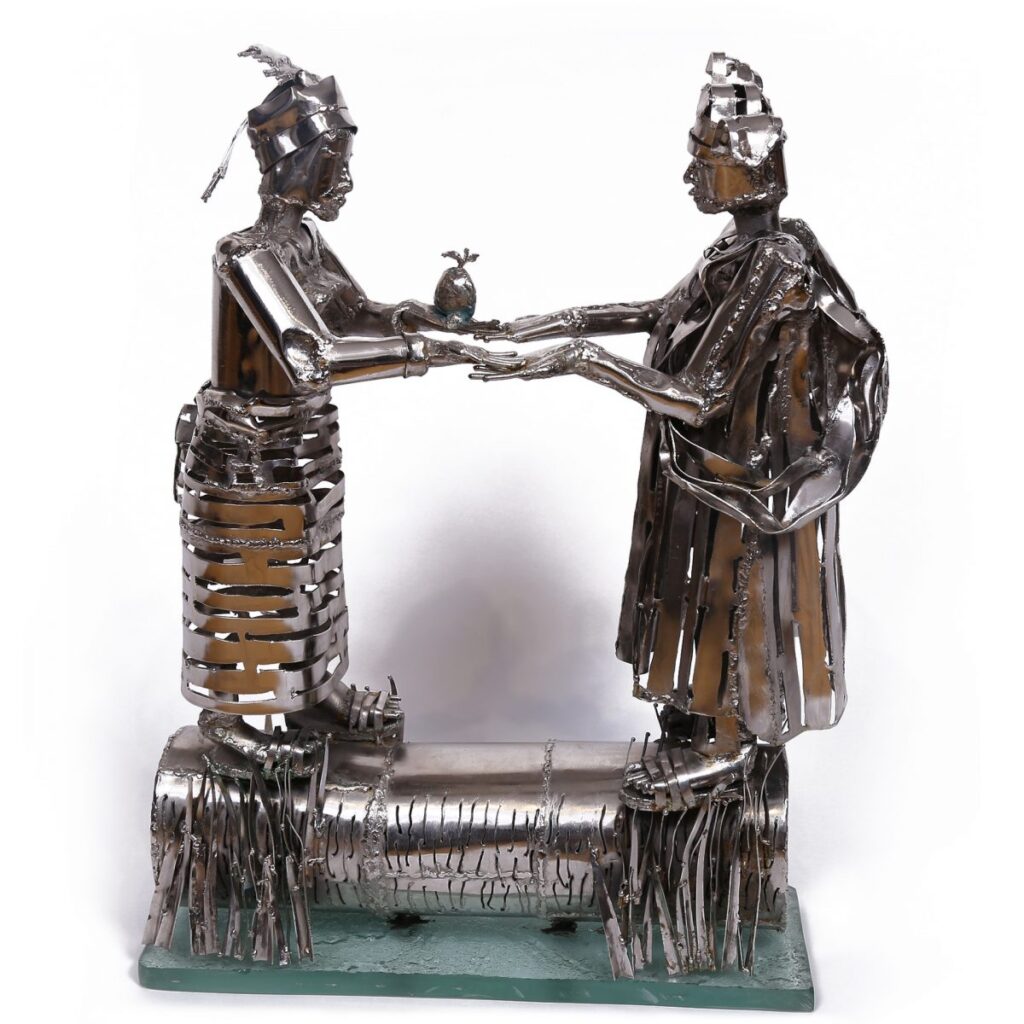
    Discovering Nigerian Artist , one of the most inspiring name in the Contemporary African Art
    Talking to Eve

    Has your practice changed during covid?

    Well, it was certainly hard; you ask yourself what is Art for if no one can see it. So what did I do? I created tables and chairs, something that people could use! That was quite fun, and it was very physical, I used the materials I got, I created metal flowers that I put on top of them. The only thing we could do here in England was walking in nature, and you could look at your surroundings, and that was my way of celebrating nature
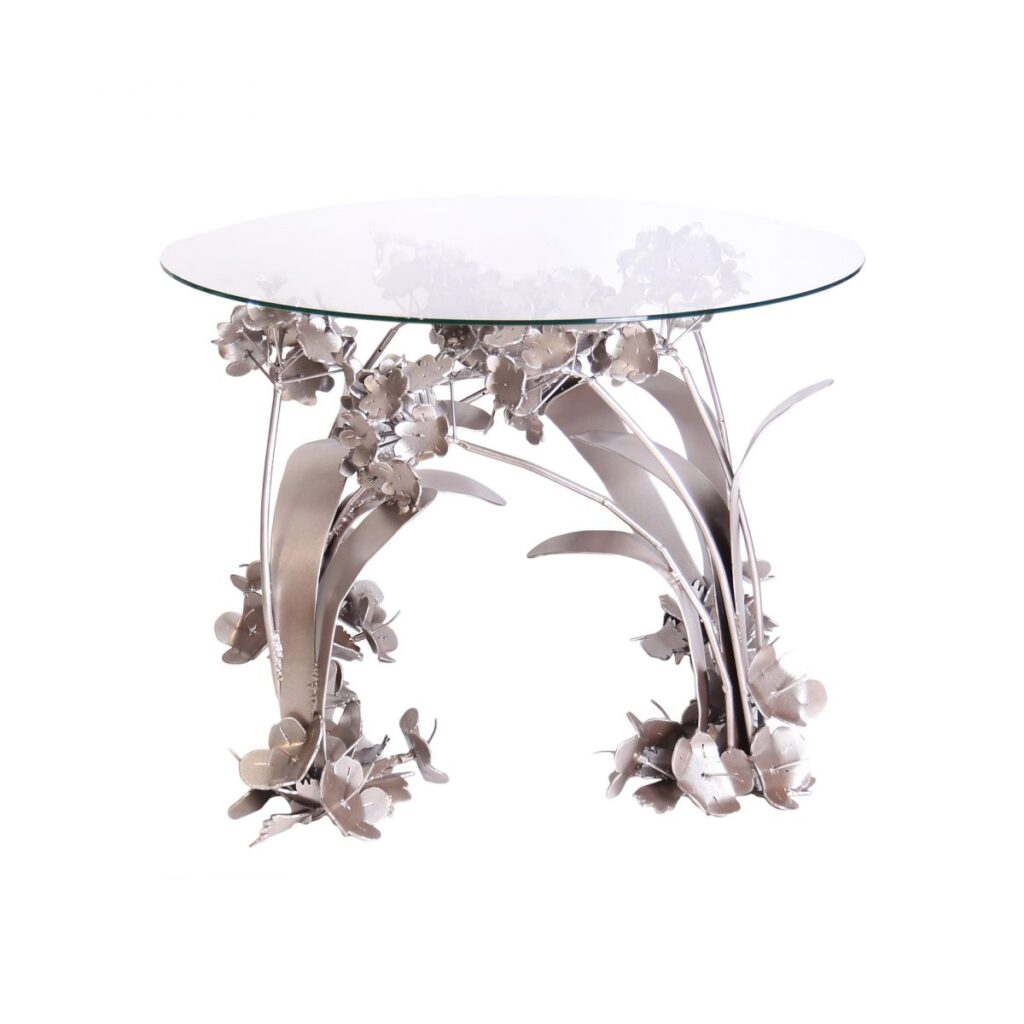
    Steel Art table. Read Sokari Douglas Camp interview
    Lockdown Table

    Your international reputation is huge, and it converted into many solo shows worldwide. What’s next?

    So many things! I’d like to display my works differently, on the streets, because there are no restrictions this way. Just before lockdown, I was in Japan, and I was able to make a work in a railway wagon, and it could be seen from the platform. You couldn’t touch it, but t was for everyone to look at. If you think about it, it was totally covid sensitive actually! I’d like to pursue more works like that. That’s what I’m concentrating on next.

    I have one final question for you; what is Art for?

    Art simply expresses things that cannot be put in words, it’s a conversation for your eyes, and it makes you look at things differently. That’s just wonderful!

    Sokaro Douglas Camp artworks on RDN Arts: Sokari Douglas Camp Sculptures
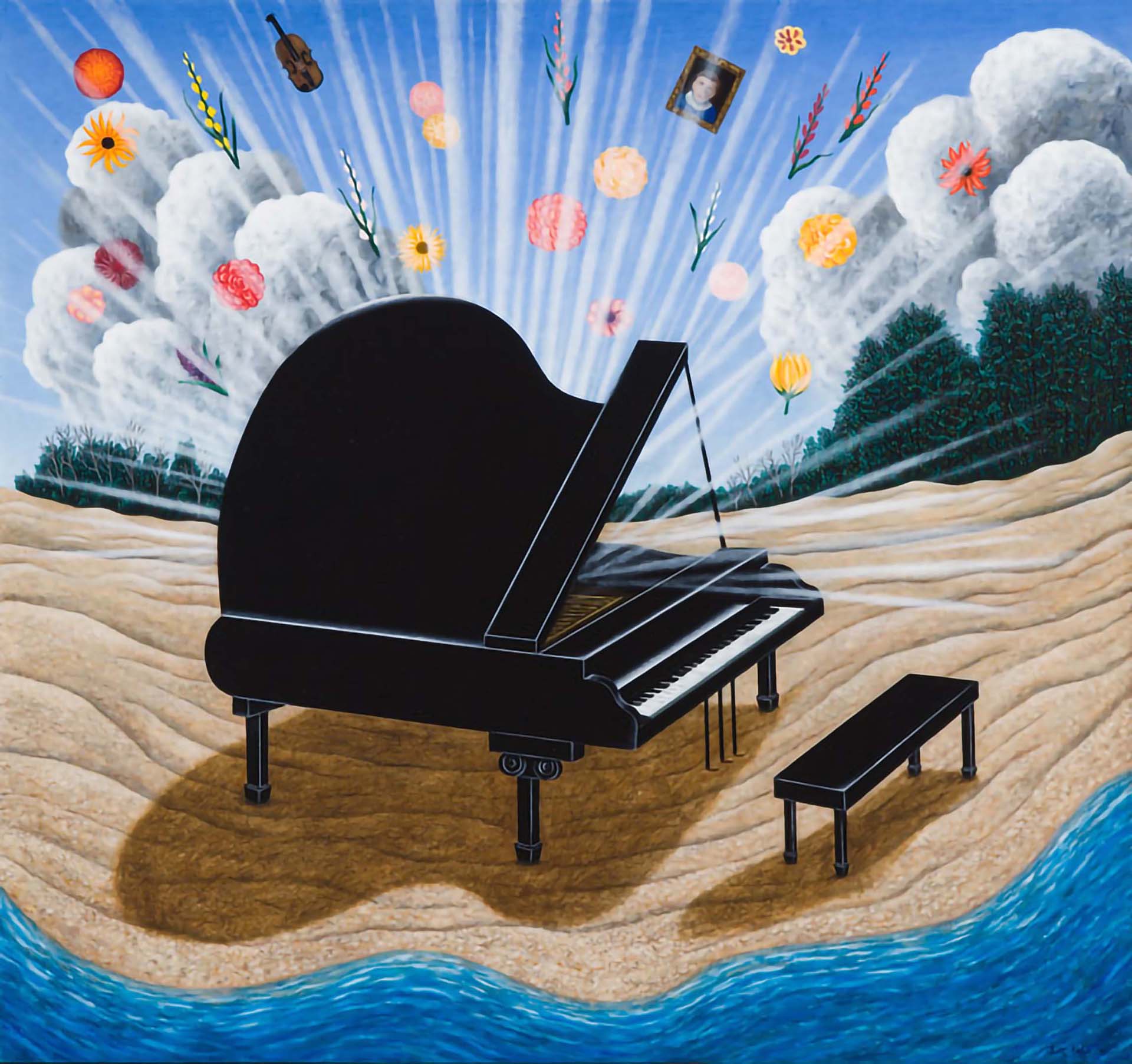
  • Interviews we love: Scott Kahn

    Interviews we love: Scott Kahn

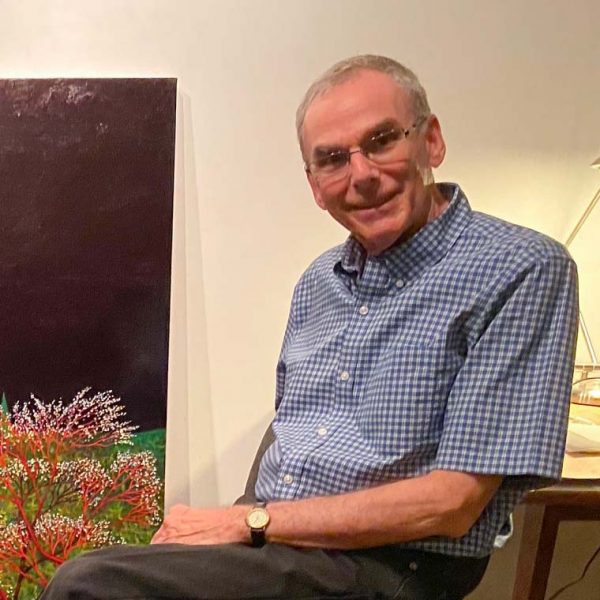
    We had the pleasure of conversing with a one-of-a-kind artist, Scott Kahn. We talked about how the pandemic has affected his artistic routine. Also, we delved into the worlds of his art and magical universes, searching for the connections at the base of art and life, always inextricably linked to each other. 

    Among the most renowned names in contemporary American art, Kahn has built a unique artistic and expressive language. His painting is chimerical, dreamlike, imaginative. The manifestations of his creative quintessence find inspiration in the portraiture and landscapes, nature, intimate spaces. These signs find space in diverse layers of colors that emerge in vivid canvas, incredibly intense. We thank Scott Kahn for this interview.

    At RDN Arts, we had the pleasure of conversing with a one-of-a-kind artist: Scott Kahn. Among the most renowned names in contemporary American art

    The allegorical and symbolic charge in your works is notable. Can you explain this choice and what is, according to you, the intersection of visual art and poetry?

    I had a particular interest in dreams, yin-yang symbol symbolism – and I guess I’m still painting in this kind of symbolic dreamlike way. You know, to me, it’s an elevated way to present my experience, and most importantly, it’s just my nature, and I can’t fight my nature. You might say it’s a subtext. It’s the way it’s reported to the viewer that suggests something beyond what is actually being seen. If I’m really successful, the painting achieves some poetic transcendence. 

    You said to consider your work to be a visual diary of your life. How do you choose which images to represent? What is the process that leads you to a choice in the representations you carry into your art?

    I wait for inspiration to pick up the brush and put it on canvas. It’s a little magical and mysterious. I often have to wait for that inspiration, that moment. The impulse that gets me to the canvas generally comes from something very recent in my life. Something I’ve seen, maybe even frequently. It could be a feeling. I don’t consider myself a conceptual artist, but I certainly want to express some symbolic and philosophical meaning through my work. 

    Interview with American Artist Scott Kahn
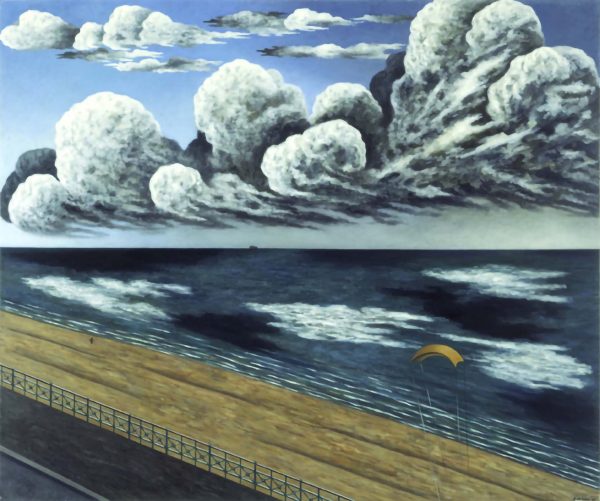
    CHANGEABLE WEATHER, 2007 SCOTT KAHN

    Covid surely affected, among many others, the world of art. How did your practice change during this period?

    For sure, it has. At the moment I’m working at home, painting smaller pictures on panels. I started working this way, and I love it. However, I’m really craving to get back at my studio in Brooklyn. I got a big canvas all prepared, ready to go. Generally, I very much like and find inspiration in nature but now I opened to news subject, like interiors. I did a couple of painting from the park, but mostly I find inspiration in my immediate environment. When I look down from my window, there is a garden, I look through leaves and branches. My view is more westerly, so I see the sunset at night, and sometimes I get up early to see the sunrise in the morning. These are the things I’ve been relying on for subject matter. 

    I’m too close to my current work to assess it, but I think it’s shifting a little bit, becoming more experimental, in a way very surreal. 

    Scott Kahn gallery: a conversation with the artist
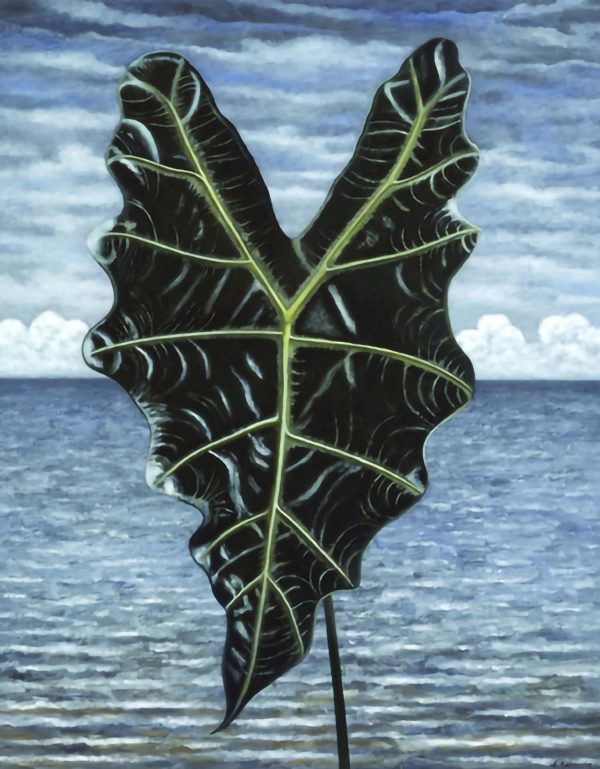
    Alocasia Leaf, 2007 SCOTT KAHN

    Why is it important to relate events that had actually happened to you?

    I have to wait to experience and see something that moves me to feel inspired. What I think is, if I don’t feel driven by what I’m trying to express, how can I expect the viewer to be compelled?

    Portraiture is an important part of your production. How did you approach it?

    I wondered: where do I begin? I started from myself! The first painting from life was a self-portrait. It was a small painting, it was an abstract painting originally, but I painted over it. Then I moved, and I started with landscapes. It has been four years where I taught myself to paint from life. I wanted to paint everything: I painted the interiors of the tiny apartment I had when the weather wasn’t good, I painted portraits, I asked the woman who was living downstairs to sit for a portrait, I painted all the traditional subject matters, but I was obsessive, I painted every leaf as I saw it as accurately as I could. I sold all those paintings, but while photorealism became popular and my art just brought me somewhere else.

    Interview with Scott Kahn, what's behind his stunning imagery
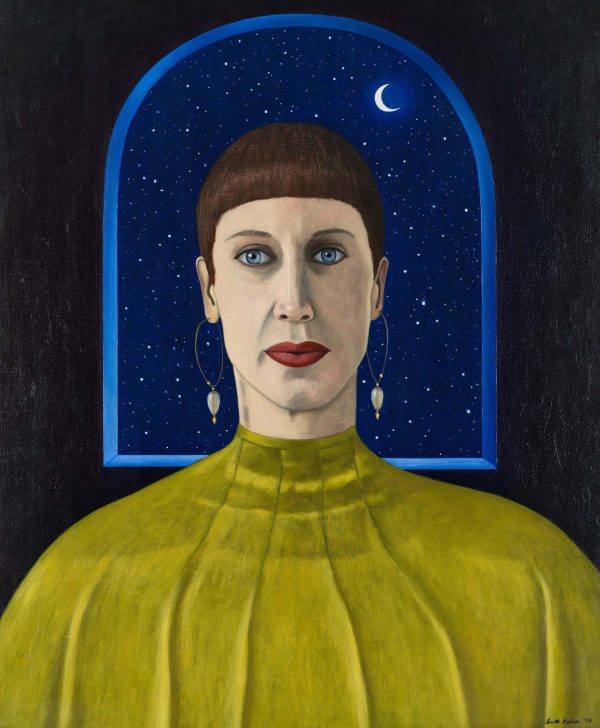
    Celeste, 1992 Scott Kahn

    Everybody thought I was a photorealist, and I had to revaluate myself again. I had exhausted the abstract art four years previously, had to discard my practice’s driving element, and now a new challenge came by! My work was photo-realistically looking, but I wasn’t using photographs. I was painting from observation. It bothered me because I think the main thing in art is to be uniquely yourself and not being summed in categories or movements. 

    I moved again, and a new period started; I painted in my studio, and there were no trees, no landscapes out the windows, there was NY. So I began to rely on my memory and imagination, which was the beginning of really finding my new voice.

    What are some of your early influences?

    There was this very famous artist in America, his name was Alexander Brook in the 30ties and 40ies he was one of the most famous and successful artists in this country. I used to paint on his property in Long Island, and he once said to me, “it’s best to have no Gods.” I have always been ispired by classical European artists, who stood the test of time. To be honest, I can’t say one artist or even a group of artists influenced me stylistically, but I always admired art that creates an illusion. I like the idea of two dimensional flat where you can make these otherworlds with perspective, form, color, and light.

    Interview with Scott Kahn; what is art for, Van Gogh influences and much more
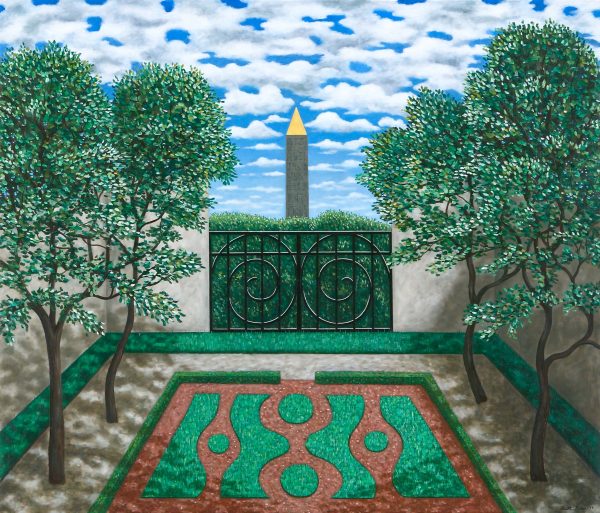
    OBELISK, 1999 SCOTT KAHN

    At the top of the list, I would say Van Gogh. Every of his painting makes me feel like my soul has been stabbed. It’s so moving and so compelling. When you see one of his paintings, it’s like there is no distance between your soul and the artist’s soul. It’s that straightforward and that direct.ù

    What part does education play in an artist’s work?

    I consider myself a self-taught artist. I admire the concept of death and poetry. You could say that artists are self-taught to the extent that whatever education they had, eventually, to find your voice, your unique voice, you have to throw up your education. I think the process for anyone, for any artist of substance, is to throw off the masters, as Alexander Brook said. The main thing I consider to be valuable about going to school, about getting an education of every sort, is that it gives you some technical skills, but ultimately I went through this project more consciously in my 20ies: you have to find your unique artistic nature.

    I think in a way it’s hard to avoid when you are young and sometimes impressionable, as a student, to prevent admiring artists who are well known and successful, who achieved fame, whether they are contemporary or recently dead. I admired Hans, Hoffman, Nolan, Stella. When you are a student, you kind of emulate what they are doing. I was working with acrylic paint, I was using masking tape, but, you know, I wasn’t yet aware of the need I had to have my work reflect my life and the circumstances of my life. I went through a several-year process to learn that.

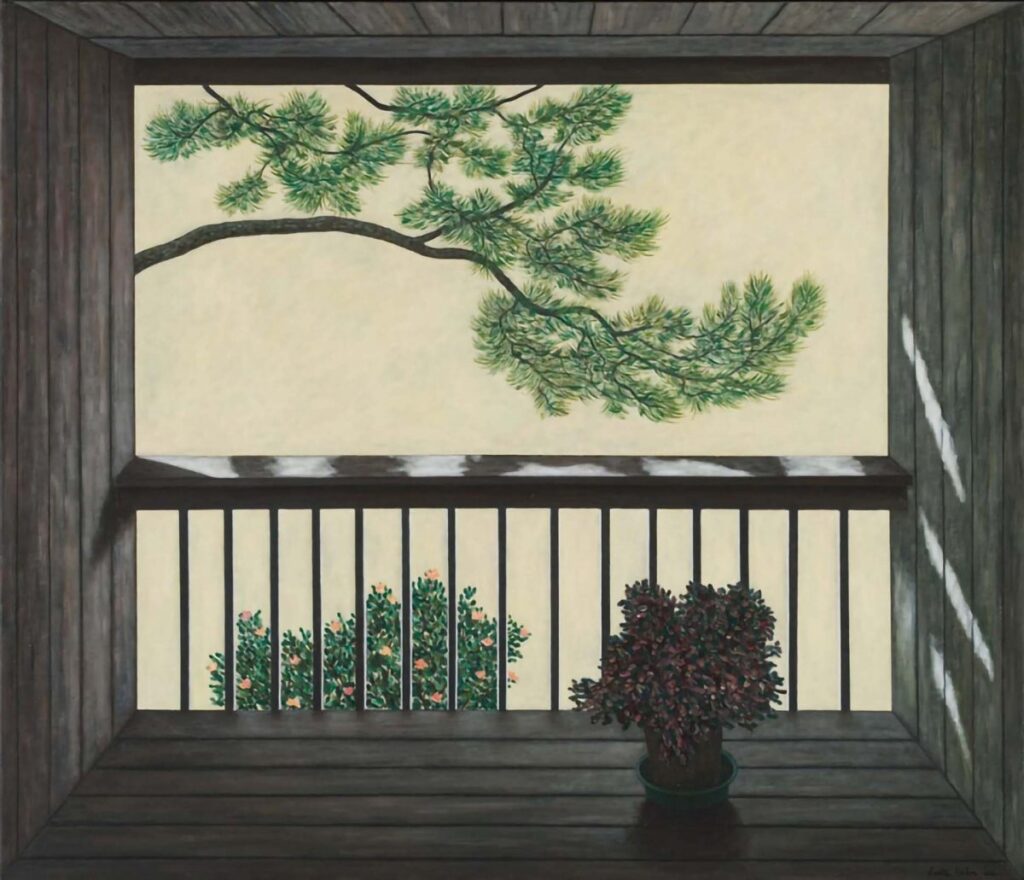
    Balcony Pine Run, 2002 SCOTT KAHN

    When I finished school, I traveled a bit, came back to NY, was still an abstract painter, was still emulating, and experimented a little bit with sculpture, installation and then I finished my education. I came back to NY after traveling, and I realized that those abstract paintings weren’t reflecting what I was living and the world around me. 

    Fortunately, I went to an art foundation at the end of Long Island and met Edward Albee. I was the only painter there. There were all playwriters. In that period, I quit the abstract mode. I felt exhausted. I reached a point where the abstract was meaningless to me. This was a blessing in disguise; from that point, a new era began in my art. 

    How is doing art in NY?

    When I first came to NY, all the galleries were in the upper east side, and over the years, they moved to different neighborhoods, and now they are all over the place. At first, when I was a student in the city, you could pretty much cover the gallery scene almost in a long afternoon between the upper east side and 57th street, and that was it! The whole art world changed, the internet contributed a lot to that.

    Your art is dreamlike, imaginative. It’s almost like taking off pre-established filters and finding the immediate and straightforward language of childhood. Do you think your art identifies itself to some extent with the world of children?

    I paint to understand myself and the world around me. That’s what children have to go through. As they develop and get older, they absorb these life experiences, and they come to an understanding. I cherish life and cherish freedom more than anything, and I feel very freedom as an artist to have total freedom when working. I think we all get trapped into some system or another to survive. It spends so much of your energy and time just needing those basic requirements but having total freedom and nobody telling you what to think. When I’m standing in front of a painting, even if it’s for an hour or two or three hours, I feel blessed. Funnily this all relates to the childlike nature of art.

    Scott Kahn’s artworks on RDN Arts: Scott Kahn paintings

  • Let’s take stock: Art Market 2020

    Let’s take stock: Art Market 2020

    Covid has left an indelible mark on the art market 2020, which has fielded unexpected resources despite the blows inflicted by the pandemic. Starting from digital and new forms of collaboration.


    Notable changes in the Art Market 2020

    The pandemic has upset the system and altered its equilibrium and structures. However, we will remember this year also for the ability to react and the innovative impetus that the sector has been able to implement, online and offline.

    The art market has discovered its vulnerability in the face of the unexpected outbreak of a global pandemic. Technology took the role of an ally of art in this scenario. With an unprecedented acceleration, in fact, the various operators have faced lockdowns. How? With online viewing rooms, live streaming, online art sales platforms, and virtual spaces. Digitization has taken over as an integral appendix to the business model of art.

    Let's take stock: Art Market 2020

    The cancellation of international fairs puts a good chunk of the turnover of art galleries in danger. Significant losses have accentuated the difficulties of a sector that is always on alert. Now more than ever, art discovered how to rely on a matrix of communities and has resorted to new forms of collaboration and networking. The virtual projects shared between galleries and the fair subjects were the tool to remain standing against the wind.

    Commitment and Digitization

    The exhibitions and closed spaces have damaged many art professions, with a high degree of emergency and precariousness. Therefore, there has been a wave of collective demands on the part of workers in the culture and visual arts. That of the art professions is surely a whole ecosystem. One that connected networks of artists, curators, gallery assistants, freelancers, and museum employees. In particular, all these people from all around the world share experiences and re-establish constructions and prospects for the future.

    Notable changes in the Art Market 2020. The pandemic has upset the system and altered its equilibrium and structures.

    Still on the subject of plural subjectivities and collective subjects, activism and commitment in the world of art, in December 2020, the Black Lives Matter movement sealed a year that devoted a lot of attention, at least on paper, to diversity.

    Covid-19 had a very strong impact on the online art market. It significantly accelerated a process of growth and development that had been active for several years now.
    Even the most doubtful and reluctant today can no longer deny that an important transformation of the market has taken place. This transformation was indeed much faster and more successful than anyone could ever have imagined.
    No one now has any doubts that the online market is not a passing phenomenon, but a reality that is here to stay.

  • Discovering Studio, Louvre’s new department

    Discovering Studio, Louvre’s new department

    The Louvre is organizing an auction to build Studio, a new educational department.

    Since the advent of the Coronavirus, museum education was among the first to perish in the art system. It has happened in small businesses, but also in the most important in the world, such as the MoMA in New York. Here sudden layoffs revealed a work sector’s fragility mostly at the mercy of precarious and “expendable” contracts. It’s evident the need to strengthen and institutionalize the industry. As is happening now at the Louvre in Paris.


    Studio and the charity auction at the Louvre in Paris

    The Louvre is organizing an auction to build Studio, a new educational department.

    The most celebrated museum ever. At this moment of forced closure due to the second wave of pandemic, the Louvre decided to relaunch teaching. How? Setting up Studio, a new 1150 square meter space dedicated to art and cultural education. The area will open in autumn 2021 to host families, school groups, disabled, temporary workers. To carry out the project, Bid for the Louvre, Enchérissez pour le Louvre there was an online auction organized by Christie’s, with the support of another auction house, Drouot.

    The auction of the Louvre in Paris: the prizes to get


    Many artists donated works of art to the cause. There are Candida Höfer with Louvre Paris XXII Museum, Pierre Soulages with Painting, 64.5 x 91 cm, 12 January 1962, Xavier Veilhan with Mobile phone n ° 9; and again Johan Creten, Eva Jospin and Jean-Michel Othoniel.

    The most celebrated museum ever. At this moment of forced closure due to the second wave of pandemic, the Louvre decided to relaunch teaching. How? Setting up Studio, a new 1150 square meter space dedicated to art and cultural education.

    The experiences offered by the museum are indeed very tempting. For example the opportunity to attend the annual scientific examination of the Mona Lisa together with experts; Magic night with a torch, a night visit to the Louvre behind closed doors. And it’s not all yet. There will be Concert des rois, a concert “for a few close friends” performed in the Salle des Caryatides, the former reception hall of France’s kings; a visit with the president and director Jean-Luc Martinez, curator of the heritage and specialist in Greek statuary.

    It will be possible to take a tour on the roofs of the museum with the street artist JR to enjoy a breathtaking view. It will also be possible to give one’s name to a newly planted tree or to a restored bench in the Jardin des Tuileries. Also, take a virtual tour of the three Louvres in Paris, Lens, Abu Dhabi. And the offers don’t end there. In fact, it is also possible to choose between the Panthère de Cartier bracelet, a Dior set consisting of a trunk with your initials and a miniature high fashion dress imagined by fashion designer Maria Grazia Chiuri or a purse explicitly created by Virgil Abloh for Off-White. The Louvre has deployed all its resources for an unprecedented event.

  • Gropius Bau ‘s retrospective on Yayoi Kusama

    Gropius Bau ‘s retrospective on Yayoi Kusama

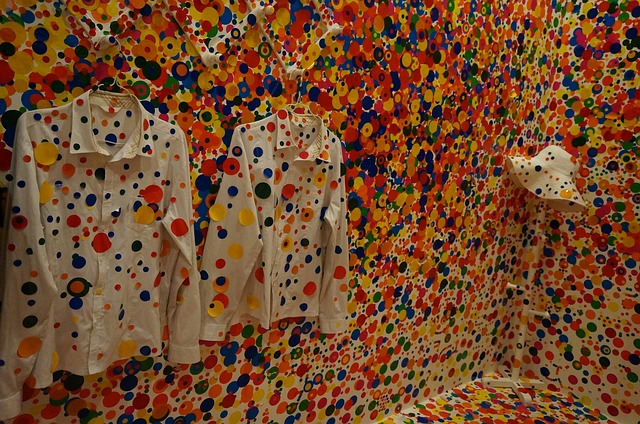
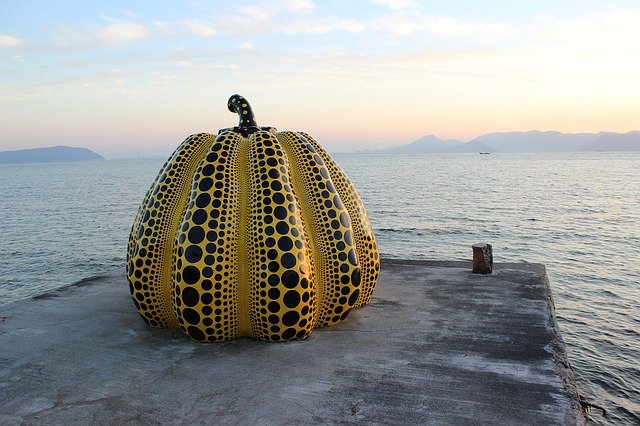
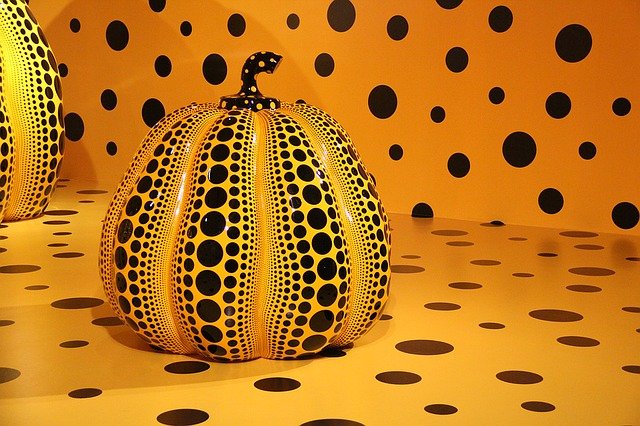
    In 2021, the Gropius Bau in Berlin dedicates a retrospective to the artist Yayoi Kusama. The ‘queen of polka dots’, with whom she decorated the living rooms and streets of New York from 1958 to 1973. She didn’t stop making art even during the dramatic weeks of the lockdown. Instead, she gave her fans a message of hope. In particular, through a poem in free verse, the artist encouraged humanity towards solidarity, peace, respect, and mutual trust. In spring 2021, the Gropius Bau in Berlin will host a major Kusama’s exhibition in Berlin.

    The exhibition, the first-ever organized in Germany, will retrace 70 years of the famous Japanese artist’s production, reconstructing her exhibitions and the most famous “Infinity Mirror rooms.“

    In 2021, the Gropius Bau in Berlin dedicates a retrospective to the artist Yayoi Kusama.

    The fair that will open on 19 March 2021 at the Gropius Bau in Berlin is the first-ever in Germany. Yayoi Kusama: A Retrospective is the title of the show that will retrace 70 years of Yayoi Kusama’s career, highlighting, in particular, the influence her art had in Europe.

    The Yayoi Kusama exhibition at the Gropius Bau in Berlin

    The exhibition will reconstruct eight shows by Kusama from 1952 to 1983. The retrospective focuses in particular on how the Japanese artist’s work developed over the decades.

    The show begins in fact with the exhibitions set up in her hometown, Matsumoto, Yayoi Kusama Solo Exhibition and Yayoi Kusama Recent Works (1952). In these, the immersive nature of her subsequent research already emerged.

    The Yayoi Kusama exhibition at the Gropius Bau in Berlin

    Aggregation: One Thousand Boats Show is Kusama’s first environmental installation in New York. It included a wooden rowboat covered with phallus-shaped objects made of white fabric.

    This motif then reappeared in the 1964 Driving Image Show in New York. Here, in 1965, she created her first Infinity Mirror Room. This type of installation made the artist famous all over the world.

    It is a series of inflatable sculptures in a sprawling shape, in bright colors and covered with polka dots (a typical sign of Kusama), enclosed in a room full of mirrors. Thus, the continuous play of reflections creates the illusion of infinite space, a fantastic and psychedelic world governed by the artist’s singular creatures.
    Gropius Bau 's retrospective on Yayoi Kusama

    “Polka dots are a way to infinity,” Kusama explained in 1968. “When we cancel nature and our body with polka dots, we become part of the unity of our environment. I become part of the eternal, and we cancel ourselves in Love “.

    The influence of Yayoi Kusama in the world

    “We are delighted that our Yayoi Kusama retrospective showcases the work of a visionary artist,” said Stephanie Rosenthal, director of the Gropius Bau.

    “Kusama not only established a unique status in the art world of the 1960s with her multidisciplinary practice. Her political statements also contributed to the feminist debate of the time. Some issues that have not lost their importance today can be found from the earliest stages of his work.

    This retrospective will reflect on the artist’s presence in Germany and retrace the development of her art from the 1950s. One of the objectives of the Berlin exhibition “, concludes Rosenthal,” is to emphasize the important role she played.”

    The show will include a new Infinity Mirror Room, recent paintings and an installation in the Gropius Bau atrium.

  • MakerArt 2020: a new frontier

    MakerArt 2020: a new frontier

    MakerArt, the section dedicated to the dialogue between art and new technologies of Maker Faire Rome, comes back from  10 to 13 December 2020. Here a long list of artists, and their projects will be online to see.


    A new participatory experience

    MakerArt is not so much a migration of artistic content already existing on the platform but a real design of the whole. The specific works are conceived, created, proposed, observed, and experienced according to physical and virtual logic.

    MakerArt, the section dedicated to the dialogue between art and new technologies of Maker Faire Rome, comes back from  10 to 13 December 2020.

    The event director is Valentino Catricalà. In particular, he invited creators and international artists to imagine a synergistic path to develop a new participatory experience.

    “MakerArt is the only section of the fair that will also maintain a physical nature, thanks to the many collaborations. Here artists, intellectuals, scientists, and creatives interact to generate new visions of the future. Being present in this particular historical moment is, above all, a way to demonstrate that art and technology can help us. This, especially to reflect on a complex era like the one we are living in “

    More than 40 artists created works specifically for MakerArt 2020. Many artists worldwide, including Juan Cortes, Ken Goldberg, Claudia Hart, MASBEDO, Miltos Manetas, Donato Piccolo, Signe Pierce, Quayola, Celine Tricart, Anouk Wipprecht Jakob Kudsk Steensen.

    Online performance and augmented reality

    MakerArt involves Antoni Abad, Elena Bellantoni, and Rä di Martino. In fact, these will be able to offer the public a representation of their artistic concepts by exploiting the potential of Augmented Reality.

    It will be possible to experience the virtual reality projects in 3D / 360 / and those with VR viewers. Alessandro Bernard, Francesco Bertelè, Jörg Courtial, Antonello Faretta, Igor Imhoff, Keisuke Itoh, Jacek Nagłowski, and Patryk Jordanowicz, Chiara Passa, Michel Reilhac, Jakob Kudsk Steensen, Lino Strangis, Celine Tricart, Vanessa Vozzo are the makers of these great projects.

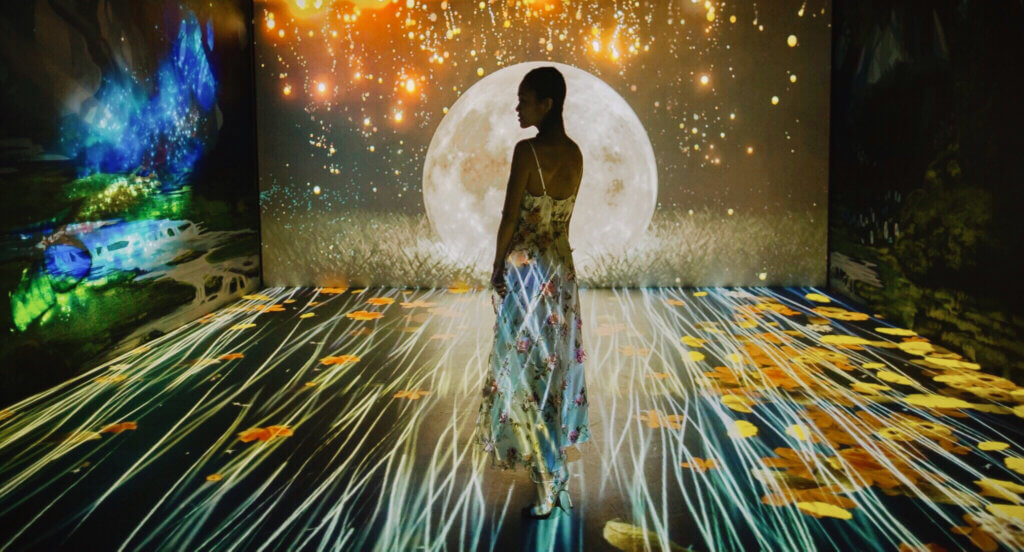
    There is also space for online performances by Apotropia, MASBEDO, Donato Piccolo, Roberto Pugliese. The works are designed ad hoc for the platform by Gaia De Megni, Claudia Hart, Steve Lambert. In this section, we will literally immerse ourselves in visual and sensory experiences.

    What does it mean to make art for MarkerArt? We still don’t know a precise answer, on the other hand, we know what it takes to make it happen. Among other things, the ability to dialogue. For example, the conversation with technology, a decidedly new area of ​​knowledge.

  • Guardians of Sleep, a project for dreamers

    Guardians of Sleep, a project for dreamers

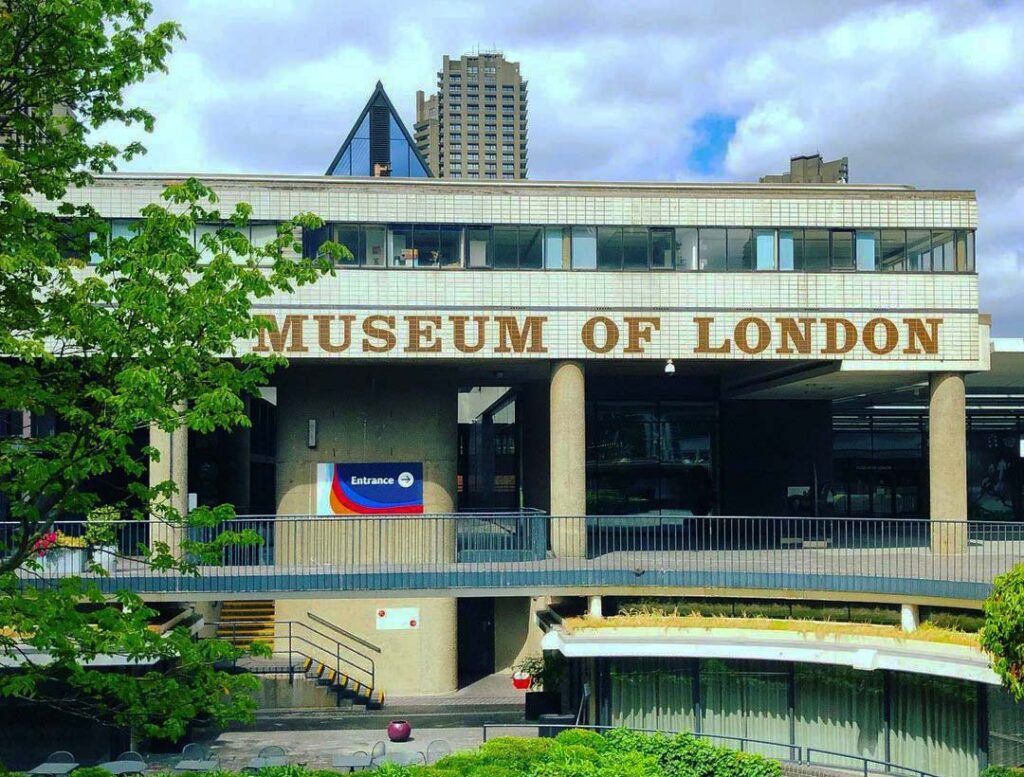
    Guardians of Sleep is the new project of the Museum of London: collecting the dreams of Londoners during the Covid-19 crisis. This is the latest initiative of the Museum of London.


    The birth of Guardians of Sleep

    The pandemic has radically changed our daily lifestyle and the way we relate to others. The stress, anxiety, and worries brought about by the global pandemic affect our sleep quality and, inevitably, our dreams. Starting from this consideration, the Museum of London launched Guardians of Sleep. In particular, the aim is to collect dreams in the era of Covid-19. The project is part of the Collecting COVID initiative. The London museum’s initiative is in collaboration with the Museum of Dreams of Western University in Canada.

    Guardians of Sleep is the new project of the Museum of London: collecting the dreams of Londoners during the Covid-19 crisis. This is the latest initiative of the Museum of London.

    Museum of London digital curator Foteini Aravani said she had the idea for Guardians of Sleep after friends and colleagues told her they had more vivid dreams during the lockdown. The project was born with the desire to understand how the pandemic affects the health of our minds. It does it this way: by going to search in the subconscious and our dreams. Sharon Sliwinski, the Museum of Dreams’ creator at Western University in Canada, explained that the project is inspired by Sigmund Freud’s “guardian of sleep”. Therefore, the research aims to give more tools in understanding dreams even in these moments of crisis.

    A project for dreamers

    The project is aimed exclusively at the citizens of London. The goal is to investigate the nocturnal brain activity of the British capital inhabitants. Also, finding correspondences between the conflicting dreams and feelings that are affecting our days. The result will be a real oneiric “archive”. The fruit of the individual participants’ stories – invited to register on the website of the English museum by next January 15th.

    Aravani recalled that traditionally the museums’ collections about dreams have always done so in artistic/visual forms.

    “I want to have the voice of dreamers in our collection,” Aravani emphasized. In fact, the dreams will be collected in the form of oral history, without a psychological analysis or interpretation, and made available to researchers.

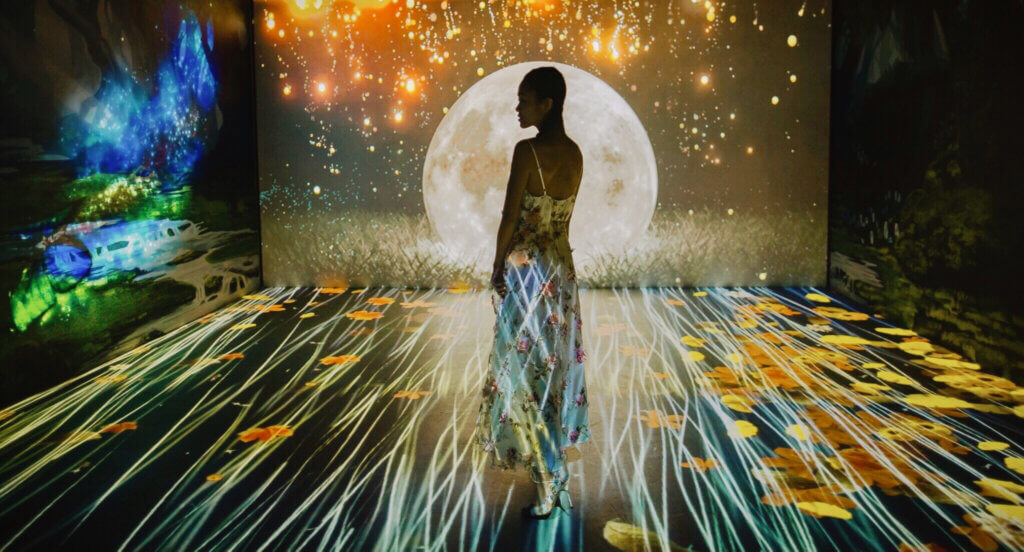
    Guardians of Sleep is the new project of the Museum of London
    Photo by © May Phan

    In fact, in February 2021, the final phase of this fascinating initiative will proceed. Each person will expose their dreams in a series of conversations conducted in virtual mode. The London Museum will then record and catalog them as part of the more extensive Collecting COVID project.

    A new, stimulating project by the Museum of London focuses particularly on this aspect, putting our dream activity in response to the lockdown under the magnifying glass.

    We have to wait for the new year to find out what strange dreams Londoners may have had. The project has all the credentials to become a fascinating psychological and social cross-section of the historical period we are experiencing. An exciting acquisition to reflect on the very subtle relationships between the unconscious and the outside world.

  • The new Shenzhen Natural History Museum

    The new Shenzhen Natural History Museum

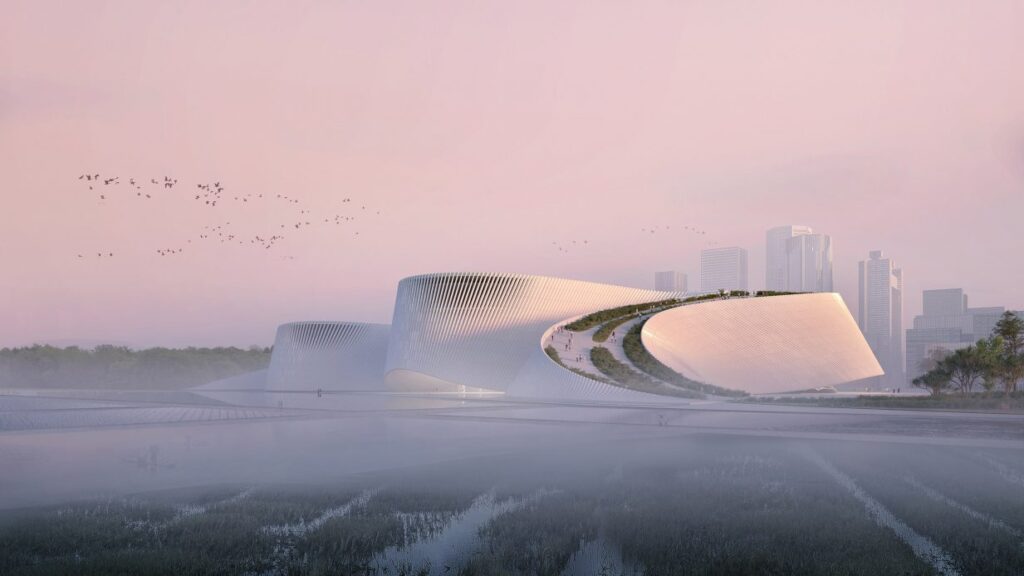
    China continues to commission great architecture: the city of Shenzen will have its new Museum of Natural History, built on a futuristic project by 3XN, B + H Architects, and Zhubo Design.

    Shenzhen Natural History Museum

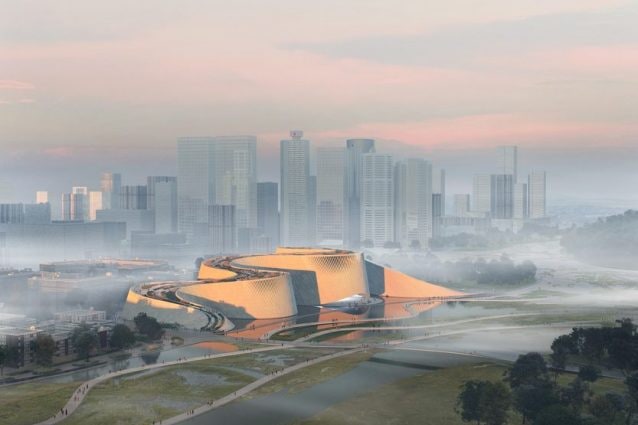
    Studios B + H, 3XN and Zhubo Design won the competition to build the new Shenzhen Natural History Museum. Located in the Pingshan district of Shenzhen, near Lake Yanzi, the new museum will spread over ​​42,000 m2. The building will be a world-class natural science museum dedicated to interpreting natural evolution laws. It will also showcase Shenzhen’s geographies and ecology from a global perspective.

    Studios B + H, 3XN and Zhubo Design won the competition to build the new Shenzhen Natural History Museum.

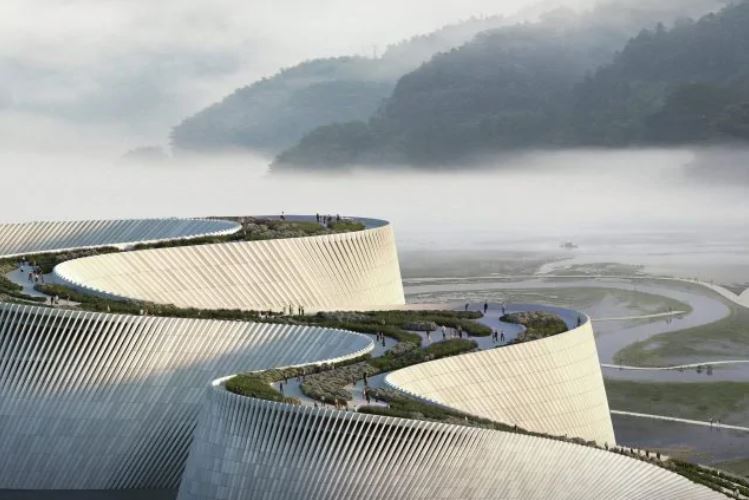
    Entitled “Delta,” the new museum rises right from the river delta. The design invites visitors and residents to travel along its accessible green roof. Here, also, there is a public park that enhances the organic geometries of the Natural History Museum.

    “Like a river that finds its shape in balance with the earth, each curve frames a new spectacular view of the surrounding park, hills and lake from the dedicated panoramic terraces along the rooftop park”. Says the team of winning architects of the contest. “Like water flowing down a river, the undulating shape leads guests into a” cave “inspired passage that is connected to the museum atrium and activated by multiple cafes and public areas, which acts as a beating heart of the building. “.

    Entitled "Delta," the new museum rises right from the river delta. The design invites visitors and residents to travel along its accessible green roof.

    The water element played an essential role in the proposal’s conception by 3XN, B + H Architects and Zhubo Design. This facility surely captures the unique atmosphere of a riverside location and discovers water’s timeless ownership as a concept. A transparent membrane will cover the structure, allowing the interior spaces to welcome natural light. With hundreds of millions of euros, the entire project will develop over an area of ​​100,000 square meters. It seems that it will certainly be a new cultural hub for inhabitants and tourists.

    The center of a new metropolis

    Point of connection between Honk Kong and the rest of the south-eastern Chinese territory, Shenzen today presents itself as a modern metropolis home to millions of inhabitants. The buildings intended for trade and the economy are numerous; at the same time, however, there are no places of historical and cultural interest. That’s why the local administration decided to launch an international call, according to the central government’s policies.

    The water element played an essential role in the proposal's conception by 3XN, B + H Architects and Zhubo Design. This facility surely captures the unique atmosphere of a riverside location and discovers water's timeless ownership as a concept.

    To combine tradition and contemporary spirit, the Asian giant also moves in the field of architectural regulation. A few months ago, China instituted a formal ban on copycatting. The practice involves the building cloning of iconic Western structures, such as the reproduction of the Eiffel Tower in Hangzhou and the copy of the White House in Jiangsu.

    In the cultural field, China has commissioned the construction of impressive modern architectures that bear great signatures. The Changsha Meixihu International Culture & Art Center by Zaha Hadid, the Ordos Art & City Museum by MAD Architects, a studio that during the past summer has presented the project for the Shenzhen Bay Culture Park, and then the first Chinese National Maritime Museum in Tianjin, a project by COX Architecture (Philip Cox). These are just some examples of splendid buildings, realities that, however, risk becoming ghost museums in the absence of human resources to make them active.

  • Digital Art: a new creative horizon?

    Digital Art: a new creative horizon?

    Digital art takes its first steps in New York in the 1930s. The gallery owner of the surrealists, Julien Levy wondered how to commercialize the filmic experiments of his artists. In particular, the gallery owner thought of selling them in a limited edition to enhance cinema as a narrative borrowed from literature and as an artistic language close to the pictorial image and photography. Levy wrote in his memoirs: “Films conceived by important painters such as Duchamp, Léger, or Dalì should have the same value as a canvas painted by their hand”.


    Digital art: the artistic phenomenon

    Even if the first video experiments of the Futurists, the Surrealists and the ‘900 avant-gardes were ahead of their time. Video art is an artistic phenomenon that becomes official towards the end of the 60s and the early 70s. In the 90s, it became a mass phenomenon thanks to digital technologies, becoming one of the progenitors of digital art. Technique and creativity, art and technologies are always a winning combination.

    Today, festivals and initiatives related to video art and digital art are multiplying exponentially. However, this, without there being a true horizontal culture, is capable of providing the minimum and necessary tools for understanding this phenomenon. 

    Digital art: the artistic phenomenon

    In fact, the debate is often still sadly today on the artistic object and on the “problem” of its reproducibility.

    Collecting Digital forms of Art

    Of course, there are many problems related to the marketing and archiving of video art and digital artworks. Nonetheless, a very evident trend has emerged in recent years. Collectors, especially the most refined and demanding ones and the most important foundations, are increasingly interested in the phenomenon of digital art. They started buying digital works with correct legal procedures, thus winning not only the exploitation rights, but also the possibility of creating new original masters on new media.

    Digital art is carving out its own privileged space among collectors. This is also thanks to the powerful scenic impact with strong innovative symbolic meanings. However, paradoxically limiting its diffusion the most is its immaterial nature and the ease with which it can be reproduced. These peculiarities generate a strong distrust of collectors accustomed to the object as a “fetish”. Historically sculpture, painting, drawing and up to a certain time also to photography.

    Digital artists have a wide range of techniques to express themselves creatively. The digital revolution has changed the process of creating images and their diffusion.

    It is a question of ubiquitous, interactive, spectacular, immersive, personalized consumption. Or collective, shared and free. For example the GIF-animatic by Canadian Lorna Mills exhibited in March on 45 mega screens in Times Square. Only those who own the original files and all the necessary certifications regarding the authenticity of that work can claim to have it in order to be able to replicate it in a few centuries.

  • Broken Nature arrives at MoMA

    Broken Nature arrives at MoMA

    Broken Nature opens at the MoMA. The Museum hosts the main exhibition of the XXII International Exhibition of the Triennale di Milano. The 2019 exhibit was curated by Paola Antonelli (Senior Curator of the Department of Architecture and Design).


    This one in the United States is a different version of the Triennale di Milano’s one. In particular, it counts a selection of 45 works of the 100 originally exhibited at the Triennale Milano. The exhibit aims to tell, reflect, and open new perspectives on the relationship between Man and Nature. The purpose is to focus on possible solutions to adopt in order to repair, strengthen and rebuild this dialogue.

    broken nature

    A year after its conclusion, the project has come back to life on the other side of the ocean. The Museum of Modern Art in New York will host it until August 15, 2021. In particular, the show proposes as an in-depth investigation into the connections between men and the natural environment. Also, it boasts a profound changes that have compromised these ties over the years. Broken Nature has been rearranged in the recently renovated US museum, reopened to the public, in a new version.

    Broken Nature: the relationship between man and nature filtrated by design

    The show highlights the role that creative practices can play in strengthening the link between the natural kingdoms and men. All this by reflecting particularly on the concept of “restorative design”. The capacity, therefore, that this discipline can have in designing solutions through objects and new systems when the relationship between Man and Nature undergoes cracks.

    Broken Nature: the relationship between man and nature filtrated by design

    The projects and designers selected for the exhibition, including Mustafa Ali Faruki, Aki Inomata, Alex Goad, Julia Lohmann, Christien Meindertsma and Studio Swine, demonstrate the “restorative” potential of design.

    “From reviving coral reefs that are discoloring at an unprecedented rate due to warmer waters, to pondering solutions to feed an overpopulated planet. ‘Broken Nature’ argues that design and architecture can be instrumental in initiating a constructive change on different levels, circumstances and time periods”, explains Paola Antonelli.

    The works exhibited at MoMA address some of the themes covered in the Triennale exhibition. They also highlight the relationships between designers, engineers, artists, and scientists and how these communities work synergistically.

    The exhibition is curated by Paola Antonelli and by Anna Burckhardt, Assistant Curator of the Department of Architecture and Design. At the Triennale the curatorial team led by Paola Antonelli was made up of Ala Tannir, Laura Maeran and Erica Petrillo.

Our Content.
Your Inbox

Join thousands of art lovers

Receive art news, market analysis and updates about new artists on the website

By subscribing you agree to receive RDN Arts emails. Unsubscribe at any time. Privacy Policy.