Author: xerkss

  • The Future of Art

    The Future of Art

    The Future of Art

    With the ever-changing climate, political, socio-economical, and global, the future is uncertain. However these things are clear: climate change, shifting demographics, and geopolitics are shifting rapidly. We can rest assured knowing that there will be changes. It’s worth considering how artists will respond to these changes. As well as what purpose art serves, now and in the future.

    Reports suggest that by 2040 the impacts of human-caused climate change will be inescapable. Making it the big issue at the center of art. Art could become more collective and experiential. With political movements and environmental issues taking center stage. The Instagram age for digital art could change from being visible online for all to see to anonymity becoming more desirable than fame.

    Art inclusivity
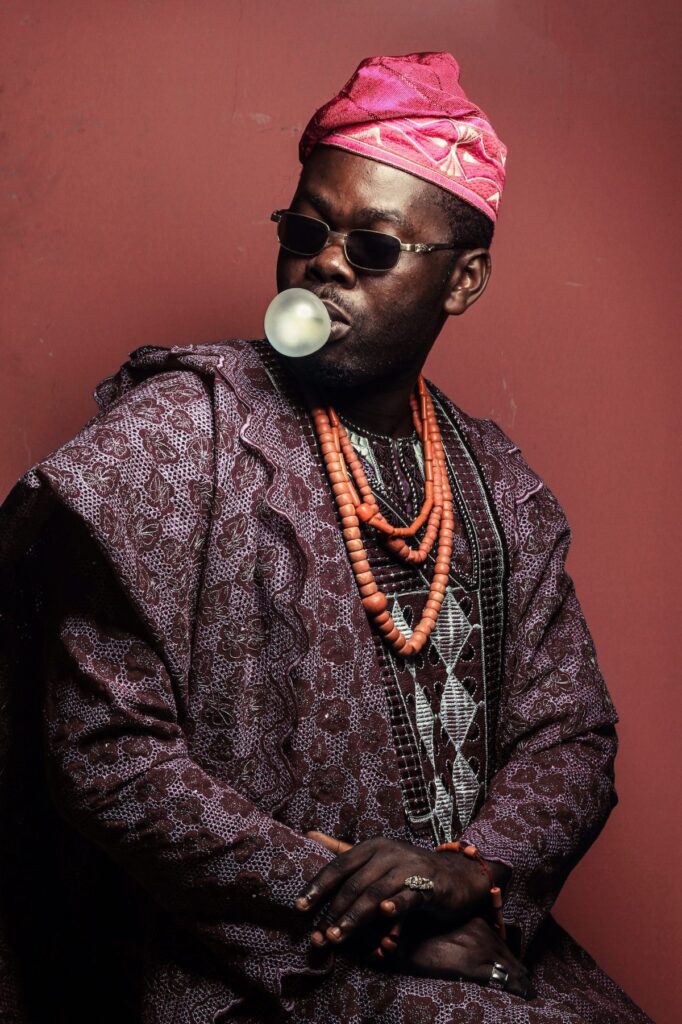
    Noma Osula, The Future of Art
    Noma Osula, Untitled

    Curator Jeffreen M. Hayes, suggest that “ art in 20 years will be much more fluid than it is today,”. “In the sense of boundaries being collapsed between media. Between the kinds of art that are labeled art, in the traditional sense. I also see it being much more representative of our growing and shifting demographics, so more artists of color, more female-identified works, and everything in between.” He continued.

    Some curators look at African Art and artists as the future of art. These artists from African, African-American, Afro-European, and Afro-Latin descent are trending globally. The recent showing at the 2019 Venice Benniale marked an opening to African diaspora artists. Artists are challenging the old social norms through different artistic mediums, and are all on center stage.

    Activism

    Activism-art campaigns are another trend in the art world. Activist- artists are revealing the power dynamics and unseemly cost that it takes to operate within the art world. Decolonize This Place, a group of artists and activists describing themselves as an “action-oriented movement centering around Indigenous struggle, Black liberation, free Palestine, global wage workers, and de-gentrification protested against the New York’s Whitney Museum of Art vice-chairman Warren B Kanders. Kanders owns a company that manufactures military supplies currently being used to tear-gas people around the world. The protest took place this spring, calling for the Whitney to remove Kanders. The letter produced by the group also contained over 200 signatures from artists and curators, including some of which who took part in the biennial.

    Even social media is feeling the effects of activist artists. Photographer Spencer Tunick took part recently in protest at Facebook headquarters where he and the activist group The National Coalition Against Censorship (NCAC) against Facebook’s female nudity policy.

    The Age of Modern Art

    The Future of Art
    Jean-Michel Basquiat “Untitled.” 1984

    In 20 years, the market might not differ from what it is today. The modern painting still dominating the art scene. However, works from the second half of the 20th Century may include more women and minorities. These artists may increase in value over time as we’ve seen in the past. The 2017 sale of a painting by Jean-Michel Basquiat, Untitled (1984), set a new record for the most expensive contemporary artwork sold at auction for $110.4m. Also, the market for contemporary African and African diaspora continues to set records. Kerry James Marshall sold at an astounding $21.1m for his work” Past Times: (1997). Setting a new record for living African-American artist.

    Modern art sales are still the major driver within the art world. Their sales dominating the market. Most modern paintings made during the first half of the 20th Century continue to be in high demand. And are currently the most inticing and most expensive artworks on the market.

    The Future of Art

    While some things may not change for the arts, others may change entirely. Museums, for example, maybe an altogether very different place from where we go today.

    A museum is not just a place for the audience to visit art. It’s a platform for the artist’s voice to be heard. A museum is a place to find inspiration, where we can take refuge in, and lose ourself in the thoughts and creations of others. With those voices changing steadily museums will most likely include a more diverse selection of artwork. Which will most likely include more minorities and female artists.
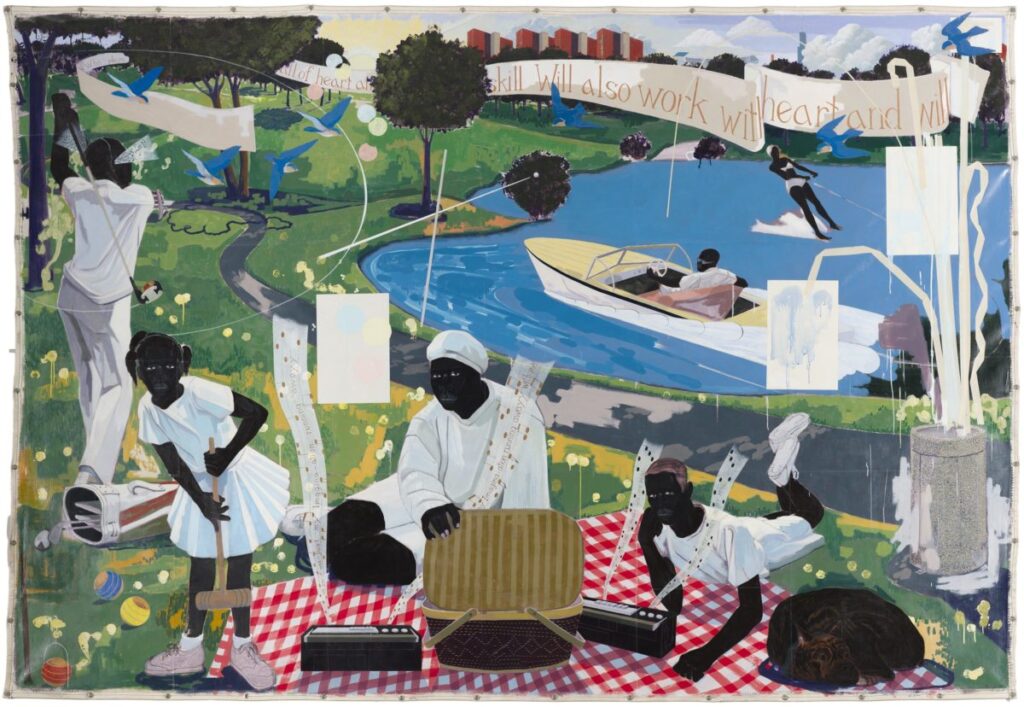
    James Kerry Marshall, The Future of Art
    Kerry James Marshall, Past Times, 1997

    “Cultural institutions and collections are highly political and have perpetuated and consolidated a very dogmatic understanding of history,” says Maite Borjabad curator at The Art Institue of Chicago. “That’s why collections like the Art Institute are the perfect material to help us rewrite histories. Plural, rather than just a history.”

    In the very near future, art might not look like what we’re used too. However, it will be a reflection of our culture, and politics and environment, just as its always been. This is what makes the future of art so exciting. The ever-changing social norms and taboos shifting. Activists artists using their platform to question politics and normative social tropes. Hopeful artists exploring new mediums to create and display with. The future of art, like all things, is undetermined. It will be what we make it. Hopefully, we will make it a brave and daring one, where we use the past to better our tomorrow.
  • Sold Picasso Stays at the Met

    Sold Picasso Stays at the Met

    Picasso to Stay at the Met

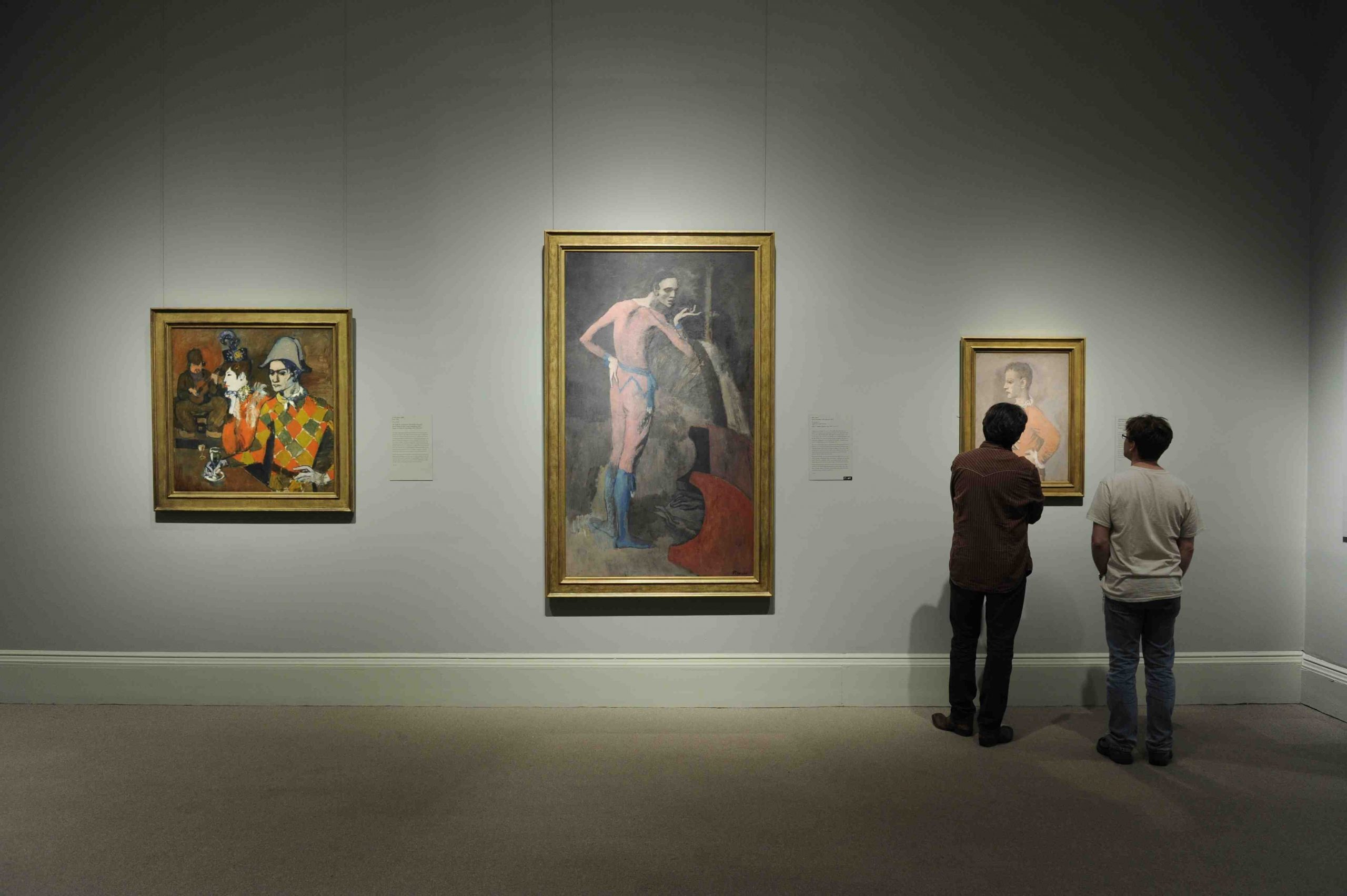
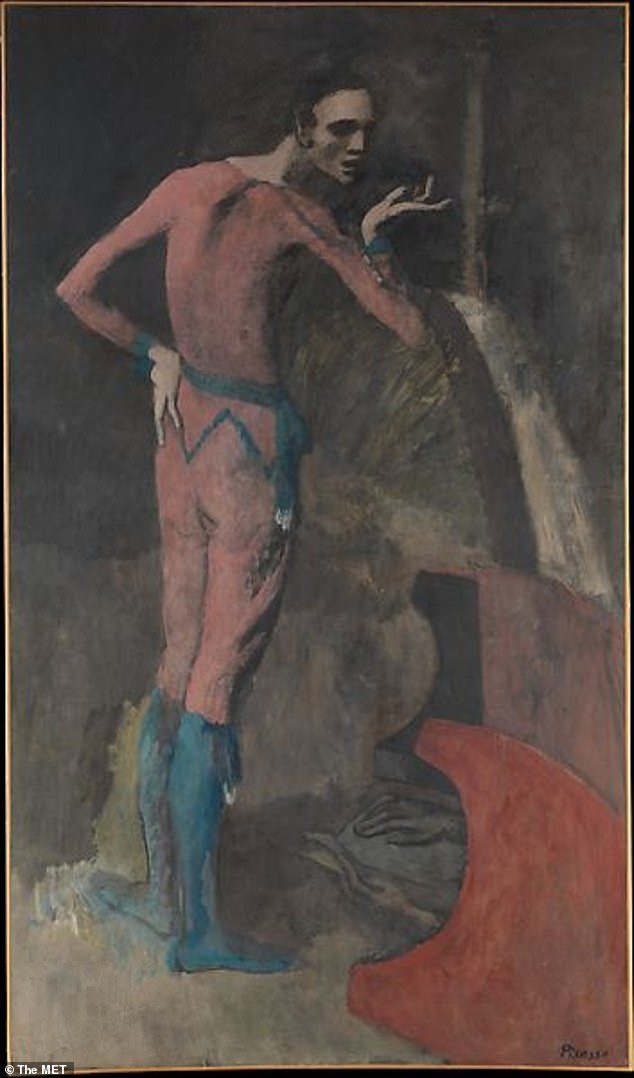
    Staying at New York’s Metropolitan Museum is a Pablo Picasso painting sold by a German Jewish businessman to fund his escape from Nazis. The case’s final verdict came on Wednesday, at the United States Court of Appeals for the Second Circuit. The ruling states that the businessman’s great-grandniece had left an “unreasonable” delay. Demanding the return of the Picasso painting ‘The Actor’ over half a century since its arrival at the museum. Previously belonging to Paul and Alice Leffmann, who sold the artwork to a private dealer in 1938. Hoping to raise funds to flee fascist Italy for Switzerland. Their great -grandniece, Laurel Zuckerman, argued that her ancestors sold the “masterwork” for $12,000 under extreme circumstances. Therefore voiding the transaction.

    Sold Picasso Stays at the Met
    Pablo Picasso, The Actor, 1904

    Recognizing that following the terrors of the Nazi era, there was cause to implement “some measure of justice, albeit incomplete” to victims and their descendants. However, Chief Judge Katzmann stated, that there was an “unreasonable” delay in the demand for the return of the artwork. Its provenance published in the Met’s catalog since 1967. However, no request for its return was made 58 years since acquiring the artwork.

    “Indeed, over seventy years passed between the sale of the painting in 1938. Zuckerman’s demand that the Met return the Painting in 2010,” court documents noted. The judge also said that “this is not a case where the identity of the buyer was unknown to the seller or the lost property was difficult to locate.”

    Nazi Era Losses

    Paul Leffman had made other restitution claims for Nazi-era losses. However, he had never made any approach about the painting, the ruling stated. “Neither the Leffmanns nor their heirs made a demand for the Painting until 2010. This delay was unreasonable, and it prejudiced the Met,”. The courts finding also states after so many years, a lack of living witnesses and documentary evidence would interfere with the claim. The finding concludes that faded memories and questionable hearsay testimony would impede the resolution of the claim. A lower district court also ruled in favor of the Met in February.

    In a statement made by a spokesperson for the Met claims the museum “considers all Nazi-era claims thoroughly and responsibly,”. Continuing it has previously returned unlawfully appropriated works. The painting issued between 1904-1905, is described by the Met as “simple yet haunting.” The painting underwent repair work in 2010 after a visitor fell onto it causing a 6-inch tear in the canvas.

  • How Art Creates Social Change

    How Art Creates Social Change

    Social Art

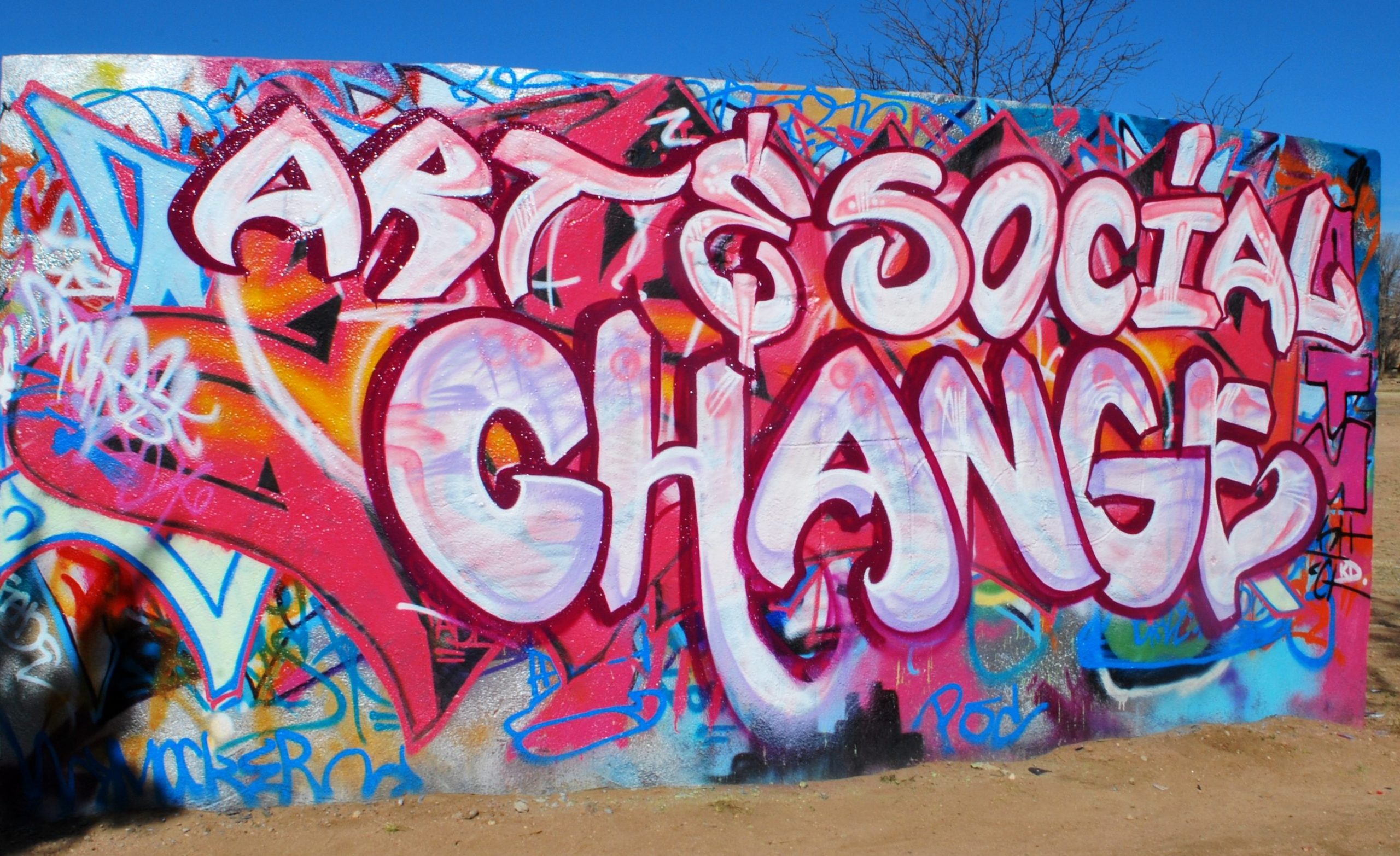
    Where the arts thrive, freedom of expression thrives. Art can directly empower the most vulnerable members of society. How does art create social change? Today, artists are committing themselves to create works that address pressing social issues. Using their platform to advocate for changes that the world needs. While some artists use traditional forms of art to make work that reflects on social change others are reaching out – adhering new mediums. This engages communities in an interactive exchange. For example, an artwork might take the form of a website, a street performance, a story exchange, or an urban planning project. Socially engaged art ignites outrage and demands for change. Creating, a platform for reflection, collaboration, and building community. These artistic expressions focus on the community, whether it is local or global.

    Dada Movement, How Art Creates Social Change
    The Art Critic 1919-20 Raoul Hausmann 1886-1971 Purchased 1974 http://www.tate.org.uk/art/work/T01918

    Many movements in art history have tried to change society in one way or another. Responding to the first world war, Dada artists advocated for silliness and nonsensical behavior in daily life. Groups like the Situationist International played a major role in the revolutionary Paris events of 1968. Exposing the divisions between artists, consumers, and the means of production. And of course, art takes the form of protest, when addressing political and social issues with direct action.

    Art Politics

    In 1969 a group of Moroccan artist known as the Casablanca School traveled to Marrakech. Owing to the majority of their style to the aesthetic of Bauhaus in Germany, they staged an exhibition in the street. Tapping into the history of abstraction in Arabic art, and heavily influenced by the “hard-edge” paintings in New York by Frank Stella or Elsworth Kelly. They staged an exhibition in the streets. The paintings hung on the city’s dusty walls, were a riot of color and pattern. Taking place near the city medina the Exposition-Manifeste intended to snub the official showroom of Moroccan art.

    In more current events, companies like Facebook have faced backlash from censoring art. So much so that they were forced to meet with activist protesting the site’s stance on female nudity. The #FreetheNipple movement is bringing awareness to the constant inequalities women face when bearing their bodies.

    How Art brings about Social Change

    In 2014, a Pakistani teenager called Saba Qaiser was shot by her father and uncle and thrown into a river. It was her punishment for having eloped with a man she loved. Saba survived and became the protagonist of the documentary about so-called honor killings. A Girl in the River: The Price of Forgiveness. The film went on to win an Oscar.

    How Art Creates Social Change
    A Girl in The River, Still, 2014

    After seeing the film, Pakistan’s Prime Minister Nawaz Sharif promised to take a tougher line on honor killings. Consequently, he fulfilled his promise. Parliament passed a new law that will make it much harder for the perpetrators to walk free.

    In this case, through the power of storytelling, the Pakistani people called for change. Good art educates and creates empathy, and empathy and understanding leads to change. Global leaders in business and politics are increasingly aware of this. Investitures in art is a way of engaging with communities. Thus, improving lives and boosting economic growth. Of course, stories of injustice, protest and resilience are waiting to be told all over the world.

    Art and the artist plays a major role in our society. An artist leads, follows, uplifts and provokes us with their work. Creative thinking for social change comes from politicians, economists or business leaders. Likewise, it can come just as easily from musicians, journalists, and visual artists. Art not only provides pleasure and creative inspiration; it also creates a dialogue and brings important issues to the public eye.

  • Noma Osula: Challenging Social Norms

    Noma Osula: Challenging Social Norms

    Out Of Africa: Noma Osula

    The contemporary art movement out of Africa doesn’t seem to be slowing down. Especially not for Nigerian born photographer, Noma Osula. Born and based in Lagos, Nigeria, Osula interest in portraiture is a mainstay in the young artist life. Teaching himself how to use the camera on his final year of university. He found photography to be an ideal format to express his ideas, and portraiture a compelling genre to display them in.

    Noma Osula, Out of Africa
    Noma Osula, Untitled

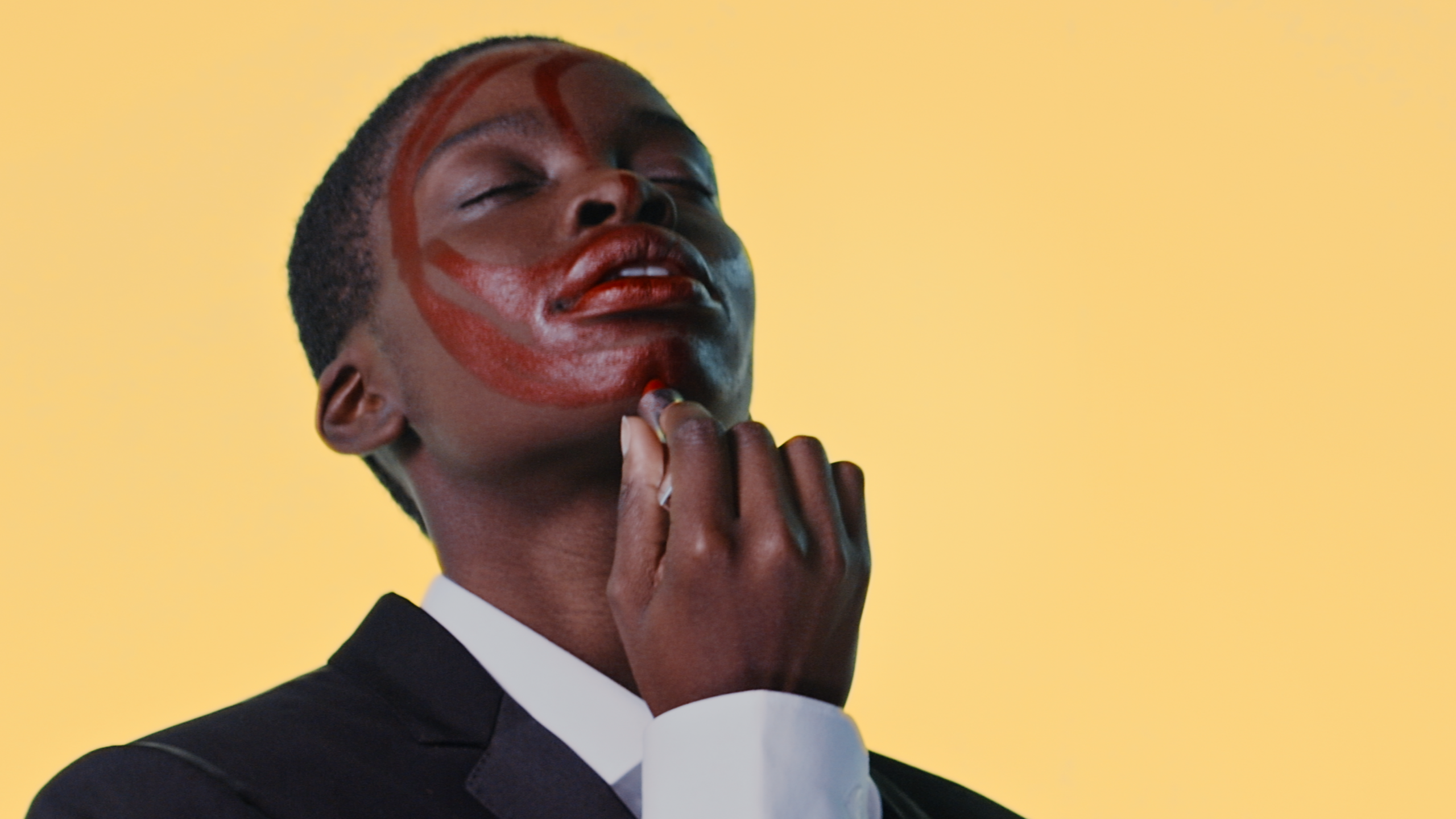
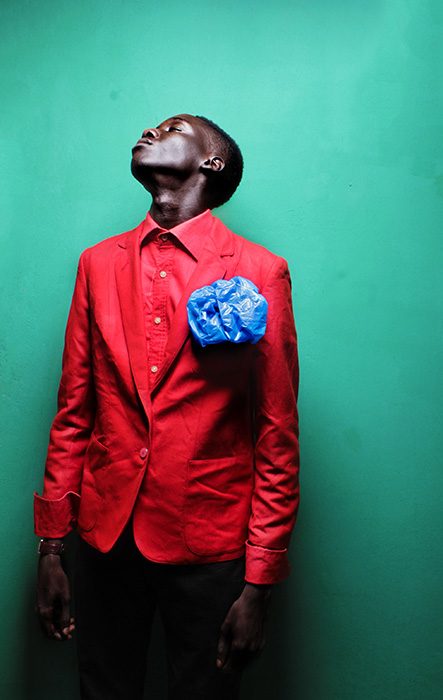
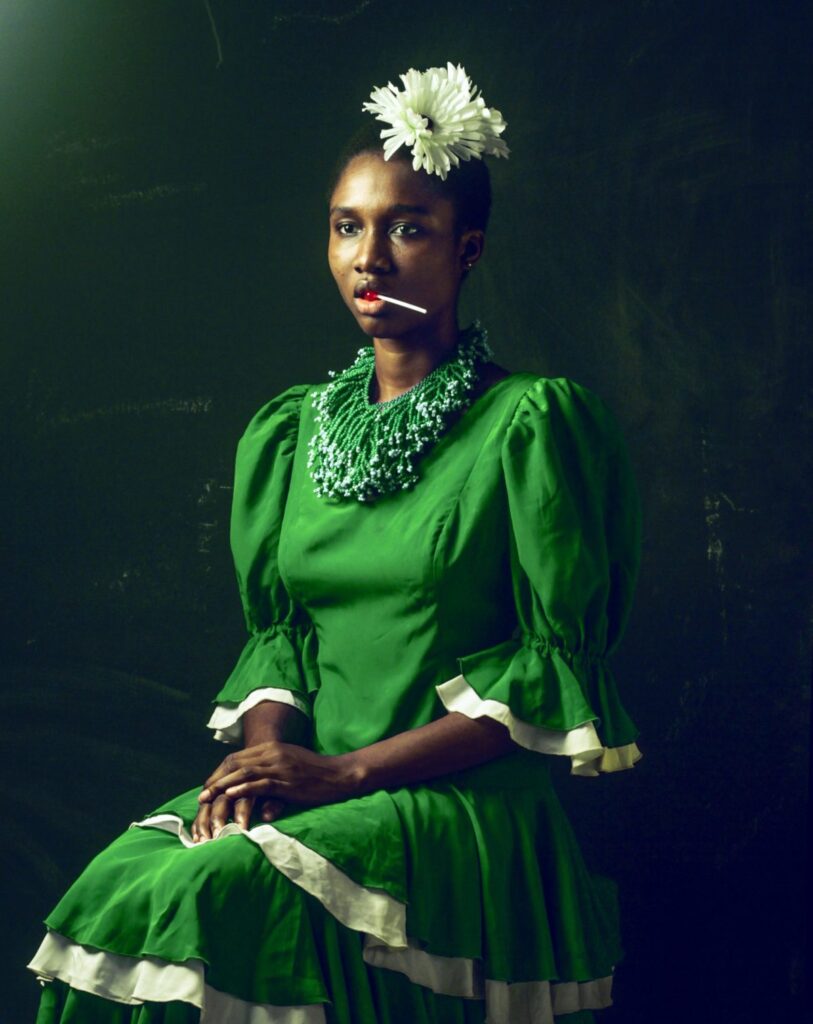
    Using color as the focal point in many of his photographs, he captures moments as vivid as they are somber. Dominating the background of his photographs are bursts of color, However, the jubilance feels misplaced in the scenes’ wider contexts.

    “Capturing people in bright outfits and awkward poses or weird gestures is my way to reflect on what I see around me,” he explained. “I get a lot of inspiration from my locale — Lagos is a chaotic, colorful, energetic place to be in, and that definitely informs my pictures.” He continues to explain the use of color. “Life in Nigeria is very much defined by color, in a way that’s completely different from the West,” he said. “We have a lot of vibrant patterns all around us, from the clothes we wear to the objects we use.”

    The Portraiture: Noma Osula

    However, Osula’s pictures don’t just want to challenge local customs. Their aim is to also critique the West’s perceived prestige, in Africa. Through the subjects, the textiles, accessories, and garments they wear, and the sets that surround them, his photographs celebrate the African aesthetic.

    “Throughout modern history, western standards have deeply influenced and affected many aspects in African society, including what’s supposed to be aesthetically pleasing,” Osula said. “We’ve been taught to appreciate sharp noses over wide ones, light skin over dark. To shy away from our form of beauty. ” He continued.

    Noma Osula
    Noma Osula, Untitled

    “Both subjects didn’t care of what other people might think of them posing like that,” Osula said. “They were ready to experiment, which is why I chose them. We have a lot of social norms in Nigeria, and Africa in general, when it comes to beauty, identity, sexuality, and gender. Society is quite conservative and conforming. There are set ideas on what’s feminine or macho, from colors to garments to how you behave in public. With the people in my photos, I’m trying to push back on that.”

    The old tropes and narrow purview of Africa and its many peoples from different countries and cultures is long overdue for a change. With that, Osula believes artists from the continent must help with that narrative. “Most people think of Africa as one big country, not a continent. It’s like, we’re all the same to them. They think it’s a jungle, where people still live in primitive ways and according to exotic notions of beauty. Western photography has often pushed that perspective, as have the media. But we are not primitive,” Osula said.

    Unafraid of challenging the social norms Noma Osula work chronicles the beginnings of new era in African art.

  • 50th Anniversary Stonewall

    50th Anniversary Stonewall

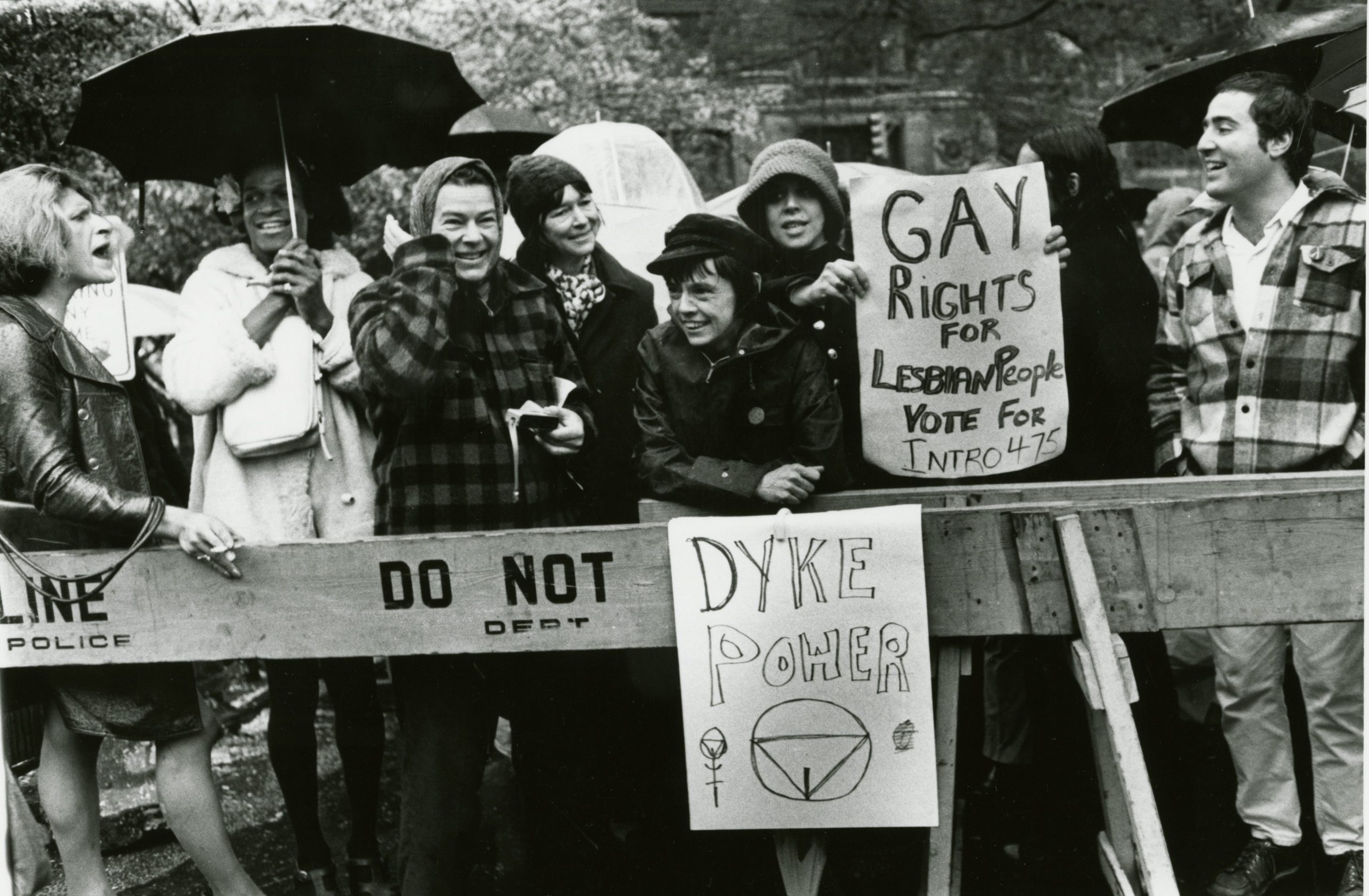
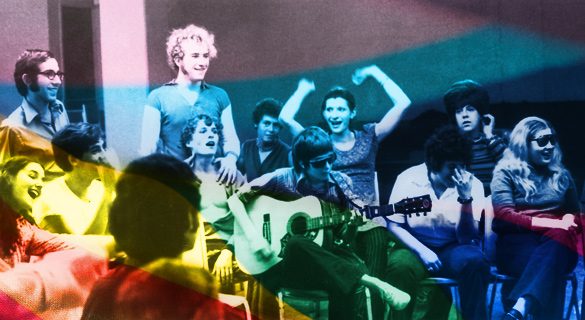
    Raids were not uncommon in New York during the 1960s. However, in the early hours of June 28, 1969, at the Stonewall Inn, the crowd erupted. People hurling insults swiftly changed to coins, beer cans, and bricks. Reinforcements and supporters alike rushed to the scene; joining in the chaos. Partially demolished, Stonewall, reopened the next night. The rioters returned, as well as the police, and for six days after, the melee continued. Half armed with protest songs, the others armed with tear gas. The news barely covering the fiasco on Christopher Street while it raged on. However, the damage completed, and the course of history was forever changed, the movement would not be silenced.

    Artist fight censorship on many levels. While the march continues today, history has shown us constant examples of resistance. As the 50th anniversary of Stonewall comes to a close, here are a few exhibitions highlighting the key intersection of art and activism in the community.

    Grey Art Gallery: Art After Stonewall

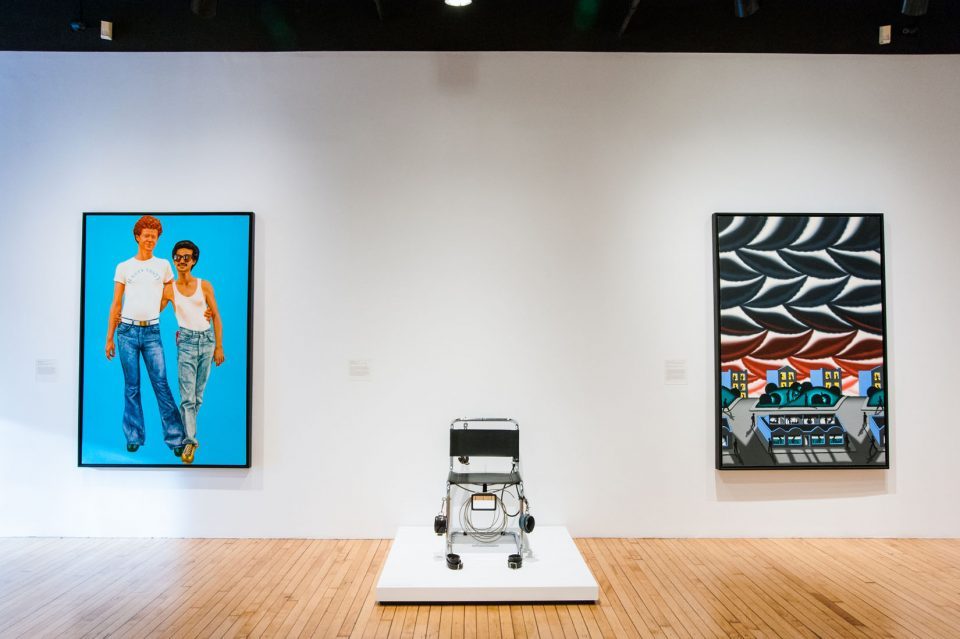
    Grey Art Gallery Exhibition: Art After Stonewall
    Art After Stonewall, Exhibit, Photo Cred: Nick Papananias

    Art after Stonewall, 1969–1989 is an exhibition examining the impact on the visual culture of the LGBTQ liberation movement. The show includes works by openly LGBTQ artists such as Scott Burton, Vaginal Davis, Lyle Andy Warhol. The show includes straight-identified artists such as Alice Neel, Jean-Michel Basquiat, Lynda Benglis, and Kiki Smith. Highlighting terms of their engagement with the newly emerging queer subculture. Divided into two parts, the show is on view at the Leslie-Lohman Museum of Gay and Lesbian Art.

    Although the Stonewall riots marked a turning point in queer civil rights, a decade later the struggle for liberation was facing extreme backlash. There was also tension within the movement, which unfortunately was not immune from perpetuating sexism, racism, and transphobia.

    Nobody Promised You Tomorrow

    Stonewall artist
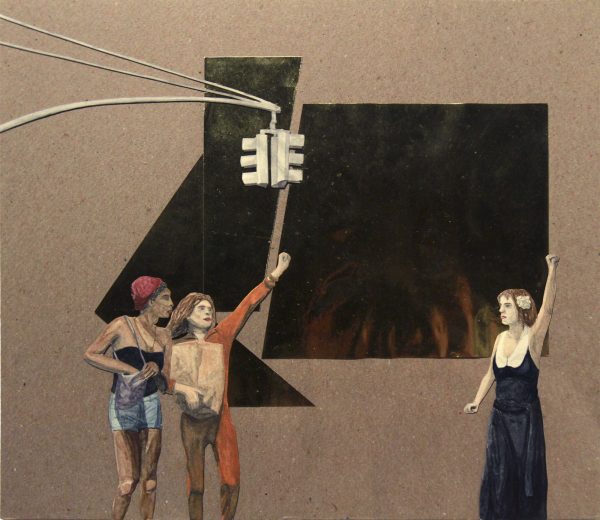
    Tuesday Smillie S.T.A.R., 2012.

    Nobody Promised You Tomorrow: Art 50 Years After Stonewall explores the profound legacy within contemporary art and visual culture. Its title is inspired by transgender artist and activist Marsha P. Johnson. Her rallying cry underscores both the precariousness and the vitality of LGBTQ+ communities.

    The exhibition presents twenty-eight LGBTQ+ artists born after 1969. Their works confronting the political condition we face today. These artists engage the overlapping themes of revolt, care, desire.

    Love & Resistance: Stonewall 50

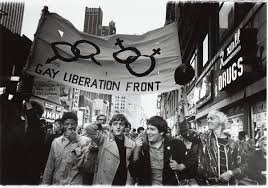
    Gay Liberation Marches after Stonewall riots
    Gay Liberation Front marches on Times Square, New York City. Diana Davies, 1969.

    Illustrating the history of the LGBTQ+ movement through the photographs of Kay Tobin Lahusen and Diana Davies, two pioneering photojournalists is the Love & Resistance Stonewall 50 exhibition. The exhibition captures the pivotal events of this era.

    Providing historical context for the city’s gay rights movement the exhibition uses photographs taken during the 1960s and ’70s. These are “among the great queer treasures of the New York Public Library”. Inviting attendees to learn about the beginnings of the modern LGBTQ movement. Including, topics such as culture, and activism today.

    New York Historical Society: Stonewall 50

    Letting Loose and Fighting Back: LGBTQ Nightlife Before and After Stonewall focuses on ways in which nightlife has been critical in shaping LGBTQ identity. Examining the building of community, developing political awareness, and fostering genres of creative expression. Beginning with gay bars in the 1950s and 1960s and continuing through the rise of the gay liberation movement as they serve as a refuge of expression in the LBGTQ community.

    Letting Loose and Fighting Back, New York Historical Society

    By the Force of Our Presence: Highlights from the Lesbian Herstory Archives. Focuses on the lesbian lives before and after Stonewall. The exhibition features photographs, books and manuscripts, periodicals, posters, and other various contributions from the lesbian community.

    Also at the New York Historical Society, A special installation: Say It Loud, Out and Proud: Fifty Years of Pride. The exhibition features imagery from New York City Pride marches and other LGBTQ protests from the 1960s to the present day.

    Revolutions, for the most part, are not televised. Rarely do they receive support from around the globe. However, that support has been hard fought, and every inch is well earned. These exhibitions are a small reminder of how far we’ve come as a global community in supporting each other’s rights to freedom and love. And still how far we have to go.

  • Caravaggio Painting Found

    Caravaggio Painting Found

    Lost Caravaggio Painting

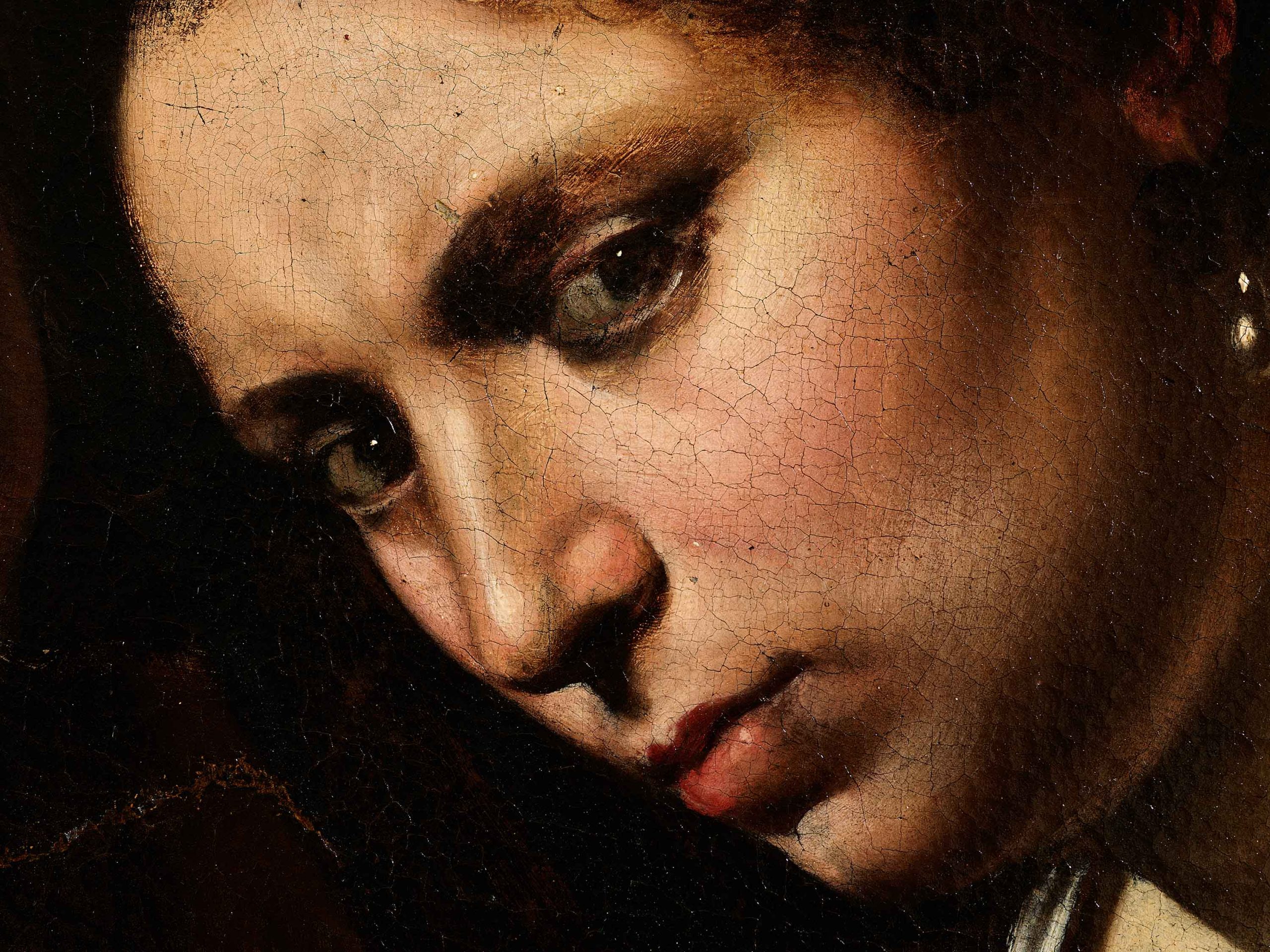
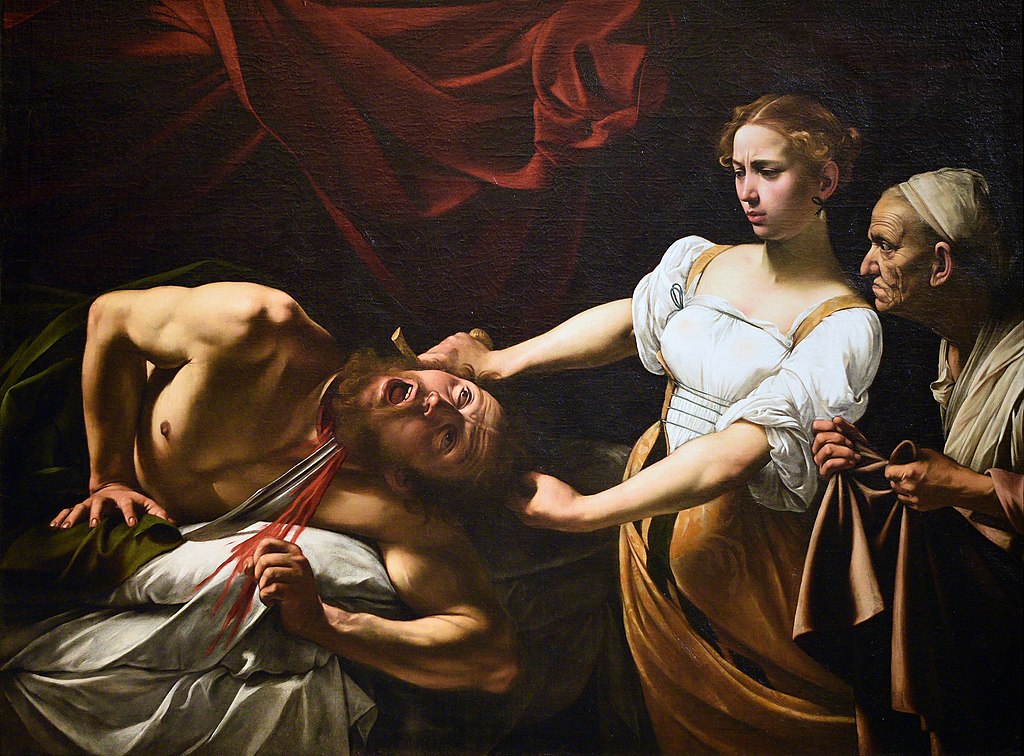
    The discovery of a Caravaggio painting in a French attic has finally sold in mysterious and dramatic fashion. The painting, worth up to $170 million is now with its mysterious foreign buyer. Purchasing the painting with much fanfare, just two days before the auction. A man who was clearing his loft had the painting identified by art expert Eric Turquin. He identified the work as a lost work of Italian master Michelangelo Merisi da Caravaggio. The painting’s subject is, “Judith and Holofernes,”. It illustrates a grisly passage from the Old Testament’s Book of Judith. Showing the eponymous young widow beheading the Assyrian general Holofernes after seducing him in his tent. The commissioning of the painting is circa 1600.

    Caravaggio, Judith and Holoferenes, ca 1599

    After its discovery, French authorities decided to restrict exportation with a ban on the work. Consequently, citing its importance to the art world and a need to “fully investigate” the piece. Announcing in February at a press conference, that the painting would be auctioned on June 27. Fully expecting it to receive upwards of $170 million. However, a mystery buyer described by art specialist Turquin as “someone close to an important museum” stepped in to secure the Caravaggio painting.

    Private Buyer Sale

    For now, the buyer remains anonymous. Auction house Marc Labarbe and art specialist Turquin said in a statement that the work had been “sold privately to a foreign buyer,”. In addition, the purchase price and identity of the buyer are unattainable due to a confidentiality agreement.

    In addition, the location of the painting is another murky detail. However, auctioneers said in a statement that “the painting will consequently be leaving French soil,”. Finally, Turquin added that the painting would soon be displayed “in an important museum.”

    “We received an offer that could not be ignored and which we communicated to the owners of the painting. The fact that the offer came from someone close to an important museum convinced the sellers to accept,” Turquin said in a statement.

    While rigorously analyzing the painting for over five years. Critics seemed confident with the authenticity of the painting. With special attention given to the work’s technical, stylistic and historical detail to confirm its validity.

    Critics believe the work to be the second on the same subject. Caravaggio’s first depiction of Judith and Holofernes painted circa 1600 hangs in Rome’s Palazzo Barberini.


  • The Great American Artist

    The Great American Artist

    The earliest stylings of American artist were based primarily on English ideals. During the 19th century, American artists became well known. However, it was in the 20th century when the United States began its major influence on the international art world. The great American artist took on the worlds art stage with their talent, daring and innovation.

    The first prominent art movement in the United States was Realism. These scenes depict contemporary social realities and the lives of ordinary people. Abstract Expressionism is the first American movement to specifically achieve international influence. It emphasized on conveying strong emotional or expressive content through abstraction. Following that movement was Pop Art. This is characterized by the use of recognizable imagery from popular cultures.  Advertisements, celebrities, and comic book characters are all apart of pop art. The U.S. also played a major role in modernism, Neo-Expressionism and Graffiti Art.

    Here is a list of a few great American artists, and their amazing masterpieces.

    Landscape – Thomas Cole

    Thomas Cole - Great American Artist
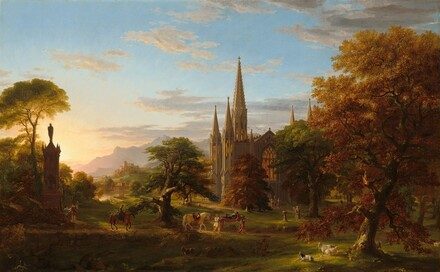
    Thomas Cole, The Return, 1837

    Technically English, Thomas Cole is a great American artist. He is most known for his depictions of the American landscape. Originally an engraver, Cole was a self-taught painter. He relied on books and studied the works of other artists. However, this does not diminish his natural talent. While he is known for his landscapes, Cole also painted many allegorical works. Most famous among them was a five-part series The Course Empire.

    Cole’s work went on to influence entire generations. He founded the Hudson River School and his work is currently on display at museums and galleries across America.

    Abstract Expressionism – Jackson Pollock

    Jackson Pollock, Great American Artist
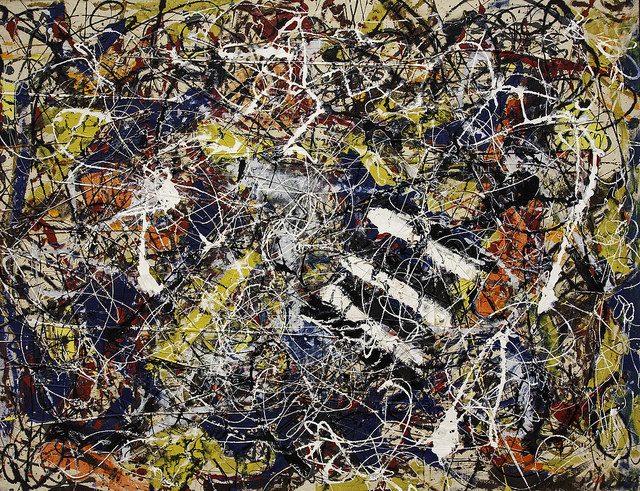
    Jackson Pollock, N17A, 1948

    Skipping ahead a century after Thomas Coles’ depiction of the American frontier we have Jackson Pollock and abstract expressionism. Abstract expressionism is the first American art form to affect the international art stage. Pollock was a major figure in the Abstract Expressionism movement. Widely noticed for his technique of pouring or splashing liquid household paint onto a horizontal surface. Labeling this the ‘drip technique’, enabling him to view and paint his canvases from all angles. Action painting is another term assigned to Pollock. Using the force of his whole body to paint, often in a frenetic dancing style. Often dividing the critics: some praised the immediacy and fluency of the creation, while others derided the random effects. In 2016, Pollock’s painting titled Number 17A  generated attention for it US$200 million in a private purchase.

    Realist – Edward Hopper

    Chop Suey, Edward Hopper, Great American Artist
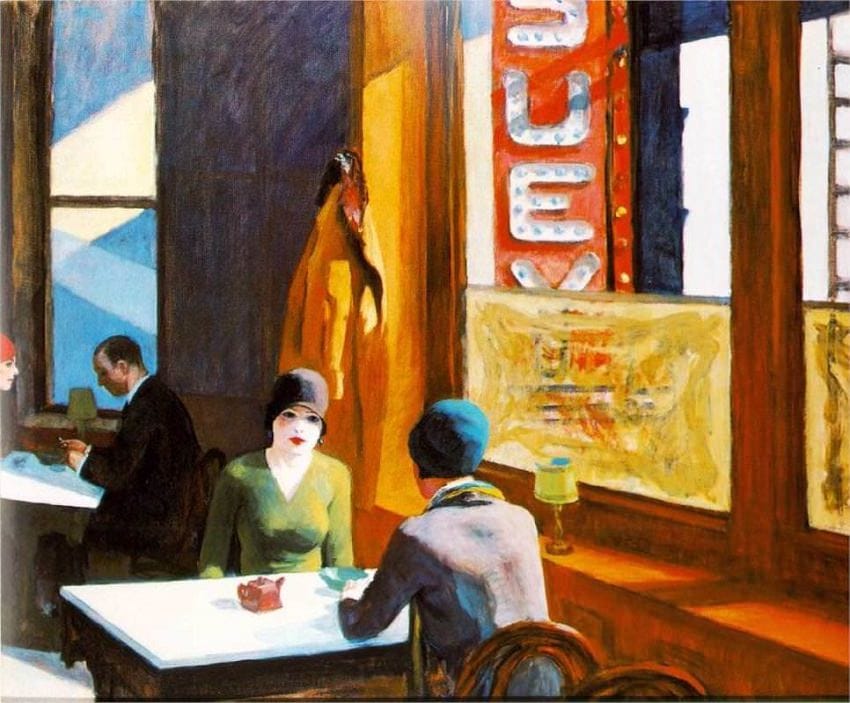
    Edward Hopper, Chop Suey, 1929

    Hopper is widely acknowledged as the most important realist painter of twentieth-century America. However, his vision of reality was a selective one. Consequently, reflecting his own temperament in the empty cityscapes, landscapes, and isolated figures. His work demonstrates that realism is not just a literal or photographic copying of what we see but it is also an interpretive rendering.  In 2018, Hoppers masterpiece ‘Chop Suey” amazed bidders. Believing the work would most likely make its way to sell for no less than $100 million. However, instantly recognizable, the piece was estimated to sell for $70 million. Going on to sell for drastically higher than the estimated price with copious amounts of fanfare.

    Modernist – Georgia O’Keeffe

    Georgia O'Keeffe, White Rose, Great American Artist
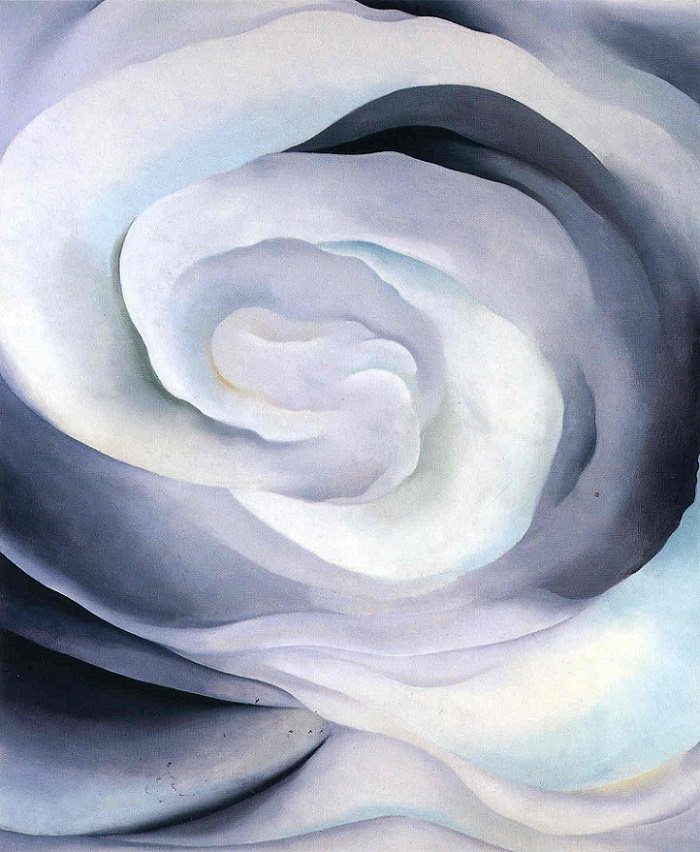
    Georgia O’Keeffe, Abstraction White Rose, 1927

    Peaking between the two World Wars, American Modernism is an artistic and cultural movement. It is a deliberate departure from tradition and use of innovative forms of expression. Georgia O’Keeffe became the leading figure in American Modernism. Combining abstraction and representation, she challenged the boundaries of artistic style with her paintings. Creating dramatically large, sensual close-ups of flowers – she essentially made them into abstract images. Notably, Georgia O’Keeffe was highly significant in influencing the gender balance in the artistic scene. Certainly, the “Mother of American Modernism“, she is not only the most famous female American artist.  She also one of the most influential figures of 20th-century art.

    Pop Art – Andy Warhol

    Andy Warhol, Great American Artist
    Andy Warhol, Campbell’s Soup Cans, 1962

    No list of great American artist would be complete without mentioning the master of pop art – Andy Warhol. Warhol is the best known and most influential artist of the Pop Art movement.  So much so he is known as the “Pope of Pop”.  His style is neither classical or really painting combined with the commercial aspects of his paintings initially caused offense. Consequently, his style was an affront to the technique and philosophy of abstract expressionism. Undoubtedly, his works created an uproar in the American art world.  The resulting controversy made Warhol a household name. A prolific artist, he explored a wide variety of media including painting, silk screening, photography, film, and sculpture. His most famous paintings are silk screenings of typical American objects and celebrities.  

    Graffiti – Jean-Michel Basquiat

    Graffiti now commonly known as street art is a common practice in our cities. Tagging our urban landscapes with brightly colored buildings, across the city skyline. Heralding the charge for this movement was Jean-Michel Basquiat. Homeless and unemployed,  Basquiat began his career as a graffiti artist. The movement, reaching its peak in the U.S. in the late 1970s and early 1980s. In 1976, Together with his friend Al Diaz the duo spray-painted graffiti on buildings in Lower Manhattan and on the New York Transit Line. Using the pseudonym SAMO, an acronym for “Same Old Shit” the tag team are first generation street artist. However, in 1979, the team split and the project ended.

    Jean Michel Basquiat, Great American Artist
    Jean Michel Basquiat, Untitled, 1981

    By the 1980s, Basquiat swiftly rose to become one of the most well-known artists in the United States. As a result, his art focused on “suggestive dichotomies”. Highlighting the gaping discrepancies between wealth versus poverty, integration versus segregation, and inner versus outer experience. Jean-Michel Basquiat is perhaps the most famous American artist of the Neo-expressionism movement. His work gave rise to an entire generation of street artists. Certainly, artists such as Banksy, Above, Keith Harring use themes inspired by Basquiat.

    The influence of these artists and many more have inspired hundreds of artist. Consequently, creating a narrative through time with art. Innovation, daring, and cunning are just a few words to describe the great American artist. Certainly, their works reflect the greatest of Americana – bravery, unyielding courage, and passion.

  • 91 Million Reasons

    91 Million Reasons

    Breaking Records: Jeff Koons

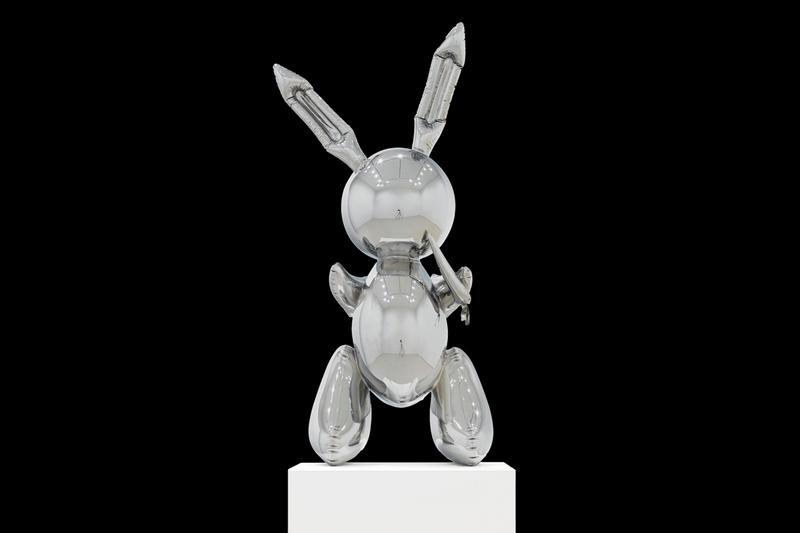
    Jeff Koons is an American artist known for working with popular culture subjects. The artist pays attention to the continuity of images as they pass through time. Consequently, combining artistic historical references, with idiomatic images. Koons, reproduces banal objects, such as balloon animals produced in stainless steel with mirror finish surfaces. Most recently, his sculpture “Rabbit” has become the most expensive work by a living artist to sell at auction.

    Jeff Koons, Rabbit, 1986
A stainless steel faceless rabbit stands at just over 3 feet. The sculpture sold for over 91 million dollars.
    Jeff Koons, Rabbit, 1986

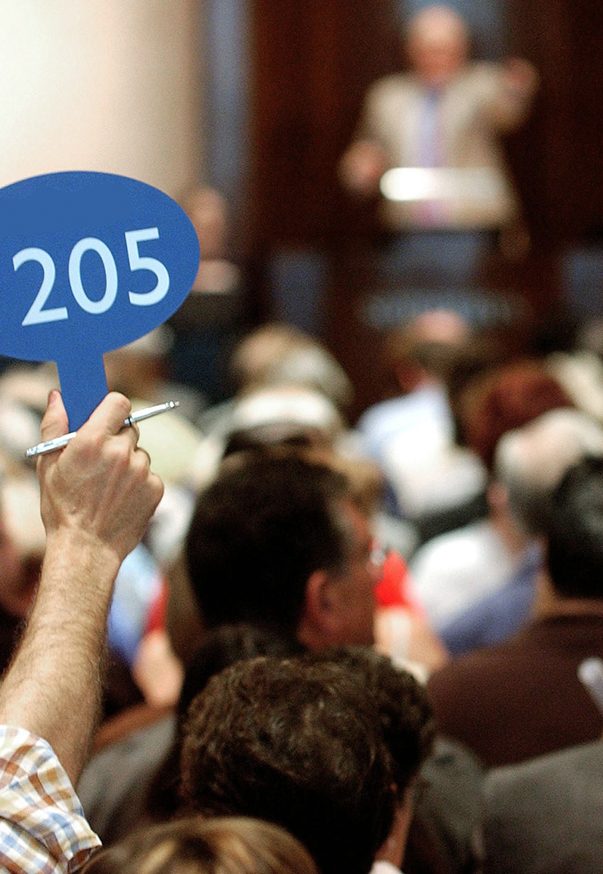
    The Pennsylvania native’s “Rabbit,” a stainless steel figure measuring just over forty-one inches, sold for more than $91 million at auction in New York. Koons’ faceless “Rabbit,” was initially proposed to sell for between $50 and $70 million. Amazingly, after no more than ten minutes into the bidding, the winning offer came in at $80 million. Including auctioneer’s fees, the total price resulted in a final sale of $91,075,000.

    The new record enters the scene just six months after David Hockney’s “Portrait of an Artist (Pool with Two Figures)”. This piece set a new peak in sales for a living artist last November when it sold for $90.3 million. Hockney’s painting coincidently, had itself overtaken Koons’ “Balloon Dog (Orange)” sculpture; the previous record-holder which went for $58.4 million in 2013.

    Prior to the sale, the auction house had described Koons’ Balloon Dog sculpture as “one of the most iconic works of the twentieth century. “It is crisp and cool in its appearance, yet taps into the visual language of childhood,”. The sale preview went on to read, “Its lack of facial features renders it inscrutable, yet its form evokes fun and frivolity.”

    Rabbit Wins The Race


    “I like to think that when you leave the room, the art leaves the room. Art is about your own possibilities as a human being. It’s about your own excitement, your own potential, and what you can become. It affirms your existence.
    ” – Jeff Koons

    Koons’ 1986 sculpture is one of three in the edition. The second is located at the Broad Foundation in Los Angeles. While his third piece is traveling to the Museum of Contemporary Art in Chicago. The piece featured in the auction came from the collection of the late media mogul S.I. Newhouse. It has not been publicly exhibited for more than thirty years.

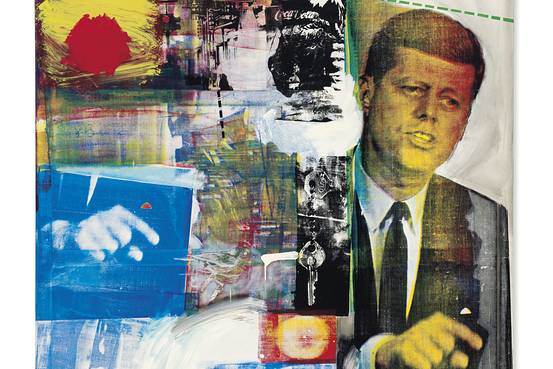
    Robert Rauschenberg, Buffalo II, 1964. Oil and silkscreen ink on canvas. The contemporary painting is a collage of images, including late US President John F. Kennedy.
    Robert Rauschenberg, Buffalo II. 1964

    Sharing the spotlight with Jeff Koons that evening were fifty other artworks. Generating a total of almost $540 million in sales that evening. Other notable lots included Robert Rauschenberg “Buffalo II,”. This contemporary piece set a new record for the artist’s work at just under $89 million. Louise Bourgeois’ towering bronze “Spider” sculptures, went for over $32 million. The sale continues a record-breaking season for art in New York. A painting from Claude Monet’s “Haystacks” series went for $110.7 million becoming the most expensive Impressionist artwork ever to sell at auction.


  • Buying Artwork online: 5 Costly Mistakes To Look for

    Buying Artwork online: 5 Costly Mistakes To Look for

    The influx of technology and availability has made shopping online a one-click process. What’s another item added to your shopping basket?

    However, there are loopholes and certain things you should go over before you take the plunge and buy art online. How do you distinguish the art you’re buying from something everyone else has? In this free guide, we will exam a few of the mistakes to avoid before buying artwork online


    1. No Quality Control

    Buying from auction houses seems like a safe bid. However, the practice of outbidding on artworks to increase the value of the artist can happen, this can result in overpaying for art pieces. The quality of the artwork presented in auction houses is not always comparable, and pieces that aren’t necessarily special or valuable, are up for auction with quality ones.

    Acquiring artwork through a reputable online gallery with experienced art advisors is key to getting original artwork. These pieces have been selected for their quality and value. Observing rules of buying art allows you to build a relationship with art dealers and gallerists.

    Developing relationships with gallerists will help strengthen your knowledge of the art scene. They offer a wider context on trends, artist and what is happening in the art market.

    They will know your taste and be able to alert you when new artists work fits your taste and needs.


    2. Not Having a Safety Net

    Another common mistake you should avoid is buying art from unreliable providers. This detail though minute is important. There is no hard rule between reliability and the dark web – simple rules of thumb? Read the terms and conditions of the site you’re buying from and check for icons of safe surfing.

    Look for an art dealership with consistent customer service, and timely responses. Find reputable galleries specialized in working with artists.

    Learn all you can about the company or individual before committing to a purchase.


    3. Overlooking Care and Conditions

    Viewing art online can be tricky. Is that little thumbnail of the painting to scale? How can you be sure what you’re buying is what you’re getting?

    A good art dealer will be happy to go over the conditions of the painting. Most sites will provide this option and have additional information ready on site for you. The dealer will always be happy to help reassure that you’re making a steady and safe investment.


    4. Forgetting the 3P’s: Provenance, Payment, and Privacy

    Another common mistake you should avoid is buying art from unreliable providers. This detail though minute is important. There is no hard rule between reliability and the dark web – simple rules of thumb? Read the terms and conditions of the site you’re buying from and check for icons of safe surfing.

    Look for an art dealership with consistent customer service, and timely responses. Find reputable galleries specialized in working with artists. Learn all you can about the company or individual before committing to a purchase.

    Provenance a Key factor in buying artwork online

    Provenance

    A qualified authority is a difficult concept. Art dealers and online galleries should have significant background and experience with the artist and artwork they have in their collection.

    When all your documentation is verified and certified by the right experts, you can have confidence in your collection and its provenance. Buying from reputable galleries and art dealers with essential credentials and documentation of their work. This is key if you want to resell the artwork in the future.

    Secure Payments a key factor in buying artwork online

    Payment

    Secure payments are a must for buying artwork online. The digital age has left buyers feeling insecure when tasked with large online bank transfers and purchases.

    Review the website of the authorized dealer. Go over the terms and conditions. Ask questions. Always. If something is unclear do not hesitate to reach out to the gallerist/customer service to illuminate any points that need clarity.

    Privacy a key factor in buying artwork online

    Privacy

    There’s nothing more important to you than your privacy. An online sale shouldn’t be an open door to third-party vendors or a barrage of emails from questionable links. Go over the sites credentials and privacy contract.

    Make sure that they’re keeping your information safe. If something seems amiss – reach out to customer service and have them verify their terms.


    Customer Care Key factor in buying artwork online

    5. No Customer Care

    How often have you looked through the FAQ page and not found what you’re looking for? How many times have you scrolled through the site and not seen a place to reach customer service for some live interaction? Too often.

    A good customer care team is a great part of the online shopping experience. Apart from working with the art dealer or the gallerist, they can answer questions to help make your online shopping experience a seamless one.

    If you’ve ever purchased art online, you know that overall the process is seamless: Online art dealers are a bank of knowledge and are generally happy to help you not only with your art selection but any questions and concerns you may have. If you’re a first-time buyer – realize that buying artwork online doesn’t have to be daunting. As technology evolves, the ability to acquire fine art does too. The subject is a lengthy one. For added convenience, we’ve made up a Guide to Buying Art.


    Sign up to RDN Arts to receive it now; follow these simple rules before you click confirm, and go from buyer to collector.

  • Tutankhamun  Statue Up For Sale

    Tutankhamun Statue Up For Sale

    Tutankhamun Statue Up For Sale

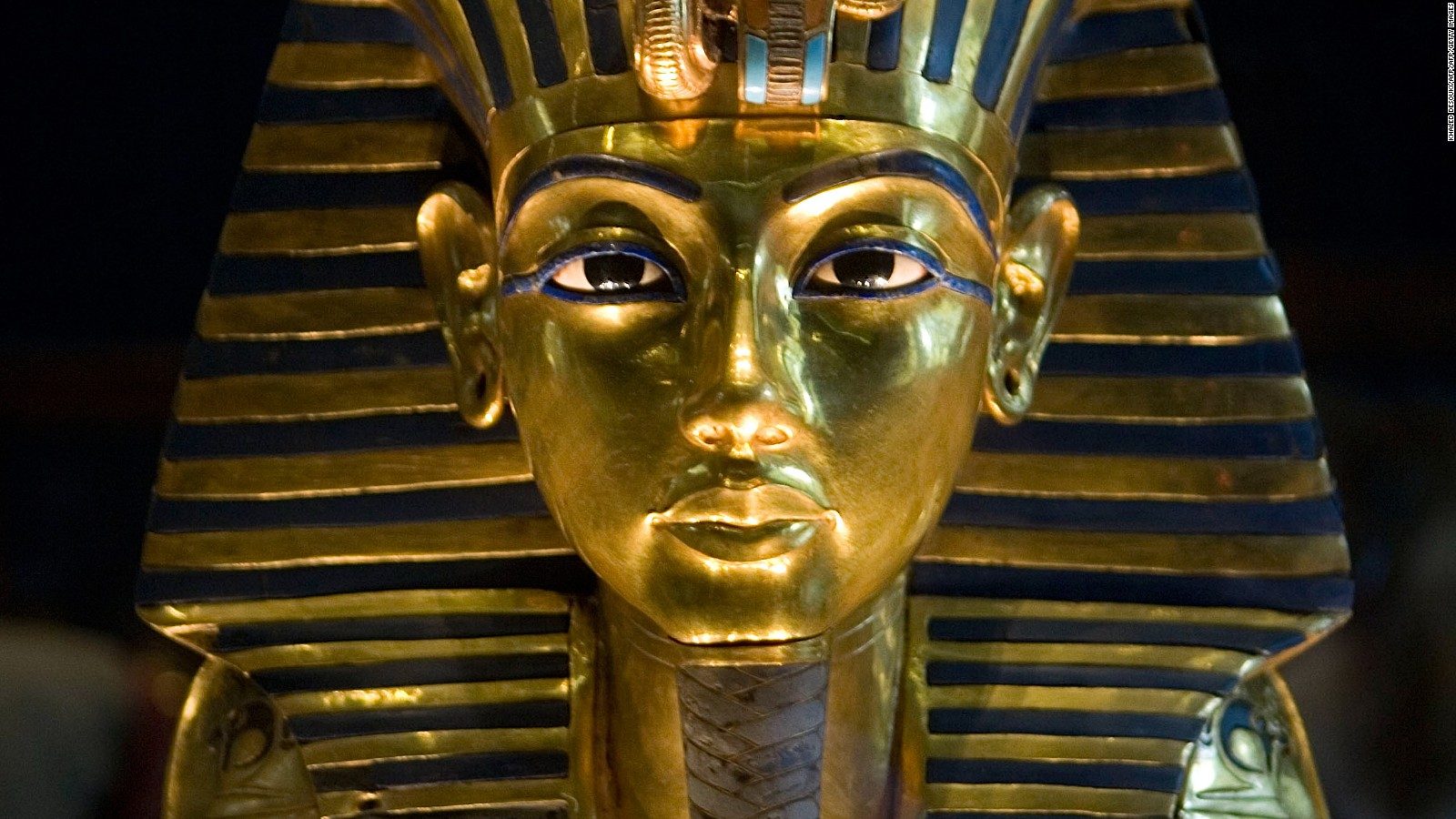
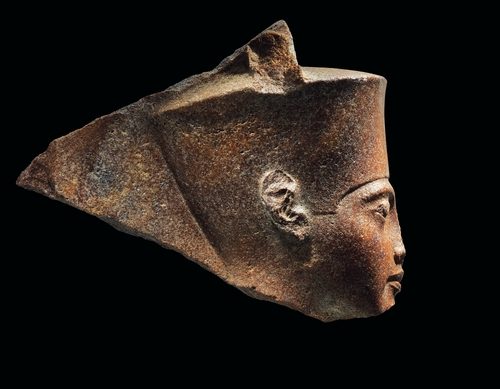
    Egypt is attempting to halt the sale of a Tutankhamun statue up for sale at an auction house in London. Their concerns are that the 11-inch statue with features reminiscent of the Pharaoh Tutankhamun may have been stolen. Egypt’s Ministry of Antiquities is appealing to UNESCO to halt the sale. Requesting to see documents proving its provenance.

    Right facing of bust of Tutankhamun. The sale of the bust is being blocked by Egypt.
    This bust of the boy king Tutankhamun is being stopped by Egpyt in an attempted sale

    However, the auction house estimates that the statue will generate a fee of more than $5.1 million. “The facial features, the full mouth with slightly drooping lower lips, and almond-shaped, slanted eyes, with a deep depression between the eyes and eyebrows — are those of Tutankhamun,” reads the statement from the auction house.

    As a result, officials from the Egyptian embassy in London asked the UK Foreign Office to return the statue. As well as halting the sale of other Egyptian artifacts. “Once again, we will not be negligent or allow anybody to sell any Egyptian artifact whatsoever,” reads the statement.

    Continuing Controversy

    This controversy is the latest stage in Egypt’s ongoing struggle to prevent the sale of stolen artifacts. Consequently, hoping to bring these pieces back to Egypt. Last January, a section of a tablet from the Karnak Open Air Museum in Luxor, Egypt was successfully recovered. Consequently, returning it to Egypt after listing it for auction in London. Monitoring international auction houses for the artifact, the ministry of antiquities removed the piece from the sale and returned to Egypt.

    Front facing of bust of Tutankhamun
    The auction house claims that the bust has the proper provenance. They will provide documents for its most recent ownership.

    However, the auction house is moving to alleviate worries over ownership. “Ancient objects by their nature cannot be traced over millennia,”. “It is hugely important to establish recent ownership and legal right to sell which we have clearly done.”

    Marking the centenary of Tutankhamun’s tomb discovery, Earlier this year, Egypt initiated a world tour of 150 King Tut artifacts; including 60 pieces that have never left the country.

    The exhibition began in March in Paris and will continue in varying location around the world including London, California, and Sydney until 2021.

Our Content.
Your Inbox

Join thousands of art lovers

Receive art news, market analysis and updates about new artists on the website

By subscribing you agree to receive RDN Arts emails. Unsubscribe at any time. Privacy Policy.