Author: xerkss

  • Art for interiors: sculptures

    Art for interiors: sculptures

    A piece of art makes a difference when building eye-catching and refined interior spaces. The painting certainly plays a key role in defining the style and the palette of a room or office. However, sculptures offer particularly dynamic solutions that result in overall distinguishing spaces. More precisely, sculpture arouses a bigger engagement and can work in different kinds of environments. Something that is definitely to consider when choosing art for interiors.

    The role of sculpture

    The sculpture is one of the oldest forms of art. It dates back to ancient Greece, perhaps even before. Since then it developed in diversified ways, becoming one of the noblest among the creative forms of expressions. In ancient times it served as a tool to connect the divine and the earthy. For a long time, it was aimed at iconographic representations, until the moment when it embraces a celebratory purpose. 
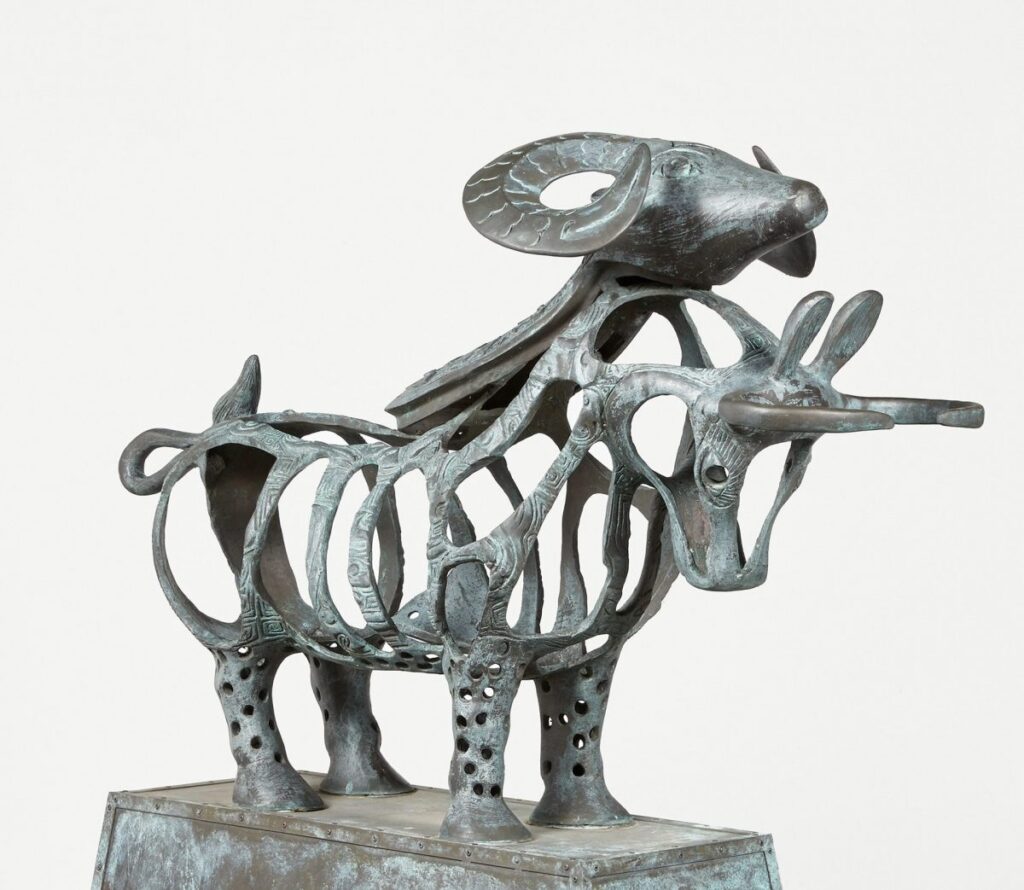
    Richard Texier Art for interiors
    Richard Texier, Mimesis Deus, 2005

    In ancient times, bronze and marble were the main materials in sculpture. Nowadays sculpture developed incredibly, becoming more conceptual and diversified. If marble and bronze are still ideal for outdoor purposes, sculpture for interiors features often iron, stone, upcycled materials, and embroidery. The definition of this form of art extended considerably. However, there are two main forms of sculpture in today’s art for interiors: abstract and conceptual sculpture.

    Sculpture, impressive Art for interiors

    Abstract sculpture founds on distorted shapes. Many sculptors choose to depict their subjects in an act of movement, highlighting the flow of the work. In particular, these forms tend to work well with modern or minimalist interiors.
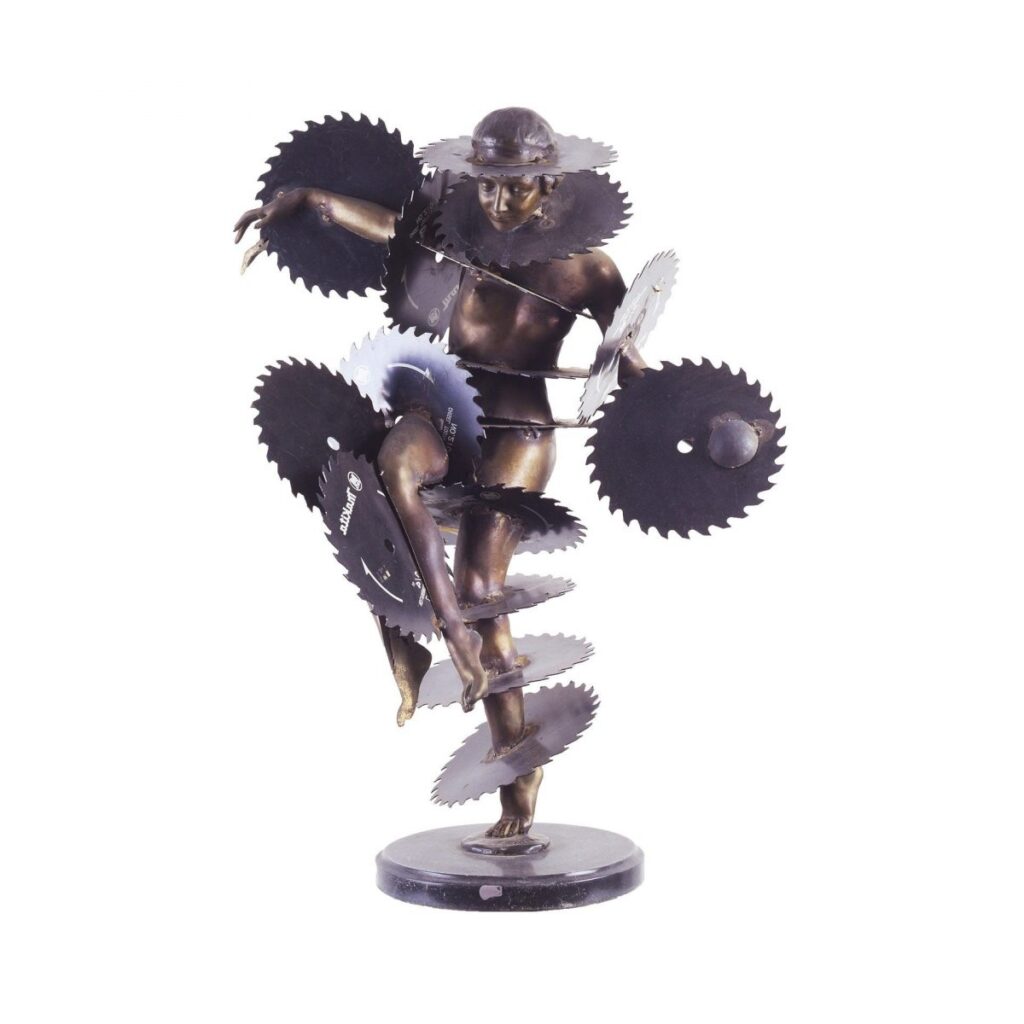
    Contemporary art sculptures for interiors and offices
    ARMAN, The mechanical bride, 1994

    By creating a more open and evocative art, the contemporary sculpture seems to embrace the pillars of abstraction. The abstract tendency comes after centuries where the sculpture had to respond to certain criteria of perfection. To gain that result static subjects were protagonists most of the time. 

    The other contemporary trend involves conceptual sculpture. This form is often deliberately provocative and can be difficult to read. However, the fact it is so challenging makes it more rewarding and appreciated by art lovers. 
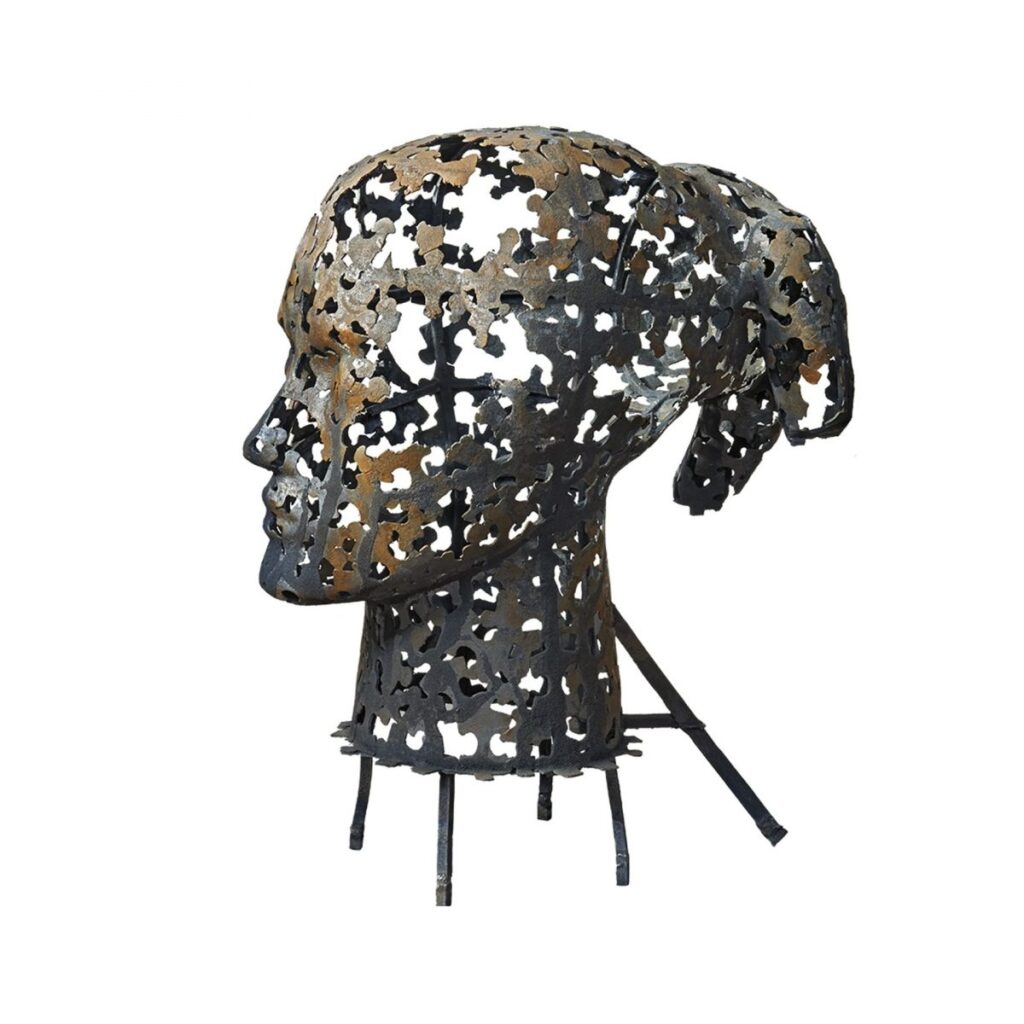
    Contemporary sculptures for interiors
    Xavier Mascaro, Eleonora

    The sculptures have a great communicative and aesthetic potential. Even materials that seem to be imperfect, or not matchable with artistic purposes hide a spark of beauty capable of shining if it is revealed.

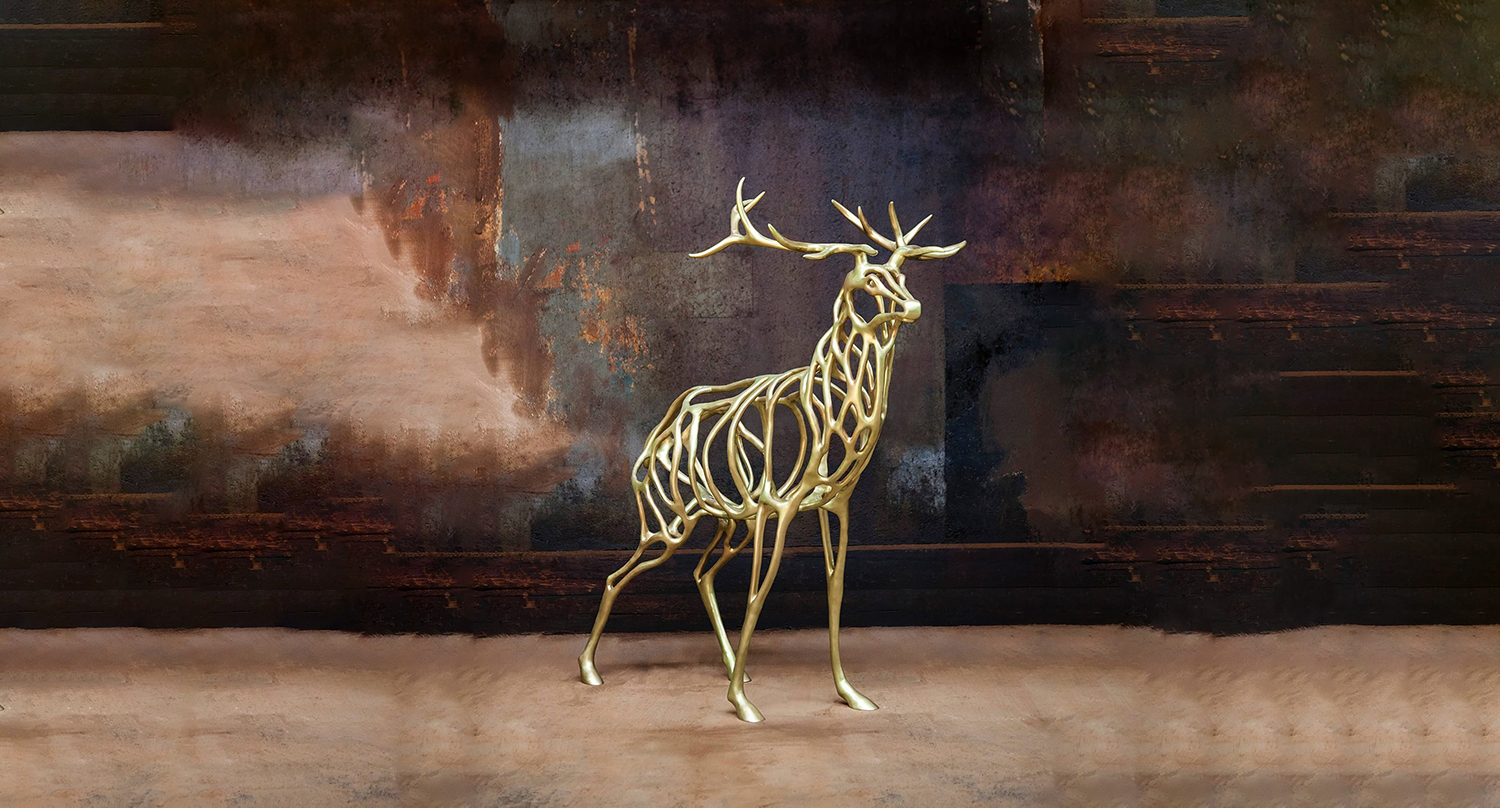
    For example, Texier’s iron animals are halfway between the environmental message and an intangible abstraction.

    Sculpture: 3-dimensional pleasure

    For many when choosing a piece for interiors, available spaces and overall style must be criteria number one. However, Art for interiors doesn’t just have to respond to stylistic needs, it has to add something unique to each environment, make the difference between ordinary and astounding. 
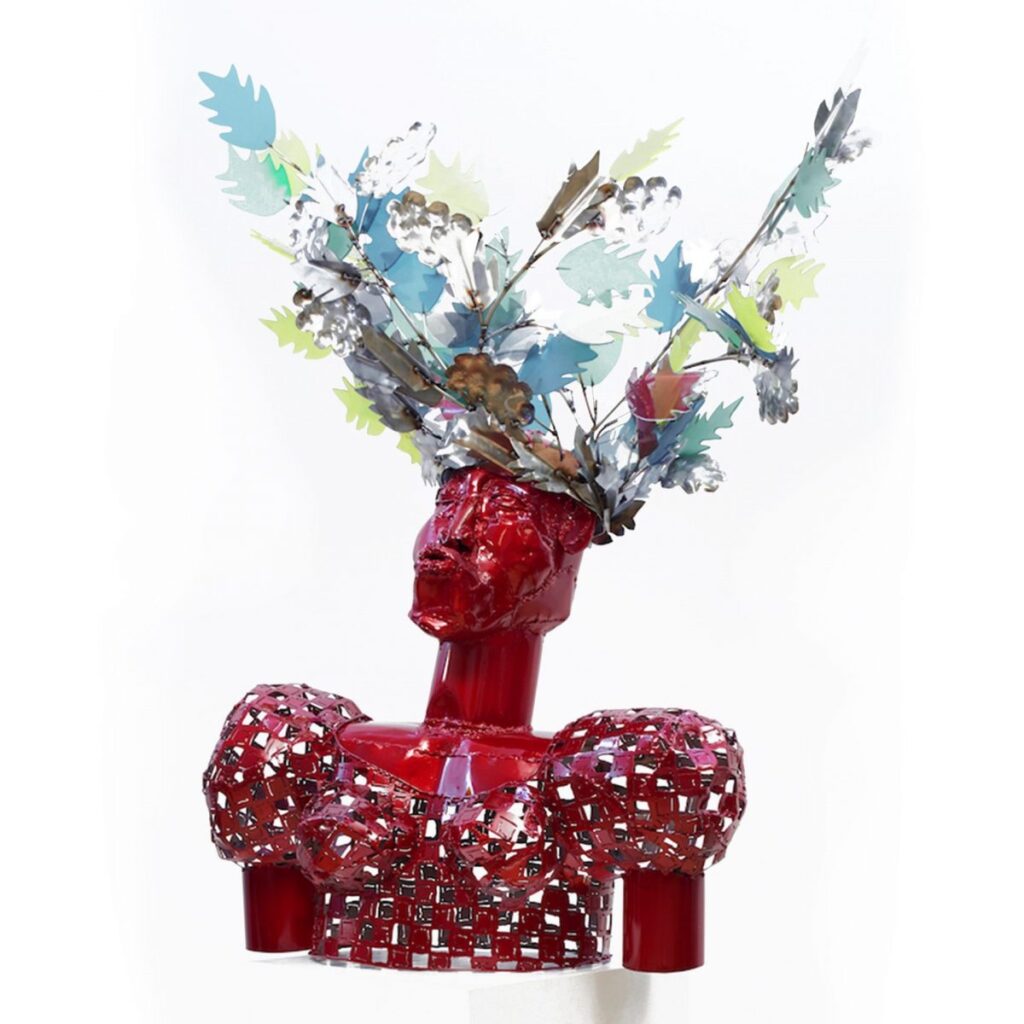
    Art for interiors. How to choose the perfect 3 dimensional pleasure
    Sokari Douglas Camp, KISSSS ME, 2014

    A sculpture can actually define the essence of a space. That is also because the artist works 3-dimensionally, which allows creative imagination to run free. No matter what the space available is, the variety of solutions today matches every need, it’s just about finding the right piece of art. Sculpture definitely has the capacity of transforming interiors, creating focal points that make the space vibrant and complete.

    Discover impressive sculptors’ work on RDN Arts: Contemporary Sculptors
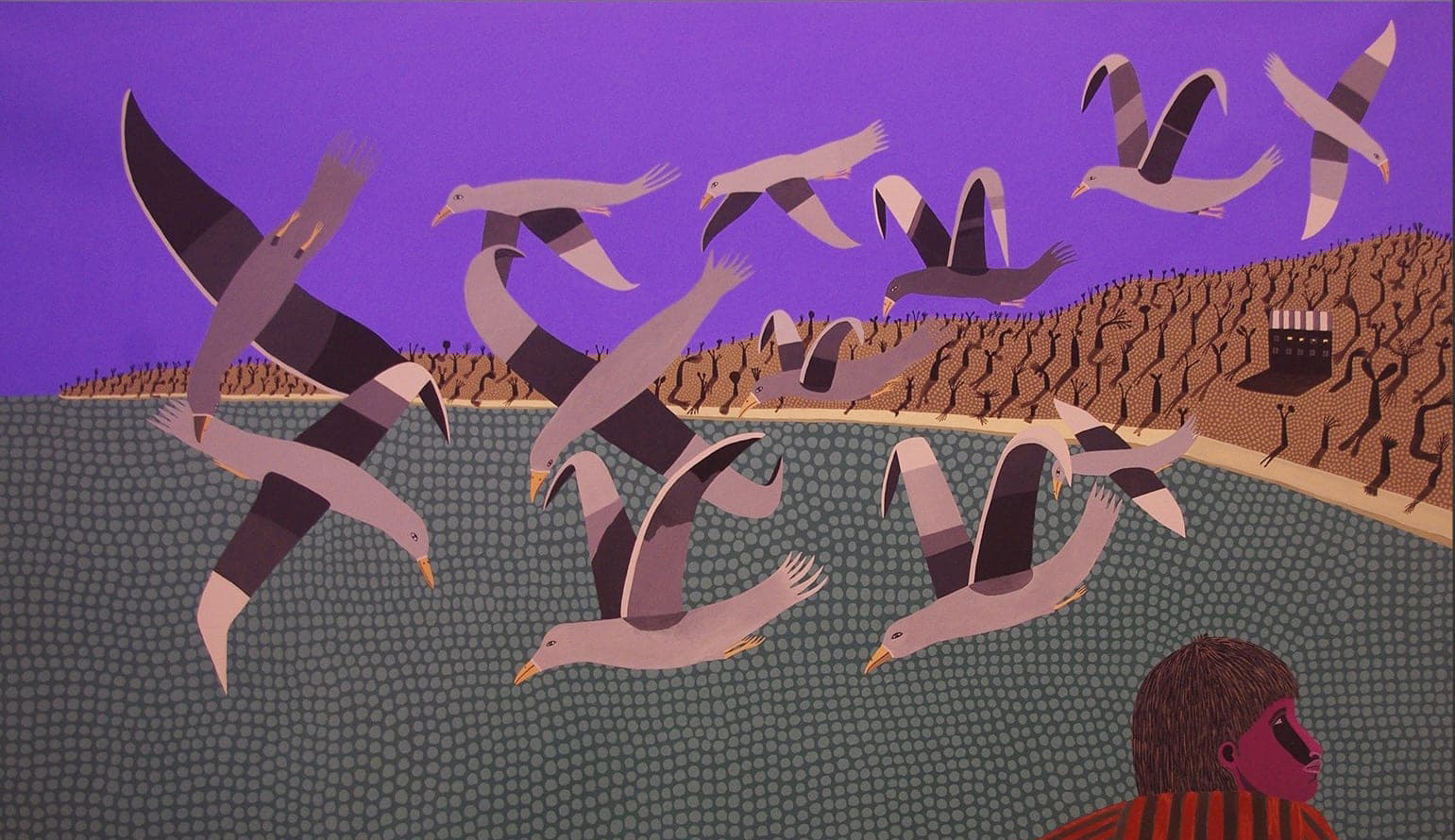
  • Art, the timeless gift

    Art, the timeless gift

    A few days left until Valentine’s Day, why not make it special and say it with art? Love is an endless source of inspiration in the art world, over the years it has been captured in many ways. That’s because visuals according to scientists are able to express feelings better than words. Not less, the connection between an artwork and its receiver lasts longer than with other kinds of gifts. That’s because the memories that remain etched longer are those that most involve emotions.

    Communicating love through art

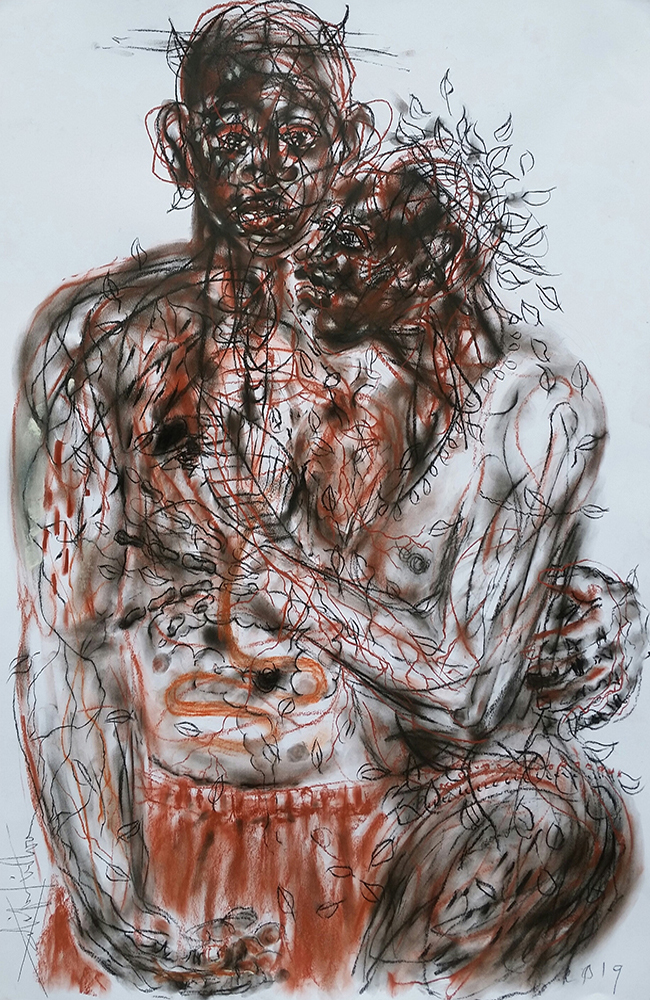
    Salifou Lindou, ADAM ET EVE, 2019

    Art is probably the most effective way of portraying and communicating love. The reasons are varied. Numerous studies have found that art is good for health by reducing tensions. We also know that it contributes to building effective relationships.

    That’s because it stimulates our critical sense, the ability to ask ourselves questions and see things from a new perspective. This is why it helps to have an empathic attitude towards others.

    Art is therefore a kind of medicine. The Huffington Post wrote about the essay ‘Art as therapy‘ by Alain de Botton and John Armstrong. In this, the two authors identify the properties of art.

    Above all, it helps grow. Art makes us uncertain because it’s not always easily understandable but “it is when we find points of contact with what is foreign to us that we manage to grow “.


    Through time and memory: Art as a gift

    Art is personal

    Giving the gift of art certainly requires an emotional connection with the person who is going to receive it.
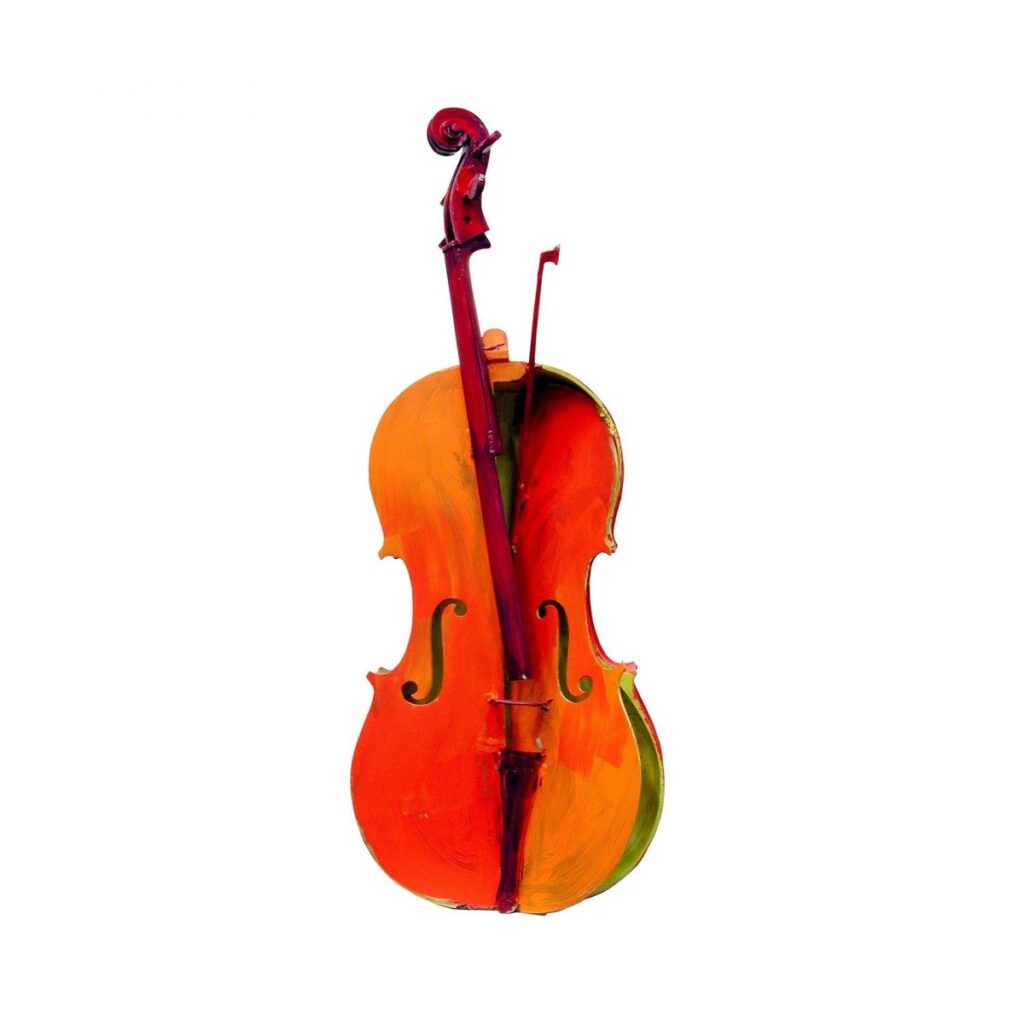
    Arman, Untitled, 2004

    Giving the gift of art certainly requires an emotional connection with the person who is going to receive it. Surely art nowadays embraces a wide variety of styles, subjects, and media. Contemporary art, in particular, provides a richness of possibilities. That’s why getting to recognize what arouses joy in the other person is a peerless way to show affection and care.

    Art is enduring

    The power and the purpose of fine art are enduring. That's why people love receiving artworks as gifts
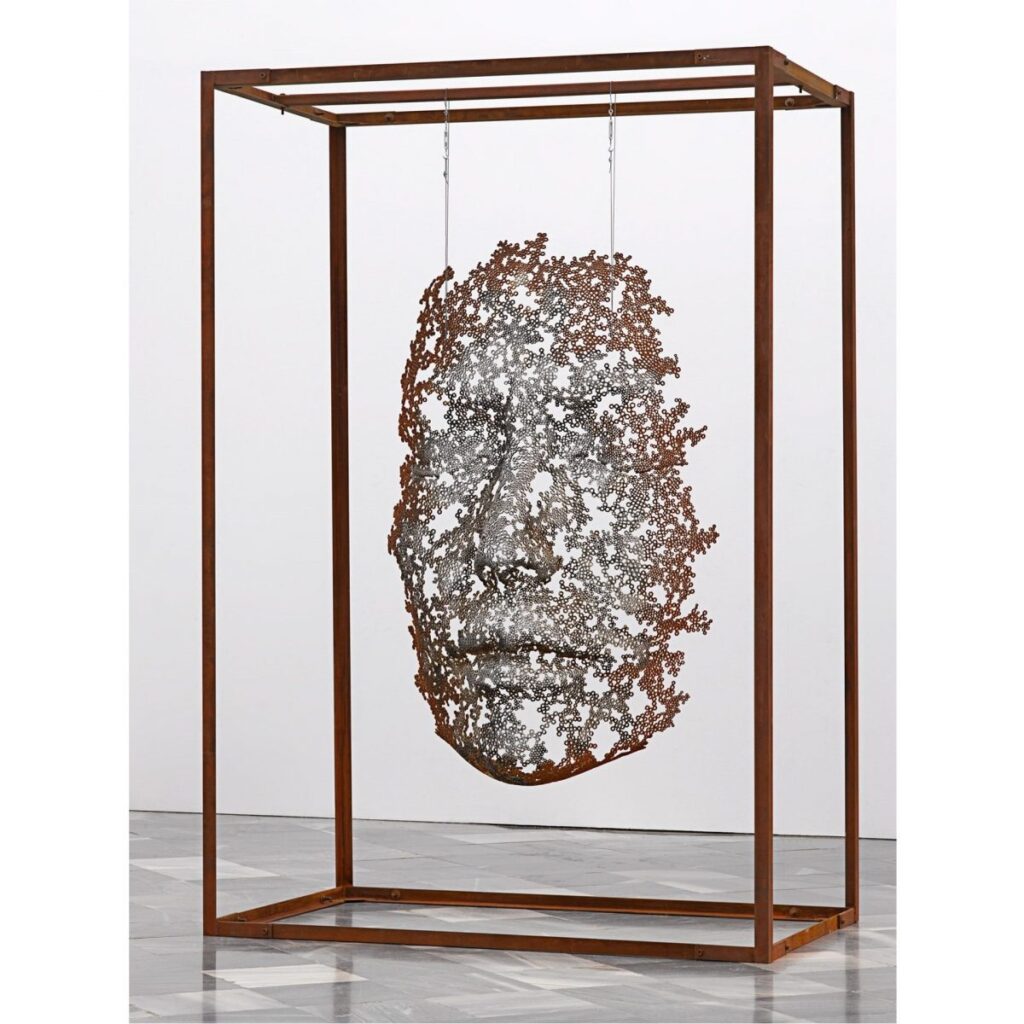
    Martí Moreno, Silencio

    The power and the purpose of fine art are enduring. The ability of a piece to communicate a whole mix of diversified feelings lasts through time. A piece of art enters somehow in the life of its owner. It becomes a reference point, a symbol of ourselves that manifests in heightened emotional responses. Also, it increases our own ability to perceive art.

    Art is unique

    Art as a gift celebrates the individuality of the person we are showing appreciation for
    Hom Nguyen, Blue Portrait of a Man

    Art is the creative process capable of giving life to works to ideas. Each artist conveys a different purpose on canvases or sculptures. That purpose is the conceptual pillar of any artwork. By using different media and styles, each artist expresses a figurative imaginarium that is unique and different from any other piece. That’s why giving an artwork as a gift it’s the best way to celebrate the individuality of the person we are showing appreciation for. The unicity of the gift matches the unicity we recognize in the person we love.

    Get inspired by our curator’s collection and connect with our art consultancy free service to find the gift of art you’re looking for!

  • Contemporary African artists

    Contemporary African artists

    It’s undeniable that Contemporary African artists are rising more and more interest in the contemporary art market. Just last year, London based auctions registered a notable increase in African Art sales. Moreover, the exhibits around the world and the growth of new artistic institutions are helping to introduce a canon that marks an advantageous nod to the future.

    The rising of Contemporary African Art

    Collectors’ demands increased consistently for works by African artists.
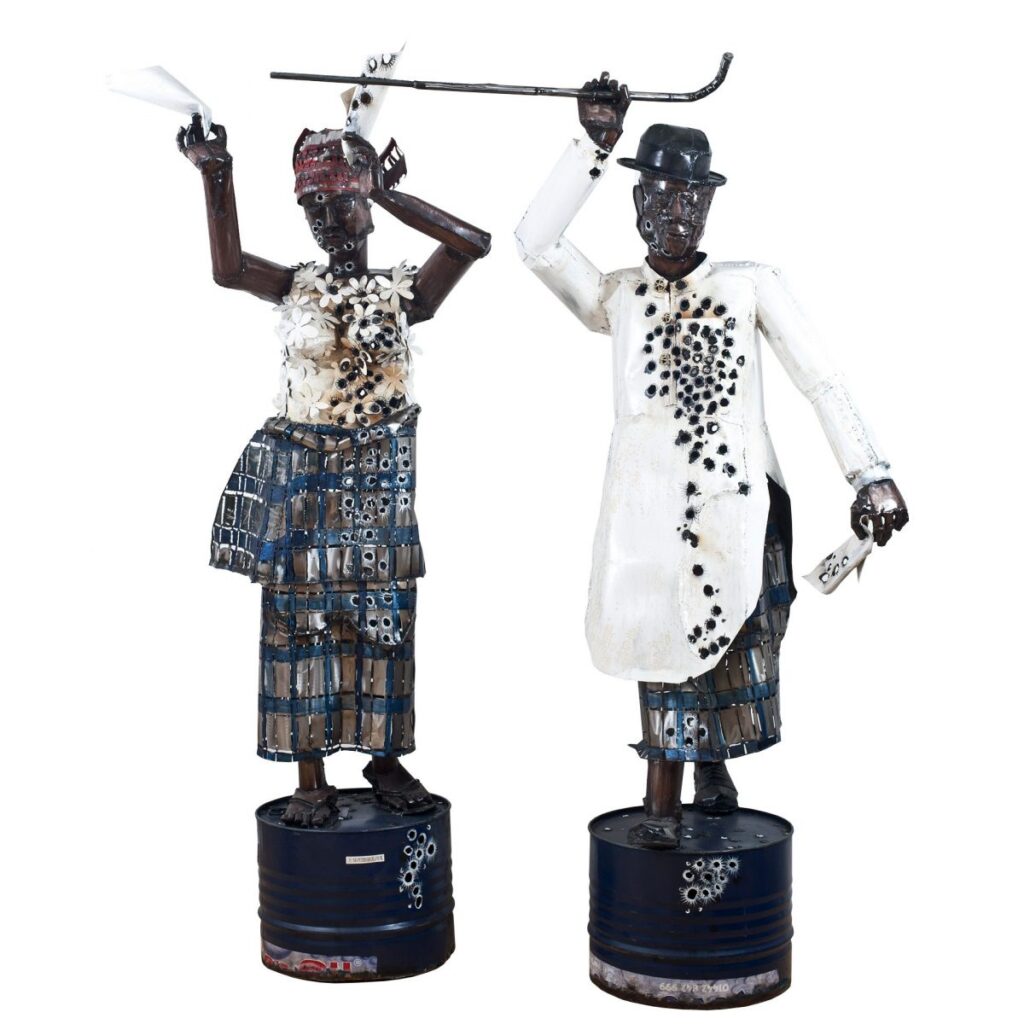
    Sokari Douglas Camp, PURGE. 2010

    What are the reasons behind African Art consecration in the last year? Collectors’ demands increased consistently for works by African artists. The tendency roots to many theme-focused art fairs that helped to get to know an art heritage rich in media and variety. The seed must be found in a rich cultural actuality, and not less, in strong art schools over the continent.

    In France, the African art scene has a key role and boasts good media coverage. Expositions as “Beauté Congo” by Fondation Cartier, 2015, turned the spotlight on the most interesting African creations, bringing them closer to a wide audience of diversified interest.

    Still in France, Art Paris 2017 focused particularly on African artists’ work while AKAA (Also Known As Africa) was the first salon in Paris entirely dedicated to African art.

    Moreover, the development of local collecting is contributing to support the artistic scene of the continent. It is no coincidence that Johannesburg’s collectors are the first players in this market. From an overall perspective, prices aren’t the highest on the market but they are steadily increasing. That is why they represent an opportunity for collectors that are seeking pieces of great historical and aesthetic consistency.
    As for defining an art capital, differently from Asia where Hong Kong has a key role for the trades, Africa boasts by now different countries that are growing in importance for the art market. Still, for now, it lacks a preeminent art-market center.

    Discovering African Artists

    African Artists are bringing impressive creativity to the Contemporary Art panorama. Work: Histoire de tripes by Ghizlane Sahli.
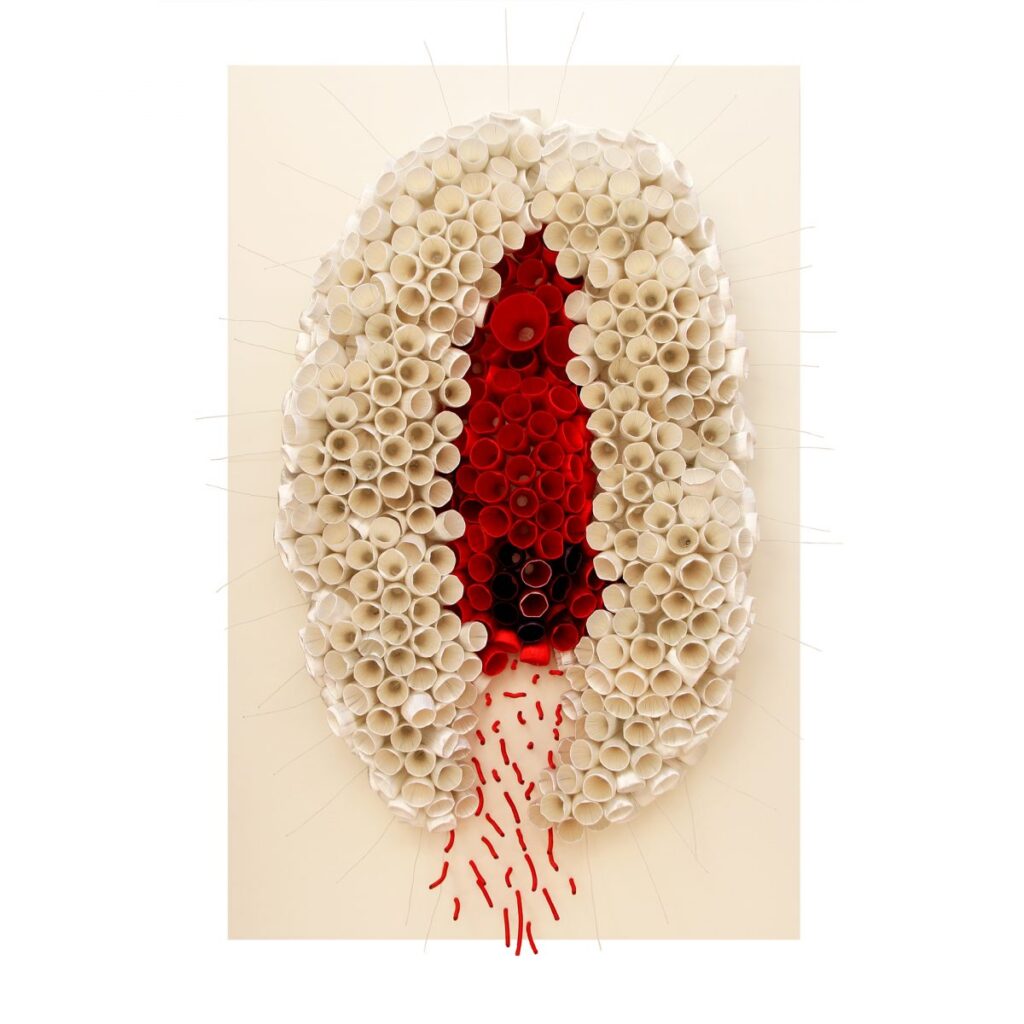
    Ghizlane Sahli, HISTOIRES DE TRIPES, 2018

    What’s impressive is the creativity those artists are bringing to the Contemporary Art panorama. Painting remains the most popular art form in East Africa but often African artists express through different media braided together. That’s the case of Maroccanean artist Ghizlane Sahli. In particular, this artist works with repurposed materials in an interdisciplinary way, that ranges from architecture to embroidery. Her works, inspired by natural and organic shapes, were recently displayed in London, Paris, Marrakesh, Milan, and Germany.

    Remarkable representatives of African art come from Nigeria. A path opened by Ben Enwonwu that widened notably these last years. In particular, Nigerian artists seem to share the intent of creating social and environmental-conscious art.

    Renowned sculptor Sokari Douglas Camp represents contemporary concerns through the rituals of the African world. In works like “Green Leaf Barrel” she focuses on the dramatic pollution conditions in the Nigeria Delta.
    Nnenna Okore, another impressive artist from Nigeria, uses a combination of biodegradable materials for her artworks. Her paintings and sculptures remind of natural primordial shapes that she creates through tools such as paper, ceramic, fabric, and hessian.

    Discovering Contemporary African Artists
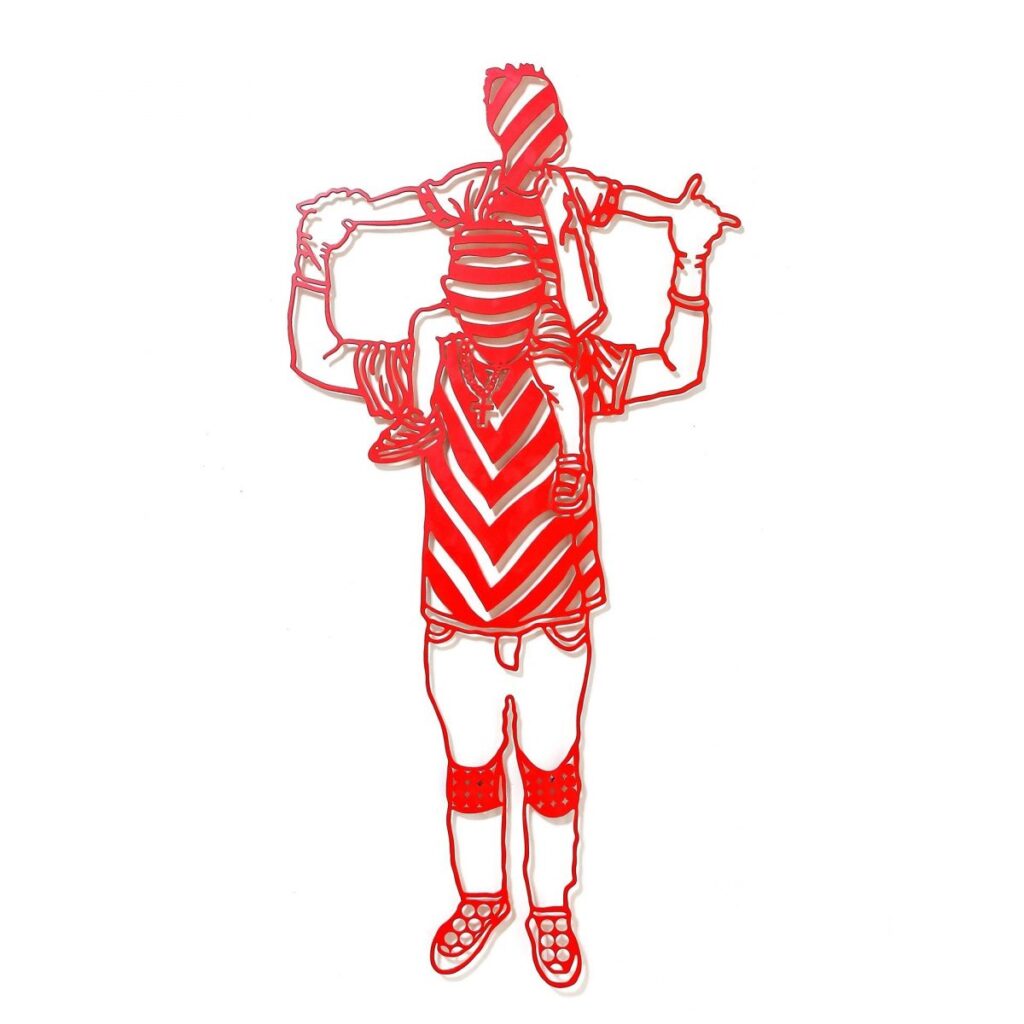
    Boris Nzebo, SURVIVORS 01 (SELF PORTRAIT), 2018

    Another incredibly interesting figure in the contemporary art panorama is Gerald Chukwuma. His vibrant canvases quest about anthropological, social and human conditions in Africa. Cameroon artists Salifou Lindou and Boris Nzebo on the other side, approach struggling themes with unique figurative identities. If Salifou Lindou’s overlapping lines reflect the ambiguity of life itself, Boris Nzebo’s multilayered paintings portray the social and political life in Douala, the biggest city of Cameroon.

    Find out more about these Contemporary African Artists in RDN gallery and in our articles section!

  • The most expensive Artworks sold in 2019

    The most expensive Artworks sold in 2019

    The art market in 2019 definitely signed an increase compared to the sales of 2018. The general tendency highlighted a balance between supply and demand. As for the previous year, Asian buyers played a key role as art investors. However, there is an even more important data sales are showing. The great majority of the most expensive artworks sold in 2019 dates after 1960. Collectors are for instance moving towards contemporary works.

    Art market records in 2019

    Before digging in the record sales of 2019 it’s important to focus on two world-famed artists that set their personal best this year. American artist Brian Donnelly, known professionally as Kaws, overcame his last year’s record. “The Kaws Album” sold for $14.8 million in Hong Kong, five times his previous record of $2.7 million. For instance, Kaws’ unique style between fine arts, illustration and commercials confirms its success.

    On the other side, Banksy dominated Sotheby’s contemporary art evening sale in London setting a record of $12.2 for his “Devolved Parliament”. 

    Those are some of the most expensive paintings sold in 2018:

    Jeff Koons, Rabbit, 1986

    $91,075,000

    Jeff Koons, Rabbit, 1986 among the most expensive Artworks sold in 2019
    Jeff Koons, Rabbit, 1986

    The stainless steel figure sold for more than $91 million in New York. It was initially proposed to sell for between $50 and $70 million. Koons’ 1986 sculpture is one of three in the edition. The second is located at the Broad Foundation in Los Angeles. This artwork aroused particularly the debate in the art world. 


    Robert Rauschenberg, Buffalo II, 1964

    $88,805,000

    Robert Rauschenberg, Buffalo II, 1964 sets a record as one of the most expensive piece of art in 2019
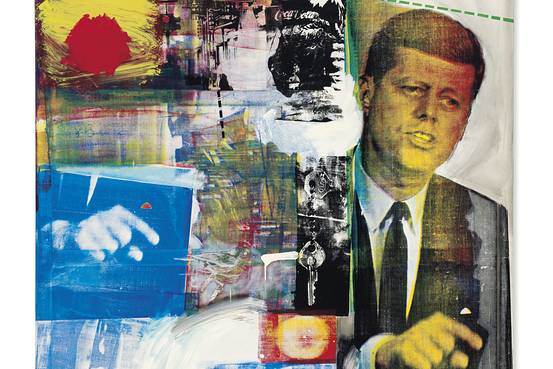
    Robert Rauschenberg, Buffalo II. 1964

    The prominent member of the American Post-War avant-garde signed with this work his record sales. The canvas includes all the main symbols of American society at that time. In particular, the ability of the artists to combine and include different materials in his works created an untraditional form of art that is still incredibly successful.


    Pablo Picasso, Femme Au Chien, 1962

    $54,936,000

    Pablo Picasso, Femme Au Chien, 1962 among the most expensive Artworks sold in 2019
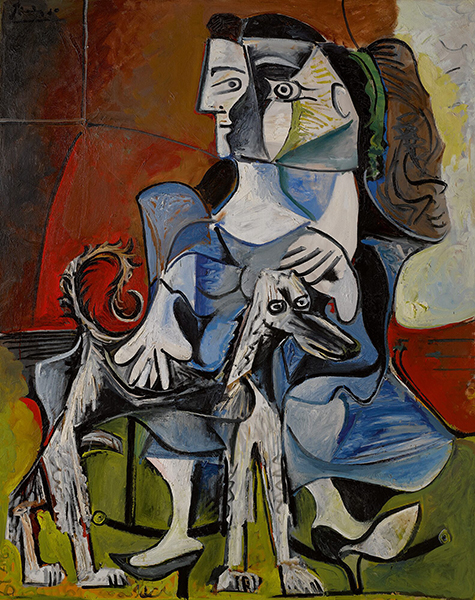
    Pablo Picasso, Femme Au Chien, 1962

    “Famme Au Chien” is among Picasso’s late works. Sold to Wynn Fine Art it exceeded consistently the estimated price of $30 million. In particular, the painting depicts Picasso’s second wife Jacqueline Roque alongside Picasso’s Afghan Hound.


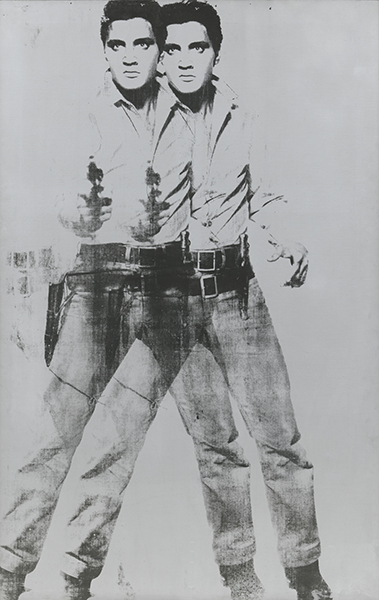
    Andy Warhol, Double Elvis, 1963

    $53,000,000

    Andy Warhol, Double Elvis, 1963 ets a record as one of the most expensive piece of art in 2019
    Andy Warhol, Double Elvis, 1963

    “Double Elvis” features two screen-printed images of the rock and roll American icon put on a silver background. The artwork is part of a wider collection Andy Warhol created especially for his second solo exhibition at the Ferus Gallery in Los Angeles. Another Double Elvis is currently in the Museum of Modern Art in New York.


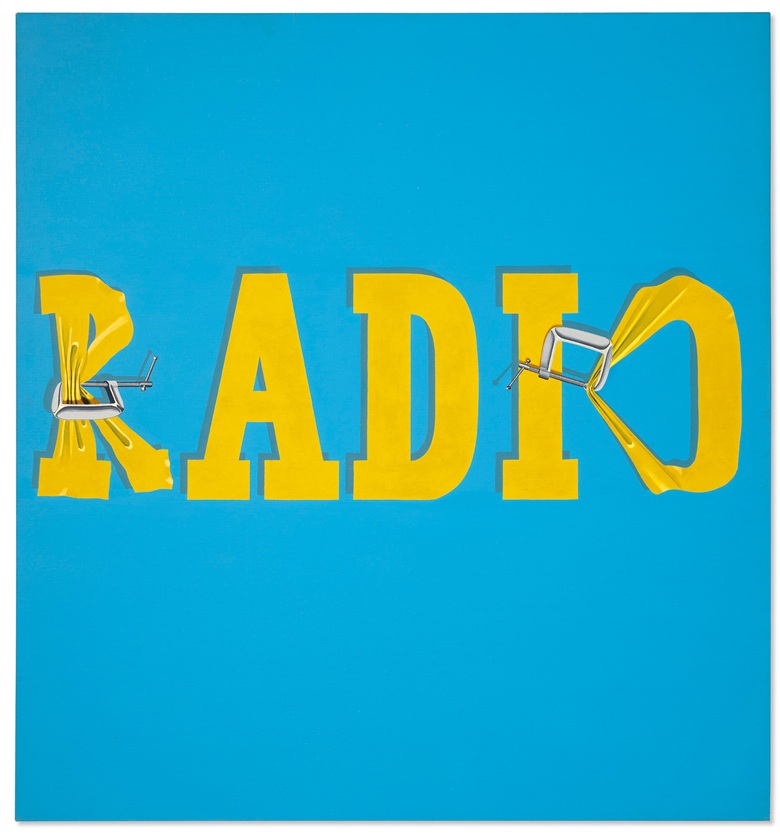
    Ed Ruscha. Hurting the Word Radio #2

    $52,485,000

    Art market records in 2019
    Ed Ruscha. Hurting the Word Radio #2

    “Hurting the Word Radio #2” perfectly represents Edward Joseph Ruscha’s c-clamp paintings. The impressive painting marked the sales record for the artist soaring above his previous record of $30.4 million, achieved in 2014 for his 1963 work “Smash”.

  • What is Abstract Art

    What is Abstract Art

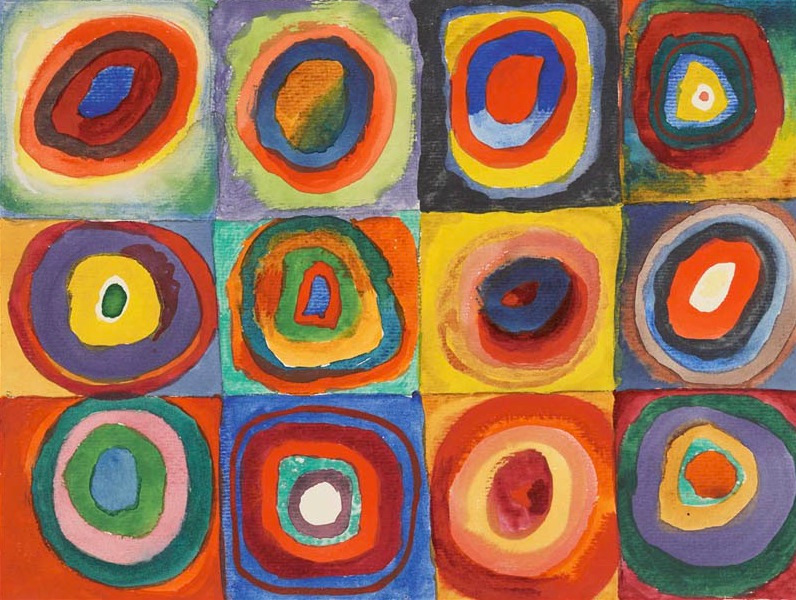
    When asking what is Abstract Art, the most immediate answer would relate to Kandinskij’s non figurative art of 1913. Even if that might be considered the starting phase of a more defined canonization of the style, the answer to the question is far more complex. The debate around abstract art raised many discussions. In addition, the idea behind the style is ductile and artists themselves express it in different ways.

    The debate around abstract art raised many discussions.  Kandinskij is for many the godfather of visual abstraction
    Vasilij Kandinskij, Composition II

    Defining the style

    Literally, “abstraction” refers to something that distances an idea from objective referents. Abstract art creates images that do not belong to our visual experience. The style tries to express its contents in the free composition of lines, shapes, colors, without imitating the concrete reality in which we live.

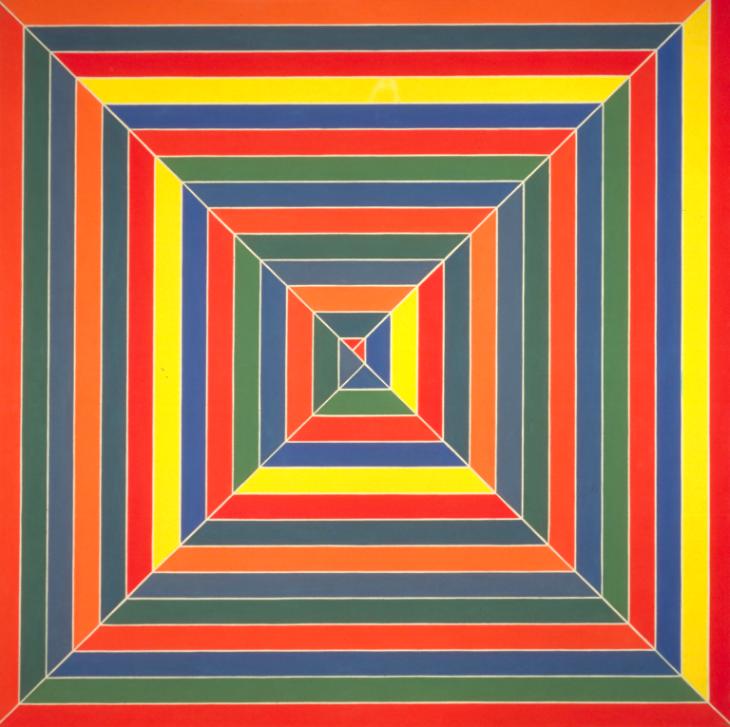
    Hyena Stomp 1962 Frank Stella

    In visual arts, that means pulling a depiction away from reference points. That’s why it can’t be defined as representational. 

    The abstract was already present in many previous aesthetic productions, even very ancient. In these cases, however, the abstract figuration had only one precise aesthetic aim: that of decoration. The abstract art of this century has, however, a completely different purpose: that of communication. It wants to express content and meanings, without borrowing anything from the images that already exist around us.

    In defining the style we must consider the concept of abstraction. This is the process through which the human mind describes reality using only some of its features. In the field of abstraction also stylizations enter, which, for example, proposed Art Nouveau.

    What is Abstract Art today

    The first signs of the style as we see it today dates to Impressionism. For instance, impressionist artists focused on capturing the essence of a subject rather than conveying it in a realistic, precise way. Surely Post-Impressionism and Fauvism in putting the colors at the center of their visual identity introduced new pillars in abstract art.

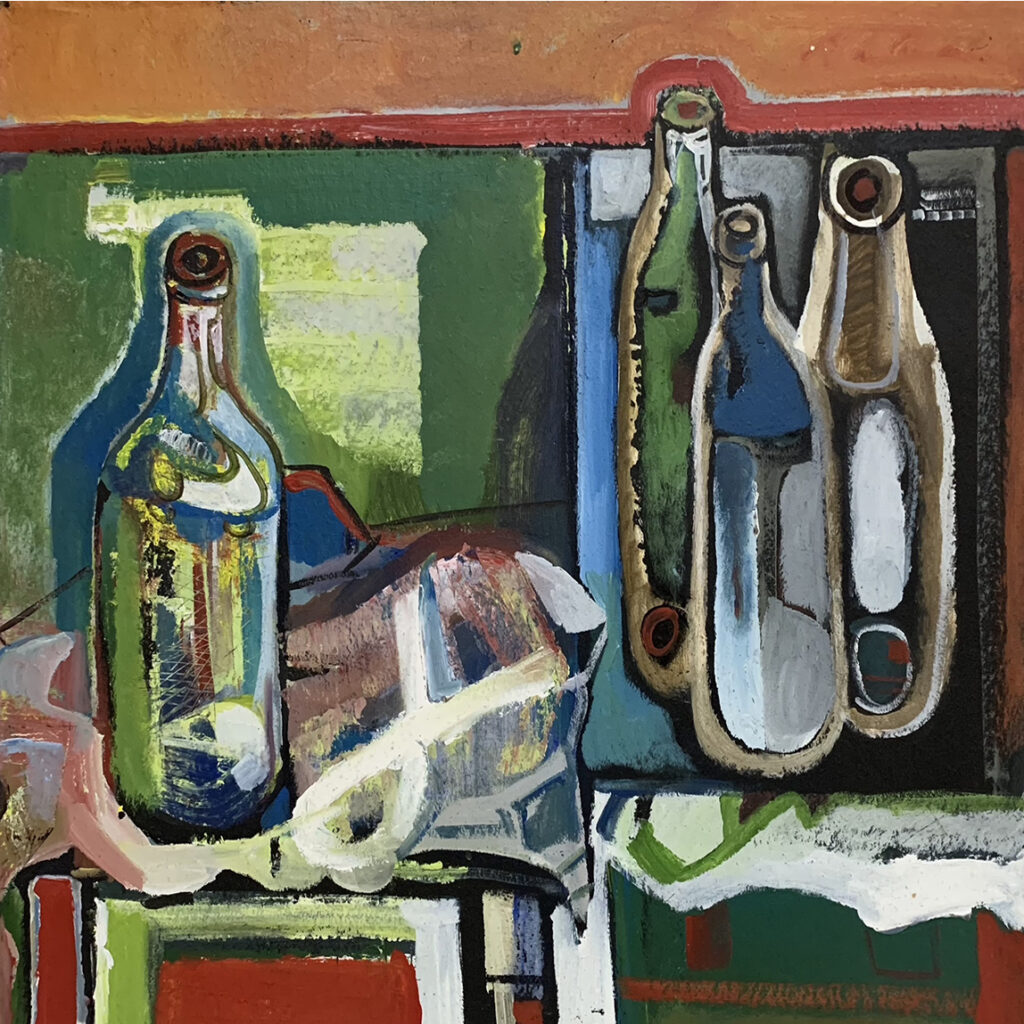
    modern abstract art by Mikhail Turovsky. A mix of figurative and abstract
    Mikhail Turovsky, Still life with bottles

    Today there are many different types of abstract art. Even the forms in which it expresses are verified, for example, it can be two or three dimensional. It can be geometric or figurative just to cite a few. For example, a great master of our time, Mikhail Turovsky often uses in his painting figurabstraction, a mix of figurative and abstract that creates incredibly powerful canvases. 

    Fluid abstraction, defined as the pictorial’s answer to dance, is another sub-genre that is totally abstract.

    However, there is something that all these sub-genres share. This main trait goes beyond any attempt to understand what is abstract art. This art is founded on emotions, sensations, and memories that undefined objects arouse in our minds.

    As Kirk Varnedoe claimed in his work “Pictures of Nothing: Abstract Art Since Pollock”:

    “Abstract art has been with us in one form or another for almost a century now and has proved to be not only a long-standing crux of cultural debate but a self-renewing, vital tradition of creativity. We know that it works, even if we’re still not sure why that’s so, or exactly what to make of that fact.”

    Kirk Varnedoe
  • The MASP commits to gender equality in the art world

    The MASP commits to gender equality in the art world

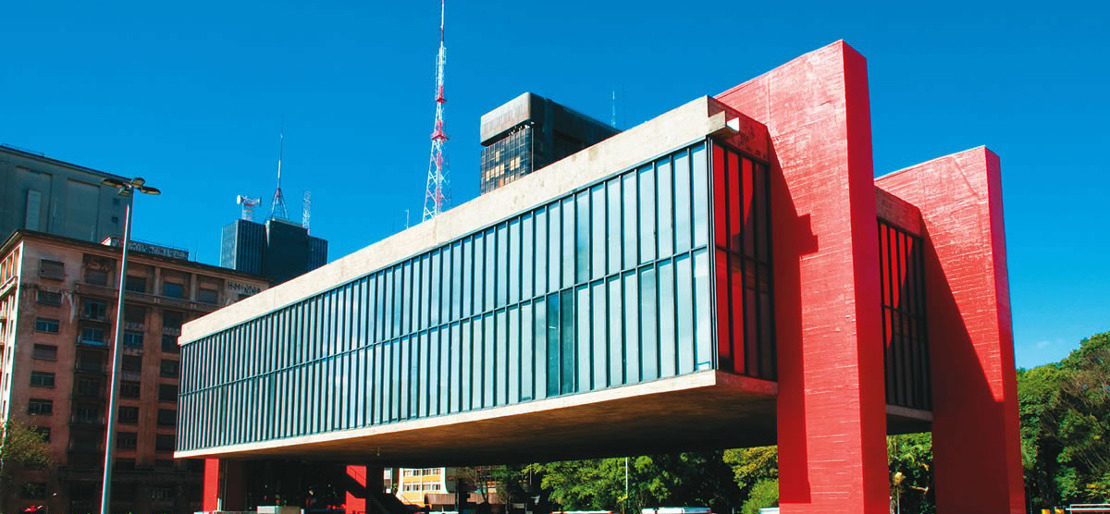
    The Museu de Arte de São Paulo commits now towards gender equality in the art world. The Museum acquired 269 artworks by women artists over the last year. The MASP is aligning to a general tendency whose aim is to give proper recognition to art made by women after centuries of men’s art hegemony in museums and galleries all over the world.

    Gender equality in the art world

    The MASP is now opening to a new artistic phase where unseen notable artworks will widen its permanent collection. In particular, the curatorship selected impressive pieces of art from all over the world. A significant part of the new acquisitions come from Egypt, Morocco, the Philippines, and Uzbekistan. The Museu de Arte de São Paulo is trying this way to give voice and space to notable art that over history was often relegated to the margins of the exhibitions halls. 

    https://www.instagram.com/p/B7PJx0IpwOm/

    Gender equality in the art world was always a controversial topic. In particular, the fact that nowadays more and more institutions are opening to a revaluation of women’s contribution to art history is due to the Feminist Art Coalition. The movement, born in the United States, has a defined purpose:

    “Motivated by the ethical imperative to affect change and promote equality within our institutions and beyond, these collective projects will advocate for inclusive and equitable access to social, cultural, and economic resources for people of all genders, sexualities, races, ethnicities, classes, ages, and abilities”

    Thanks to the artistic director Adriano Pedrosa, the MASP distinguished for giving important spaces to underlooked histories of art. The tendency seems to finally erase the boundaries that have always put the European male artists in a centric position. 

    New acquisitions for the Museu de Arte de São Paulo

    This past 2019 the MASP launched two main exhibitions. “Histórias das Mulheres” is a show that collects women’s art prior to1900. The second exhibit that focuses on gender equality in the art world was “Histórias Feministas”. Over this show, the MASP displayed art by contemporary women-identified artists with works since 2000.

    The co-curator of “Histórias Feministas”, Isabella Rjeille said in a statement:

    “This is a historical step for the institution toward a more balanced representation of art history. This is known for its major presence of white, male and European artists.”

    As part of this commitment, the museum hosted 12 solo exhibitions of women artists in the last year. These include artists as Anna Maria Maiolino, Gego, Laure Prouvost, and Leonor Antunes.

    https://www.instagram.com/p/B7yzN7sphp9/

    The new acquisitions of the Museu de Arte de São Paulo in addition to enlightening a consistent female artistic production, also mirror a variety of styles and artistic media. Among the new acquisitions are works by Geiger, Antunes, Virgínia de Medeiros, and Serigrafistas Queer. Also, there works by Carolina Caycedo, whose 40 India ink drawings are already on display in the permanent collection galleries. 

    After centuries of patriarchy in art, women are finally obtaining the due recognition in the art world enriching with powerful creations our artistic patrimony. 

  • Contemporary Art market between 2019 and 2020

    Contemporary Art market between 2019 and 2020

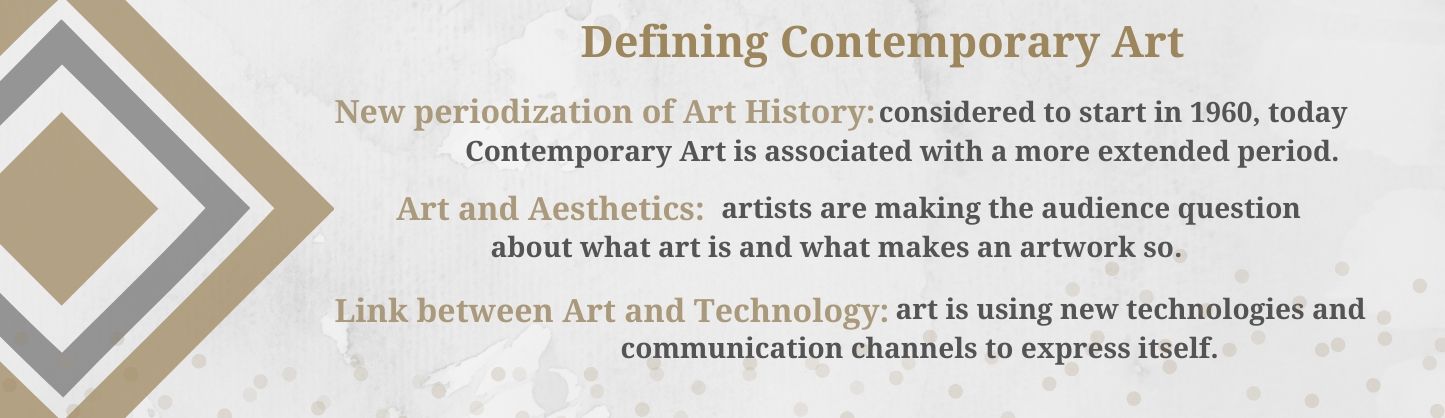
    Analyzing the tendencies in the contemporary art market might be tricky. Above all, there is, nowadays, the need to define what contemporary art refers to. The canonical interpretation collocates contemporary art with works that postdate 1960. However, the definition is widening embracing a longer period.

    Defining Contemporary Art

    Even if Contemporary Art is considered to start in 1960, today art experts tend to look at it over a more extended period. That is so why artists as Anselm Kiefer (b. 1945) or Martin Kippenberger (1953-1997) are collocated in the classification. Even if time considerations are not sufficient in recognizing the classifying boundaries, a certain periodization of art history helps in studying the Contemporary Art market.

    Defining what Contemporary Art is important to understand the Contemporary Art market.

    The way art express itself is changing fast. In particular – today more than ever – it is strictly related to new technologies and new communication channels. These factors play a significant role even if it is uneasy to understand in what amount they interfere with the dynamics of the art market. 

    Above all, it almost seems that the concept of art is going more and more towards one of aesthetics. More precisely, it is like – by creating controversial works, such as Cattelan’s world-famed banana – artists are making the audience question about what art is and what makes an artwork so.

    Contemporary Art market: results and turnovers

    With auction results amounting to $129 million in 2019, Basquiat is at the top of the Contemporary Art market. Prices soared for the American artist in the last years. For example in 2012 one of his artworks sold for $7.6 million superating an estimate of $4 million to $6 million.

    record in the Contemporary Art market for Ed Rusha's Hurting the World Radio
    Ed Ruscha, “Hurting the Word Radio”, 1964

    Analysis based on the sales of this last year highlight that Jeff Koons and Christopher Wool made the best results for ‘vintage’ contemporary art. On the other hand, Kerry James Marshall was in the world’s Top 100 artists by annual auction turnover along with Chinese artist Zhou Chunya.

    Ed Ruscha’s Hurting the Word Radio (1964) made a new record for the artists in New York. The piece sold for $52.5 million. Meanwhile, Philip Guston’s Smoking II (1973) sold for $7.6 million. 

    New market standard 

    An article in the New York Times pointed out that currently, the art market is particularly stable. The pieces sold seem to be in line with the offer for maybe the first time. Also, even if the results might appear in decline, that is to refer to the lack of major works in the offer. Still, sales confirm that the Contemporary Art market is now buoyant.

    Contemporary Art market tendencies and growth

    Even Christie’s and Sotheby’s performances registered an increase compared to the sales of 2018. After the previews drop of about 32% in the prestige sales, they are seeing a notable increase. More specifically, they reached $595.8 million by the end of 2019 versus $400.8 million registered by the end of 2018.

    All these trends mirror a phase in the Contemporary Art market of stability and solidity that is causing a growth in the number of new art collectors.

  • Norman Rockwell from the American dream to the civil rights works

    Norman Rockwell from the American dream to the civil rights works

    The traveling exhibition dedicated to Norman Rockwell arrives at the Museum of Fine Arts in Huston. Launched by the New York historical society in June 2018, the show will be on display in Huston until March 22nd.

    The images created by the American painter and illustrator constitute the very iconography of the American myth. In particular, his style embraces a strong photographic sense, which exacerbates reality by distorting it with irreverent – and sometimes grotesque – details.

    Rockwell and the Saturday Evening Post

    Norman Rockwell is a peculiar painter. He became famous for the representation of the American dream in the mid-twentieth century. His style, in particular, gained wide appreciation in the United States and greatly influenced generations of illustrators to come.

    Rockwell was an extremely prolific artist. Between 1916 and 1963 he created 300 covers for the magazine “The Saturday Evening Post“. His illustrations, in particular, return a precious reconstruction of American popular culture of the last century.

    “Without thinking too much about it in specific terms, I was showing America I knew and observed to others who might not have noticed. My fundamental purpose is to interpret the typical American. I am a storyteller.”

    Norman Rockwell

    Rockwell is acknowledged to have softened, in America’s perception of the time, the brutality of war through art. In fact, the artist devised a series of covers starring the recruit Willie Gillis. These are images describe the life of a young soldier from the first day in uniform until his return home.

    The Four Freedoms of Norman Rockwell

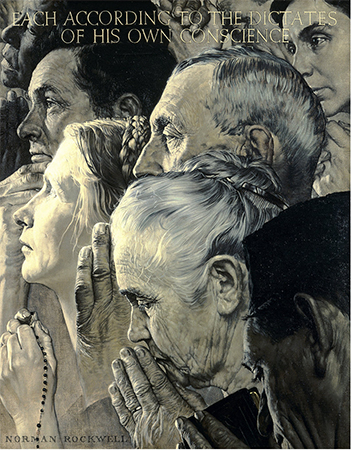
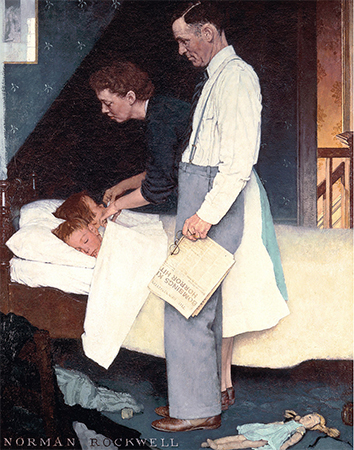
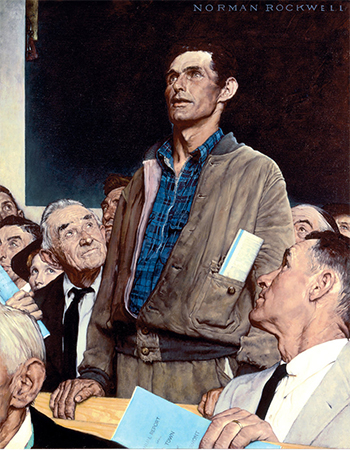
    The review collects the most incisive and famous works of the American painter. Among these, there are in fact the paintings inspired by Franklin D. Roosevelt’s speech on the state of the Union. Eleven months before the Japanese attack on Pearl Harbor and the entry of the USA into the war.

    In that famous speech, Roosevelt announced the civil reference objectives: Freedom of expression, Freedom of religion, Right to a dignified standard of living and Freedom from rest. Rockwell then brought to canvas what Roosevelt had expressed with his voice. The artist created a series of four paintings called “The Four Freedoms“. After the publication of the series on The Saturday Evening Post, the works quickly became iconic.

    The American government made those already popular paintings posters that went into countless American homes.

    Rockwell’s collaboration with “The Saturday Evening Post” lasted 47 years. Subsequently, the artist began to publish his works on “Look”. In this phase, Rockwell created works related to themes such as that of racial segregation, the war in Vietnam and the manifestations for civil rights in works such as “The problem we all live with“.

    Rockwell’s illustrations, from the first phase to the more politically engaged works of the last period, offer a mirror of the beliefs of the time. According to the words of the art curator Eccher, “Rockwell constantly oscillates between a popular narrative, functional to an immediate emotional involvement, and a learned linguistic articulation that captures the scents of classical art, literature, a refined symbolism“.

  • René Magritte Surrealist painting sold for 17 million

    René Magritte Surrealist painting sold for 17 million

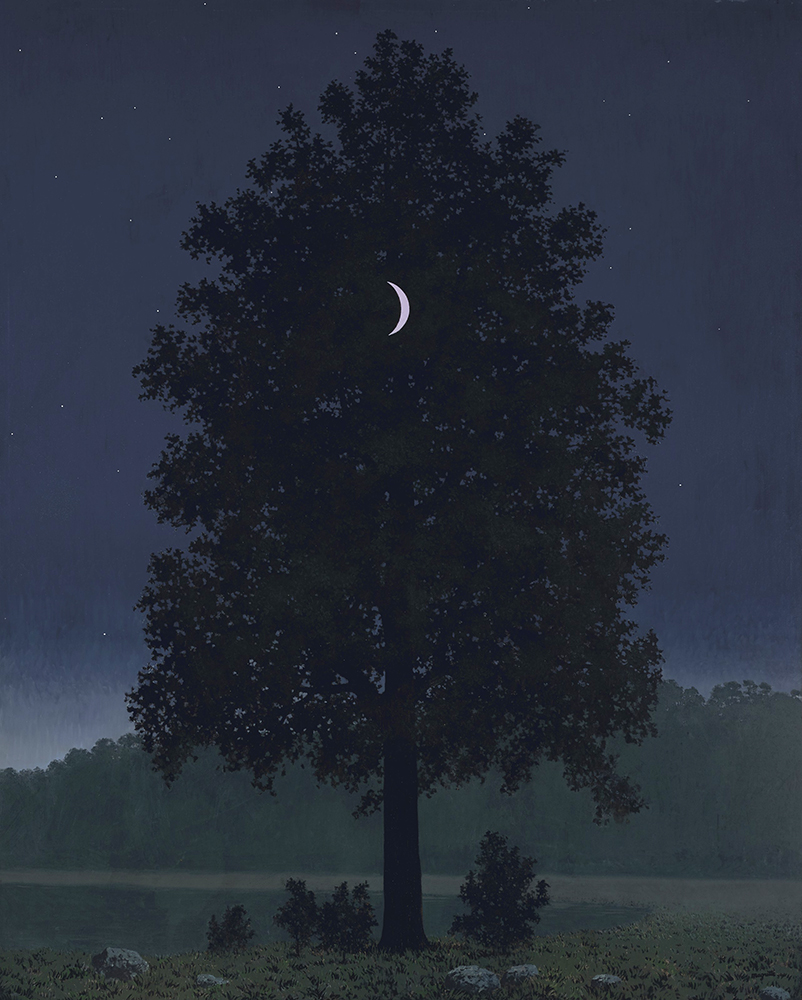
    René Magritte returns to beat surrealist painting auction records. “Le seize septembre”, 1957 was sold for 17,752,900 euros. Magritte’s unique approach to Surrealism has made him a very special exponent of twentieth-century painting.

    René Magritte Surrealist painting sold for 17 million
    Le seize septembre, René Magritte, 1957

    The Belgian painter, embracing but at the same time distancing himself from Andrè Breton’s surrealist manifesto, developed a painting of illogical dislocations and combinations, however carefully outlined. During the same auction “Le sabbat“, 1959, a smaller painting by the artist reached 9,001,160 euros.

    The artist of the Day and Night

    René François Ghislain Magritte was born on November 21, 1898, in Lessines. His father was a wealthy Belgian trader. The family often changed residence until the artist’s mother took her own life in Châtelet by throwing herself into the Sambre river. It is said that the woman’s body was found with her head wrapped in her nightgown. Although there are no certain attestations in this regard, it seems that that terrible image influenced the creation of well-known paintings by the artist.

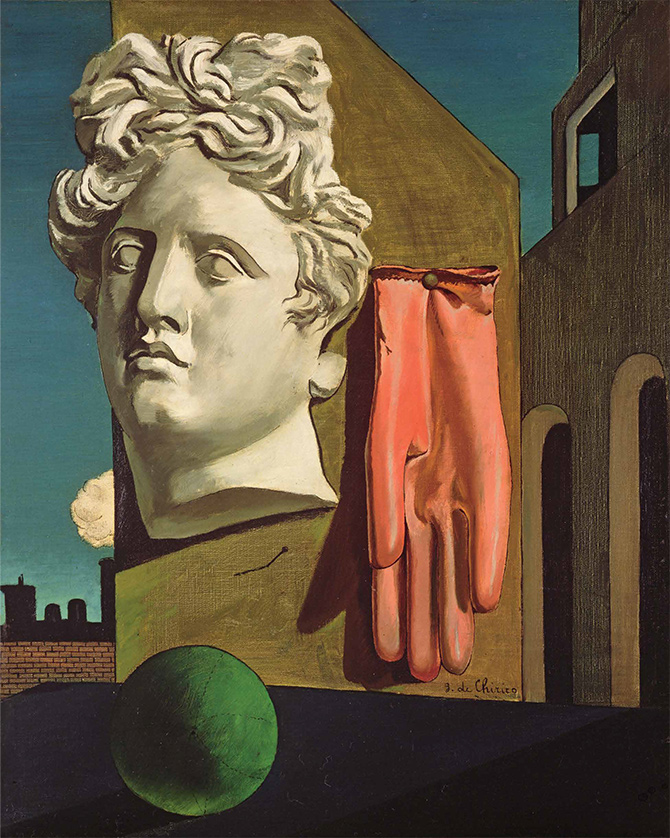
    After studying at the Brussels Academy, his beginnings as a painter moved within the avant-garde of the twentieth century. Magritte will join the surrealist group in Brussels only in 1925 after seeing Chirico’s painting “The Song of Love“.

    Magritte will join the surrealist group in Brussels only in 1925 after seeing Chirico's painting "The Song of Love".
    Songs of love, Giorgio de Chirico, 1914

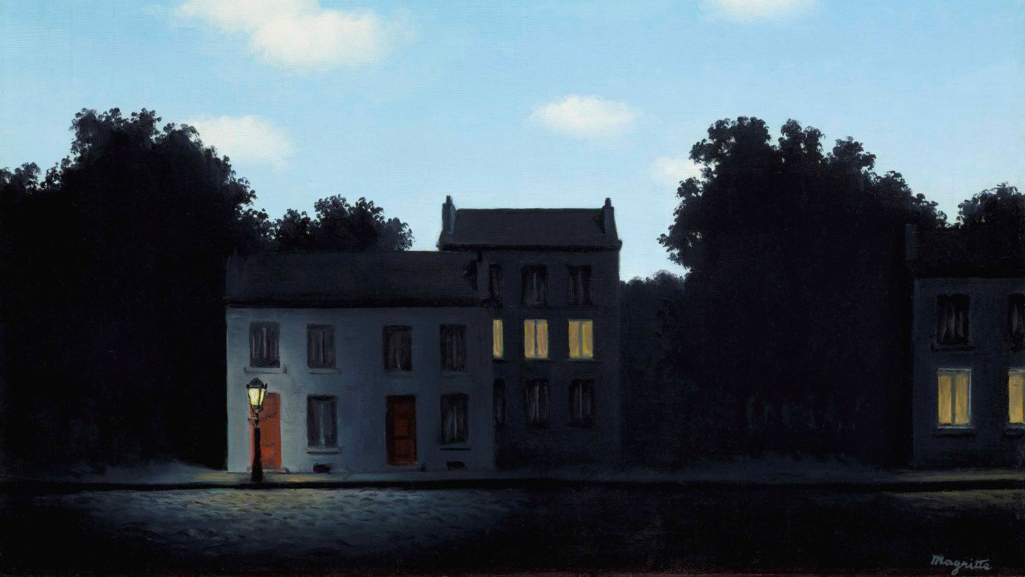
    Magritte’s first surrealist painting is “The Lost Jockey“, 1926. The artist adopts for the first time the principle of unreality that will be the basis of his subsequent works. In particular, Magritte starts developing what will be a recurring theme in his art. He creates suggestive night landscapes inserted in daytime contexts and vice versa. More precisely, the artist outlines an artistic feature that using lights and shadows allows to display on the same canvas day and night settings.

    René Magritte’s style and quest

    The artist’s paintings immerse the viewer in an atmosphere of expectation that pushes to find answers that do not exist. The objects that Magritte chooses to represent are familiar to the observer. However, the representation of common objects serves precisely to quest the purpose of life and its meaning.

    Magritte outlines an artistic feature that using lights and shadows allows to display on the same canvas day and night settings.
    The Empire of Light II, René Magritte, 1950

    Besides, Magritte’s painting soon begins to be based on the trompe l’oeil technique. This becomes his favorite tool for researching the human unconscious and the mysteries of the universe. The artist approaches reality only to express its elusiveness. For this reason, in his works, the allusion to the mystery is almost obsessive and retains very similar sides with those of Metaphysics.

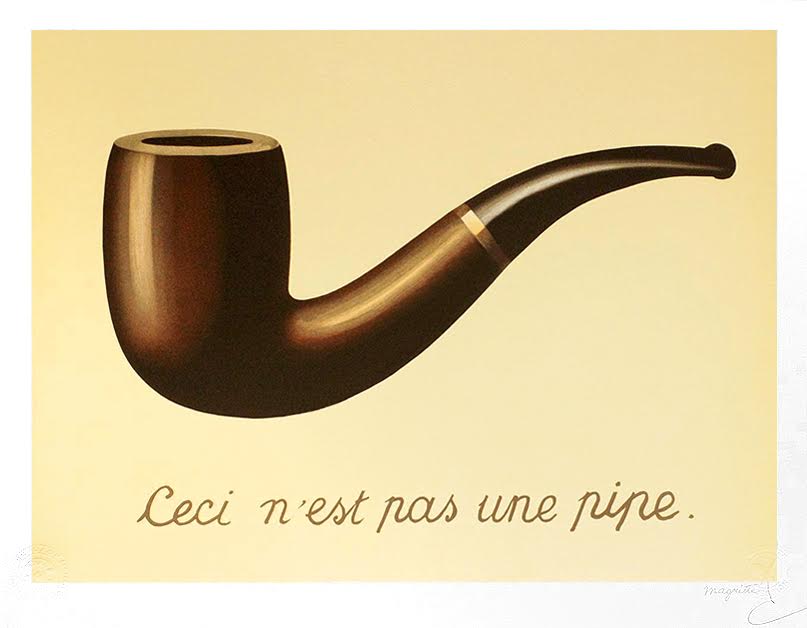
    His poetic representations of the mysterious and improbable aspects of existence are made in an almost illustrative style. In particular, Magritte induces the observer to look at real and three-dimensional objects, actually painted on a two-dimensional surface.

    The objects that Magritte chooses to represent are familiar to the observer but they are tools to quest life itself
    The Treachery of Images, Rene Magritte, 1929

    For this reason, Magritte’s style is very different from that of Salvator Dalì. Both embrace the surrealist avant-garde, however, they give vent to their creativity in a different way. If Dalì associates art with a creative delirium full of unconscious images, Magritte represents the mystery through more essential and clear representations.

    An exhibition at the Royal Museum of Fine Art in Belgium investigates the figurative approach of the two painters and their substantial differences. “Dalí & Magritte: Two surrealist icons in dialogue” will be on view until February 16, 2020.

  • American landscapes by Edward Hopper

    American landscapes by Edward Hopper

    The Fondation Beyeler in Basel will host Hopper’s iconic artworks from January the 26th. At the base of the artist’s creative imagination is the urban view of American landscapes. Like painted scripts, Hopper’s works contain infinite possible interpretations.

    The imaginative painting 

    Edward Hopper, class 1882, was called “the silent witness of America”. However, this designation does not perfectly correspond to the pictorial personality of the New York artist. Hopper paints in an era of unstoppable modernization. With TV, advertising, and massive consumerism that began to develop in those years, Hopper embraced an opposite type of message and artistic intent.

    Edward Hopper on view at Fondation Beyler in Basel
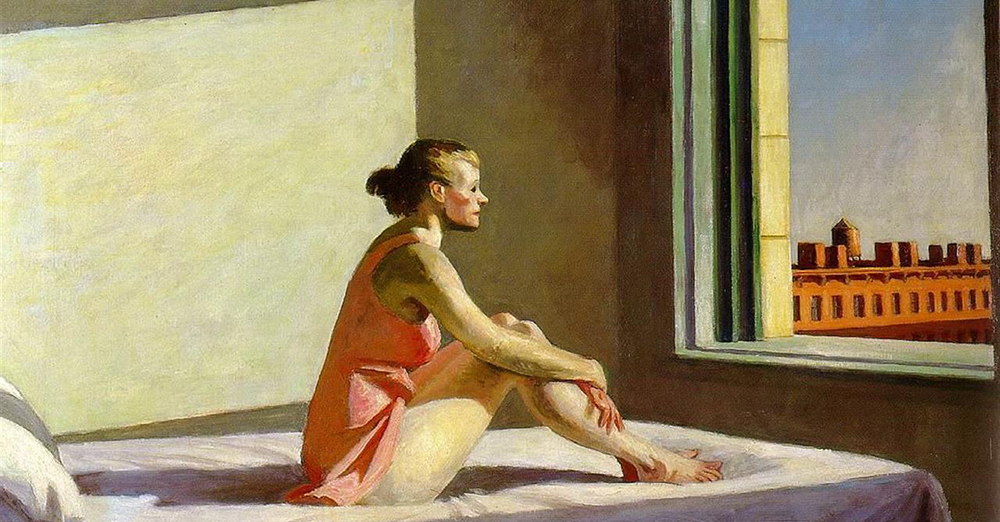
    Morning Sun, Edward Hopper, 1952

    Hopper’s works seem suspended in an unreal and melancholic atmosphere. For this reason perhaps, within his works, Hopper seems to freeze his figures. It is no coincidence that the men and women protagonists of his paintings always look elsewhere.

    “No amount of skillful invention can replace the essential element of imagination.”

    Edward Hopper

    Despite the great pictorial capacity that brings him closer to realistic painting, Hopper’s is an art of the dream that arouses a state of tension in the viewer. In leaving room for the viewer’s imagination, Hopper’s American landscapes present an apparently harmonious scene. However, something intangible immediately elicits conflicting perceptions.

    “Great art is the outward expression of an inner life in the artist, and this inner life will result in his personal vision of the world.”

    Edward Hopper

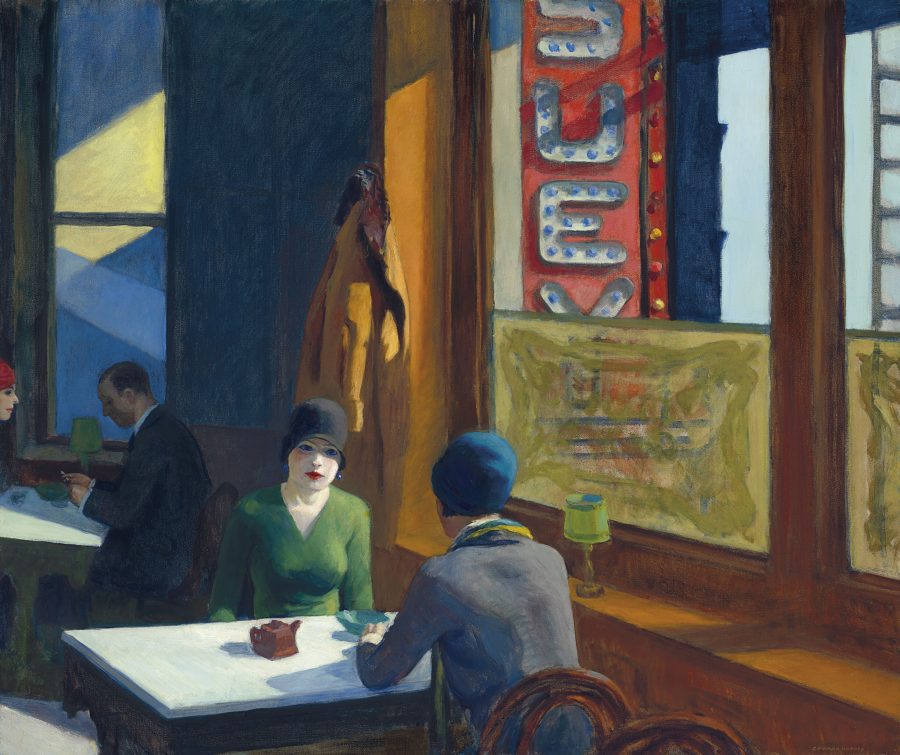
    During his career, Hopper painted 366 works, many of which are now in the most important American museums. When a work by the New York artist is on the market, in most cases it establishes auction records. In 2018, for example, “Chop Suey” was purchased for 81 million euros. Since 2005, eight other paintings by the artist have reached sales amounts between 7 and 29 million euros.

    Edward Hopper on view 

    The one at the Fondation Beyler in Basel is an unmissable event. The museum will host 67 works from the finest galleries and international collections.

    The imaginative painting of Edward Hopper on display
    Chop Suey, Edward Hopper, 1929.

    Edward Hopper’s art has influenced the imagination of generations of artists, even those from other artistic fields. Direct references to his paintings are for example in Hitchcock films, such as Rear Window and Vertigo. Indeed, the perspective, the light and the placement of the figures make his works almost cinematographic. It is no coincidence that numerous directors have admitted that they were inspired by Edward Hopper’s artworks to recreate particular atmospheres and suggestions.

    Ridley Scott revealed that he took inspiration from Hopper to obtain particular atmospheres for some scenes of Blade Runner. Finally, Woody Allen reproduced the view of the “Queensborough bridge” in the initial sequence of Manhattan.

    The exhibition stems from the collaboration between the Fondation Beyeler in cooperation with the Whitney Museum of American Art. This is the major repository of Hopper’s work. 

    In addition, a 3D short film by Wim Wenders will give further insight into the very peculiar art of the American artist.

Our Content.
Your Inbox

Join thousands of art lovers

Receive art news, market analysis and updates about new artists on the website

By subscribing you agree to receive RDN Arts emails. Unsubscribe at any time. Privacy Policy.