Author: xerkss

  • The auction record of Ubaldo Oppi

    The auction record of Ubaldo Oppi

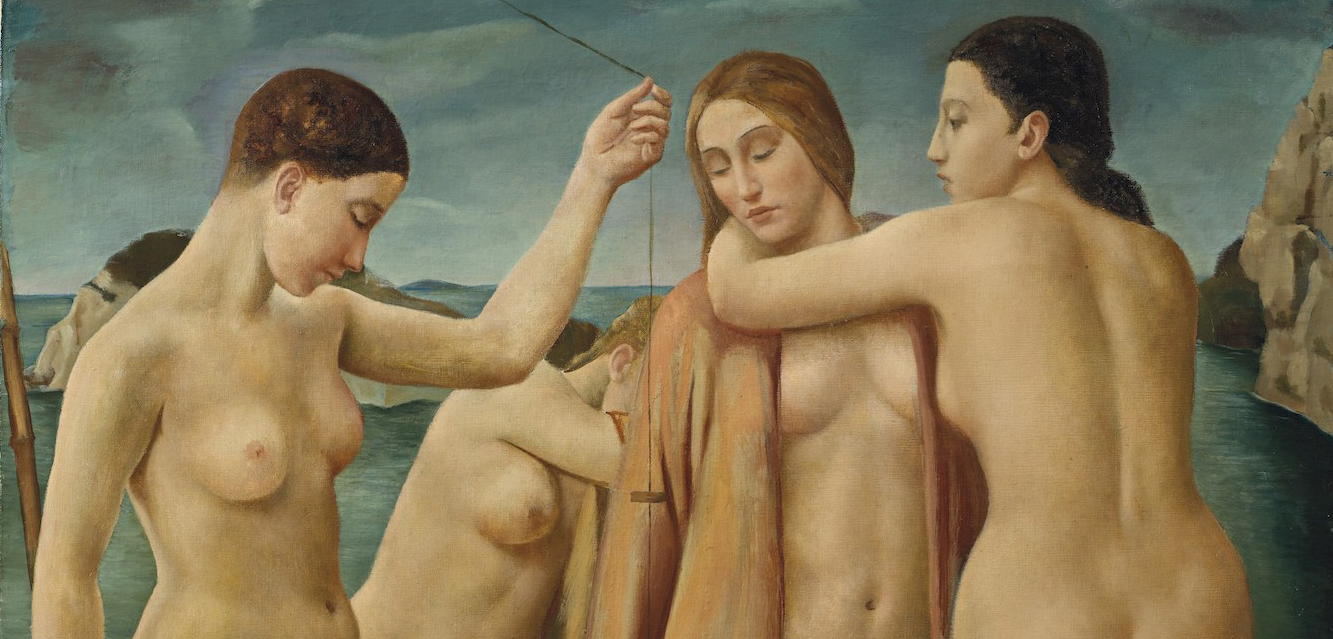
    The Magical Realism of “Young women at the sea” marks a new auction record for Ubaldo Oppi. The suggestive painting by the Italian artist is one of the most representative examples of the artistic current of the 1920s. The artwork was auctioned for 200 thousand euros.

    The “modern classicism” of Ubaldo Oppi
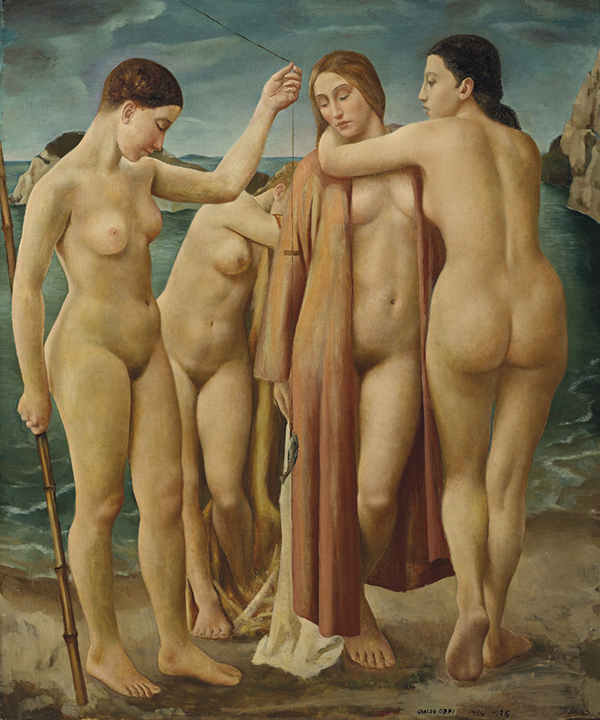
    The "modern classicism" of Ubaldo Oppi registered an auction record with the artwork Young women at the sea
    Young women at the sea, Ubaldo Oppi, 1924-1926

    Ubaldo Oppi’s painting marks a return to classical tradition after the avant-garde of the beginning of the century. In Oppi’s artistic imaginarium, in particular, symbolism is a fundamental feature. Through a poetic, and at times melancholic, figurative art, the Venetian painter brings a “modern classicism” to his canvas. “Young women at the sea“, as well as the other works of the master, underlines the reference to Italian paintings of the 15th century. Here, the metaphysical language is extraordinarily clear. Above all, the great peculiarity of Oppi’s art lies in the synthesis between the pictorial symbols and the sharpness of the drawing. An approach clearly inspired by the lessons of the ancient masters.

    The auction record testifies to the renewed interest in meditative and elegiac painting. More precisely, the works of the Venetian artist often investigate the relationship between man and nature. His artistic vision evokes mythological and sacred themes. In a later period, however, Oppi will focus on subjects that contemplate the misery of the human being. Among the works of this artistic phase there is “Peasant at night“, 1928-1931. The emaciated figures and the painted figures’ expressive harshness reinforce the metaphysical value of the work. A sense of loneliness dominates the canvas. A feeling that is definitely different from his preceding works.

    “Peasant at night” was sold in the same auctions of “Young women at the sea” for 175 thousand euros.

    Magic Realism between exhibitions and auction record

    A renewed interest in the artist is certainly developing. For example, just two months after the auction record, “Blind and other figures“, 1922, was sold in Milan for a considerable price. The artist’s quotations register an increase that seems destined to grow in the coming years. Especially if we consider that back in 2015 the work “Amazons” of 1924 had reached just 63 thousand euros.
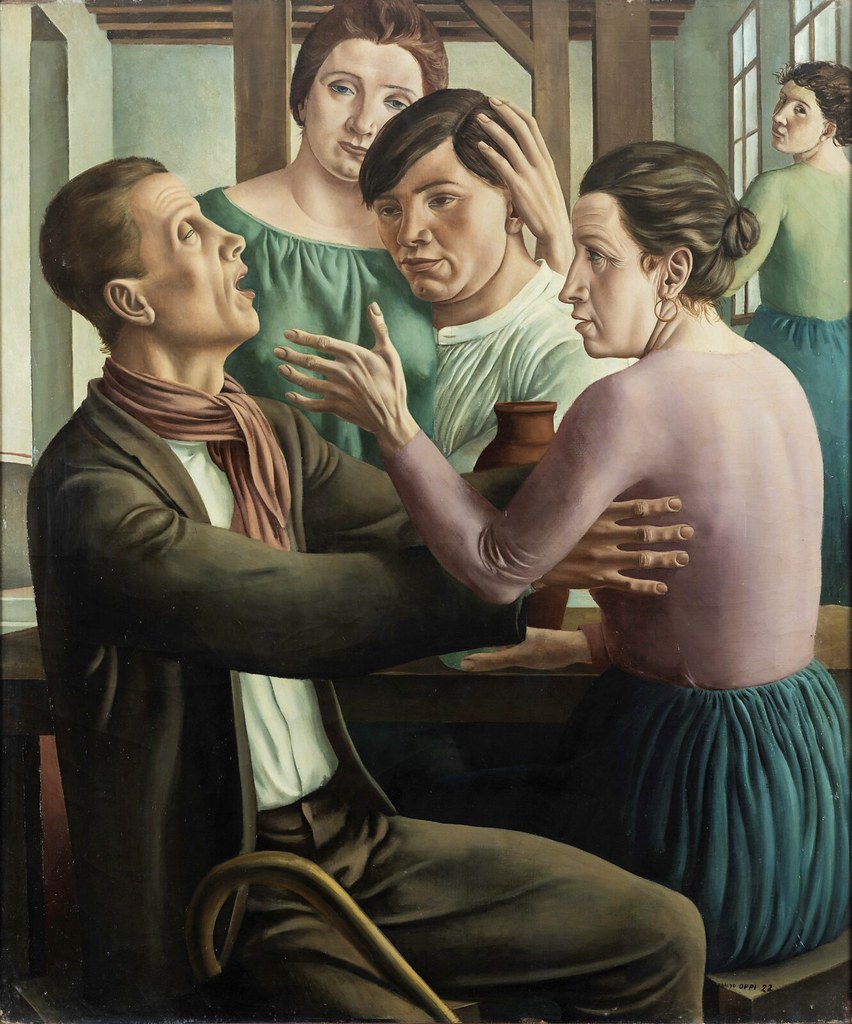
    Blind and other figures by Ubaldo Oppi, dated 1922, was auctioned in Milan
    Blind and other figures, Ubaldo Oppi, 1922

    Today it is possible to admire this suggestive work of Ubaldo Oppi in Florence, until April 13, 2020. In particular, the work is part of the exhibition “Portrait of a woman. The dream of the twenties and the gaze of Ubaldo Oppi ”at the Palladian Basilica of Vicenza.

    Those who love Oppi’s painting and Magic Realism will be able to explore the symbolic languages ​​of the artistic current at the Royal Palace in Milan. In fact, from October 2020 the artistic institution will host a review on Magic Realism.

    The exhibition responds to the success of the 2006 exhibition in Paris. The Grand Palais in Paris hosted a remarkable genre review, “Italia nova, an adventure of Italian art“. The exhibition paved the way for a new collecting interest for all the artists of Magic Realism.

    Just a few months before the performance at the Grand Palais in Paris “The shipowner’s son” of 1925 had reached 82 thousand euros. Today the painting’s value is between 175 thousand and 300 thousand euros.

  • Fauvism art movement

    Fauvism art movement

    Fauvism art in the early 1900s involved a concentrated group of painters who, although without drafting a defined artistic formula, greatly influenced the art to come. Daring and bright, Fauvism is among the most energetic and influential styles in Western Art. Besides, the artistic current boasts an exceptional pioneer: the French painter Henri Matisse.

    Fauvism, art and emotion

    More than loyalty to the depicted scene, the artistic current had the aim of interpreting how the scene is conceived in the mind. In complete contrast to the pastel-colored impressionist paintings from the 1800/1900, Fauvism is characterized by the centrality of the emotional and irrational approach.

    fauvism artworks by henry matisse
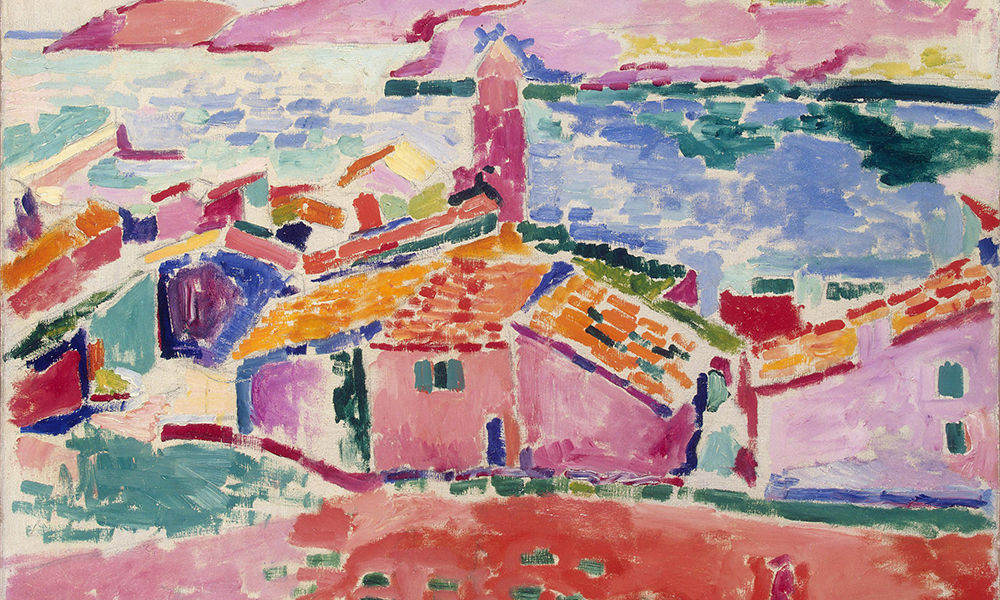
    View of Collioure, Henri Matisse 1905

    Above all, more than on purpose, the matter is about freethought. Fauves deny the mainstays of the artistic styles, putting on the canvas impactful colors and images that do not aspire to realistic representations. The priority is instead to replicate the essence, the emotion aroused by the subject. To this end, Matisse and his followers created multi-colored paintings and scratchy brush stroked figures.

    Following in Matisse’s footsteps, the followers of the genre embraced a type of painting that escaped the schemes of ratio. Color became the tool to represent the world mainly on an emotional level.

    In particular, in the Fauvist paintings, there is the abolition of perspective and chiaroscuro. The choice of colors combine cold and warm palettes in the same work. As for the choice of subjects, although there is no strict confinement, there is a return to landscapes.

    Matisse, pioneer of Fauvism

    The first time Matisse exhibited his colorful paintings a critic claimed that the works seemed to have been created by “fauves” (wild beasts). The French artist and his followers chose to represent themselves with that word, defining Fauvism their artistic approach.

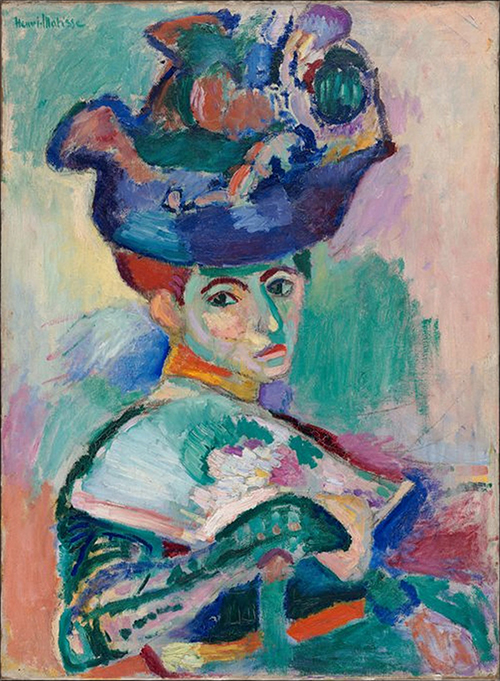
    Woman with a hat by fauvism pioneer Henry Matisse
    Woman with a Hat, Henri Matisse, 1905

    Matisse’s technique is particularly visible in works like “View of Collioure” and “Woman with a Hat“. In the first work, the use of color is anti-naturalistic. In particular, there is no geometric perspective and the spatiality is devoid of volume. Instead, what is evident is a bright contrast of temperature, brightness, and color scheme that defines an incredibly personal interpretation.

    In the famous “Woman with a Hat“, the artist chooses the portrait to convey the idea behind Fauvism Art. The work is a portrait of the artist‘s wife. The hat and fashionable clothes offer the artist the opportunity to create a work based on the expressiveness of color.

    Matisse’s companions in the new artistic approach were André Derain, Albert Marquet, Maurice de Vlaminck, Henri Manguin and Charles Camoin. These, despite having been artists with different artistic phases, have preserved over time the idea of Gustave Moreau, at the basis of Fauvism art:

    “I don’t believe in reality; neither of what I see or what I touch, but only of that of my inner feeling.“

    Gustave Moreau

    Paradoxically, the success of Cubism followed the excess of the Fauves, seen as a desire for form and a greater organization, which put a brake on the absolute freedom of color of Fauvism.

  • Expecting the 59th Venice Biennale

    Expecting the 59th Venice Biennale

    The next edition of the most famous art appointment in Venice starts centralizing media’ s attention with the designation of the new curator Cecilia Alemani.

    The 59th Venice Biennale gives us an appointment in May 2021 but the wait is already feverish for the upcoming featured works and the new Artistic Director’s curatorial approach.

    Cecilia Alemani, Art Director of the 59th Venice Biennale

    https://www.instagram.com/p/B7JpzrQnDf6/

    Cecilia Alemani, class 1977, is an Italian curator based in New York. Alemani has already distinguished considerably in the art world, collecting over the years important projects and collaborations. Currently, she is Director and Chief Curator of High Line Art. In particular, the project has the purpose of expanding the role of contemporary art in public spaces. High Line Art boasts collaborations with some of today’s most influential artists. To cite a few: El Anatsui, Carol Bove, John Baldessari, Phyllida Barlow, Faith Ringgold, Nari Ward, and Adrián Villar Rojas, Ed Ruscha, Sheila Hicks, Rashid Johnson, Barbara Kruger, and Zoe Leonard.

    However, this is just an example of the accomplishments Alemani achieved. The Italian curator launched also the High Line Plinth. The program focuses on monumental art and shows off Simone Leigh’s sculpture “Brick House”.

    This is the fifth time that the Venice Biennale picks a woman curator as Artistic Director. Besides, for the first time in many editions, the responsibility falls on an Italian woman. Alemani is actually not new at the Biennale. She curated the Italian Pavilion on the occasion of the 57th international art exhibition, in 2017. “The Magical World” featured large-scale artworks by Adelita Husni-Bey, Giorgio Andreotta Calò, and Roberto Cuoghi.

    The Tate Modern and the MoMa also appear in Cecilia Alemani’s remarkable curriculum. She collaborated with these artistic institutions as an independent curator.

    Venice Biennale 2021, Olympics of the art world 

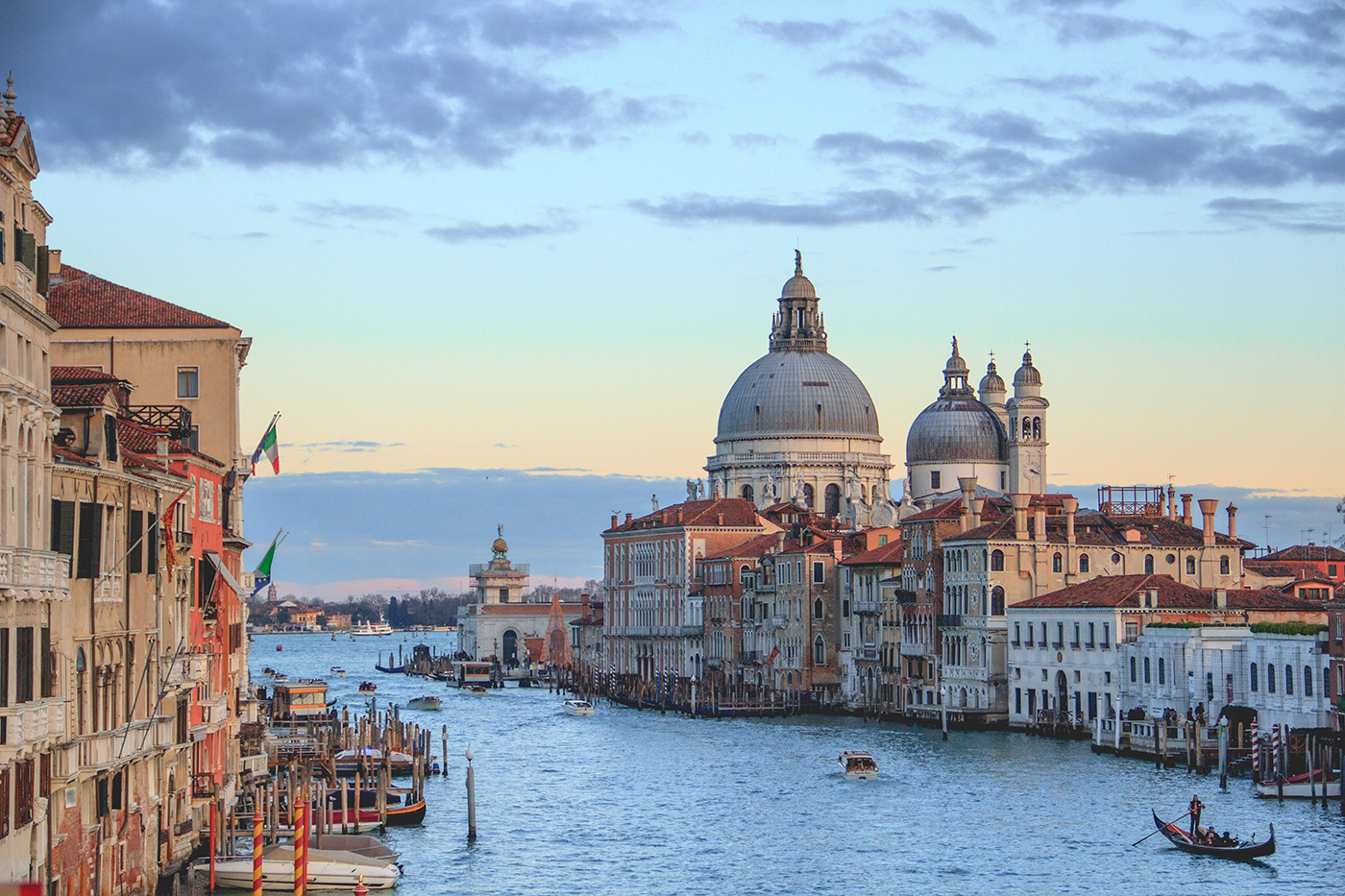
    The next Venice Biennale will unfold in 2021 between May and November. The exhibition also called “the Olympics of the art world”, is one of the most prestigious events for contemporary art. With national pavilions hosted by individual nations, and independent exhibitions throughout Venice adding to the central exhibition.

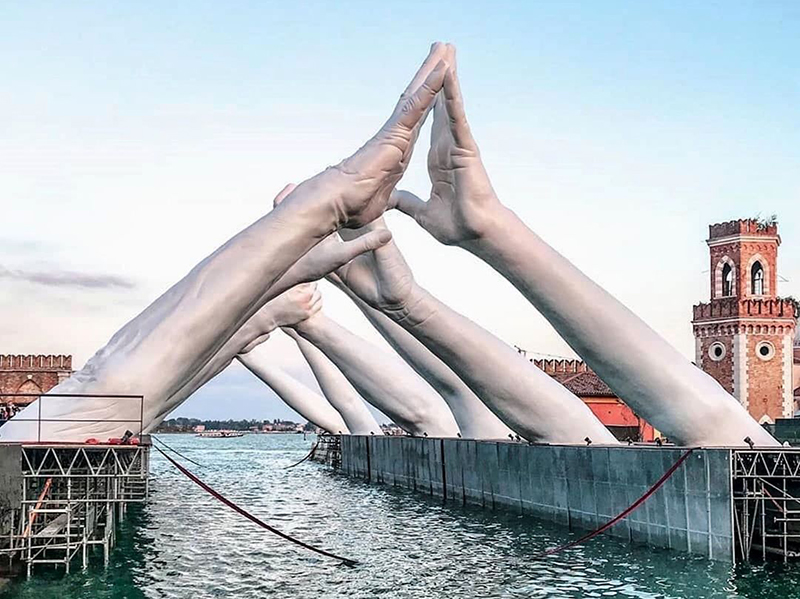
    expecting the 59th Venice Biennale a remarkable artwork by Lorenzo Quinn
    Support by Lorenzo Quinn at Venice Biennale 2019

    About her new position as Artistic Director at the 59th edition of the Venice Biennale Cecilia Alemani said:

    “It is a great honour to be able to take on this role in one of the most prestigious and recognised Italian institutions in the world. As the first Italian woman to hold this position, I understand and appreciate the responsibility and also the opportunity offered to me and I intend to give voice to artists to create unique projects that reflect their visions and our society.”

    Although the list of artists who will participate in the exhibition will undergo continuous updates in the coming months, some countries have already announced their spearheads.

    Marco Fusinato will represent Australia in the 59th Venice Biennale. This artist frequently integrates sounds in his artworks as a way to widen new forms of perception.

    In the meanwhile, Iceland chose the artist Sigurður Guðjónsson. Lastly, New Zealand announced in September that Yuki Kihara was going to represent the country at the next Venetian international art exhibition.

  • Why we love art

    Why we love art

    Art has been an important part of civilization since its inception. Despite the particularity of personal tastes, it is a fact that there is some inherent and deeper reason why we love art.

    Art constitutes a type of human experience that knows no parallels in nature. The human being has always shown a natural propensity for the decorative use of colors and patterns. How come this ancient affinity still accompanies us after thousands of years?

    Why we love art according to Rudolf Arnheim

    Why we love art according to Rudolf Arnheim
    Hom Nguyen, Blue Portrait of a Man

    In recent years in particular there have been numerous studies that have tried to reveal the reasons for the primal response that the human experience with art.

    According to Rudolf Arnheim, German-born film theorist, and perceptual psychologist, artistic perception is given by the analysis – single and overall – of its structural characteristics. The influential researcher deals with this theme within the work “Art and Visual Perception“, 1954. Arnheim states that there is a sort of “visual grammar” that we use unconsciously when approaching a work of art.

    This breaks the links between the elements of a piece of art, allowing us to focus on detail. However, at the same time, the “visual grammar” gives uniformity to the overall view, letting us see the work in its entirety.

    When we look at a painting or sculpture there would therefore be a whole series of constituents that – even if we don’t notice them – come into play in the way we perceive art. Line, shape, color, material, texture, represented subject, symmetry, balance, just to name a few.

    How art acts on the human brain: expressive quality, cognition associations, and visual memory

    The approach to formal qualities develops at this point in the field of expressivity. Gustav Metzger, artist and creator of the concept of Auto-Destructive Art and the Art Strike, defines those as “expressive qualities“. In particular, according to Metzger some shapes and colors create emotional associations a priori.

    why we love art and how art acts on human brain
    Ma desheng, 10

    Cognitively there are two areas of the brain that respond to art. These cause the eye to process the artwork visually. In particular, the link between visuality and cognition leads to functional connections. For example, as soon as we see an object we immediately associate it with its use.

    The University of Toronto has also conducted a study that confirms that the part of the brain that deals with logical thinking and understanding function is our posterior cingulate cortex.

    To date, there are certainly many studies that investigate why and how art acts on society and individuals. Among these there is a study that highlights the relationship between art and memory. Art capitalizes on specific stored memories in the mind of the observer. That is also why a visual stimulus can affect the mental or emotional state of the viewers.

    When asked why we love art, before answering, we need to choose a very specific interpretative approach. However, beyond personal opinions, it is clear that art provides much more of a mental stimulus than types of puzzles.


  • Symphony of art and music for Beethoven’s 250 years anniversary

    Symphony of art and music for Beethoven’s 250 years anniversary

    With Beethoven’s 250 years anniversary, a new symphony of music and art embraces Vienna for celebrating the great composer. 

    Concerts, but not only. For the important occasion, the Capital of Music counts a wide list of appointments. And the visual arts participate in the event. Exhibitions, iconic works and special itineraries that tell about the composer’s classicist sensitivity.

    250 years of Beethoven, Vienna between music and visual art

    The exhibition at the Kunsthistorisches Museum in particular puts Beethoven’s compositions in dialogue with the works of notable visual artists. The show will be on display next spring. Created in collaboration with the Archive of the Gesellschaft der Musikfreunde in Vienna, the unusual tribute delineates a blurred border between musical and visual arts. A relationship not of duality, but of completion, in which music empowers the impact of the artworks on the audience and vice versa.

    Exhibitions in Vienna for Beethoven's 250 years anniversary
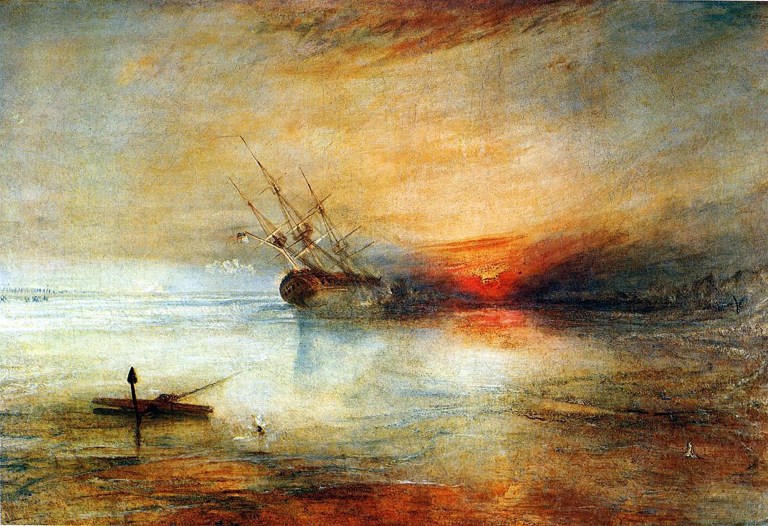
    Joseph Mallord William Turner Fort Vimieux, 1831

    The Kunsthistorisches Museum will feature graphic works by Francisco de Goya, Anselm Kiefer and Jorinde Voigt, as well as paintings by Caspar David Friedrich and J.M.W. Turner. In addition, there will be remarkable sculptural artworks by Auguste Rodin, Rebecca Horn and John Baldessari. Also, there will be more modern settings such as the performative sculpture by Tino Sehgal and a video by Guido van der Werve, to mention a few.

    The exhibit is thought to serve as a bridge. A bridge between past and present, fine art and music, Beethoven – composer and person – and visual artists.

    “But freedom and progress are our true aim in the world of art, just as in the great creation at large …”

    Ludwig van Beethoven

    Inspired by Beethoven: from Klimt to Auchentaller

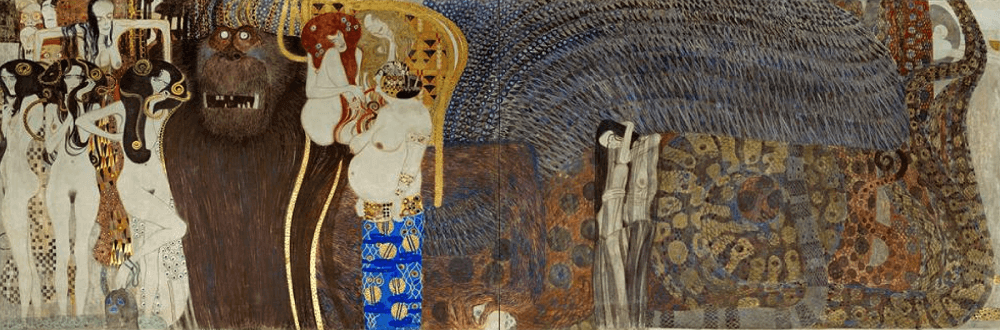
    Particularly important is the “Beethoven Frieze” by Gustav Klimt. It is a 34-meter painting, now considered an icon of Viennese art. The monumental artwork represents the individual’s long journey in search of happiness. The story depicted tells about the dispute between the forces of good and evil acting on men, taking inspiration from Schopenhauer’s philosophy.

    Celebrating 250 years of Beethoven with Beethoven's Frieze, 1902 by Gustav Klimt
    Beethoven Frieze, Gustav Klimt 1902

    Beethoven’s 250 years anniversary also resonates at the Österreichische Nationalbibliothek, Austrian National Library. Until April 4th the library will feature “Beethoven. World of the Man and Spark of the Gods“. The exhibition shows precious original scores, manuscripts and letters written by the composer. In particular, on display there is the score of the 9th symphony with the famous sentence “Joy, beautiful spark of the gods“. The manuscript is on loan from the Berlin State Library and is a UNESCO World Heritage Site.

    Beethoven’s 250 years are also celebrated at the Leopold Museum. The museum presents the first reconstruction of the work of Josef Maria Auchentaller inspired by Symphony No. 6. The artwork by the Austrian painter comes back to life again. The show, “Inspirational Beethoven, A Symphony in Pictures”, will be on the scene from May 30 to September 21. Above all, it does it by showing the world how deeply the influence of Beethoven’s music affected human lives and all kinds of arts.

  • The year of the Flemish master Jan van Eyck

    The year of the Flemish master Jan van Eyck

    In the year of the Flemish master Jan van Eyck, the city of Bruges is filled with events dedicated to the forefather of oil painting in the Netherlands.

    After Pieter Paul Rubens and Pieter Bruegel the Elder, the Flemish Masters triennium ends in splendor. Flanders is ready to be the artistic stage of the first official painter of the Burgundian court.

    The year of van Eyck in Bruges and Ghent

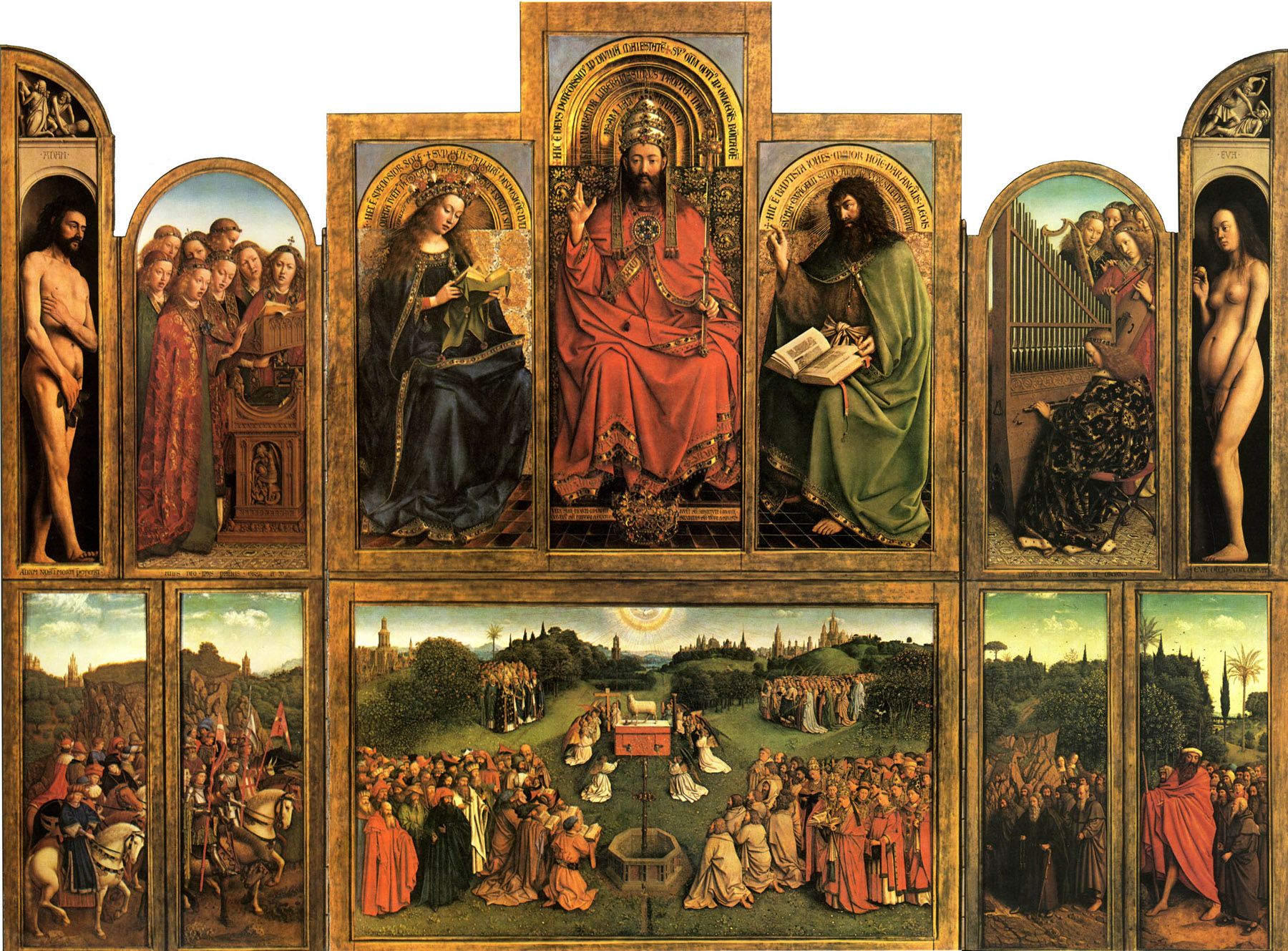
    Polyptych of the Adoration of the Mystic Lamb at the Groeninge

    At the Groeninge Museum, will be staged a review that explores the artistic and life paths of the artist. On display, there will be the absolute masterpiece of the fifteenth-century painter, Polyptych of the Adoration of the Mystic Lamb. The painting is one of the most remarkable examples of van Eyck’s genius. Painted between 1426 and 1432, it has 12 panels, arranged on two registers. Furthermore, van Eyck’s masterpiece highlights the fundamental characteristics of his pictorial style. Analytical naturalism and the use of bright colors produce a lyrical and detailed landscape. A pictorial approach that made Jan van Eyck’s works recognizable at first glance.

    Polyptych of the Adoration of the Mystic Lamb year by Flemish master Jan van Eyck
    Polyptych of the Adoration of the Mystic Lamb, Jan van Eyck 1432

    That at the Groeninge Museum will be an exhibition that wants to explore van Eyck’s artistic journey in toto. Not only the most famous works but a real excursus of van Eyck’s creative processes and techniques.

    Jan van Eyck’s exhibitions at MSK and other unmissable appointments

    Since the 1st of February, An Optical Revolution will bring together more than half of his paintings to the MSK. An unmissable appointment for Flemish paintings lovers that will see large loans from European and American museums and collections.

    From June, then, the Polyptych of the Adoration of the Mystic Lamb will return to the Saint Bavo Cathedral, a jewel of the Flemish Gothic, to show itself in a new suggestive setting.

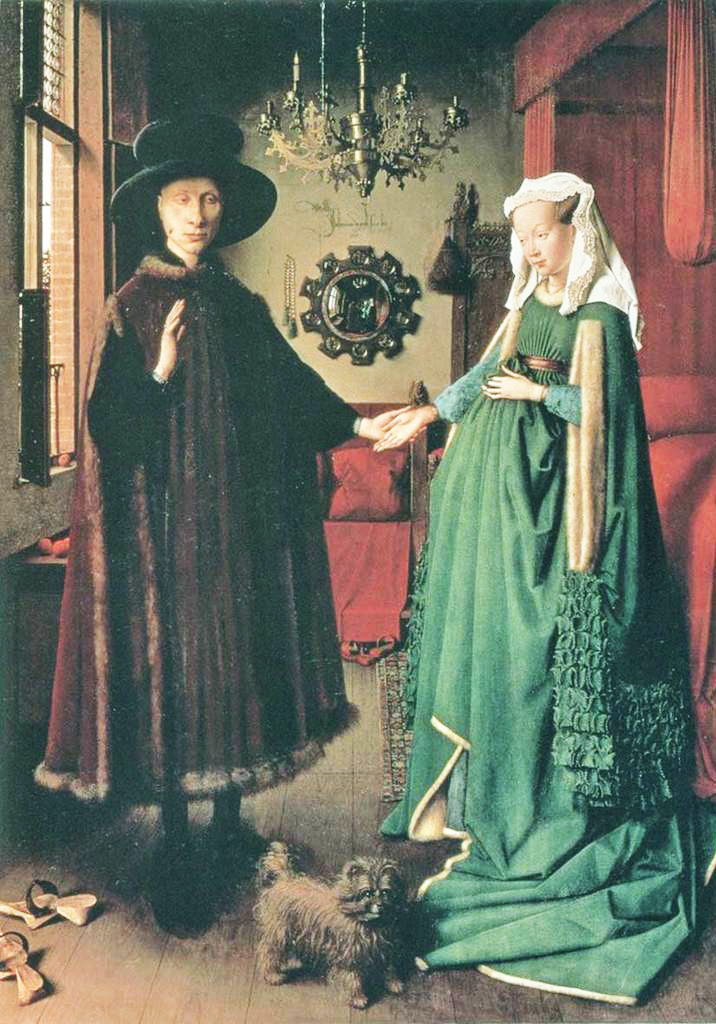
    Italian merchant Giovanni di Nicolao Arnolfini and his wife depicted by Jan van Eyck
    Arnolfini Portrait, Jan van Eyck 1434

    Floralies, the historic flower festival that lights up the spring of Ghent, will also be dedicated to the master. From 1 to 10 May there will be events, workshops, and installations inspired by his Garden of Paradise. At the Museum of Design, instead, the bright colors of Van Eyck’s palette are reinterpreted by contemporary designers. The exhibition, van Eyck’s Colors in Design will be on stage from the 13th of March to the 6th of September.

    Van Eyck: the genius of the Flemish master

    Van Eyck had the merit and fortune of working for Duke Philip the Good of Burgundy, whose court moved from city to city, enriching each of its offices with works of art and valuable architecture.

    For this reason, the Year of Van Eyck takes shape as a great event spread between Ghent, Bruges, Mechelen, Leuven, and Brussels. Bruges, in particular, hosted the painter from 1432 until his death and today it preserves his remains.

    Among the events not to be missed is that of the Museum Sculpta. Here it will be possible to admire ten famous scenes painted by the artist in a three-dimensional version. In addition, will be inaugurated tours to discover the places frequented by the master centuries ago. These will lead the audience between the Gouden Handstraat laboratory-house, the painters’ quarter and the Saint-Salvator Cathedral.

  • Reading a Portrait

    Reading a Portrait

    With the evolution of art, the same development of the portrait genre has changed course towards more intimate and abstract banks. However, to learn reading a portrait it is important to know about its evolution.

    The role of Portraiture

    Portraiture has played a significant role in every era of art. Before the advent of photography, portraiture was the only way people could represent themselves. Initially commissioned by noble families, the portraits had to respond to a series of needs. How to testify to family value, a specific profession, or convey social and political messages. As a result, the artist was entrusted with the task of communicating a lot through a single image.

    The role of Portraiture in art over the centuries
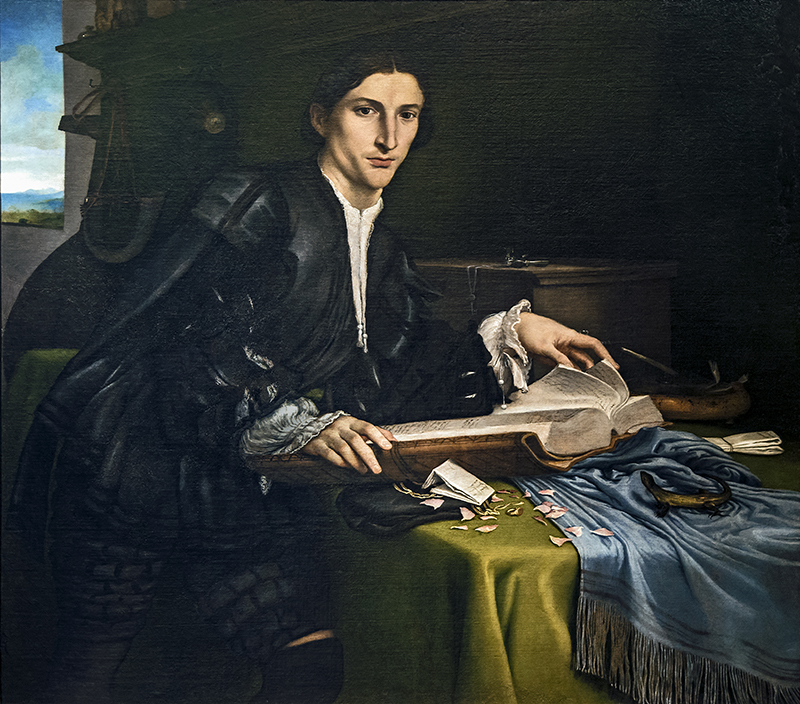
    Portrait of a Gentleman in his Study by Lorenzo Lotto

    Despite the alleged total loyalty to the subject, the portrait is much more than a mechanical reproduction of physical peculiarities. In the process the sensitivity of the artist comes into play, as well as the artistic currents of an era. In the history of art there have been artists who practiced the genre extensively, if not almost exclusively. These types of works are often full of references that can go unnoticed to an untrained eye. As particular skills of the artist, or clue elements related to the person in the portrait.

    Objects often serve a symbolic function. They become means by which representing particular ideas, concepts or events. The same pose and clothing of the painted person can outline the story that the painter wants to communicate. To read a portrait, in any case, you have to start with two main questions. These are: why was the portrait created? And, what purpose did it serve? Only by understanding the intent behind the work is it possible to clearly distinguish the symbols for reading a portrait.

    The History of Portraiture

    Hellenistic and Roman examples show that the Portrait has been of fundamental importance since ancient times. However, over time, its role has changed depending on how it was used. Emperor Octavian Augustus was among the first to use it as a tool for political propaganda. In particular, the emperor wanted a statue of him in all the colonies of the Empire. In other cases, the portrait conveys a celebratory commendation. A significant example is that of Commodus who got himself painted in the guise of the hero Hercules. If the portrait mystified, in more recent times it has become an instrument of demystification. For example, Francis Bacon’s portraits bring the pictorial representation to the extreme limit of the disappearance of the body. In those of Andy Warhol, on the other hand, the portrait becomes serial and glamorous.

    The Portrait from 1400 to 1500

    the role of the Portait in the art of the sixteenth century
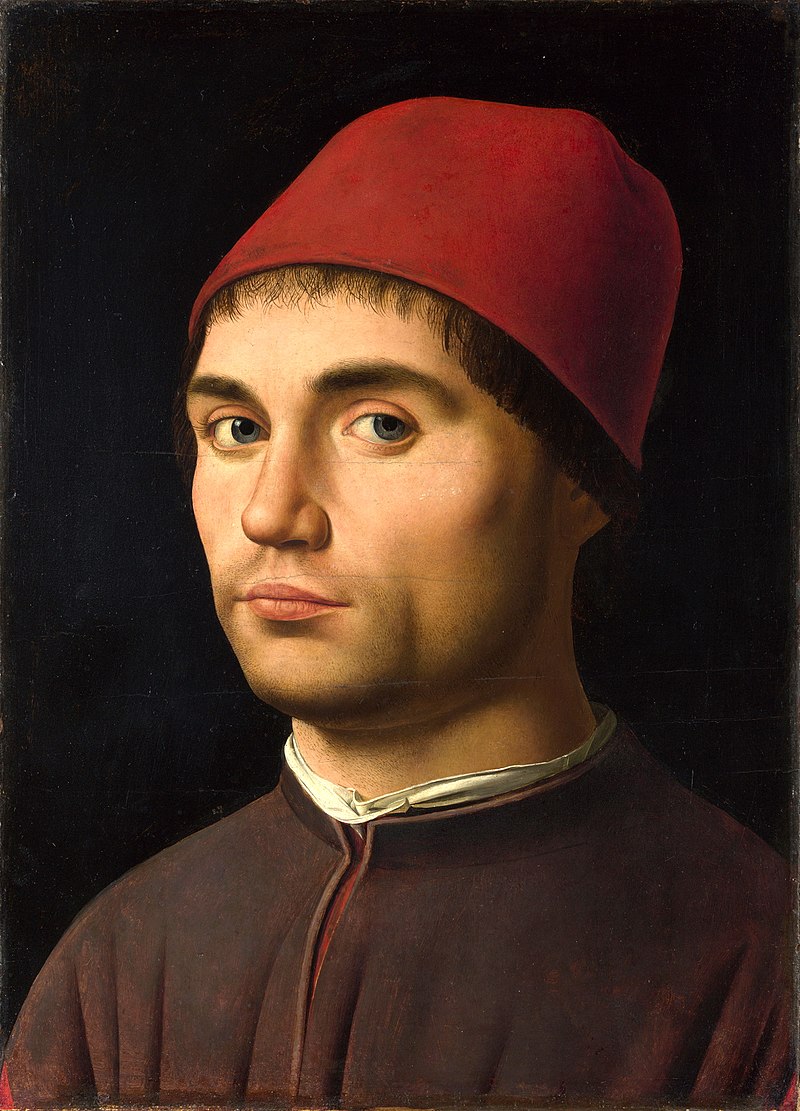
    Portrait of a Man, Antonello da Messina, 1475

    With the rediscovery of classical culture, the fifteenth century is definitely the period in which portraiture regains an artistic centrality. In this period the ideology at the base of all the arts recognizes the man as the cornerstone of the universe. Numerous portraits from this period reflect the social fabric of the time. Not only princely courts, but exponents of the rising bourgeoisie also become subjects of portraiture.

    In the sixteenth century the genre begins to know a certain diversification. After Leonardo’s studies, the portraitists refined the physiognomic representation of the figures. If before the portrait was in profile and half-length, in the sixteenth century the portrait was mainly in full or three-quarter shape. In this century the state portrait also became the official icon of political propaganda.

    With the advent of the Baroque in the seventeenth century there is a formal compositional representation. The portrait serves to enhance the European rulers and becomes a vehicle for promoting monarchical absolutism. Probably for this reason, are used canvases of large proportions in which the subject of the work is full-length.

    The Portrait from 1700 to 1800

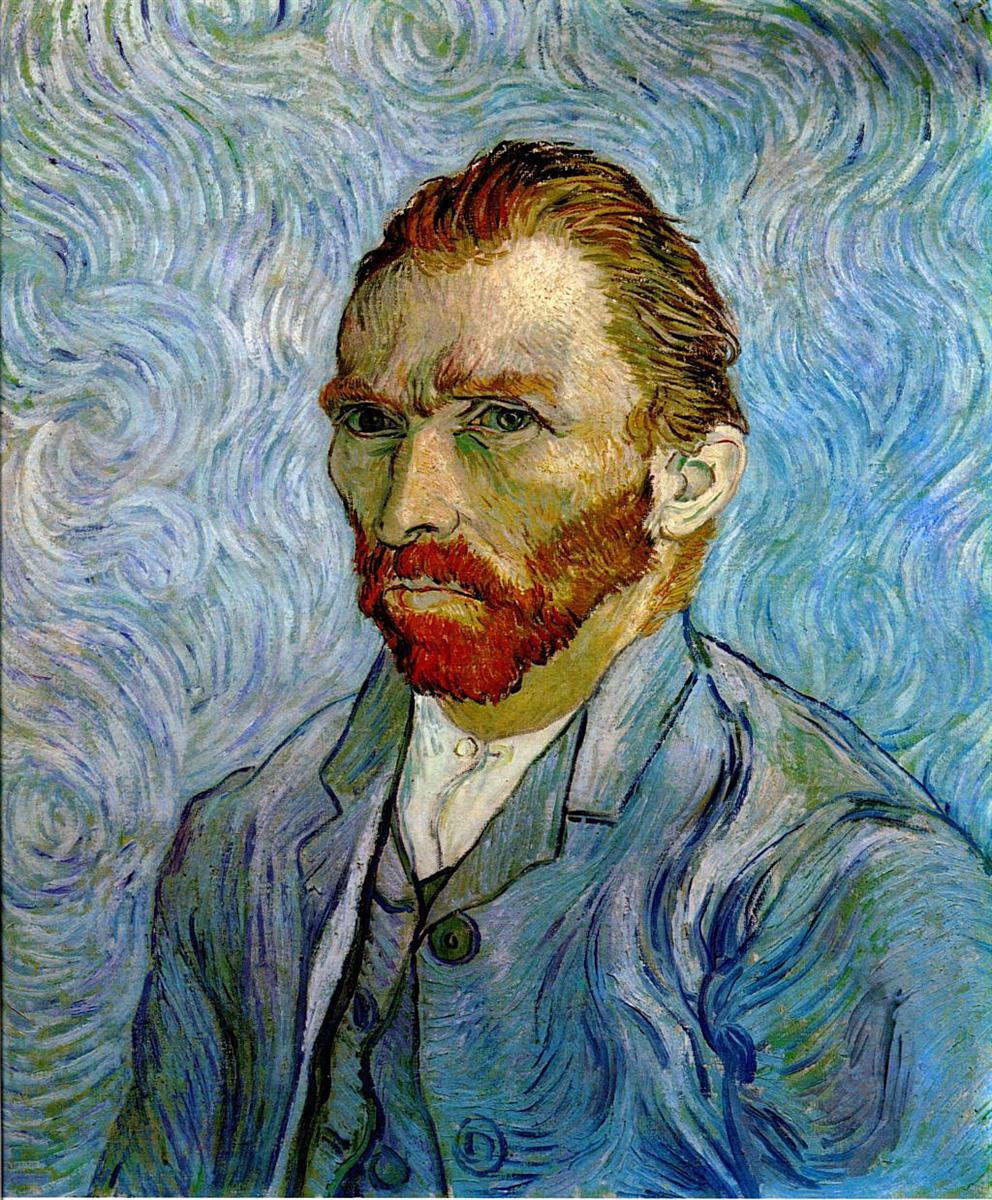
    history of portrait. Vincent van Gogh and the centrality of the artist
    Self-portrait, Vincent van Gogh, 1889

    In the eighteenth century, however, the advance of Enlightenment theories meant that there was a more homogeneous representation of the society of the time. Even the most marginal classes find their place in artistic representations. Along with a series of “popular” paintings, bourgeois portraiture developed even more. Reading a portrait becomes a more intricated process. The subjects of these works are represented at work and in their homes. In colloquial and daily environments. The figure of the bourgeois hero fascinates the collective imagination and becomes an unusual protagonist of the portraiture of the time.

    In England numerous painters became famous in this field: among them there are Joshua Reynolds, founder of the Royal Academy Thomas Gainsborough, and George Romney.

    With the nineteenth century the genre of the portrait spread throughout Europe with a particular interest in the self-portrait. There were self-portraits already in the fifteenth century, but they appear in marginal contexts. In the nineteenth century, however, self-exhibition becomes for some a manifestation of their pictorial virtuosity. Flemish artist Vincent van Gogh is a remarkable example of this trend. Van Gogh paints himself because he considers his person central to his painting, at the point to dedicate a self-portrait to every step of his artistic evolution.

  • Picasso and Paper

    Picasso and Paper

    Picasso and Paper exhibition at the Royal Academy of Arts

    Picasso’s genius returns to surprise in an exhibition that highlights one of the characterizing aspects of his artistic approach. Born in Malaga, the Catalan artist has certainly rewritten the rules of painting. Biographies and studies have followed over the course of his life and post mortem. These helped to create the myth of a man who has determined the fate of the art. Both of his time and that to come.

    The show, which will be inaugurated on January 25, 2020, counts more than 300 works by the artist.

    It is said that the first word pronounced by little Picasso was “Piz!”, From “lapiz”, which means “pencil”. In particular, even before talking, Pablo Picasso draws. He succeeds so well that, a few years later, his father left him collaborating with some of his paintings, entrusting him precisely the care and definition of the details. The result surprises everyone: the young Picasso immediately reveals an early inclination for drawing and painting.

    Picasso drawings 

    For Picasso more than an artistic medium, the paper is a creative vehicle. It is the main tool for impressing a nascent idea to be explored later. For Picasso, the paper is a rehearsal room that allows you to pin an idea down.

    As a result of this approach, today we have many paper testimonies of Picasso’s genius in the most diverse variants. Among these, there are pages taken from books, café receipts and paper scraps on which the Spanish artist noted his fantastic scenarios and his distorted realities. This is certainly a path that expands the knowledge about Picasso. The show leads the viewer to fully understand how creative thinking was born and developed in the most iconic artist of his time.

    Picasso drawings at the Royal Academy of Arts

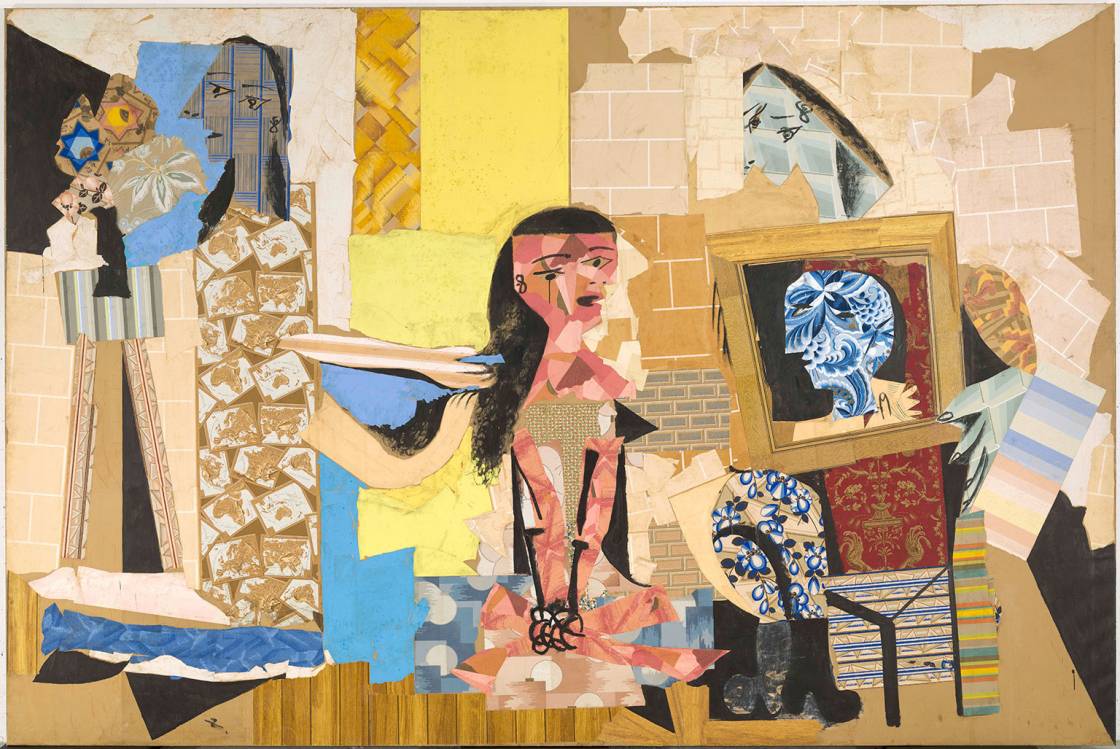
    Among the highlights of the exhibition of the Royal Academy of Art there will be a collage of 4 and a half meters entitled “Women at Their Toilette“. The composition is back on display in the UK after 50 years.

    Picasso and Paper at the Royal Academy of Arts

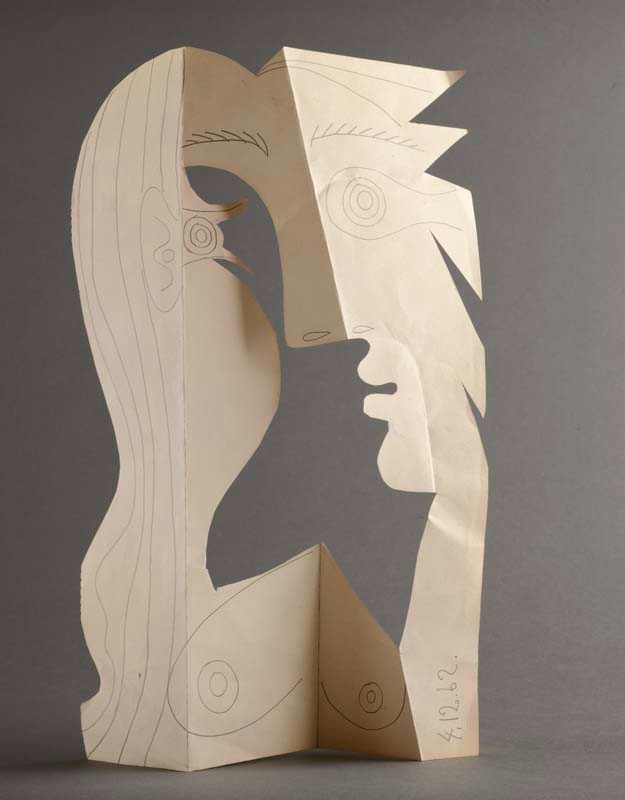
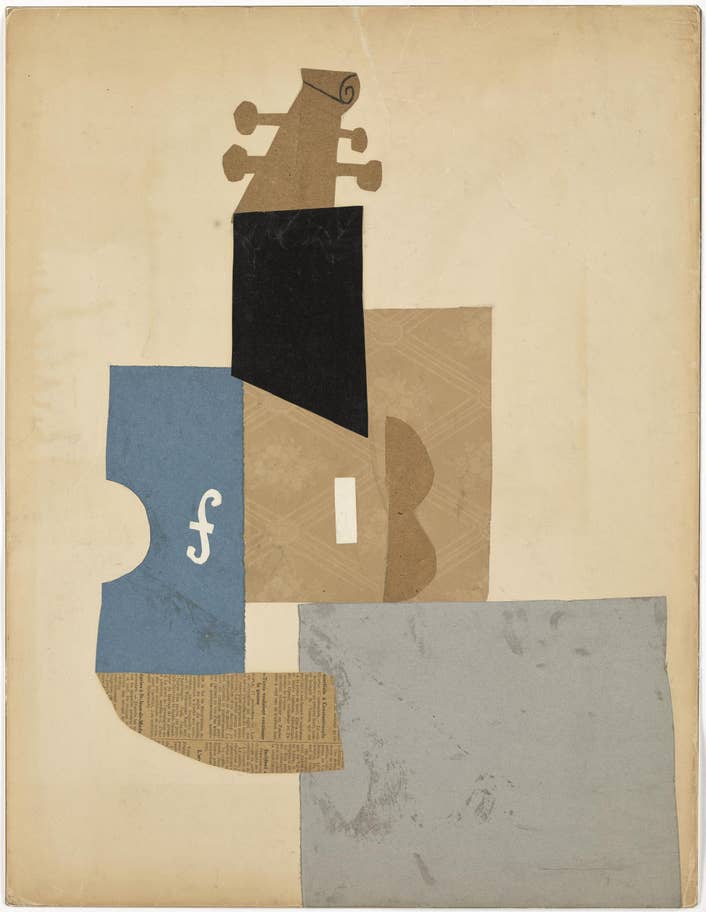
    The exhibition traces a chronological journey through different stages of Picasso’s career. A remarkable path of over 8 decades in which paper is the artist’s main ideational medium. On display, there will be not only paper sculptures but collages and watercolor drawings that capture the master’s most vivid creative instincts.

    The show will feature also Cubist papier-collés sketchbook studies for his great masterpiece, Les Demoiselles d’Avignon (1907), and documentary footage that offers a rare glimpse of Picasso at work.

    The Royal Academy of Arts hosts the exhibition dedicated to Picasso and Paper from 25 January to 13 April 2020.


  • Art over Time and Space

    Art over Time and Space

    Art and culture: the concept of time

    Art is an essential part of the culture of any socio-political environment. But how does Modern Art fit into this mutual and articulated relationship? First of all, art is able to mirror an era, to bring out the issues of the time with visual force.

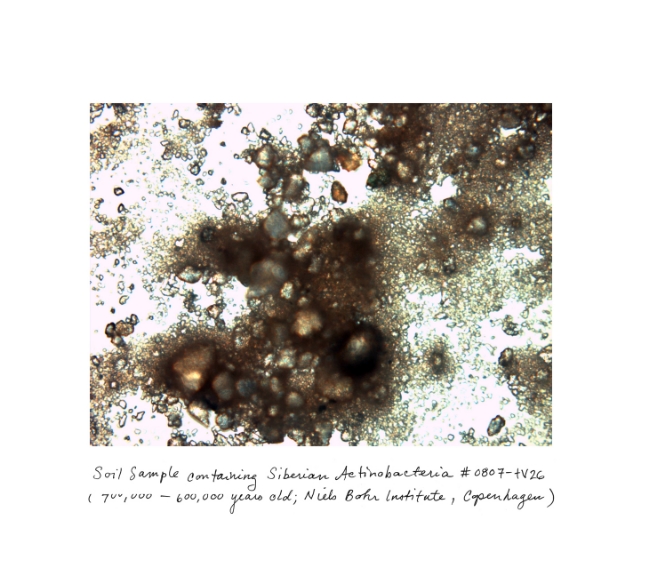
    The concept of “timefulness” precisely indicates the ability to place the viewer in specific ages. A concrete example is the artistic production of Rachel Sussman. The Brooklyn-based contemporary artist defines in an interview with Marina Abramovic Institute the concept behind her works:

     “My use of deep time is about creating perspective and differentiating between the shallowness of human timescales and the depth of natural, geologic, and cosmic timescales.”

    The Oldest Living Things in the World by Sussman. A travel of art through time.

    Through her decade-long project “The Oldest Living Things in the World” Sussman creates art of scientific and environmental interest. The artist almost brings the viewer back to a primitive conception of the earth, putting nature in the foreground.

    Sussman is certainly not the only artist whose artistic concept is intertwined with that of time. The New Zealand artist Honor Harger, in particular, combines the means of modern technology to create a soundscape of the history of the Universe. Through his works, it is possible to immerse in the oldest sounds in the world. Those include as well the ones of the cosmic rays left over from the Big Bang.

    Not only past and present, but art also allows you to explore plausible or totally imaginary futures. The fusion of art with the tools of modern science has greatly expanded the creative possibilities. 

    Art as exploration: the concept of space and protest

    Ice Watch installation by Olafur Eliasson.
    Ice Watch, Olafur Eliasson 2014

    Art, however, allows to range not only in time but also in space. Sometimes it brings the audience to an otherwise unknowable emotional level. This is the case of the Ice Watch installation by Olafur Eliasson.

    The Danish-Icelandic artist is known for his employment of elemental materials such as light and water in his artworks.

    In Ice Watch the artist transported melting glacial ice from the Arctic to London. In this case, the artist creates a real experience. This translates into an audience that expands its knowledge and understanding of specific issues.

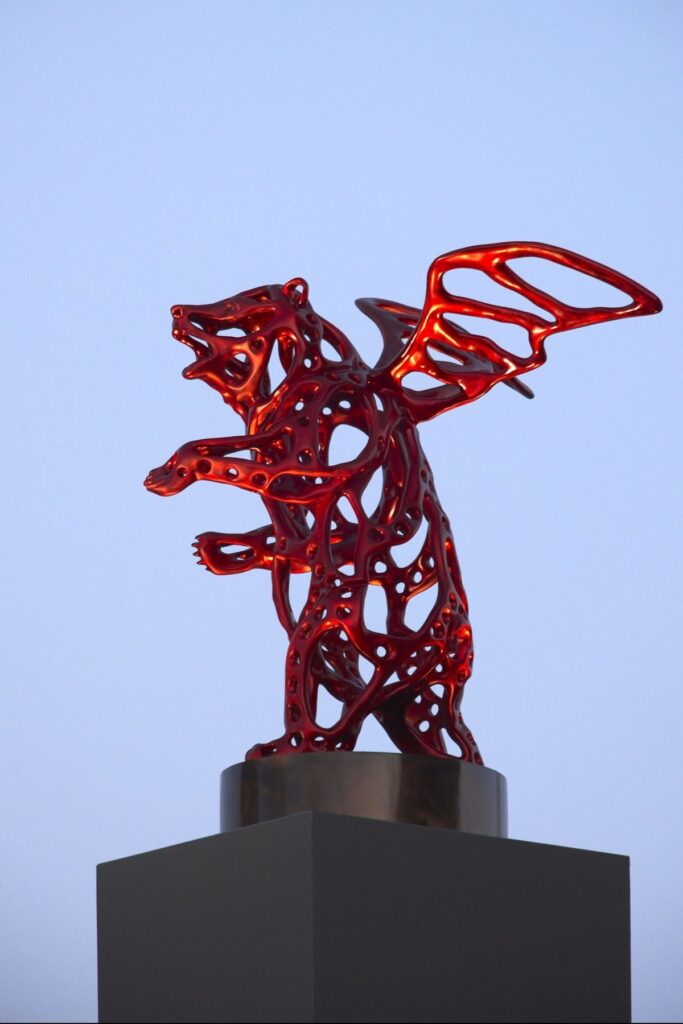
    Richard Texier's Angel Bear. Gare du Nord, The Paris Nord Train Station.
    Angel Bear, Richard Texier

    “I believe that one of the major responsibilities of artists – and the idea that artists have responsibilities may come as a surprise to some – is to help people not only get to know and understand something with their minds but also to feel it emotionally and physically.”

    Another example is that of the famous Angel Bear by Richard Texier. The French painter and sculptor was commissioned with a public artwork to place in front of Gare du Nord, The Paris Nord Train Station.

    The monumental winged bear emphasizes the issue related to the melting of the glaciers and the danger of the environmental change taking place for the conservation of polar bears.

    Art builds culture through unpredictable paths. Not only challenging the status quo, but making totally different worlds and epochs tangible.

    Above all, without any intellectual constraint, art elevates knowledge and broadens our perspectives, allowing a more impartial construction of our beliefs, over time and space.

  • Scar of Bethlehem by Banksy

    Scar of Bethlehem by Banksy

    Banksy continues surprising. The British artist has created a new work to raise awareness about the impact of the wall built by Israel during the second Intifada of 2000. In particular, Banksy chose Bethlehem, to propose a “modified Nativity” – as he himself defined his latest creation on Instagram.

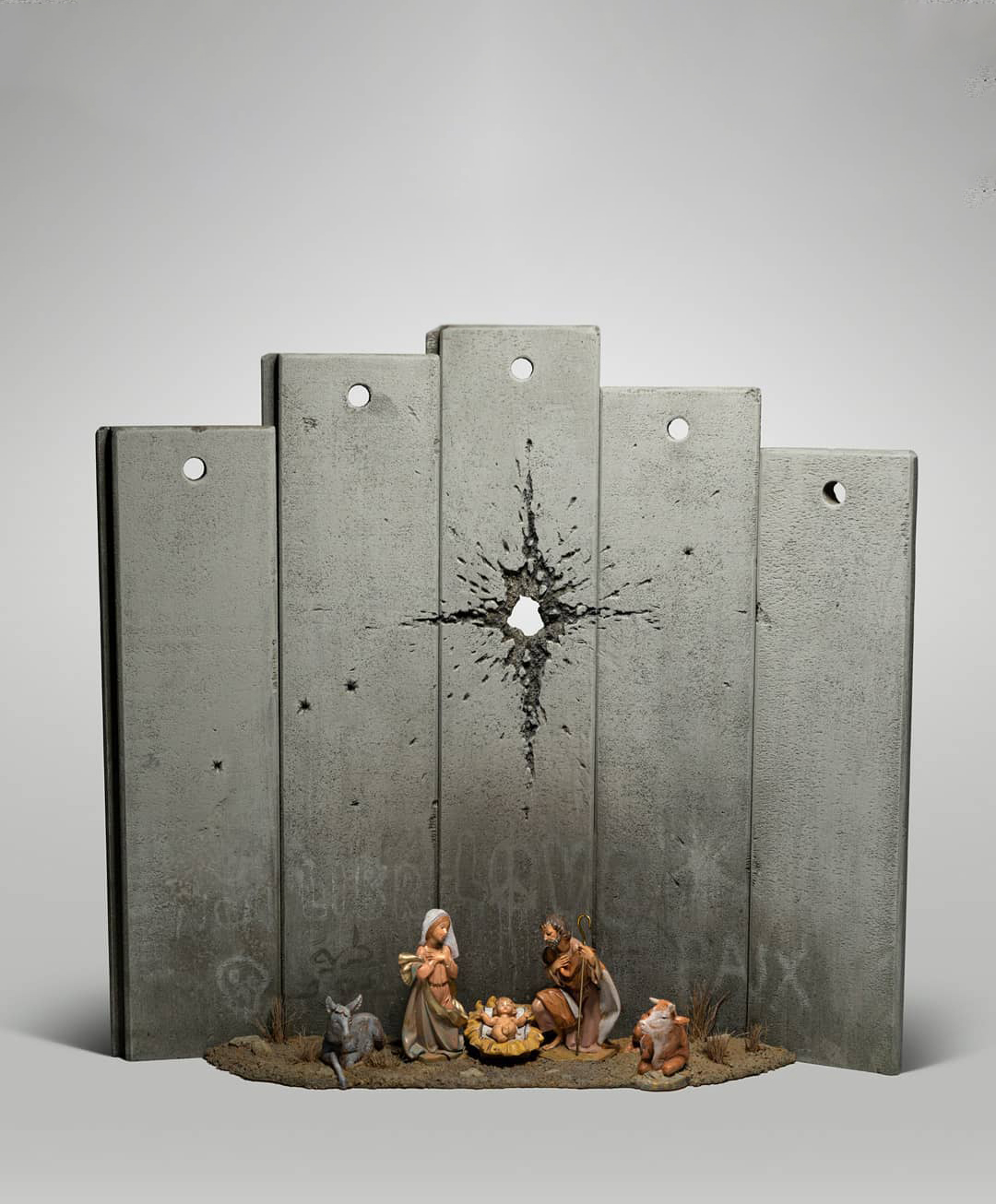
    Scar of Bethlehem

    The work, called “Scar of Bethlehem” was placed right at the entrance of the Walled-off Hotel. The hotel, built in front of the wall, houses works by Banksy and other artists. It was inaugurated by Banksy in 2017.

    https://www.instagram.com/p/B6VOhqjnDBy/

    Through the use of Christian symbolism, the Bristol artist makes his statement on the conflict between Palestinians and Israelis. The work consists of a small manger, an icon of the Christian Nativity, leaning against a piece of Israel’s protective wall. However, the most remarkable feature of the Scar of Bethlehem is the jagged hole inside the wall. 

    The hole of a shot becomes in Banksy’s imaginarium the comet star. The words scratched in English and French on the background wall are “peace”, “freedom,” love “. In addition, in much smaller characters follows the wording “offer subject to terms and conditions”.

    In a symbolic choice that leaves no room for misinterpretation, the artist chooses to openly criticize the West Bank’s separatist policies and social disparities. Above all, the comet star in Christian iconography is a symbol of joy, which announces the coming of Christ. In Banksy’s work on the other side, it becomes the symbol of fierce violence and injustice.

    Banksy, new model of resistance through art

    Banksy is not new to forays into the conflict. In 2007 he left various drawings on the wall of Bethlehem. These included the famous one of a girl inspecting an Israeli soldier with his arms raised and the rifle placed next to him. In 2005, however, he made nine different drawings with the stencil technique. Among them a ladder leaning against the wall and a girl who is carried up by balloons. Above all, Banksy’s intention is to highlight the impact of the wall on Palestinian life.

    One of the murals of 2007 portrayed a donkey stopped by an Israeli soldier for a document check. The work aroused several controversies until its mysterious disappearance. Currently, according to Banksy’s agent, Jo Brooke, the work is certainly on sale on the international market.

    Moreover, the Walled-Off hotel itself can be defined as the symbol of a precise ideology. The hotel – whose launching slogan was “the hotel with the worst view in the world” – looks directly onto the wall and has become over time a point of reference not only in welcoming tourists but above all as a political emblem.

    The hotel manager, Wissam Salsaa said about the work: 

    “Banksy is trying to be a voice for those that cannot speak. He is creating a new model of resistance through art.”

    The work comes after the one made in mid-December in Birmingham. In particular, the piece showed two reindeer painted on a wall as if pulling a bench as a sleigh. In a video posted on his Instagram page, the bench is occupied by a homeless man, a modern Santa Claus that raised other social considerations.


Our Content.
Your Inbox

Join thousands of art lovers

Receive art news, market analysis and updates about new artists on the website

By subscribing you agree to receive RDN Arts emails. Unsubscribe at any time. Privacy Policy.