Author: xerkss

  • Banksy, found the door that the artist painted at Bataclan

    Banksy, found the door that the artist painted at Bataclan

    It disappeared a year ago, in January: and in the same mysterious way, the Bataclan door on which the artist Banksy had painted a mural in mourning for the victims of the terrorist attack reappeared last week.


    Banksy’s mural on the Bataclan gate

    A veiled woman painted on one of the emergency exits used to escape during the concert that ended in tragedy in 2015. The work was found in a country house in Abruzzo. More precisely in the province of Teramo.

    The district attorney of L’Aquila Michele Renzo, who in the course of investigating the case, had ordered the search of the property to report the discovery. In particular, the work had been painted in late June 2018 and claimed by the famous faceless artist Banksy. Months later, the Bataclan had denounced its disappearance. They communicate the theft via Twitter.

    “A deep indignation” for a work that was “a symbol of recollection and which belonged to everyone. Residents, Parisians, citizens of the world . “
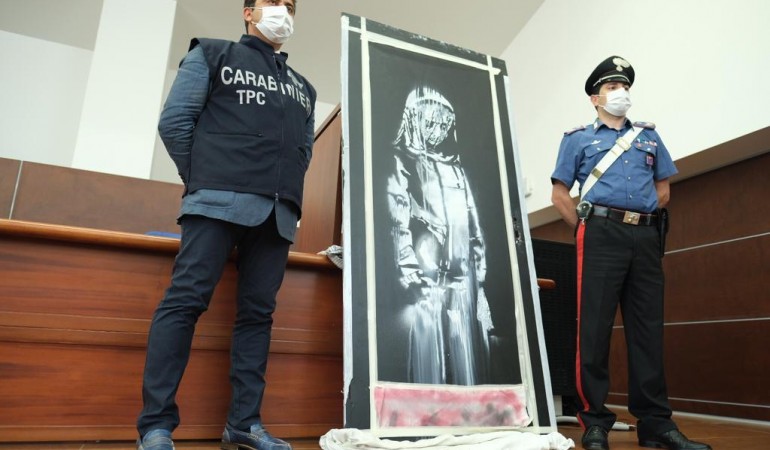
    banksy bataclan door found

    Bansky, wrote the Parisian theater, “offered this work on the Bataclan emergency exit door for one reason. That of his choice as an urban artist and in a moment of homage and support. The very essence of urban art is to give life to a work of art in a particular environment. We are convinced that this work made sense only if it is in this place. It is for this reason that we had decided to leave it, free, in the street, accessible to all “.

    The artist’s works are not new to such episodes. For example, a theft of a painting donated by Banksy to doctors fighting Covid19 was attempted in the hospital in Southampton (UK) a few weeks ago. In February, two people were arrested in Paris on suspicion of the theft of the iconic murals on the advertising sign near the Centre Pompidou, which, to date, is still missing.

    How much Banksy’s works are worth

    Banksy’s street art is a fatal attraction for art collectors. His works, have appeared on walls, buildings, and bridges around the world. From the West Bank to the United States. At auction, their value is over $ 1 million.

    Known for their distinctive style and irreverent humor with which he tackles socio-political issues, they enchant the people!
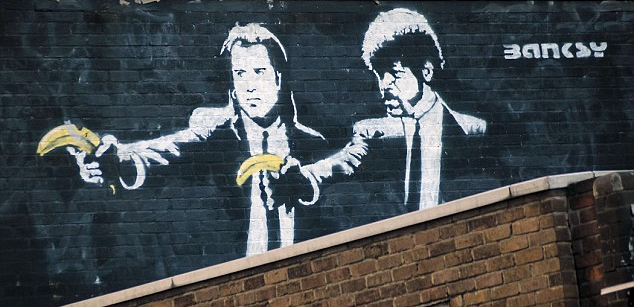
    Banksy's street art is a fatal attraction for art collectors. His works, have appeared on walls, buildings, and bridges around the world. From the West Bank to the United States

    Last October, the large painting depicting House of Commons MPs as a chimpanzee was sold in a private auction for $ 12 million (almost £ 10 million). Certainly a record auction price for a work by the British street artist.

    The murals of the sad Bataclan girl are not Banksy’s only work to have been stolen in Paris. In 2018, thieves took a mural of a businessman in a suit and tie who offered a bone to a dog after sawing his paw and also that of a masked mouse brandishing a cutter, who disappeared from outside the Pompidou Center. Some of Banksy’s stolen and recovered Parisian works have been covered by fans with plexiglass. A way to protect them from thieves and vandals.

  • The quality of a work of art

    The quality of a work of art

    When we talk about the quality of the work of art, the three “organs” prince of collecting – eyes, heart, and head – come into play, which must necessarily work in unison to lead us towards a conscious purchase. Let’s see, then, what are the qualitative aspects of a work that must be verified, firstly, when deciding to buy or collect historicized artists.

    How to determine the quality of a work of art

    It is necessary to evaluate the work to understand if it has the “right” date, therefore, from a double point of view. The first concerns the history of art. This focuses on the artist’s research and work in a specific historical period. The other concerning the artist’s career. Was the work done in one of the artist’s creative heights or, instead, does it belong to a more repetitive phase of his career?

    How to determine the quality of a work of art

    The term “representativeness” means something as simple as it is essential. That is, whether or not the work reflects the peculiar characteristics of the artist who produced it. This, although an artist, throughout his career, has ventured with various expressive modalities, contents, and different inspirations (think of Picasso). The more the “sign” of its author will be recognizable in a work, the more representative it will be. Also, in this case, it is necessary to know the production of the artist you are about to buy well.

    Rarity and other criteria

    During the career, the artists try their hand at multiple techniques and supports. And not all techniques and supports have the same importance within the production of a particular artist, and this has a heavy influence on their economic value. This is an assessment to be made on a case-by-case basis. In addition, knowing the technique and support gives us valuable information on how a work will be preserved.

    Rarity and other criteria to determine the quality of an artwork

    The rarity factor is an added value that has important effects from a purely economic point of view. In this case, rarity means difficult availability on the market. Some examples: the work of an artist whose production is almost entirely preserved in museums is rare.

    Origin of the artwork

    The origin, on the other hand, has nothing to do with the intrinsic quality of the work. When we talk about provenance, we mean from which collection/property the work placed on the market originates, from which merchant/gallery, etc. The more prestigious the person who puts it up for sale, the more the work will have added value in economic terms. Provided, of course, that the first two elements exist. The exhibitions in which the work was in are also to cite in the provenance.

    As you will have seen, talking about quality in the art market brings into play various factors that are not always closely related to the artist and his creation. But these are elements that can influence the value of an artwork in a more or less significant way. And when dealing with the market, it is necessary to take them into account. This is why when venturing into the art market, it is essential to have the support of art advisors who can direct new collectors towards safe investments and quality works of art!

  • Klimt goes digital

    Klimt goes digital

    Klimt, the immersive exhibition in the world’s largest digital art center, starts in Bordeaux. The exhibition dedicated to the Viennese painter is held in Bordeaux and is preparing to enchant the public through plays of light and projections.

    The Bassins de Lumières is literally “basins of light,” the most extensive digital art center in the world. To open the cycle of exhibitions there is an immersive retrospective that focuses on the unmistakable golds, colors, and nudes of Gustav Klimt.

    Klimt’s digital exhibition

    Curated by Gianfranco Iannuzzi, Renato Gatto, and Massimiliano Siccardi, the exhibition celebrates Klimt’s artistic revolution. On view, famous paintings such as The Kiss, Judith I, Portrait of Adele Bloch-Bauer I. Many others also come together in a play of lights and projections, sliding on the surface of the water. A real immersion, where the spectator certainly enters the work of art by walking on the docks that line the large basins and on the walkways that cross them.

    https://www.instagram.com/p/CAvhyxslQNv

    Until February 3, 2021, the former submarine base will also host the exhibition “Paul Klee: musical painting”. The show celebrates the work of the German painter, musician, and professor. In particular, the show, which blends images and sounds, leads the viewer from an opera overture in an imaginary city to an underwater concert between multicolored fish.

    Immersive digital experiences

    Built-in 1941 in one year, the naval base could accommodate up to 15 submarines. The base survived the bombings of the Second World War and eventually got free in August 1944. Transformed into an industrial district after the war, it has then undergone several attempts at redevelopment. In 2018 it became the most important digital art center in the world. Modern and contemporary works are projected in the four basins 110 meters long, 22 wide and 12 deep. A total area of ​​13 thousand square meters and a surface dedicated to projections of 12 thousand square meters. In particular, it includes 90 projectors and 80 speakers.

    https://www.instagram.com/p/B8W9WRepiZ6/

    Above all, the walls of the four basins will host a continuous cycle of digital exhibitions. In particular, these will alternate between lengthy retrospectives and shorter shows where contemporary works and digital artists will find space. The six exhibition areas include: Le Cube, a 220 square meters soundproof and isolated area, dedicated to artists specialized in immersive art; The Citerne, with an area of ​​155 square meters, acts as a link with the museums and houses the original works used for digital projections; Les Grands Nénuphars, area dedicated to the screening of images on the water; a museum space that traces the history of the underwater base; an educational area and a mezzanine floor to offer viewpoints from different heights.

  • Banksy’s latest work is for George Floyd

    Banksy’s latest work is for George Floyd

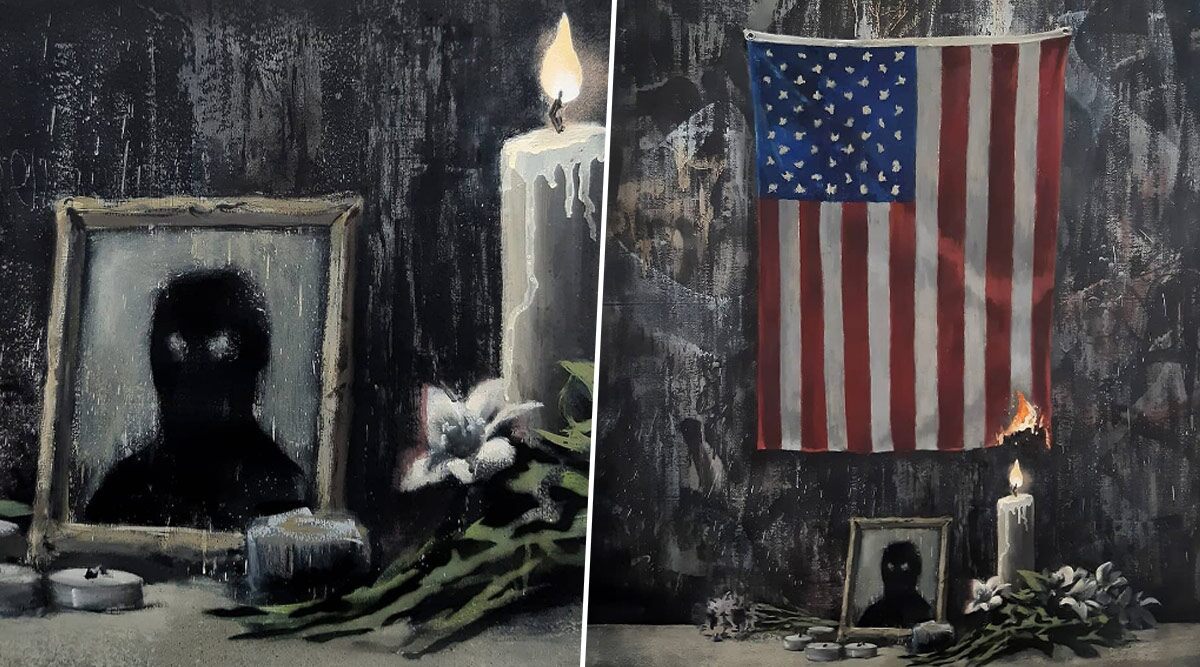
    The framed portrait of a black silhouette and a candle whose flame burns the American flag. That’s how Bansky, the mysterious English artist considered one of the greatest exponents of street art, decided to show his solidarity with the Black Lives Matter movement, during an international protest day for the murder of African American George Floyd.

    “It’s not their problem.”

    The artist published the work yesterday by the same artist on his Instagram profile with a message:

    “At first, I thought I should just shut up and listen to black people about this issue. But why would I do that? It’s not their problem. It’s mine. People of colour have being failed by the system. Like a broken pipe flooding the apartment of the people living downstairs. This faulty system is making their life a misery, but it’s not their job to fix it. They can’t; no one will let them in the apartment upstairs. This is a white problem. And if white people don’t fil it, someone will have to come upstairs and kick the door in.“

    https://www.instagram.com/p/CBFyA8iM15Y/

    The work, the latest in chronological order after the one depicting an anti-Covid superhero nurse, is a clear stance in favor of the movement born against the abuses of the police against African Americans. This adds to the positions of the American cultural institutions, appeared on the boards of their social profiles these last days. The MoMA on June 2 darkened his Facebook page in mourning until the declaration of the president of Princeton University Christopher L. Eisgruber on the importance of addressing the awareness that “the long legacy of racism in this nation continues to damage and destroy the lives of black people“.

    The Art world for George Floyd

    In the wake of the global events that are moving to the cry of Black Lives Matter, even the art world is reacting to the last breath of George Floyd. The street art is now more than ever an essential, useful communication channel. It is actually dusting off its original function. That of being able to speak to citizens through the use of roads, walls, windows.

    https://www.instagram.com/p/CAwTBPVnvdx/

    From Germany to Syria, from Spain to the United States, from Belgium to Palestine. All over the world street art has paid homage to George Floyd, the forty-six-year-old man killed during a police detention last Monday, May 25 in Minneapolis.

    The death of George Floyd in the hands of the police sparked a devastating wave of protest across the country. It also aroused the interest of urban artists around the world. The phrase #icantbreathe then became a hashtag and a cry of protest against police violence against African American citizens, which inexplicably continue to happen.

  • Basquiat painting sold for more than $100 million

    Basquiat painting sold for more than $100 million

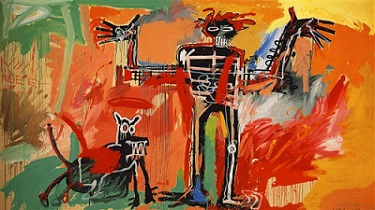
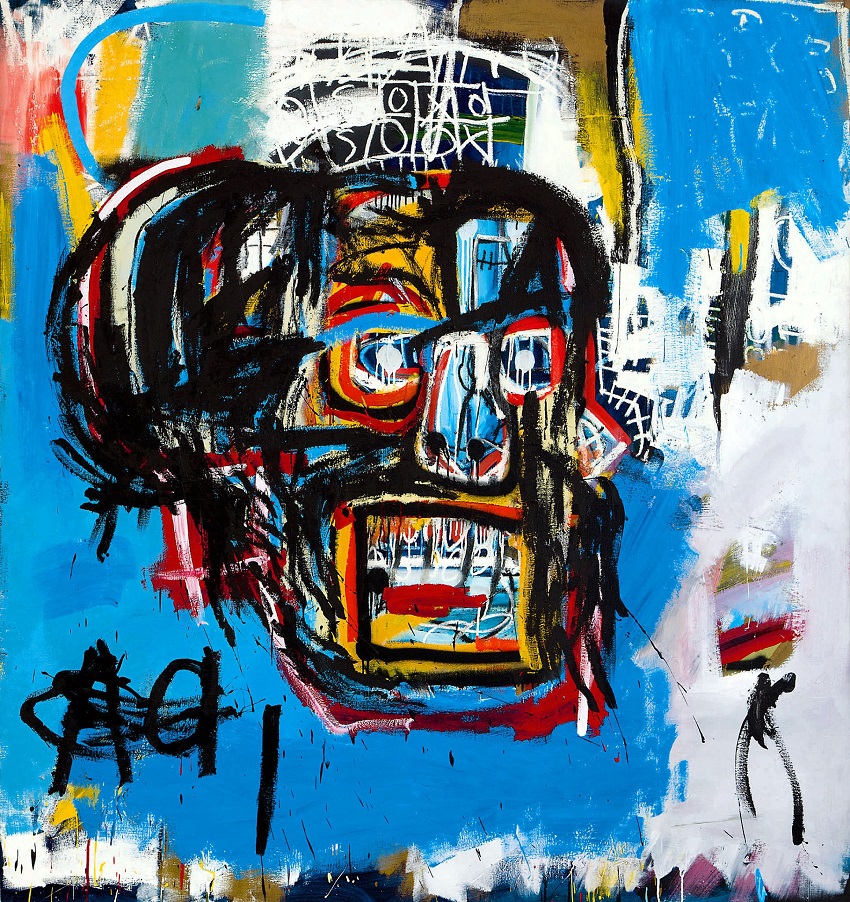
    Ken Griffin, the king of hedge funds, bought a painting by Jean-Michel Basquiat for over $ 100 million. According to the Bloomberg Billionaires Index, its assets are worth $ 15.3 billion. Griffin is also a great art collector. The works in his collection are in several museums. A spokesman said that “He intends to share this piece too.”

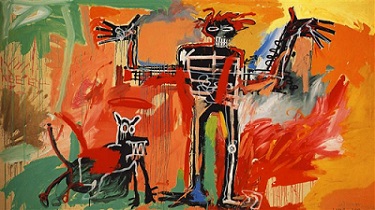
    Boy and Dog in a Johnnypump

    Source: Wikipedia

    The canvas is “Boy and Dog in a Johnnypump“, made in the magical year of the black Picasso, 1982. According to Baer Faxt, the seller is Peter Brant. He is an industrialist and entrepreneur and new neighbor of Griffin’s home in Palm Beach, who last year organized a major exhibition of the artist in his private museum in Manhattan. “Boy and Dog in a Johnnypump” was among the 70 works on display.

    Basquiat at auction


    In May 2017, a Basquiat painting was auctioned by Sotheby’s for $ 110.5 million, setting the record for the artist. “Untitled”, from 1982, had been awarded to a buyer on the phone from Asia for $ 110,487,500. The anonymous comparator later turned out to be Yusaku Maezawa. He is a young Japanese businessman who founded the Contemporary Art Foundation and the largest online Japanese fashion store, Zozotown. Already the previous year, he had bought another record-breaking Basquiat from Christie’s.

    Untitled", from 1982, had been awarded to a buyer on the phone from Asia for $ 110,487,500.

    What is most surprising about this private sale is the moment in which it took place. It would in itself be an essential event during a so to speak “normal” period. But in this post-pandemic historical moment when the art market has been stuck for several months, and private transactions have mostly remained below $ 5 million, according to dealers and auction house executives makes this even more impressive sale.

    Among the works purchased by Griffin, there are also works by Jackson Pollock and Willem de Kooning. In particular, this Basquiat joins works by female and African American artists. Those include Lee Krasner, Isa Genzken, Njideka Akunyili Crosby, and Virgil Abloh.

    Jean-Michel Basquiat and New York graffiti

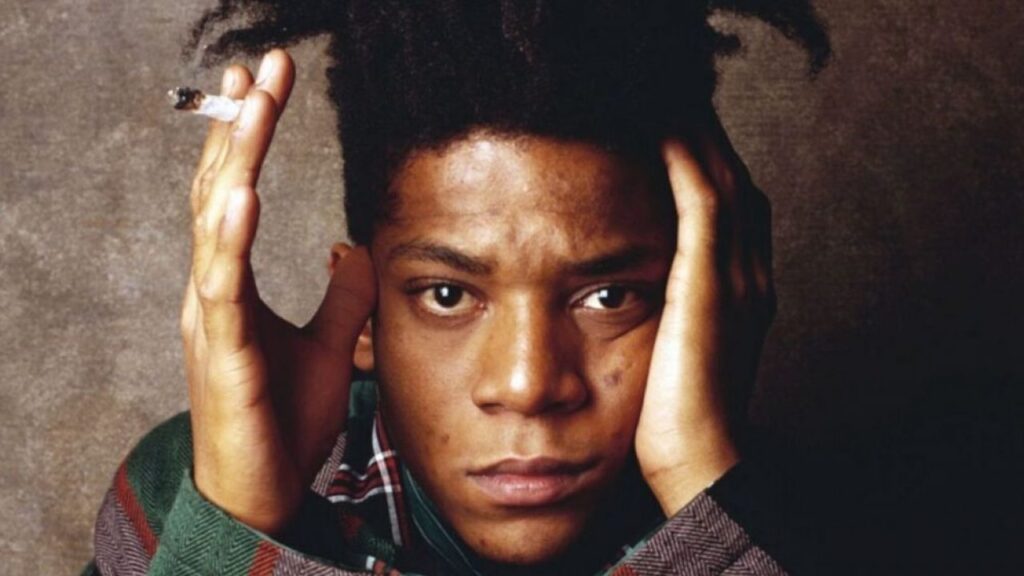
    Jean-Michel Basquiat signed himself under the pseudonym SAMO (Same Old Shit) to tag in the streets of Manhattan. Across the walls and subways of New York, graffiti loaded with poetic messages challenged capitalism. His taste for cultural mix and his hatred for racism give life to a neo-expressionist work.

    Jean-Michel Basquiat signed himself under the pseudonym SAMO (Same Old Shit) to tag in the streets of Manhattan.

    In 1978 Jean-Michel sold to Warhol some postcards he illustrated in a Manhattan restaurant. The two had a common idea of ​​art understood as “open, popular, public” and non-elitist. Pop Art speaks a language that everybody knows. It is that of the mass media, that transforms everyday objects into artistic images.

    The turning point in Basquiat’s life begins precisely from this meeting with Warhol, who later welcomes him to his factory, becoming his tutelary deity. Poet, musician, and graffiti prodigy, in the late 70s, he improved his graphic style of obsessive doodles and elusive symbols.

    Basquiat drew his subjects from his Caribbean heritage – his father was Haitian and his mother of Puerto Rican origin – and a convergence of African American, African and Aztec cultural stories with classic themes and contemporary heroes such as athletes and musicians. Often associated with neo-expressionism, Basquiat has received high acclaim in a few years, showing itself alongside artists such as Julian Schnabel and David Salle.

  • Farewell to Christo, master of Land Art

    Farewell to Christo, master of Land Art

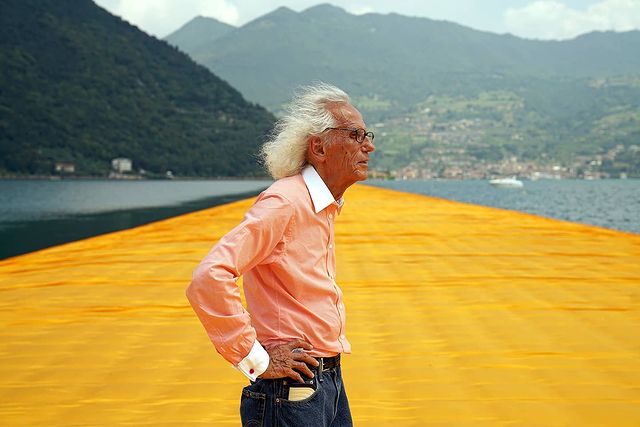
    The celebrated artist Christo Vladimirov Javacheff, known simply as Christo, by natural causes, passed away at his home in New York at the age of 84 this week. The announcement was on the Facebook page dedicated to the artist and his wife.

    “Christo lived his life to the fullest, not only dreaming up what seemed impossible but realizing it. Jeanne-Claude and Christo ‘s artwork brought people together in shared experiences across the globe, and their work lives on in our hearts and memories.“


    Christo, artist of the impossible

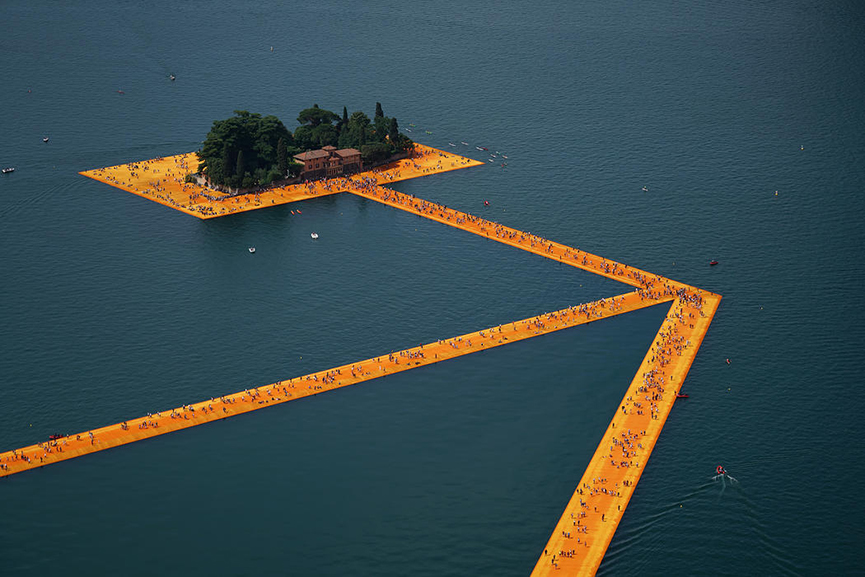
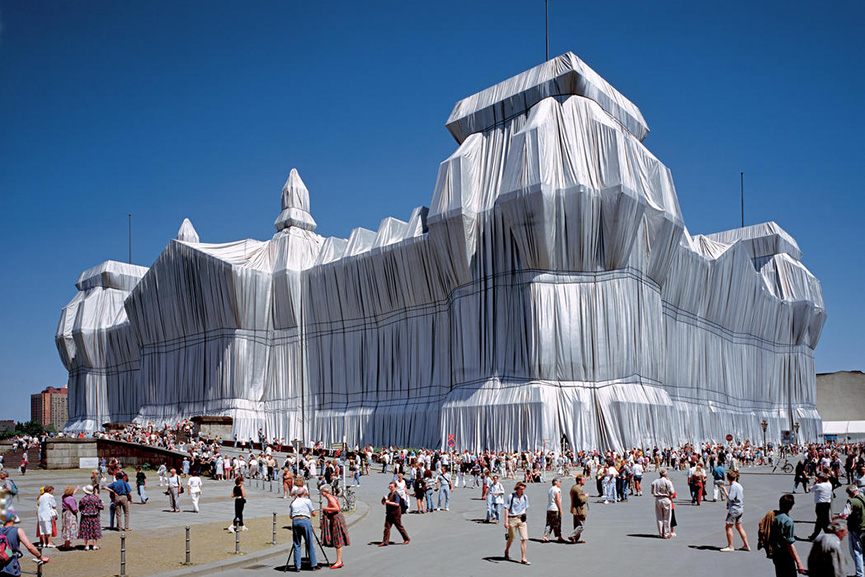
    The artist’s most essential and original works include the Floating Piers on Lake Iseo in 2016. The Pont Neuf in Paris in 1985 and the Reichstag in Berlin in 1985 are among his prominent works too. Christo has always been a particular artist. He financed himself by selling designs and projects, to have that independence that allowed him to work freely.

    The artist's most essential and original works include the Floating Piers on Lake Iseo in 2016.
    The Floating Piers Photo: Wolfgang Volz © 1983 Christo

    Each of his works is an apparition, a push to connect with the surroundings. Not to emphasize the temporary, but to ignite a different way in the memory to read things.

    He was of American nationality but was born in Bulgaria. Christo was also the name of an extended art project started a few decades earlier with his wife Jeanne-Claude. Christo and Jeanne-Claude were an artist couple born on the same day, June 13, 1935. She had died in 2009, but Christo had continued their artistic project.

    Land art: The Floating Piers and the partnership with Jeanne-Claude

    Jeanne-Claude Denat de Guillebon was instead of Moroccan origin. She and Christo had met in Paris in 1958. Six years later after getting married they decided to move to New York. They become the leading exponents of “land art“. This art form focuses on the artist’s intervention on the natural territory, especially in large spaces such as deserts, prairies, or lakes. From the sixties onwards, Christo and Jeanne-Claude had created bizarre and very flashy installations.

    Land art: The Floating Piers and the partnership with Jeanne-Claude
    Wrapped Reichstag Photo: Wolfgang Volz © 1995 Christo

    Christo was born in Gabrovo, Bulgari. He was the son of an entrepreneur and a secretary of the Academy of Fine Arts in Sofia. Here, Christo studied since 1953. Three years later, he moved to Prague, the Czech Republic, and from there, he had managed to go to Austria, thus escaping from the countries of the communist bloc. 

    Farewell to Christo, master of Land Art
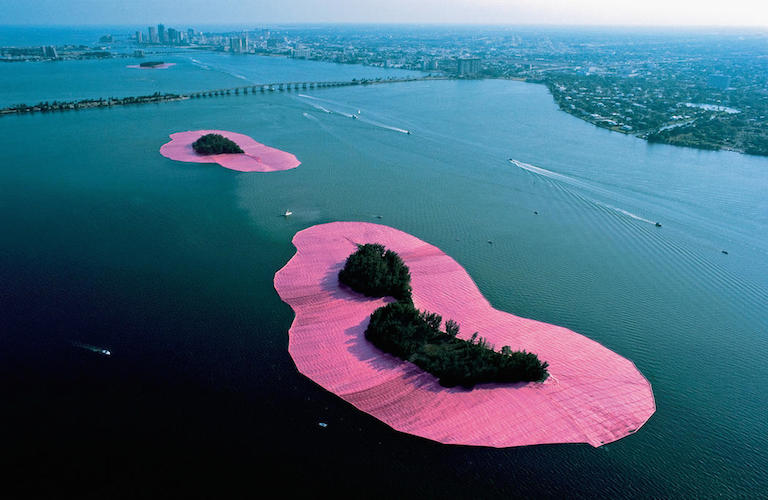
    Surrounded Islands Photo: Wolfgang Volz © 2016 Christo

    He spent a few months in Vienna and then went to Geneva and Paris, where he started earning some money by selling abstract portraits and paintings. However, he made himself known above all for his first small “wrapping” of living objects or models, and together with the French artists Arman and Yves Klein he became one of the leading exponents of the Nouveau Réalisme. 

    They soon became the activity that would make him famous, with an impact that gave him extraordinary popularity even outside the world of art lovers and curious.

  • Art & Market: a guide to art prices

    Art & Market: a guide to art prices

    The market prices of works of art, as for any other good, are generated by the meeting of supply and demand. It is essential to understand that the good is not the artist but the work produced by it. So here is a small price guide to orientate yourself adequately in the contemporary art market.


    Guide to contemporary art prices

    Guide to contemporary art prices

    It is a mistake to think that you have a certain capital only because you have a painting with a known signature. The works of a given artist, especially if produced in different periods of his path of expressive research, can have enormously different values.

    Evaluate the artistic periods

    Take the case of Jackson Pollock (1912-1956) and his latest auction sales. His pre-dripping works dated before 1948 are well below the million euro. Indeed, two of his works on auction in Christie’s New York in the 1930s were unsold. In particular, these are Composition with Vertical Stripe and Composition with Horse at Center, both c.1934-1938.

    Take the case of Jackson Pollock (1912-1956) and his latest auction sales. His pre-dripping works dated before 1948 are well below the million euro.
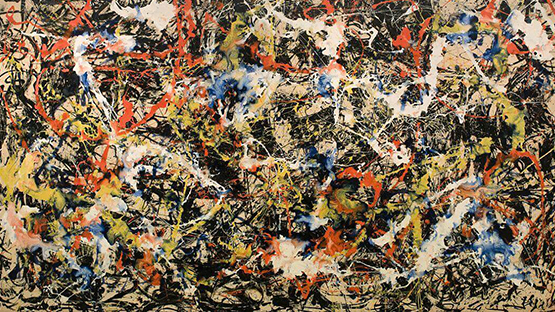
    Convergence by Jackson Pollock, 1952

    His last sold painting (Number 17 of 1949, Sotheby’s New York, 11 November 2015), however, has changed hands for the impressive figure of 18,873,000 Euros. This brief but significant example tells us how important the subject is as much as the period of production, and not only the measures on which so many sellers and collectors base the prices of the works they own.

    In auction houses, it is not uncommon to notice overstatements that generate unsold goods; these cases are essential to find out which is the maximum ceiling under which it is possible to buy a contemporary work without squandering money. Evaluating becomes more complicated if the works of the artist to be taken into consideration was never on auction. In this case, it is necessary to do market research or ask for the help of an art consultant.

    Purchase works by emerging artists

    Purchase works by emerging artists

    If you want to buy a work by a living contemporary artist, keep in mind that the price is “imposed”. You can trust the experience of other collectors and your instincts. However, keep in mind that the works purchased today are not shares of an S.p.A. They are unique objects that often take time to settle, but that more than others prove be valuable investments in the future.

    Prices of works of art, conclusion

    To the question “Is the price right?” the most sensible answer is “it depends on what you are going to buy”; establishing the price for a work of art is not easy. Theoretically, the right price is in a range of values. Selling is an art, but knowing how to buy is no different. That’s why aspiring collectors often rely on consultants when choosing works of art.

    If you are also interested in collecting contemporary art, you can ask for free the suggestions of one of our art advisors who will give you an expert guide to invest successfully in Modern & Contemporary Art!

  • The unique vision of Takashi Murakami

    The unique vision of Takashi Murakami

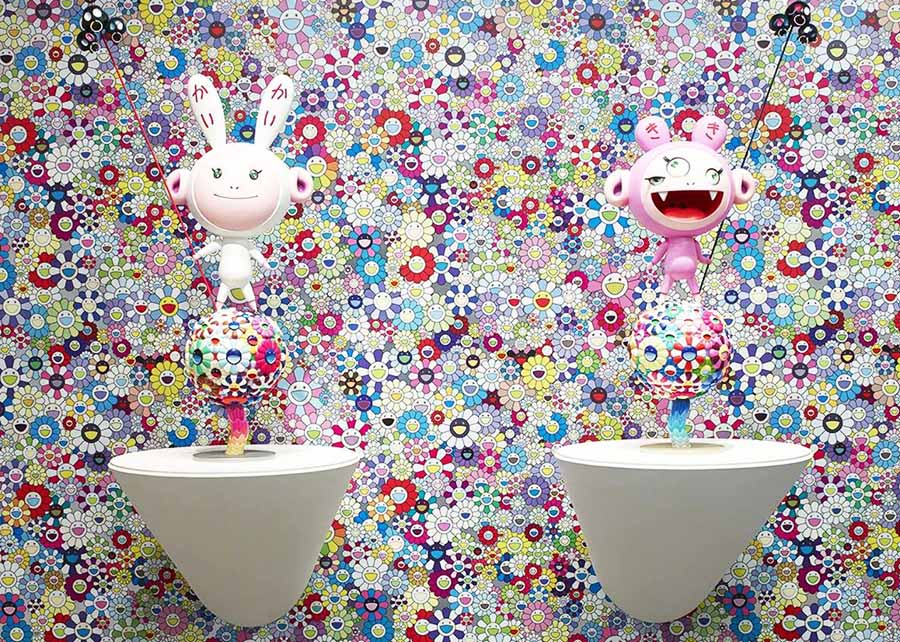
    Takashi Murakami is probably the best known Japanese artist in the world.

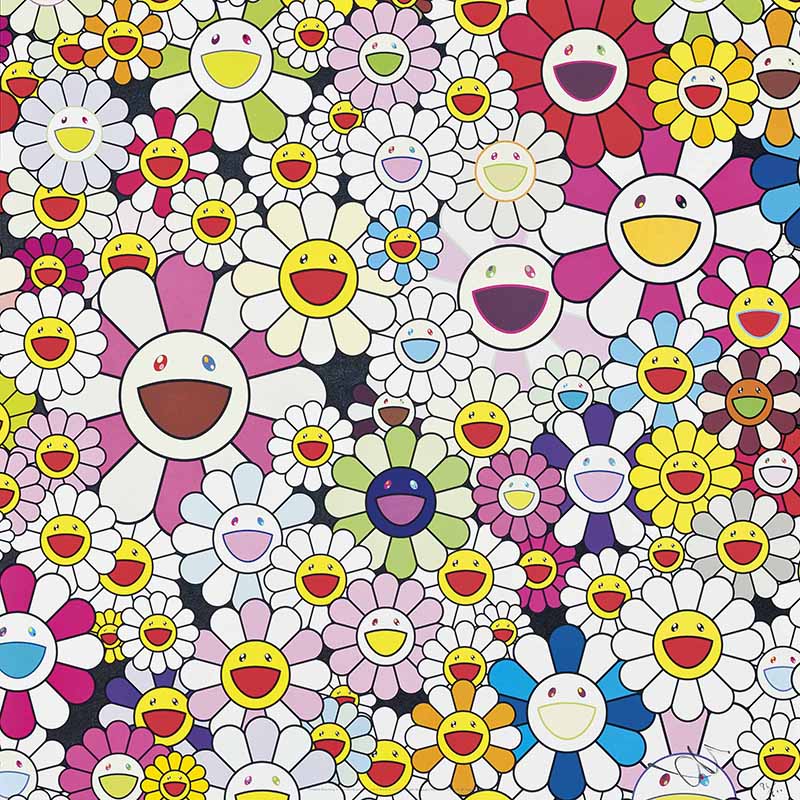
    Born in Tokyo in 1962, Murakami is today the most influential Japanese artist internationally. To this, certainly contributes the fact that he is a multifaceted artist who goes from painting to sculpture to graphic art and commercial collaborations with ease.


    Between Pop Art and Superflat

    When the Japanese artist coined the term Superflat in 2001, he launched one of the most vigorous movements in postmodern art. In particular, it is a movement that is influenced by manga and anime.

    Often classified as a Japanese form of Pop Art, Superflat has become an international phenomenon, infiltrating all areas of culture, from pure art to commercial art.

    Superflat artists are not few, and some of them are part of the Kaikai Kiki association. A group exhibition “Superflat”, held at the MoCA Gallery, California in 2001, included Japanese artists, designers, and cartoonists known as Superflat artists, including, Yoshitomo Nara, Chiho Aoshima, Aya Takano, Yoshinori Kanada, well known even in the west.

    Another fantastic exhibition called Kawaii! El Japó ara, held at the Espaci 13 of the Fundació Joan Miró between 2007 and 2008, focused more on the concept of kawaii, but was inevitably Superflat and includes works by Chiho Aoshima, Aya Takano, Erina Matsui, Tomoko Sawada i Kowei Nawa .

    The Kaikai Kiki Co. on contemporary Japan

    Kaikai Kiki is an artistic production company. Murakami founded it with the primary objective of promoting and producing works of art, and of supporting selected young artists.

    The company represents several prominent international artists including Aya Takano, Chiho Aoshima, Mr., Kazumi Nakamura, Emi Kuraya and Yūji Ueda. The company was born in Saitama, Asaka City and now has offices in Tokyo and New York.

    Kaikai Kiki is an artistic production company. Murakami founded it with the primary objective of promoting and producing works of art, and of supporting selected young artists.

    Takashi Murakami is very critical of Japan and its culture. In particular, the artist believes that to date there is no real awareness of one’s cultural identity.

    Thus, in 1993 the artist created his own alter ego: Mr. Dob, a cute little mouse with rounded features, which is different among the various versions in the multiple works. Above all, for Murakami, this representation is the symbol of that infantilized Japanese culture, which in his opinion characterizes Japan.

    Projects between fashion and art

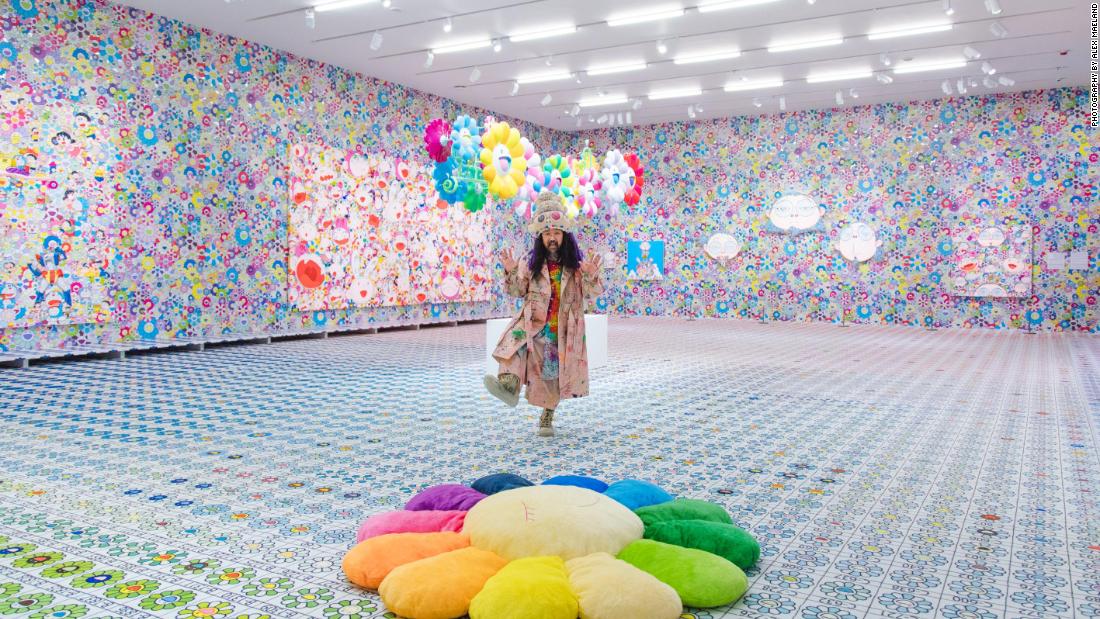
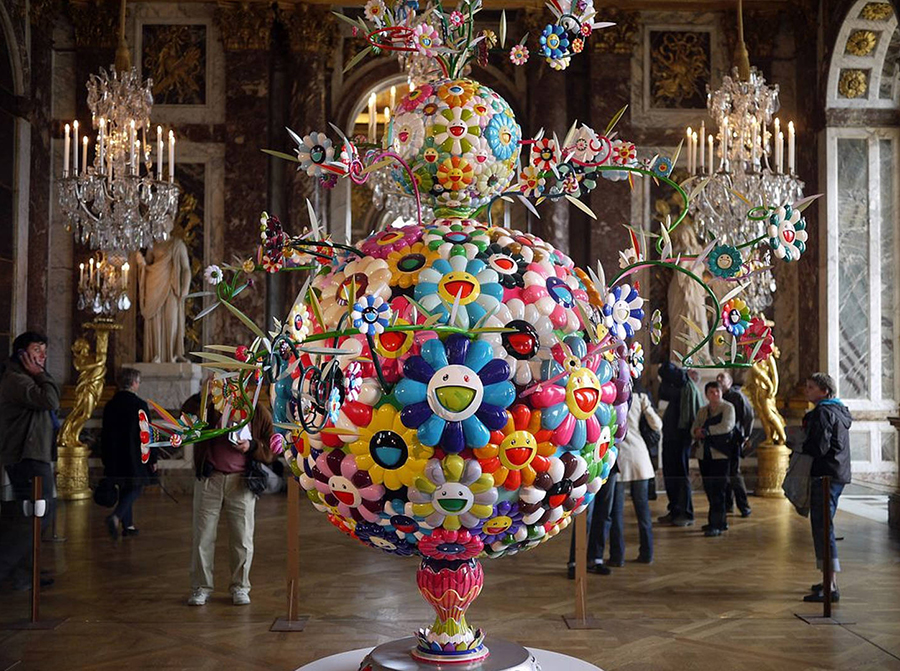
    Perhaps the artist’s most prestigious collaboration remains the exhibition in the Palace of Versailles held in 2010. Twenty-two works, half of which were new to public, have decorated and contrasted nicely with the style of the seventeenth-century palace.

    “Murakami Versailles presents itself as a cheerful extension of Louis XIV’s remarkable patronage of the arts. There is something almost hereditary about the appearance of these sculptures in this place. They are triumphs of the populist baroque framed by the royal baroque. You can come and look at Murakami’s work, but his sculptures force you to turn your attention to Versailles. “

    Perhaps the artist's most prestigious collaboration remains the exhibition in the Palace of Versailles held in 2010. Twenty-two works, half of which were new to public, have decorated and contrasted nicely with the style of the seventeenth-century palace.

    The antithesis between Superflat contemporary art by Murakami and the Baroque style of the royal residence of the Bourbons of France is incredibly impressive. On the one hand, the ostentation of western luxury that characterized the dynasty of the rulers of the French monarchy until the deposition of Louis XVI. On the other, a show made of bright colors, kawaii shapes and consumerist concepts expressed by Japanese Superflat art.

    Takashi Murakami has collaborated with many artistic, fashion and commercial realities. The most famous is undoubtedly the one with Louis Vuitton: in 2003 Marc Jacobs was creative director of the Vuitton fashion house, and Murakami applied his creativity on the monogram bags of the French brand. The success of the Cherry Blossom bag and collaboration, in general, has been unquestionable.

  • Fondamenta, the online platform of Artissima

    Fondamenta, the online platform of Artissima

    This is not an online exhibition nor a viewing room: with this new curatorial project, the Turin fair aims at a renewed exchange between galleries and collectors. with the intent to bring even a younger pool of buyers closer.

    The search for the Turin fair continues through curatorial experimentation and new forms of contemporary communication. This time Artissima focuses entirely on digital, inaugurating the Fondamenta project which will be online for a month, from June 5th to July 5th 2020.


    Fondamenta Artissima

    Fondamenta answers the question of what is the center of a fair: that is, galleries, structural elements on which all the actors of the system move. The platform therefore represents an opportunity offered free of charge to the latter, to continue to weave new relationships and exchanges while waiting for the kermis to open in its physical version, scheduled from 6 to 8 November 2020 at the Oval Lingotto in Turin.

    Fondamenta answers the question of what is the center of a fair: that is, galleries, structural elements on which all the actors of the system move.
    FRANCO NOERO – Mario García Torres – A Small Big Mexican Splash – 2020

    At a time when much of the attention of international art is shifted to online exhibitions and virtual tours, Artissima says it does not want to place its new project either in the viewing room or in the virtual fair.

    Fondamenta is “a survey of contemporary artistic research, aimed at offering the galleries of the fair free of charge new opportunities for visibility, sales and contact with the art public”.

    How the new Artissima project works

    194 works are presented by Fondamenta, one for each gallery among those that participated in the 2019 edition of the fair. The exhibitors will be presented through a simple and intuitive interface, on virtual pages imagined as ideal bearing walls.

    194 works are presented by Fondamenta, one for each gallery among those that participated in the 2019 edition of the fair.
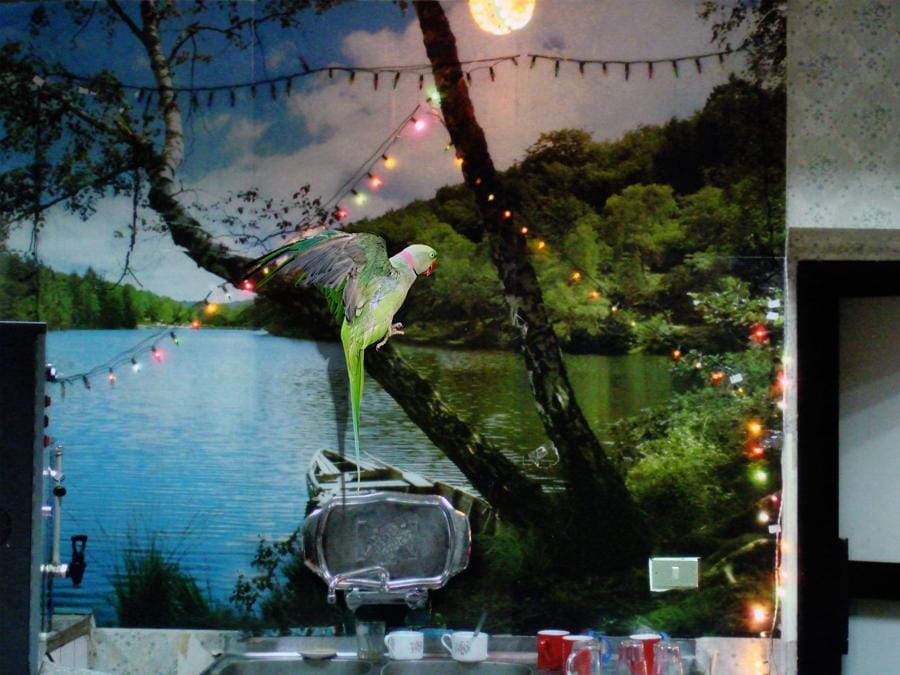
    ROSA SANTOS – Maha Maamoun – Untitled (Parrot) – 2015

    Each wall corresponds to a section: Present Future, curated by Ilaria Gianni and Fernanda Brenner; Back to the Future, curated by Lorenzo Giusti and Mouna Mekouar; Drawings, curated by Letizia Ragaglia and Bettina Steinbrügge; New Entries, curated by Valerio Del Baglivo and Main Section, on this occasion curated by Ilaria Bonacossa.

    A partially renovated curatorial team that selected the works to be exhibited for the virtual project – each working on its own section of competence – through close dialogue and different criteria each time.

    Fondamenta: new exchange format between public and galleries

    “Investigating contemporary art and discovering the trends, shared themes, obsessions or visions of individual artists: it is a passion that I share with the gallery owners of whom I admire the special ability to identify hidden talents”, comments the director of Artissima Ilaria Bonacossa.

    And he continues, “Fondamenta was born thanks to the extraordinary curatorial team of Artissima 2020, showing its work in progress, pursuing the aim of giving galleries the opportunity to take part in a collective project in a very delicate moment for the world of ‘art. A small, well-kept project that offers the public an experience that can also be enjoyed in time. Giving new stimuli to discover contemporary art, supporting our galleries in a new way and teaming up to collectively propose a virtual meeting both to new contemporary lovers and to collectors of every generation.

  • Art and Environment

    Art and Environment

    The combination of art and the environment can be an excellent guide to follow. There are many artists, whether they are photographers, sculptors, or urban artists, who have decided to take care of nature, creating works that convey messages that are impossible to ignore.

    In recent months at home, when it was impossible to move and travel physically, it’s necessary to find positive inspirations. In particular, there are very interesting projects in which contemporary art protects the environment. Those raise awareness on issues that are more collective than ever and of great relevance.


    Contemporary art and environment

    Sculptors, photographers, painters and street artists have decided to dedicate their talent to the defense of the planet that hosts us, tackling urgent and delicate issues.

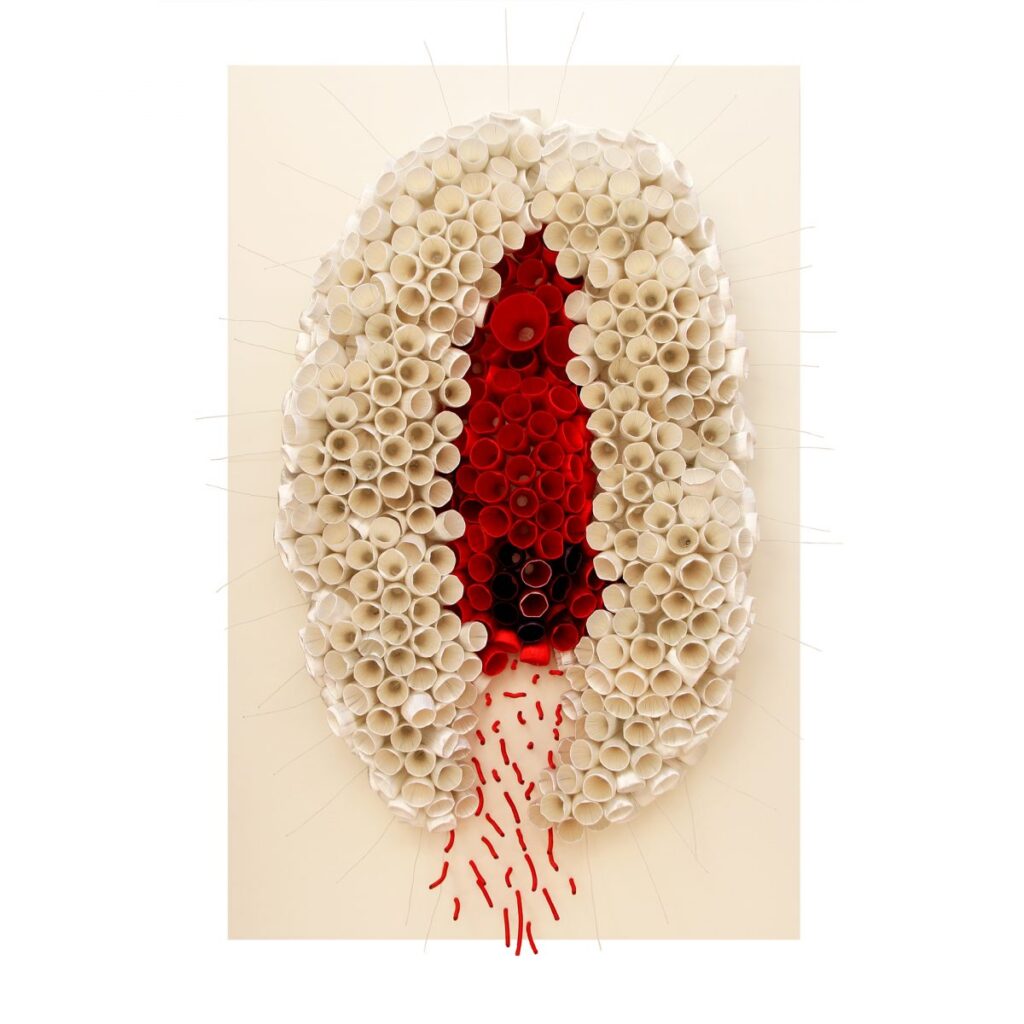
    When it comes to art, it is normal to think of tempera, watercolors and clay, all materials worthy of value. But the plastic has an immense potential. Among the many different proposals for creative recycling, that of the Ghizlane Sahli stands out. She has focused on the reinterpretation of the theme of the sea, transforming plastic bottles into colored jellyfish with long and intertwined tentacles.

    Contemporary art and environment
    Ghizlane Sahli, HISTOIRES DE TRIPES, 2018

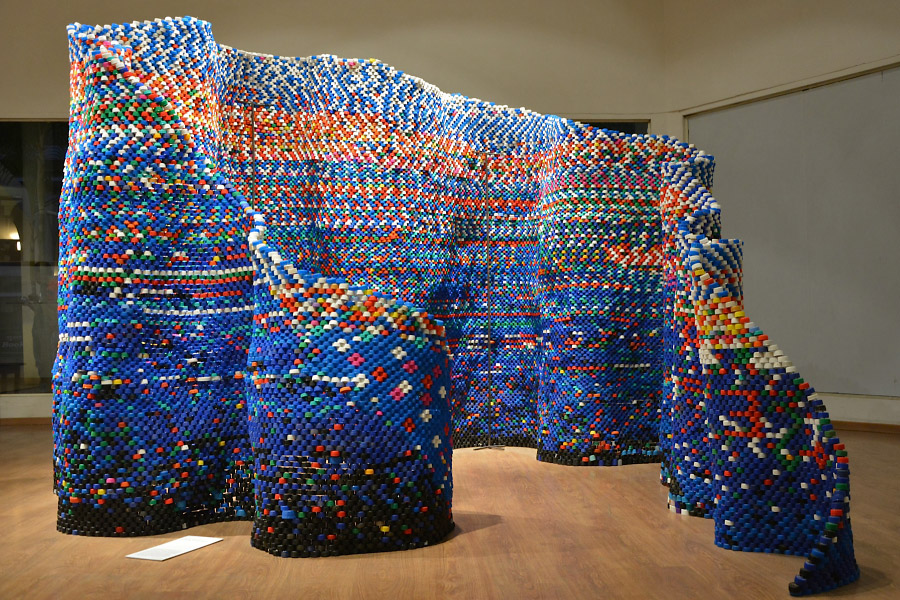
    Another great supporter of the binomial art and sustainability is the Indian artist Arun Kumar, who in one of the latest editions of the “Sculpture by the sea” festival which takes place in Arhus, Denmark, has decided to raise public awareness on the topic of sustainability environmental. The work “Droppings and the dam” is the sculpture he made using only recycled plastic. More than 70,000 plastic caps, collected all over the world

    “It is so sad to see the planet suffering in this way. It is from nature that we seek inspiration and peace, and we are destroying it. How many natural disasters have there been in recent years? We have now devastated such a large part of our Earth that it is almost impossible to completely stop and repair our mistakes. We must learn to love it. Now more than ever. And if each of us gets to work, we will certainly have a few more possibilities. “

    Art and Climate Change
    © Arun Kumar

    Art and Climate Change

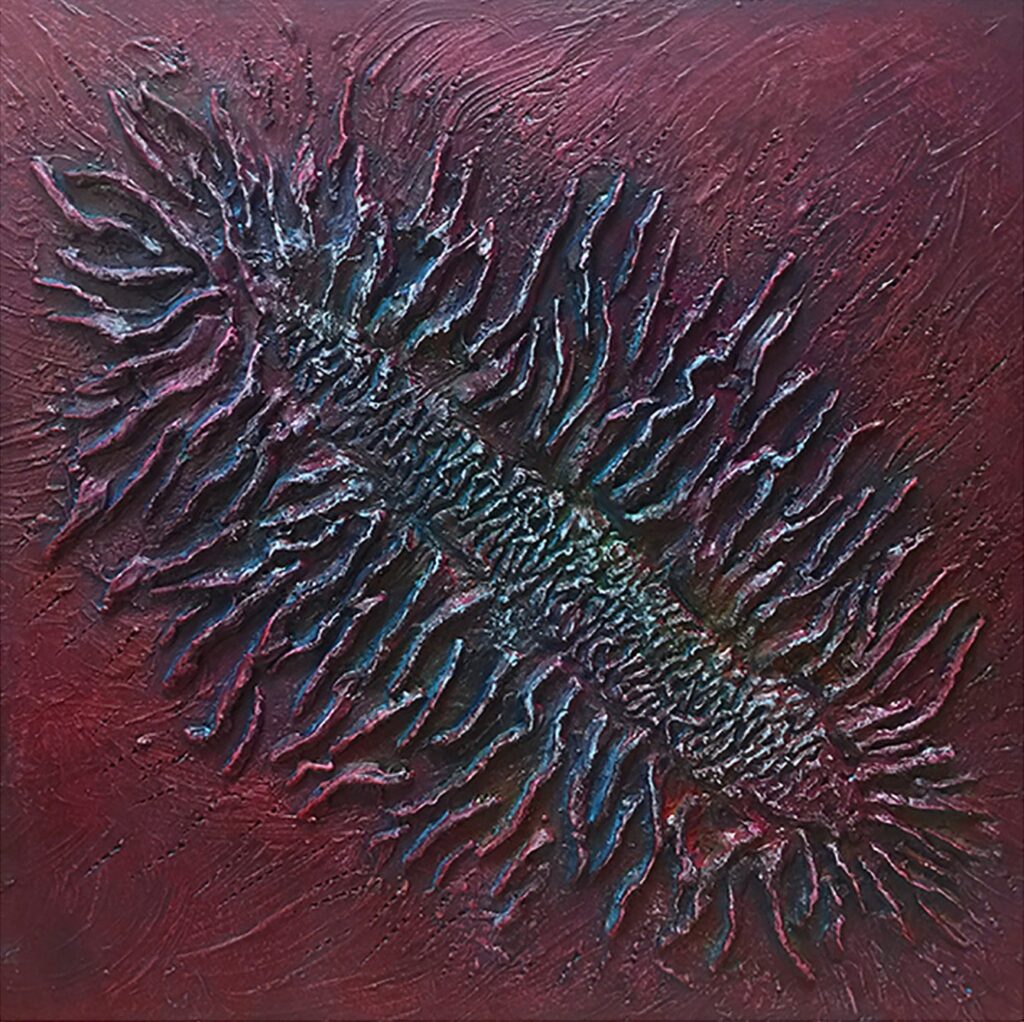
    Nature is therefore overwhelmingly present in the imagination of the contemporary artist. This is what we see, for example in the works of Nnenna Okore, experimentations that turn to the mysteries of the human genome. Also by playing with genetic kits and DNA.

    A path of continuous questions and answers, where biotechnology becomes an art tool, pursuing an ethics of manipulation.

    Nature is therefore overwhelmingly present in the imagination of the contemporary artist. This is what we see, for example in the works of Nnenna Okore
    Untitled 19 by Nnenna Okore

    The Prada Foundation hosted Michael Wang’s Extinct in the Wild exhibition. The project enclosed in the north wing of the Milanese complex. It investigates the dynamics of the protection of endangered animal and plant species. In fact, the artist showcases a series of living creatures that no longer exist in the wild. The finger is pointed, albeit with aesthetic tolerance, towards those interventions that have shaped biomes and atmospheres. Definitively and inexorably changing their balance.

    The result is surprising in the inevitable contradiction. Creatures whose survival is endangered by man can be preserved only and exclusively thanks to the intervention of man himself. For example, through the reproduction of artificial environments capable of hosting them.

Our Content.
Your Inbox

Join thousands of art lovers

Receive art news, market analysis and updates about new artists on the website

By subscribing you agree to receive RDN Arts emails. Unsubscribe at any time. Privacy Policy.