Author: xerkss

  • Picasso’s drawing hidden in Still Life painting

    Picasso’s drawing hidden in Still Life painting

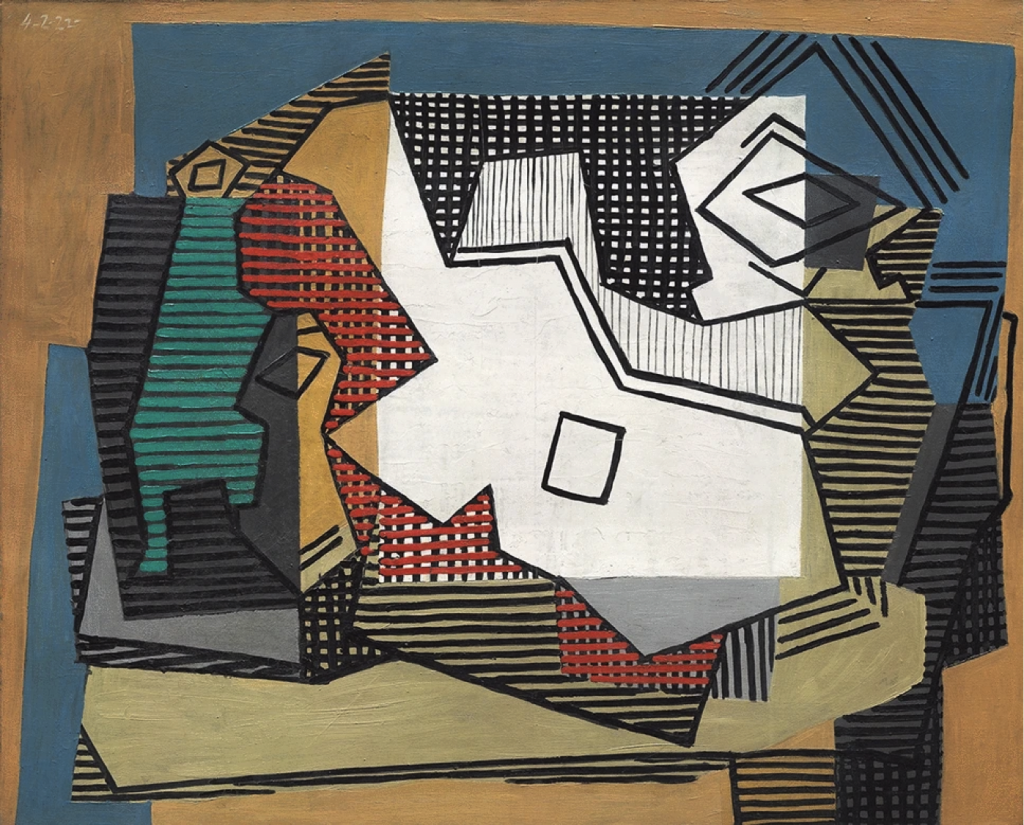
    Researchers from the Art Institute of Chicago have discovered a drawing hidden under a famous work by Pablo Picasso, Still Life of 1922.
    Thanks to the use of X-ray technologies, a group of researchers has discovered a hidden design under one of Pablo Picasso’s most famous works.


    Pablo Picasso’s drawing hidden

    An unusual discovery, as the researchers of the Art Institute of Chicago defined it. The work revealed the presence of a sketch, on the back of the canvas. This depicts a jug, a cup, and a newspaper on a chair.
    picasso's drawing hidden in still life painting

    According to the study published in SN Applied Science, infrared images revealed that Picasso had originally represented a neoclassical still life on the canvas. He then applied a white lead-based layer on this first composition. After he created the famous painting dated February 4, 1922.

    “X-ray and infrared imaging, as well as cross-sectional paint analysis, revealed details about the design and level of completion of the first Still Life. It clarified that it was indeed painted on the front of the canvas. Then Picasso covered it with a layer of white paint before painting the linear cubist still life.” Allison Langley, head of Paintings Conservation, told IFLScience.
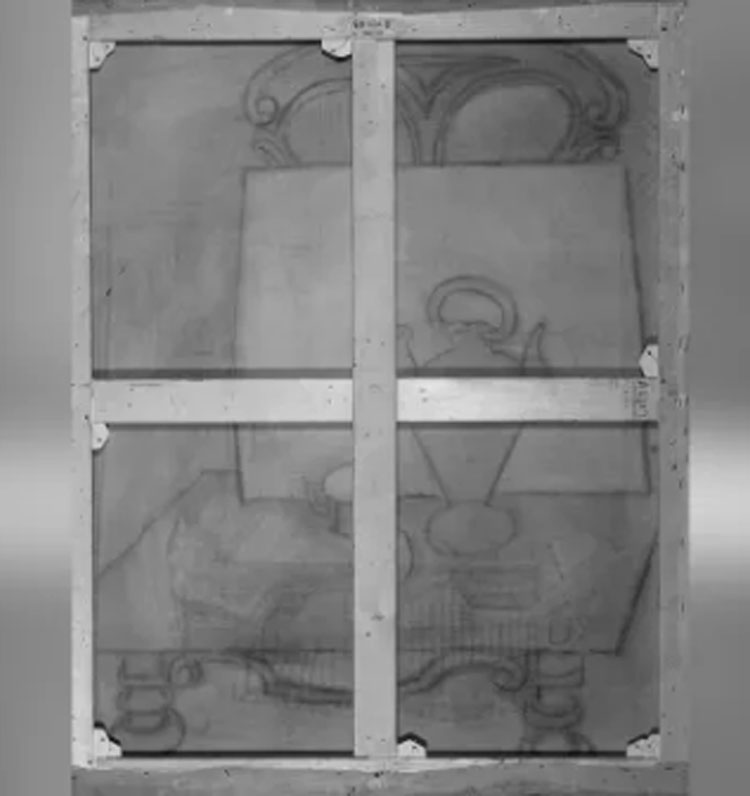
    Thanks to the use of X-ray technologies, a group of researchers has discovered a hidden design under one of Pablo Picasso's most famous works.

    “Picasso often reused canvases and this has been documented on works at the Art Institute and elsewhere,” Langley said. “What is surprising is that he blocked out the first composition with a layer of white paint. This is unusual in his practice. He typically painted directly on top of the earlier paint layers. Often retaining vestiges of the original forms or colors in the final painting.”

    Other discoveries and hidden drawings in Picasso’s artwork

    It seems that this white layer was applied with a brush. The intention was probably to block the first composition and provide a uniform surface to the subsequent 1922 painting. “An almost unusual fact in Picasso’s production, since the artist often painted directly on previous compositions, making it clear that underlying shapes would influence the final painting, “say the researchers.

    Still Life was a gift by Picasso to a dear friend, the famous Gertrude Stein, novelist and art collector,

    It is not the first time researchers find sketches in Picasso’s artwork. In fact, in 2018, they discovered a landscape painting under Picasso’s painting The Crouching Beggar. The modality was similar. Researchers used X-ray technology in this case too to examine with efficiency the layers of the painting.

    It is not certain that the painting was Picasso’s. However, it served as contour inspiration for the Spanish painter to paint the figures on top.
  • The three most violent and brutal paintings in art history

    The three most violent and brutal paintings in art history

    Other than beauty: art history has often seen fierce, violent, and brutal paintings. We see in this post three of the most violent and brutal paintings in the whole history of art.


    Between myth and narration: the most brutal paintings

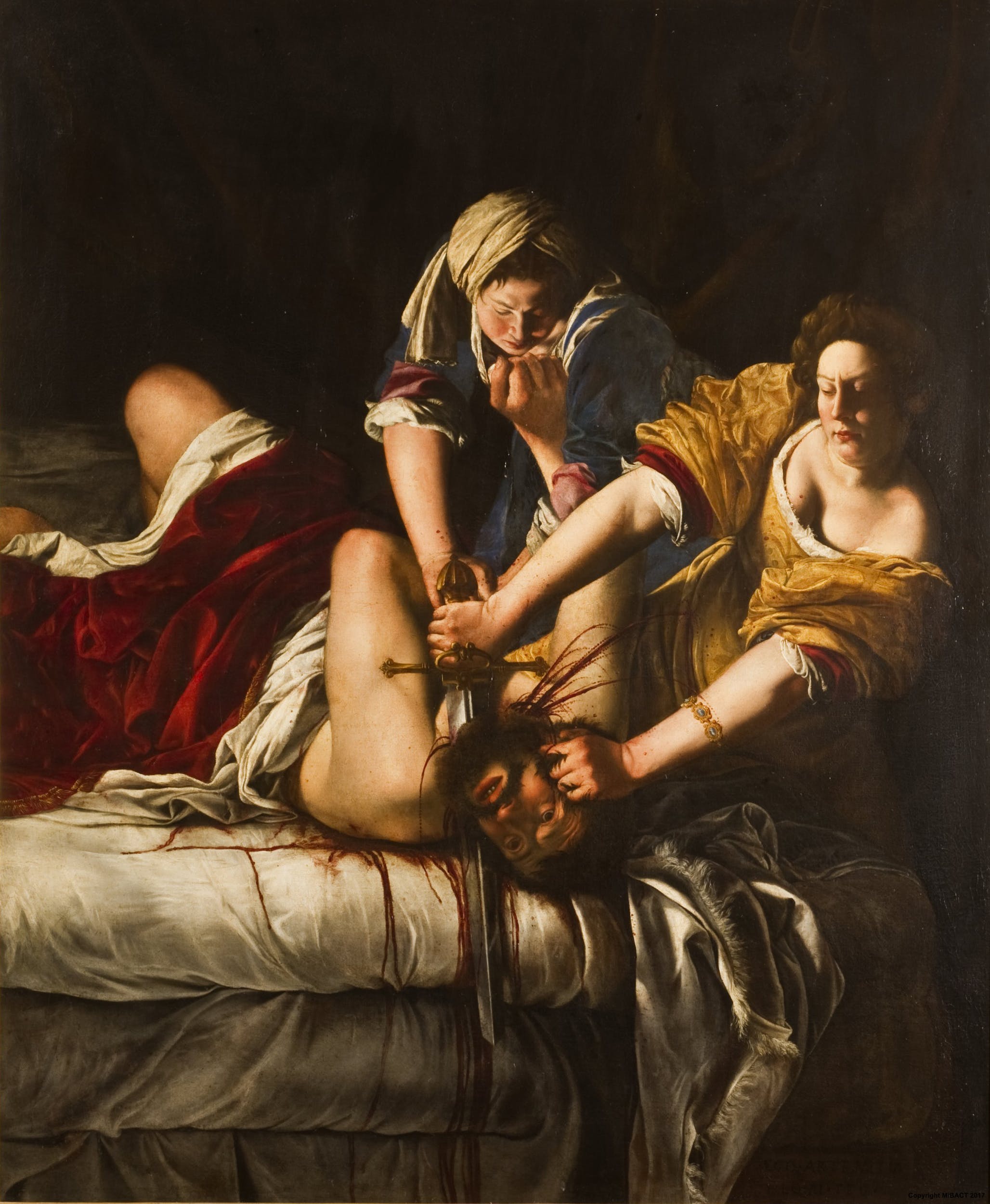
    Artemisia Gentileschi, Judith beheading Holofernes

    The three most violent and brutal paintings in art history

    The Judith, who beheads Holofernes by Artemisia Gentileschi (Rome, 1593 – Naples, 1654), has become almost a symbol of seventeenth-century violent art. This, especially since the author of the painting, is a woman. The scene refers to the most famous episode of the history of the biblical heroine, Jewish leader and opponent of the Assyrian army, commanded by Holofernes.

    Artemisia Gentileschi made a couple of versions of this painting: both produced in Florence. That of Naples was painted for the noblewoman Laura Corsini. That of the Uffizi in Florence was destined to the Grand Duke Cosimo II de ‘Medici.

    Rembrandt, The Blinding of Samson

    Rembrandt, The Blinding of Samson

    The story of the biblical hero Samson is in the Book of Judges: a man of proverbial and impressive strength. He had married a Philistine woman, but the marriage was contrary to the wishes of her parents. The reason was that Samson, as Jew, was naturally an enemy of the people of the Philistines.

    The clash between the beloved’s father and Samson will lead to chilling consequences, including the killing of more than 1000 Philistines and the blinding of Samson.

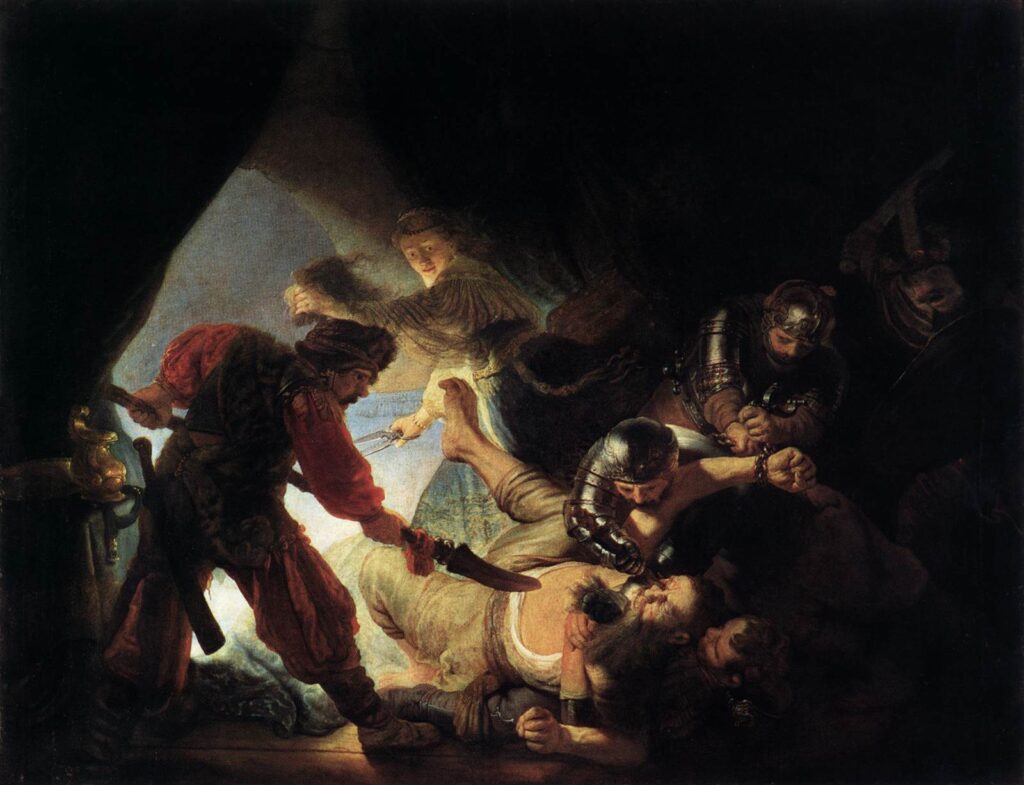
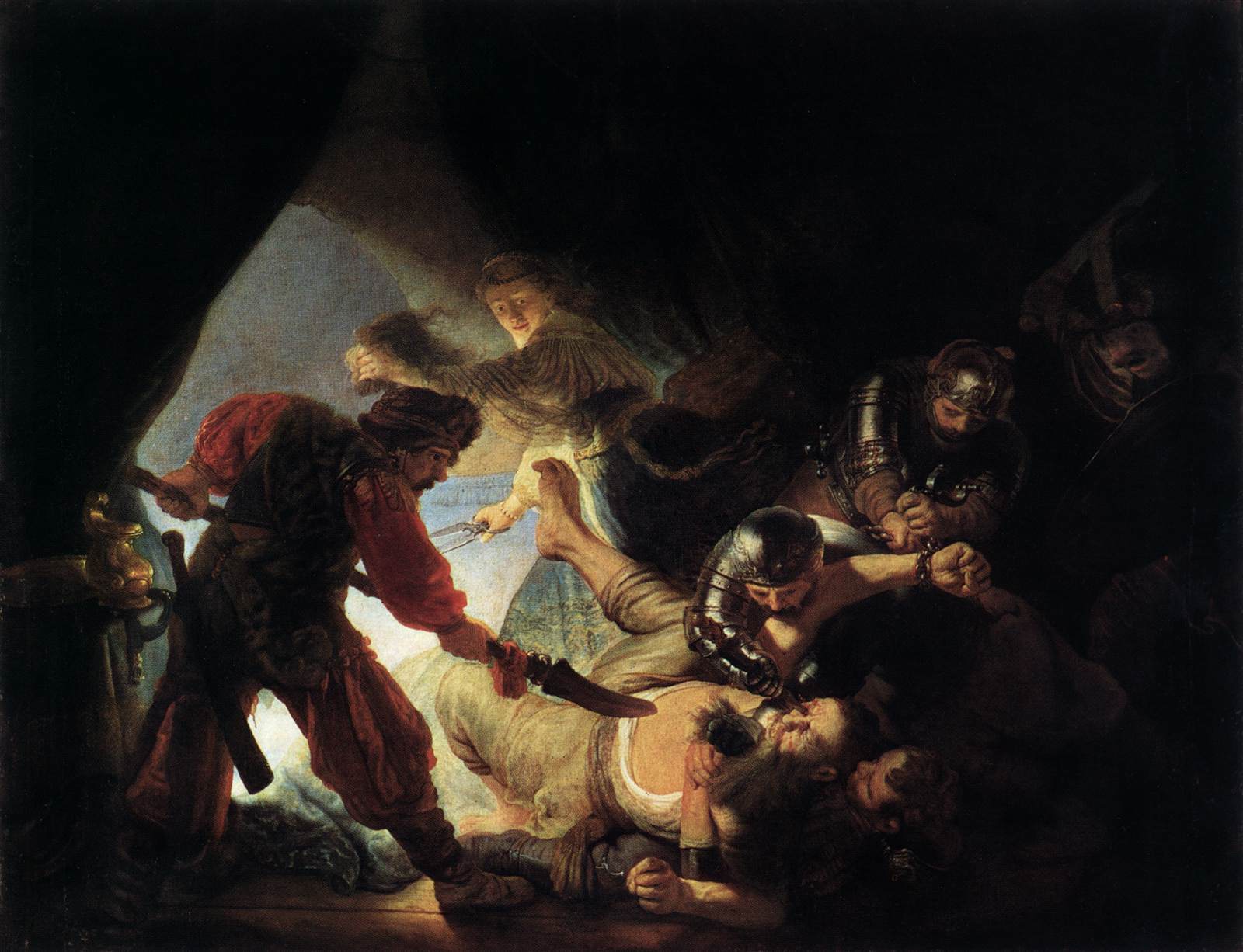
    In this painting, preserved in Frankfurt, Rembrandt van Rijn (Leiden, 1606 – Amsterdam, 1669) depicts the episode of blindness. Some Philistine soldiers hold him while another threatens him with a pike. One is poking an eye with a dagger, while Samson writhes in pain. The violence of the episode is even stronger thanks to the chiaroscuro with strong gradations, typical of the Rembrandt of the thirties.

    Francisco Goya, Saturn Devouring His Son

    Francisco Goya, Saturn Devouring His Son

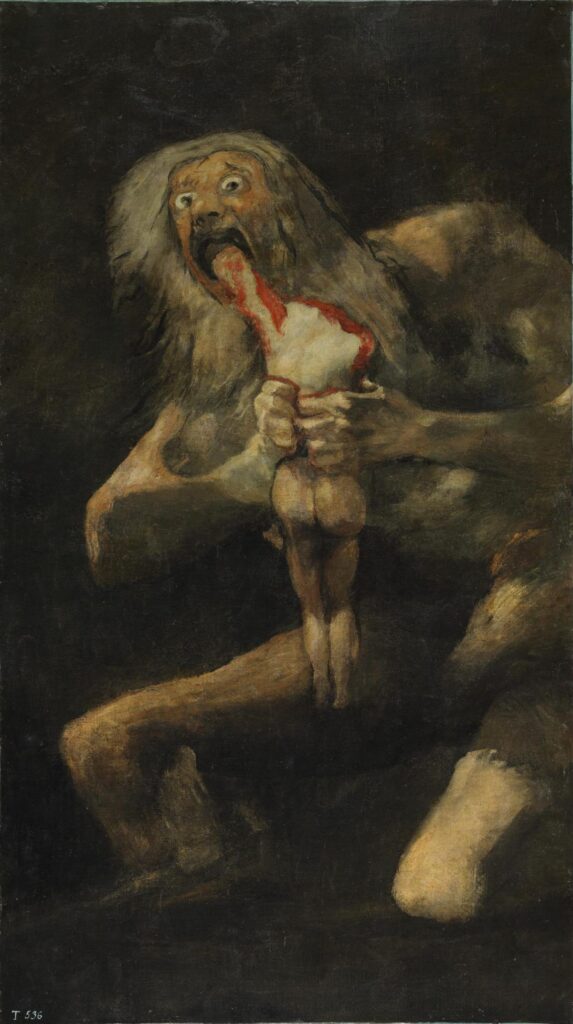
    The God Saturn (Cronus for the Greeks), king of the gods, having learned from his parents Gea and Uranus that one of his children would have ousted him, had the idea of ​​devouring them so as not to let any of them chase him from the throne. However, his destiny will be inevitable. Jupiter (Zeus) managed to escape secretly from the massacre (Saturn’s wife, Rhea, begot him) and, when he became an adult, he returned to defeat his father.

    The work is part of the cycle that went down in history as the Pinturas Negras (“black paintings”) because they are all characterized by the use of very dark colors.

    For this painting, interpretations have been provided that go beyond the mere mythological episode and its more traditional readings. Saturn is also God of time, and myth is a metaphor of time that devours everything. In particular, it could be an allegory of madness or even a sarcastic reading of the political situation of the time.

  • Paul Klee’s art:  a revolutionary pictorial language

    Paul Klee’s art: a revolutionary pictorial language

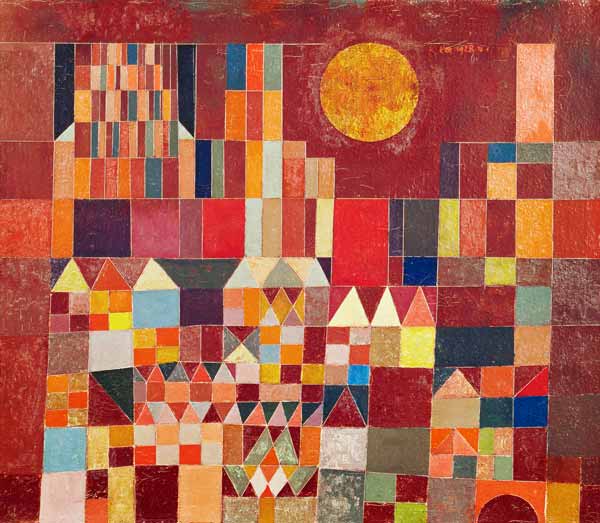
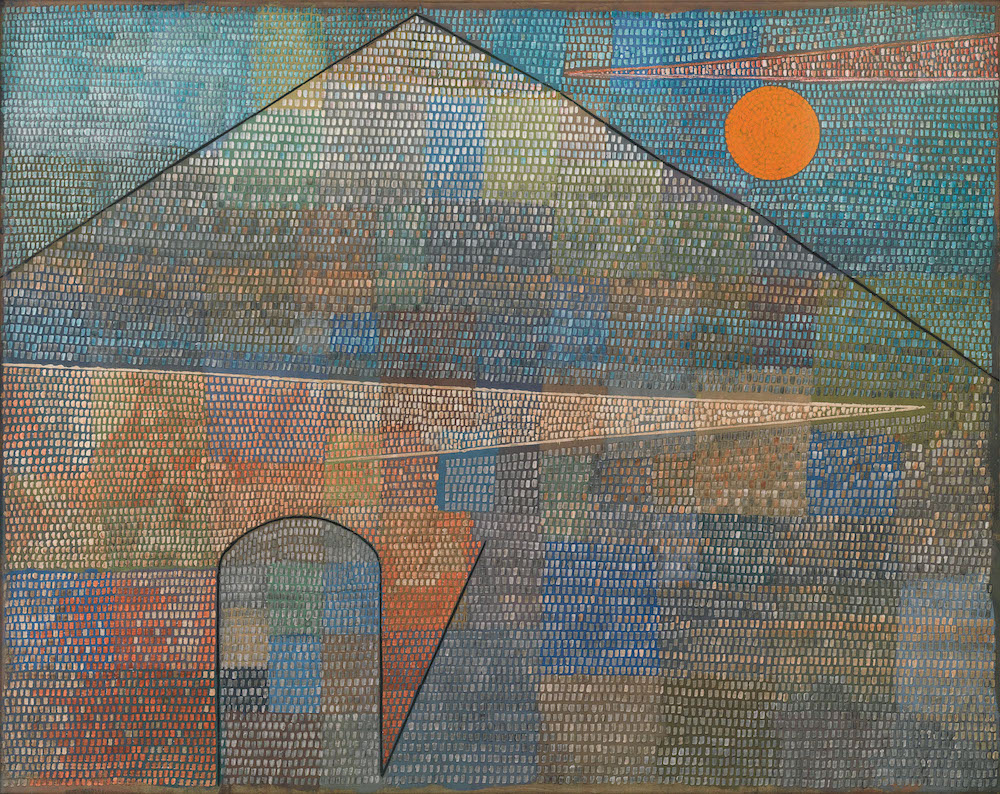
    Sensitive and refined artist, Paul Klee manages to realize the dream of transfiguring every kind of experience thanks to an in-depth study of the magical relationships between forms, ideas, places, and colors. He uses a new expressive language in which the abstract and the figurative give the observer the sensations of a composition in which objects appear immersed in a dreamy and evocative atmosphere.


    Paul Klee: life and career

    Raised with German father, musician, Klee begins to manifest his art precisely in music. He graduated from the Stuttgart Conservatory and became a violin teacher at the Bern Academy. Her passion for drawing, however, manifests itself since her childhood.

    Sensitive and refined artist, Paul Klee manages to realize the dream of transfiguring every kind of experience thanks to an in-depth study of the magical relationships between forms, ideas, places, and colors

    At the age of 20, he moved to Bavaria and to attend the Academy of Fine Arts in Munich. He held his first important exhibitions in Bern and Berlin. We are in the avant-garde years, where German expressionism mixes with the play of light and French colors.

    The trip to Tunisia in 1914 was fundamental for the artist. Following this, there was a phase of a prolific production of watercolors. Klee didn’t stop painting even during the two years of enlistment.

    Paul Klee: life and career

    In fact, he began to exhibit his works during the First World War. In 1920 he was invited by Walter Gropius to teach in his school of architecture, art and design in Germany.

    But when Hilter came to power, the artist was forced to resign. The Nazi regime considered his art “degenerate.” He later left Germany and returned to his hometown.

    The mysterious painting

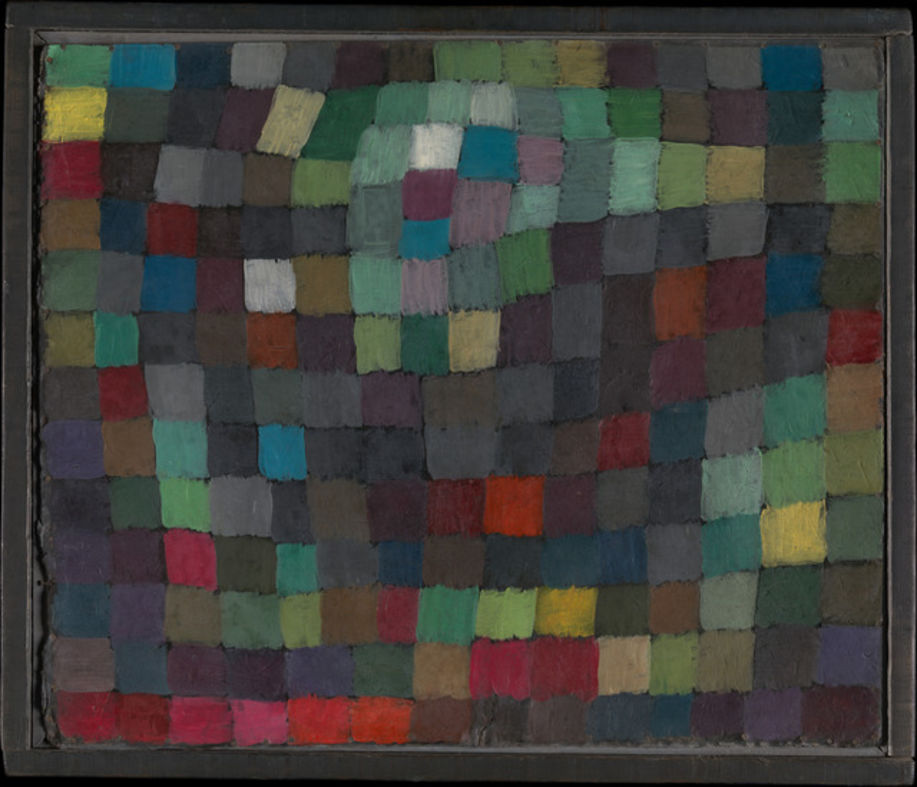
    An artist of intense spirituality, Klee believed that the material world represents only one of the many windows open to human knowledge. His use of drawing, of color, reveal his attempts to use art as an instrument of his philosophical conception.

    Delacroix inspired the painter. Also impactful were Kandinsky and Goethe’s theories on color. These focus his attention on the “circular rhythm of color” in which there is a focus on the fundamental chromatic relationships.

    Together with Macke, Kandinskij, and Marc he gives life to a movement called “Blue Cavalier” which aims to create art that presupposes an abstraction from reality without, however, precluding the immense range of human feelings.

    Paul Klee's art:  a revolutionary pictorial language

    Over the years, he manifested an interest in primitive art, childish expressiveness, and archaic cultures. These will give life to other enchanting and singular paintings. In these, in particular, the inspiration for an art dictated by an emotional need is manifested.

    Klee’s artistic production has indelibly changed the course of modern art and influenced generations of painters. In fact, the artist is today among the great masters of art history.

  • Why and where to buy emerging artists

    Why and where to buy emerging artists

    All art lovers sooner or later dream of owning their pieces. Those who love art want it to be part of their life, to enjoy and benefit from it as much as possible. Many of the new collectors enter the art market by choosing to buy emerging artists. Why and above all, where to buy emerging artists for your collection?


    The art market: buying emerging or established artists

    Often we have the perception that contemporary art is inaccessible. However, this is a false myth. Renowned artists and protagonists of international performances can indeed reach dizzying figures. Yet, those who want to approach the art world with caution have several options ahead of them.

    The art market: buying emerging or established artists

    First of all, we must see the purchase of art as a real investment. When choosing to buy a work of art, you need to establish a price range and choose from the many media on the market. Whether it’s photography, sculpture, or painting, most of the new collectors opt for works by emerging artists.

    What are the reasons behind this trend? Moving towards emerging artists allows you to buy quality art at affordable prices. In fact, the artists who have recently appeared on the artistic panorama can be purchased at much more competitive prices than established artists. This is because surely, an emergent provides fewer guarantees than a big name. However, the lesser-known artists represent a potentially very profitable investment opportunity, as their work could increase in value over time.

    Where to buy emerging artists

    For those who venture in there, finding a way in the contemporary art market is anything but easy. However, the approach does not differ much from the one we adopt in front of every significant investment. It is essential to document oneself, listen to opinions, and prefer channels with proven experience. That of the galleries is a very vast panorama. It is, therefore, necessary to adopt criteria that allow to buy with confidence.

    To understand where to buy emerging artists without expecting bad surprises, you should turn to galleries that offer art advisory services. This is not only a sign of reliability. More than anything else, it is an essential service if you are a beginner in contemporary collecting.

    Another fundamental criterium is to check shipping methods and returns policy. Experienced galleries will have reliable couriers specialized in the transportation of high-value items. Also, the seller should offer coverage in the event of damage during transport.

    Serious companies will, in fact, take full responsibility for damage to the work of art. Also, no less important than the other points is authenticity. Without specific proof of artistic attribution, the painting or sculpture purchased has a problematic value to prove. The Authenticity one is one of the most critical documents that accompany a work of art because it certifies its authorship

  • Exterior design and outdoor sculptures

    Exterior design and outdoor sculptures

    The design has become an incisive part in defining the personality of a home. That includes gardens and exterior spaces. Nowadays, Art and design are braided together. Many experts consider outdoor sculptures to be fundamental when creating outstanding and refined environments.


    Art and exterior design

    The outdoor space allows for more significant contact with nature and extents our experience of a place. Beautifying also means having not only what is necessary but being able to have it with a touch of extra flair that can make the difference.

    Exterior design and outdoor sculptures
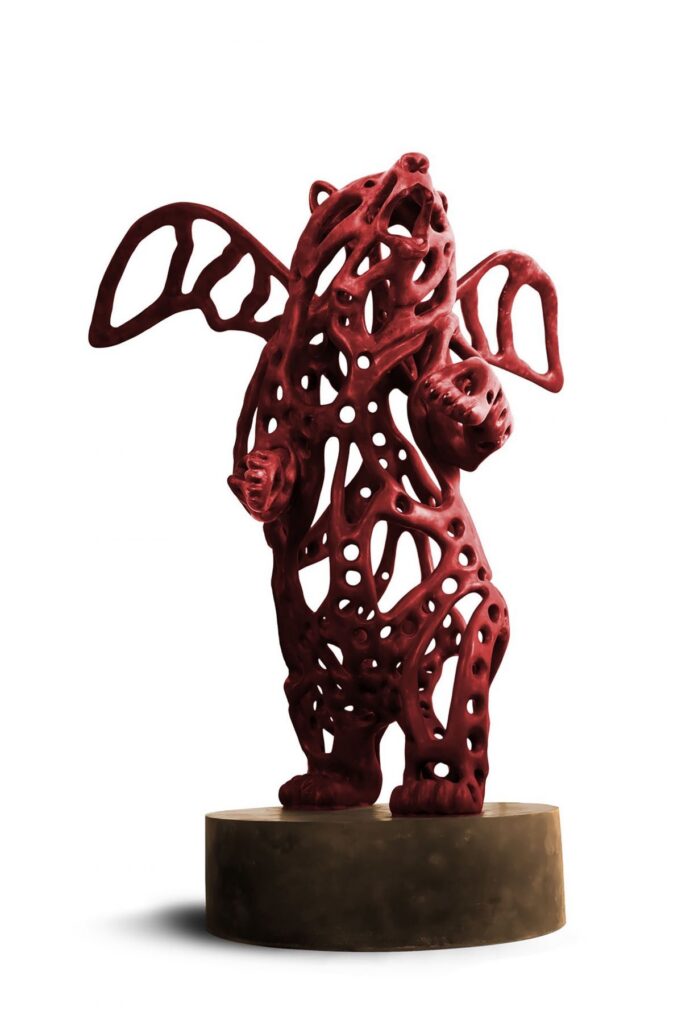
    Angel Bear by Richard Texier

    In this specific sector, Art and functionality can find a joint synergy. Outdoor sculptures must be chosen based on the style of the outdoor space. That’s essential to obtain a harmonious result on an aesthetic level. It is crucial to convey with clarity the idea that is the source of our inspiration.

    Placing a sculpture in the garden can also help enhance the beauty of a particular spot.

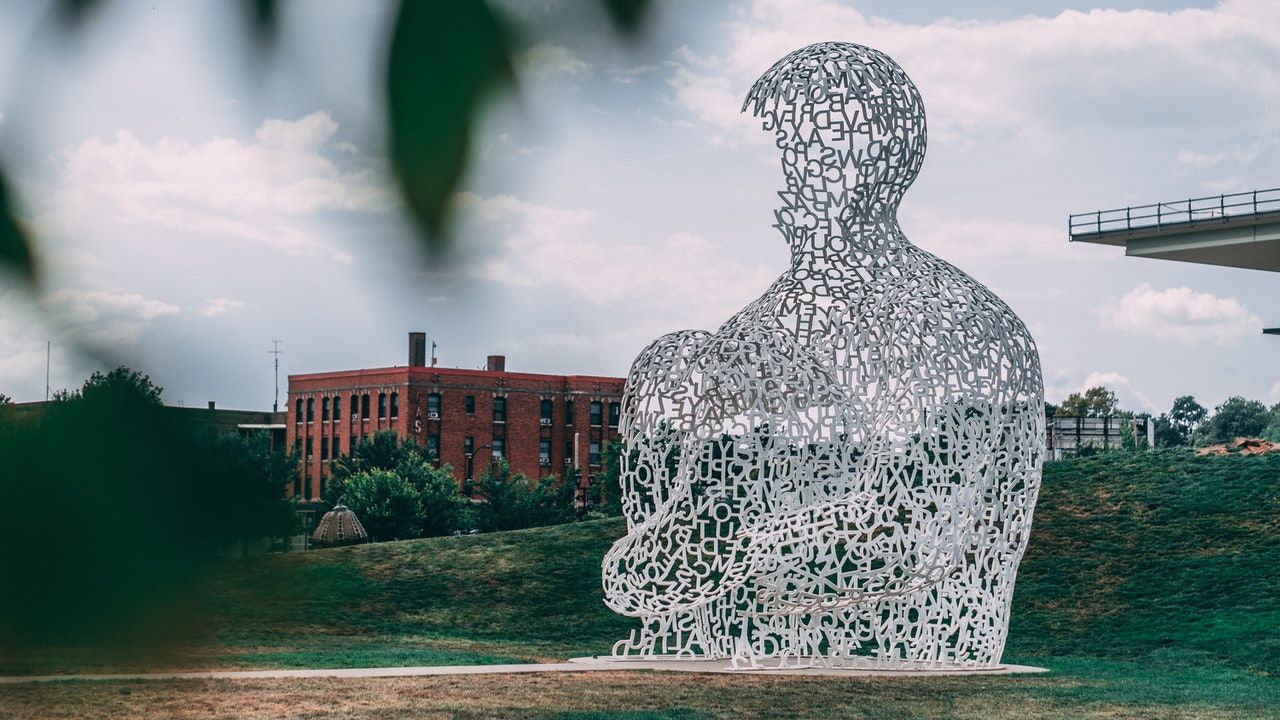
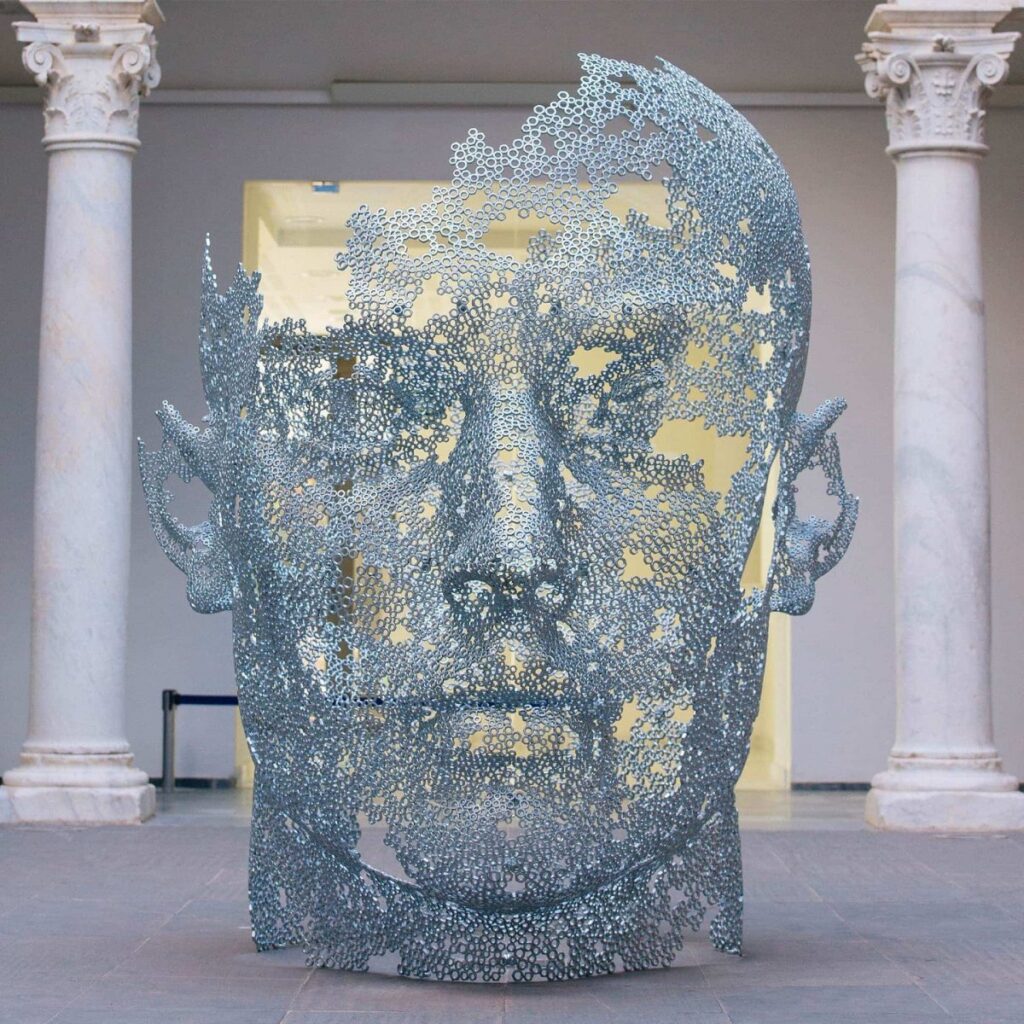
    Origen by Martì Moreno

    In fact, there are outdoor sculptures with classical canons and others that present a more futuristic aspect or abstract forms. Moreover, the different materials give different shades of chiaroscuro and a different ornamental effect.

    Concepts of design: Outdoor Sculptures

    Since garden sculptures offer a great variety of shapes, subjects, and materials, it is obvious that there are different possibilities of combination.

    Not just marble, stone, or terracotta. The sculptures for the exteriors can also be in bronze, a material that recalls an ancient charm, of which traces remain in the history books.

    Concepts of design: Outdoor Sculptures
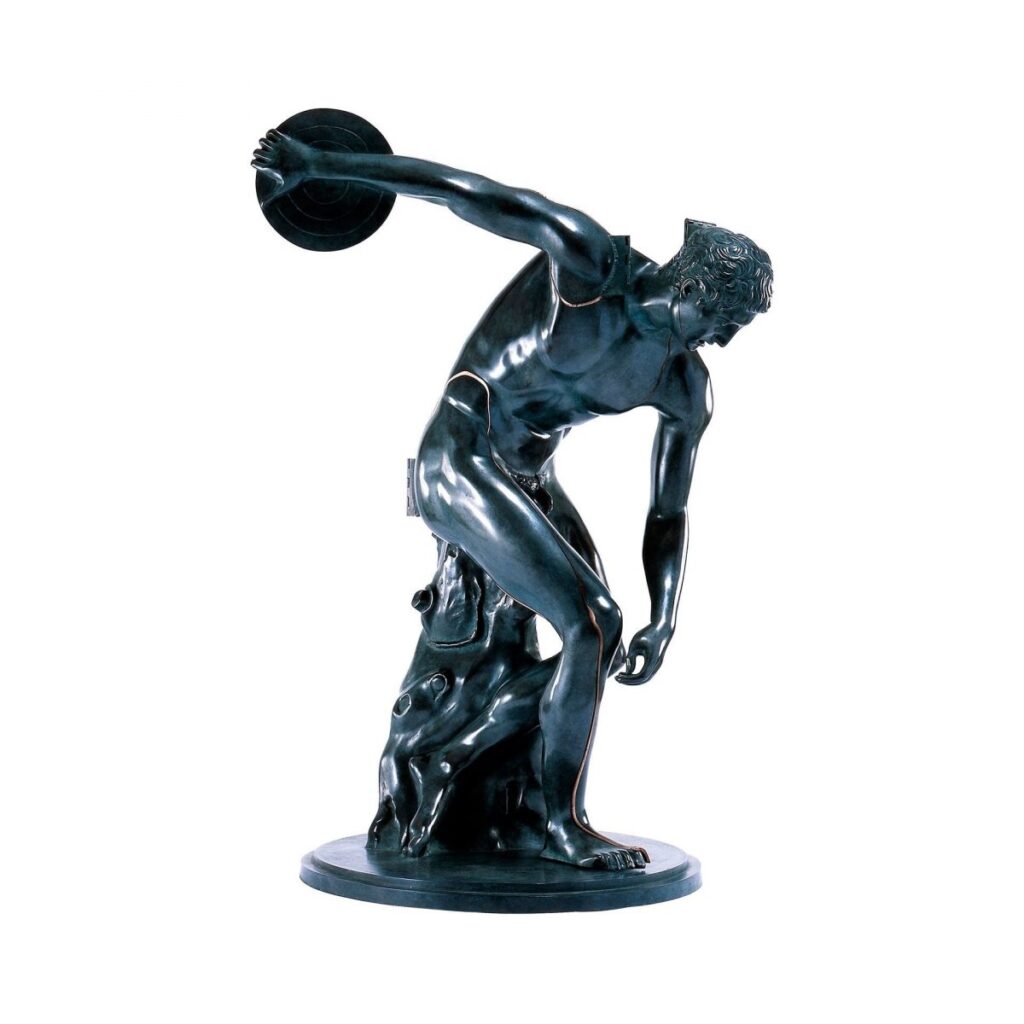
    Le grand discobole by ARMAN

    Of course, a good designer will opt for artworks that integrate harmoniously in the environment, adding beauty to it without creating unbalanced visuals effects. Each space has its proper personality and characteristics. In fact, a sculpture can have a powerful aesthetic impact. Still, all the recent tendencies in design for exteriors confirm the potential of this type of artwork to enhance the suggestion of a space.

    A sculpture can define the essence of a space. Since the artist works 3-dimensionally, creative imagination can run free from any limitation. 

    In recent years the concept of outdoor design has continuously developed. Finally, an artwork meant for these kinds of environments should always be stimulating, somehow inspiring. If we want a garden with an inexhaustible and mysterious charm, then choosing an abstract-inspired statue will be the right choice.

    Discover impressive sculptors’ work on RDN Arts: Contemporary Sculptors

  • Metaphysical Painting

    Metaphysical Painting

    Metaphysical Painting is one of Italy’s significant contributions to the historical avant-gardes of the 1900s, an indispensable passage for the birth of Surrealism.
    In those years, Futurism was emerging, and Metaphysical Painting was the exact opposite. For example, in Futurism, it is all dynamism and speed; in Metaphysical dominates absolute immobility.


    Defining Metaphysical Painting

    The term “Metaphysical Painting” indicates the particular relationship of this painting movement towards reality. Compared to other pictorial currents that were emerging in the early twentieth century, Metaphysical Painting is characterized by its order and compositional clarity.

    The paintings depict recognizable objects and shapes, placed in well-defined spaces from an architectural point of view. Still, the various elements mix in an absurd way, without an apparent connection between them.

    The term "Metaphysical Painting" indicates the particular relationship of this painting movement towards reality.

    The Metaphysical paintings recall stages, on which are both strange and paradoxical representations: the background itself emphasizes the silence and stillness of the air.

    The perfection of real objects placed in this way sets these works of art outside reality, hence the name “Metaphysics.”

    History of metaphysical Painting

    Metaphysical Painting is one of the leading Italian artistic trends of the first half of the 1900s. This presents an evident charge of suggestion, rich in magical and enigmatic atmospheres, where absolute silence is manifests itself

    Metaphysical Painting is one of the leading Italian artistic trends of the first half of the 1900s.

    We cannot define it as a real movement, but rather a current. In fact, it is not based on a manifesto or a programmatic document. It does not assume the countenance of a group. It is not even possible to set a precise debut date.
    Like all currents, on the other hand, its poetics and characteristic elements can be defined.

    The features of Metaphysical Painting

    The objects in metaphysical paintings can be mannequins, torsos of sculptures, metronomes, toys, bottles, boxes, spheres, artist’s tools, etc. Its main features are stylized and schematic physiognomy, sharp contours, two to thin black lines, simplified surfaces with elementary chiaroscuro, and mostly monochrome shadows. The spaces that form the backdrop to the objects present typologies that differ according to the author.

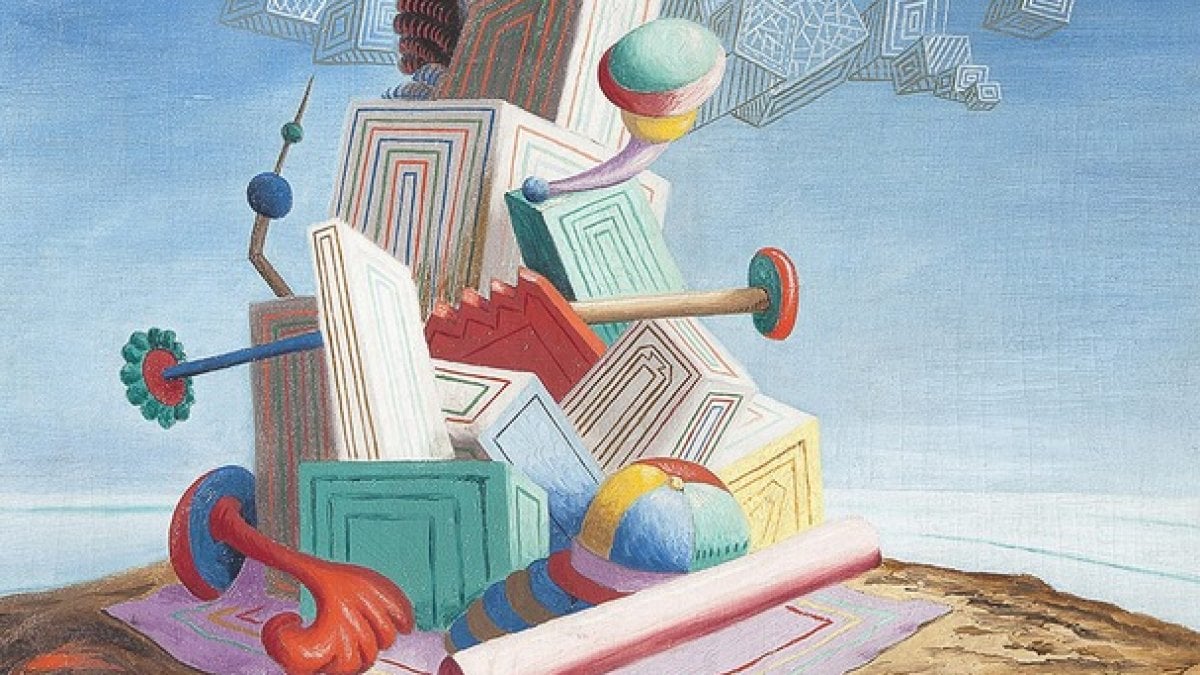
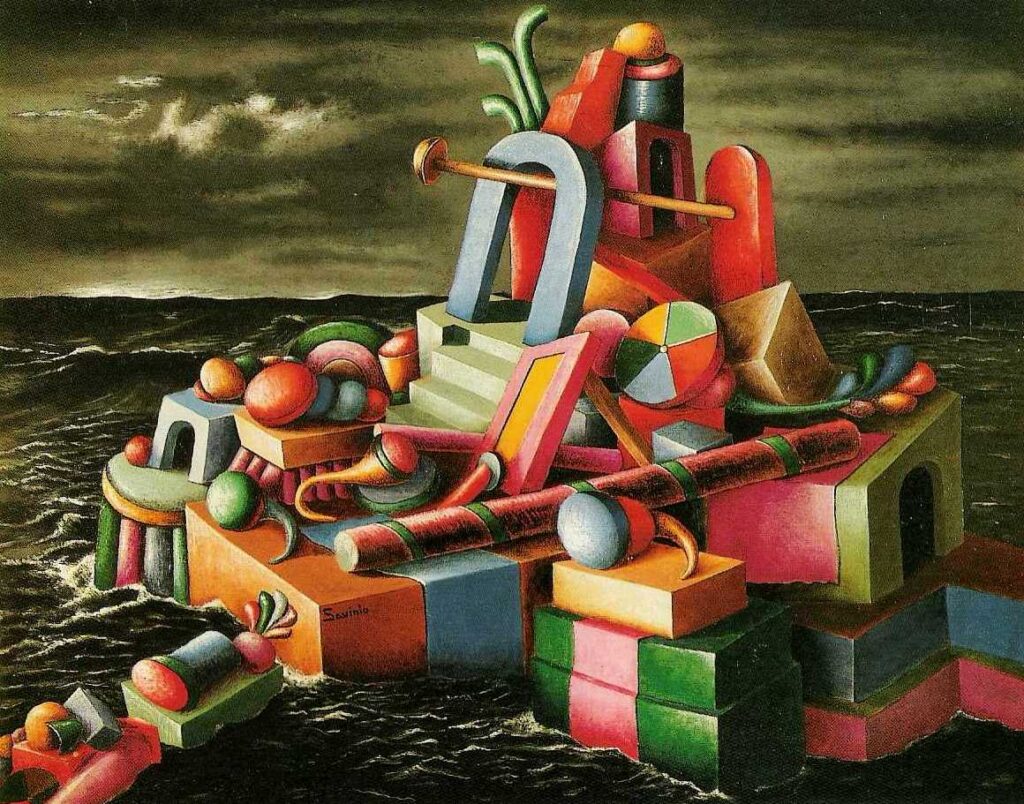
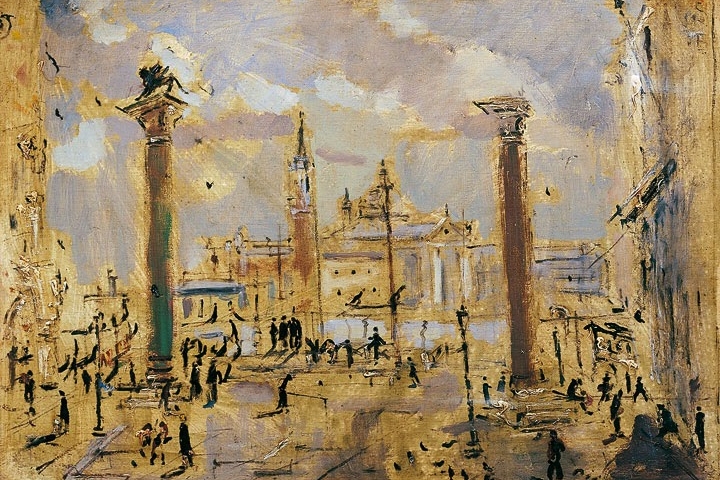
    Almost all the paintings of Carrà, Morandi, De Pisis, and some of De Chirico, depict interiors of rooms. There are, however, many exceptions, mainly consisting of Giorgio de Chirico and Alberto Savinio. And also Giorgio Morandi deserves a separate discussion.

    Almost all the paintings of Carrà, Morandi, De Pisis, and some of De Chirico, depict interiors of rooms. There are, however, many exceptions, mainly consisting of Giorgio de Chirico and Alberto Savinio

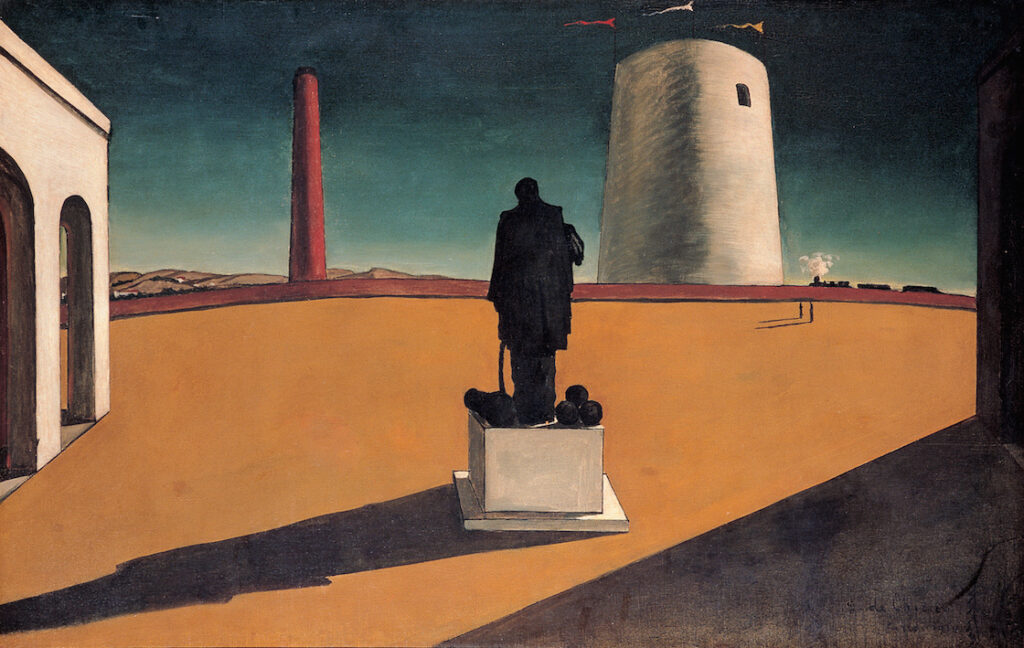
    Open spaces often resemble De Chirico’s canvases, similar to squares, terraces, glimpses of arches. Particularly famous are the so-called “squares of Italy”: visions of open spaces on the horizon, delimited by arched buildings, towers, and more or less known architectures, with ancient sculptures placed in the foreground.

    Giorgio Morandi‘s canvases from 1918-19 are, instead, metaphysical still lifes, in which objects appear arranged on tables.
    The main characteristics of the spaces that form the background are clarity and clarity of the composition, schematic and simplification of architectural structures, presence of forced perspectives and improbable escape lines, and use of warm and earthy colors.

  • The oldest Museums in the world

    The oldest Museums in the world

    The idea of ​​preserving objects of cultural and historical importance began thousands of years ago. These institutions make use of artifacts stored for viewing through their temporary or permanent exhibitions around the world. The oldest museum, built by the Babylonians over 2,500 years ago, was discovered by Leonard Wooley. The following there are some of the oldest museums in the world.


    Discovering the oldest Museums in the world

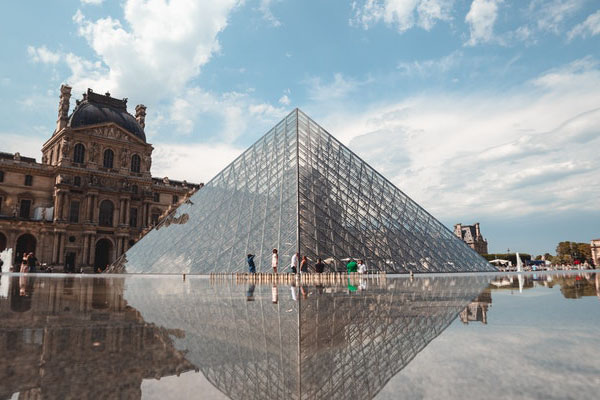
    Louvre museum

    The Louvre is not only a historical monument but also the most visited art museum in the world.

    The Louvre is not only a historical monument but also the most visited art museum in the world. In particular, the museum houses 35,000 objects exhibited in the prehistoric era. It is surely considered the landmark of Paris and one of the best museums in the world. At first, during the late 12th century it was a fortress. Later the monarch Philip II transformed it into the home of the French king in 1546. The museum opened in 1793, with a collection of 573 paintings. The collection grew particularly during Napoleon’s reign.

    Musée des Beaux-Arts and d’Archéologie de Besançon

    The Musée des Beaux-Arts and d'Archéologie de Besançon (Museum of Fine Arts and Archeology) in Besançon, is the oldest museum of fine arts and archeology in France.

    The Musée des Beaux-Arts and d’Archéologie de Besançon (Museum of Fine Arts and Archeology) in Besançon, is the oldest museum of fine arts and archeology in France. In fact, the museum opened in 1694 after Jean Baptiste contributed his collection to the city. The curators have divided the artifacts in this institution into three categories: drawing, painting, and archeology.

    Belvedere Museum

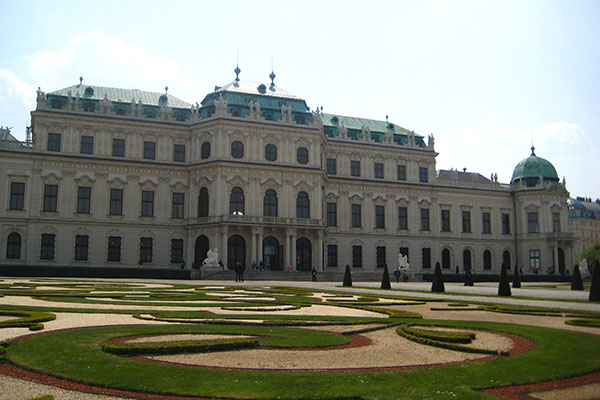
    The Belvedere Museum is a historical complex with two Baroque palaces (the low and the high), the stables of the palace, and the Orangery.

    The Belvedere Museum is a historical complex with two Baroque palaces (the low and the high), the stables of the palace, and the Orangery. The Belvedere is in the landscape of the baroque park in the 3rd district of Vienna. In particular, this museum houses the most extensive collection of paintings by Gustav Klint and Austrian art collection.

    Royal Armories

    The Royal Armories in London is the oldest museum in Britain

    The Royal Armories in London is the oldest museum in Britain. In particular, the Tower of London is home to the largest collection of armories in the world. This was the first attraction for specific visitors who paid for the privilege of seeing the Royal collection. The museum opened in 1660. The armories were subsequently divided and placed in three different locations across Britain with the primary goal of building museums in West Yorkshire, Leeds, and the Victorian fort in Portsmouth.

    Capitoline Museums

    discovering the oldest museums in the world

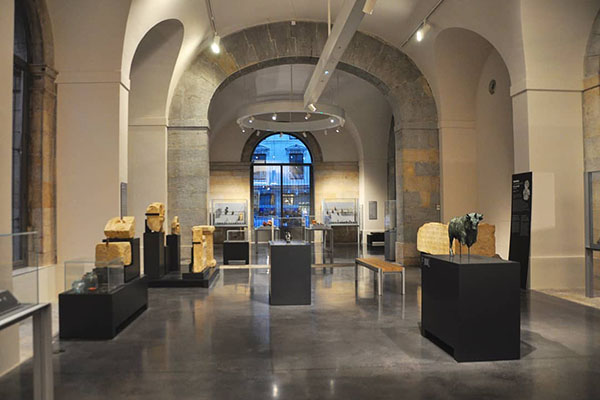
    Located in the Plazza del Campidoglio on the Campidoglio in Rome, this museum has a collection of archaeological and fine arts exhibits. The history of the Capitoline Museums starts in 1471. In particular, Pope Sixtus IV contributed with a series of critical prehistoric bronzes in Rome and placed them on the Capitol. Later the collection grew thanks to numerous ancient Roman inscriptions and statues, as well as a set of Renaissance and medieval art. The Capitoline Museums opened in 1734.

  • Artist we love: Matthew Shlian

    Artist we love: Matthew Shlian

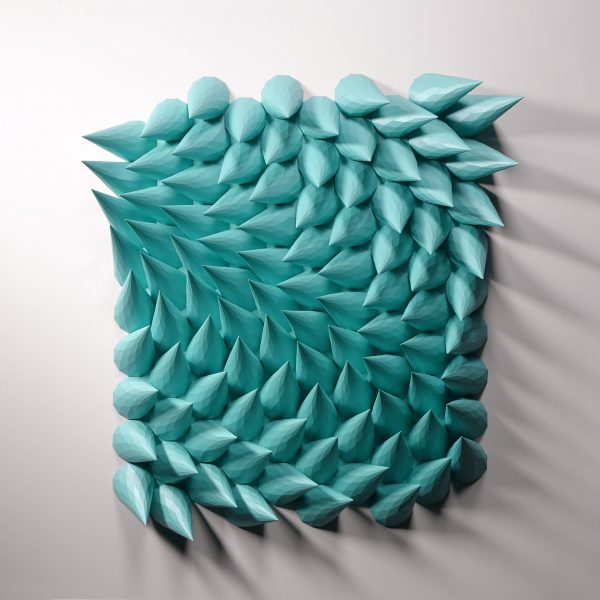
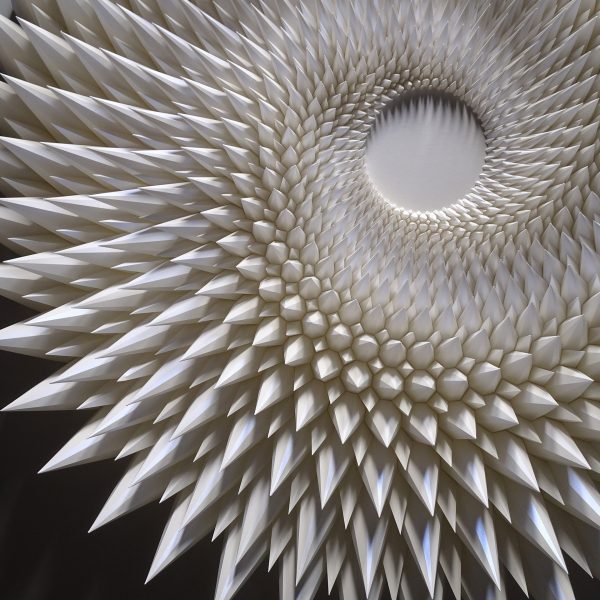
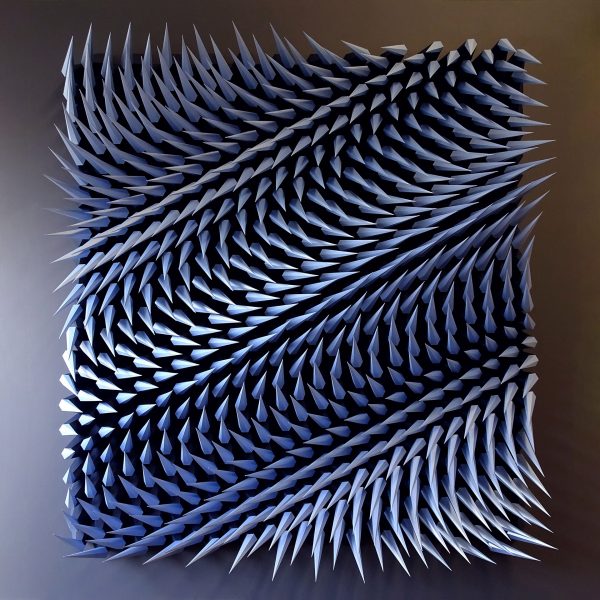
    The artist Matthew Shlian has a truly unique artistic approach. In his art, the idea and the shape come together with harmonious and unpredictable results. Shlian made paper the medium and the message of his art. The result is as if suspended between science and geometry, in elements with a captivating and unmistakable design.


    Matthew Shlian: artist between geometry and science

    Matthew Shlian was born in 1980 in the United States. Trained in ceramics, the artist has, however, extended his artistic language by embracing other materials. Already during the first years of activity, Shlian developed a keen interest in digital printing and paper, of which he appreciated the flexibility and immediacy.

    Matthew Shilian: artist between geometry and science
    Unholy 238

    As a paper engineer, the artist’s work is rooted in print media, as well as commercial design. However, the aesthetic that Shlian aspires to has far greater inspirations. The engineering skills of the American artist, led also to the collaboration with scientists from the University of Michigan. In particular, the creation of kinetic nanoscale sculptures extends to the visualization of solar cell development and cellular division.

    “I loved the immediacy of paper as a medium. I also loved the geometry. Figuring out the pieces was like solving a puzzle. I understand things spatially; I have to see something to make sense of it. Researchers see paper engineering as a metaphor for scientific principles; I see their inquiry as a basis for artistic inspiration. “

    The creative process is different for each sculpture and each shape and geometry that the artist reproduces. According to the artist himself, the material often takes on the final aesthetic during the work. The final form does not necessarily reflect the initial idea.

    Artist Matthew Shlian: designer with inexhaustible creativity

    Shlian has been the protagonist over the years of numerous performances. Some of the most recent are: Matthew Shlian Solo Show, Turner Carroll Gallery, Santa Fe, Peripheral Technologies Group Show, Ann Arbor Art Center and Science et Art 8th Biennale Nationals De Sculpture Contemporaine, Trios- Riveres, Quebec. The artist also aroused great interest at the Islamic Arts Festival Juried Exhibition, Sharjah, 2017 and at the Paper Biennial Rijswijk Group Show, Rijswijk Museum, Netherlands in 2016.

    Artist Matthew Shilian: designer with inexhaustible creativity
    Unholy 214 Soon My Doubles Will Pull Off All Of My Stunts

    Teaching is also an essential part of Shlian’s work. Protagonist of the lecture “Paper Engineering” in Minneapolis and Albuquerque; lecturer in “Paper Sculpture” in New York, Naples Florida, and Gatlinburg, among many others.

    Matthew boasts meaningful collaborations that have made him a point of reference and inspiration among designers from many different fields. During his career, the artist has, in fact, collected collaborations with Apple, Ghostly International, ZAAZ, Supreme, Levi’s, Chrysler, Shutterstop, Facebook, Shingle, The British Film Institute, MoMA, Google, Visa, Fitzpatrick Architecture, Vogue and Christian Dior.

    “Unfolding” is the book that runs through Shlian’s entire journey to discover paper and the geometry of shapes. The collection reviews over a decade of activity that highlights the work of an extremely prolific artist with inexhaustible creativity.

    Art we love

    “I find inspiration in just about everything; Solar cell design, protein misfolding, Islamic tile patterning, systematic drawing, architecture, biomimetics, music, etc. “

    The artist Matthew Shilian has a truly unique artistic approach. In his art, the idea and the shape come together with harmonious and unpredictable results
    Unholy 75

    Shlian is a fluid artist, who discriminates against the impositions of a stylistic choice at the expense of pure inspiration. This approach allows the artist to move from drawing to large-scale installations. However, the unifying element is almost always paper. That is a material that is a cornerstone of civilization. An essential component of the human experience since ancient times.

    In Shlian’s works, there is an extreme definition and clarity, which, however, does not lack movement. From the intuition to investigate the concepts of form and art, the artist’s impulses cross the purely aesthetic limits and become a tool to analyze and understand the structures at the base of the world.

    Discover the works of the artist Matthew Shlian on the dedicated page of our site: Matthew Shlian!

  • New donation for the Uffizi Galleries

    New donation for the Uffizi Galleries

    About three years after his death, the extraordinary collection of Carlo del Bravo, professor of art history at the University of Florence, became part of the Uffizi Galleries heritage.


    Donation for the Uffizi Galleries

    A treasure of 455 works of art including paintings, sculptures and drawings from the 16th to the 21st century. Masterpieces by Tribolo, Jacopo Vignali, Giovanni Battista Foggini, Ingres, Pio Fedi, Giuseppe Bezzuoli. Also, the extraordinary San Giovannino del Rosso Fiorentino, last picture of the mannerist genius to date in private hands.

    Donation for the Uffizi Galleries

    The legacy is the result of the generosity and foresight of his pupil and universal heir Lorenzo Gnocchi. Also a professor at the Florentine university.

    In 1982 Carlo Del Bravo was awarded the chair of History of Modern Art. He voluntarily worked at the university even further. In fact, he trained generations of students. In particular, these include the directors of the Modern Art Gallery, Ettore Spalletti, Carlo Sisi, Simonella Condemi, and Antonio Natali, former director of the Uffizi Gallery.

    A treasure of 455 works of art including paintings, sculptures and drawings from the 16th to the 21st century.

    It is a great event, even for a museum so important as the Uffizi. In the first place, as the director Eike Schmidt explains, because the “bewildered, irreverent San Giovannino del Rosso Fiorentino becomes part of the public heritage and will be part of the new preparation of the early 16th-century painting at the Uffizi».

    An incredible collection

    All the works donated are of excellent value. Among these, there are two of the most poignant paintings by the Florentine Jacopo Vignali. The Young flutist and Jesus crowned with thorns will be on view at the Palatine Gallery. The other works in the collection will be on view in the coming months.

    About three years after his death, the extraordinary collection of Carlo del Bravo, professor of art history at the University of Florence, became part of the Uffizi Galleries heritage.

    “Carlo Del Bravo put them together over the course of his life, is the result of an existence based on a passion for knowledge and a sense of beauty – explains Eike Schmidt -. Precisely these values ​​inspired today the act of generosity carried out by his pupil and universal heir Lorenzo Gnocchi. He handed over his master’s most precious, personal and intimate treasures to the Italian people”.

    “Just as in academic studies, the collection that Carlo Del Bravo put together over the course of his life – one of the most important donations to Florentine museums since the post-war period. It is the result of a life marked by a passion for knowledge and a sense of beauty.

  • The history of the Pea Harvest by Camille Pissarro

    The history of the Pea Harvest by Camille Pissarro

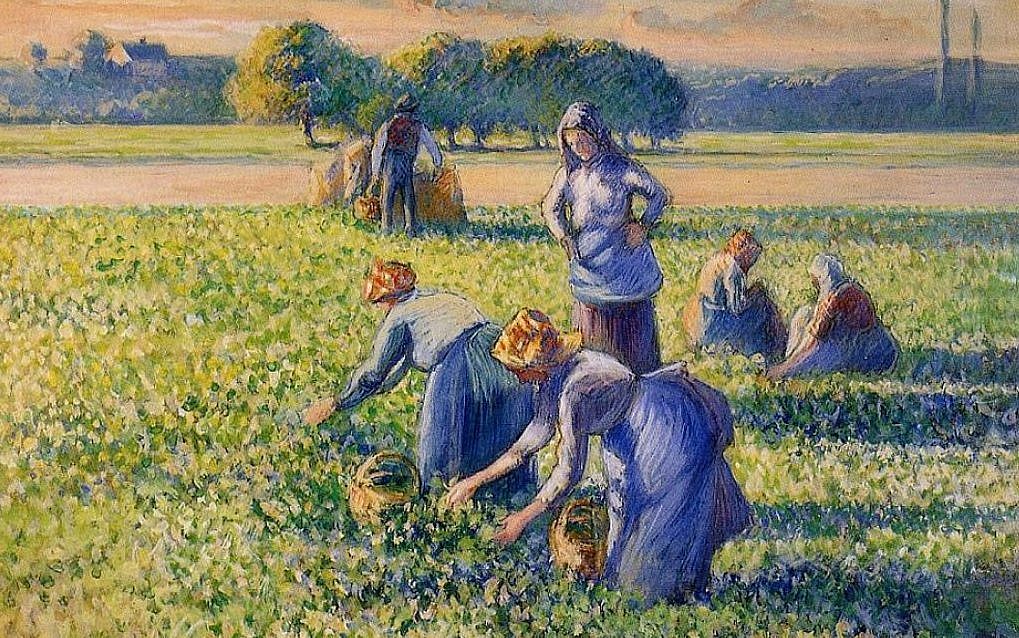
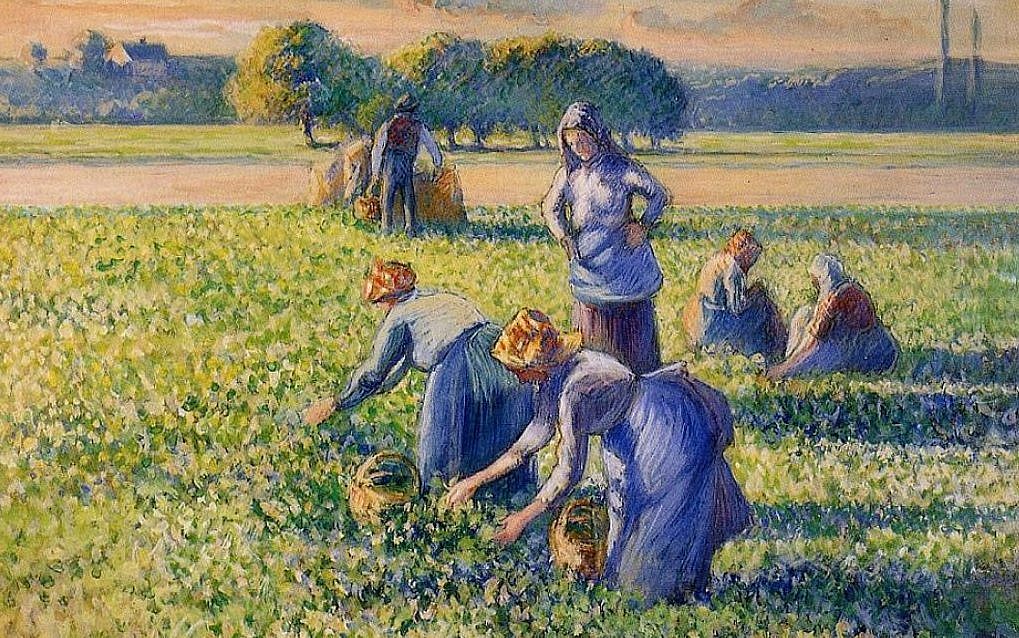
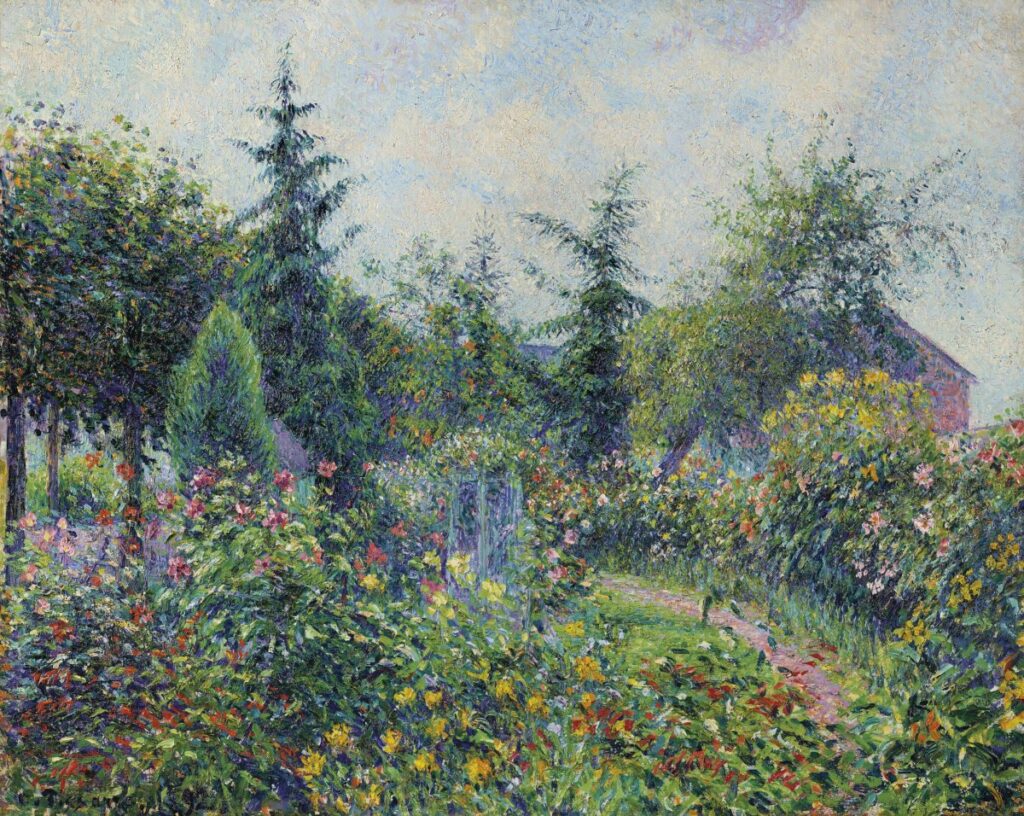
    The Pea Harvest (La cueillette des pois) by Camille Pissarro returned to its legitimate owners based on a decree of 1945. This law states that the expropriations committed during the collaborationist period of Vichy are to be considered null. 


    France confirms restitution of Pissarro looted from Jewish collector

    The history of the suggestive landscape painted by Pissarro is full of unexpected events. 

    Today the painting returns to the heirs of the Jewish collector Bauer. The history of the dispute between the last owners and the Bauer dates back to an exhibition in 2017. In Paris, the Marmottan-Monet Museum hosted a retrospective dedicated precisely to Pissaro. Among the delicate canvas on display, there was The Pea Harvest. 

    The Pea Harvest (La cueillette des pois) by Camille Pissarro returned to its legitimate owners based on a decree of 1945.

    The artwork, dated 1887, was a loan by Bruce and Robbi Toll, a couple of great American collectors.

    However, among the many participants in the exhibits, there also were the Bauers. These were the heirs of the French industrialist, to whom the Nazis confiscated the paintings during the occupation of Paris.

    After claiming the ownership of the Pisarro’s and passed three years of legal battle, on Wednesday, the French Court of Cassation decided. The artwork will return to Bauer’s family. 

    Back before the war, Simon Bauer owned 93 works. He was later captured to be sent to concentration camps, but managed to escape. After the war, he managed to get back only a few pieces before he died in 1947. All the others ended up in the hands of others or on the market. 

    Pissarro’s Pea Harvest was auctioned by Christie’s New York in 1995, and the Tolls became its owners for $ 800,000.

    Camille Pissaro, a great name of French impressionism

    Camille Pissarro is one of the most famous French artists of the 19th century. He was one of the leading exponents of impressionism.

    Known as the “poet of the countryside,” Pissarro also painted about thirty canvases with human subjects in the foreground and created watercolors. He also used lithographs and etchings, experimenting with various techniques, including gouache.

    Pissarro, known as the "poet of the countryside," Pissarro also painted about thirty canvases with human subjects in the foreground and created watercolors.

    His interest in painting the rural and urban life is due to his adoptive country. Many saw in this tendency also an innate empathy towards the poorer social classes.

    The touch with which Pissarro portrays winter and spring landscapes is light and poetic, as seen in the Pea Harvest.

Our Content.
Your Inbox

Join thousands of art lovers

Receive art news, market analysis and updates about new artists on the website

By subscribing you agree to receive RDN Arts emails. Unsubscribe at any time. Privacy Policy.