Author: xerkss

  • Simone Leigh, the first black woman to represent the United States at the Venice Biennale

    Simone Leigh, the first black woman to represent the United States at the Venice Biennale

    Simone Leigh will be the first black woman to represent the United States at the next edition of the Venice Biennale, the 59th, in 2022.


    One of the most influential personalities of recent times in the world of American art. Leigh will be the first African American woman to represent the United States at the Venice Biennale of Contemporary Art. The appointment was supported by the State Department of Cultural Affairs. This, on the recommendation of museum professionals and artists, gathered in the National Endowment for the Arts.
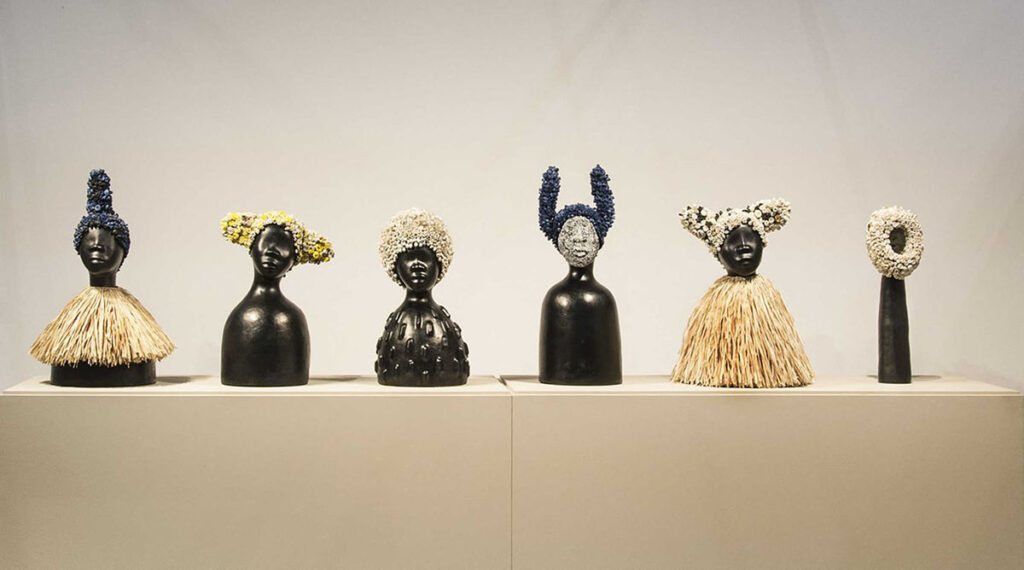
    simone leigh venice biennale

    The last two artists chosen to represent the United States, Martin Puryear, and Mark Bradford, are both African Americans.

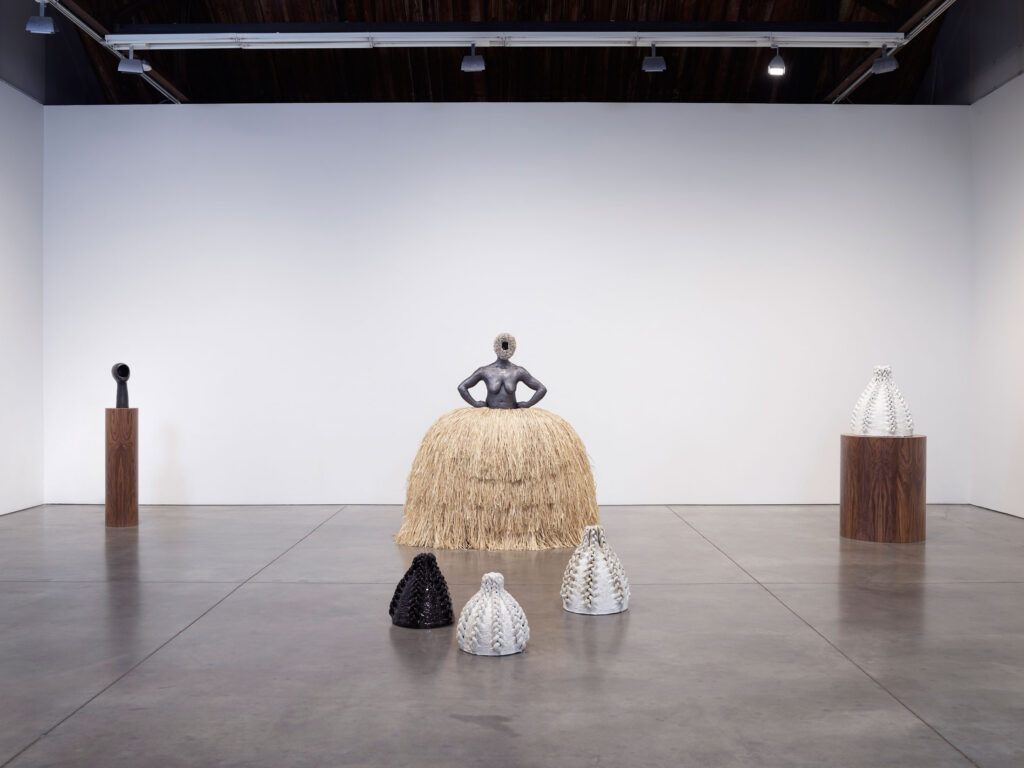
    Simone Leigh’s project for the United States Pavilion

    The ICA expects the exhibition to cost approximately $ 2 million. This with resources that include a $ 375,000 grant from the US State Department’s Bureau of Educational and Cultural Affairs, which chooses the commissioning institution. Most of the exhibition will be devoted to Leigh’s new sculptures and installations. The objects will cover the materials for which she became famous: bronze, ceramic and raffia.

    Simone Leigh, the first black woman to represent the United States at the Venice Biennale

    The project in the Lagoon will include new sculptures by the artist, whose work focuses on African-American gender history. A monumental bronze sculpture will be located outside the pavilion. And, inside, other works made of raffia, ceramic and bronze, materials characteristic of Leigh’s work, will be set up. Also, as part of the United States Pavilion project, Leigh is collaborating with the Atlanta University Center Art History. The Curatorial Studies Collective of Spelman College also includes additional teaching and training aspects.
    Simone Leigh's project for the United States Pavilion

    Cecilia Alemani, leader and chief curator of New York’s High Line Art will direct the international show. She commissioned also Leigh’s High Line, Brick House. This was part of “Anatomy of Architecture”. It features female figures inspired by the architectural styles of West Africa and the American South, will remain visible in the famous park until next spring.

    The nomination for the United States Pavilion at the 2022 Venice Biennale of Art comes at the height of a particularly prolific and fortunate moment for Simone Leigh, who in 2018 won the Hugo Boss Prize, one of the most coveted in the world.

    Her works were part of exhibitions at the Berlin Biennale, the Whitney Biennial and the Dak’Art Biennale of Contemporary African Art, as well as in the collections of museums such as MoMA PS1 and the Hammer Museum.
  • Baltimore Museum sells a Warhol

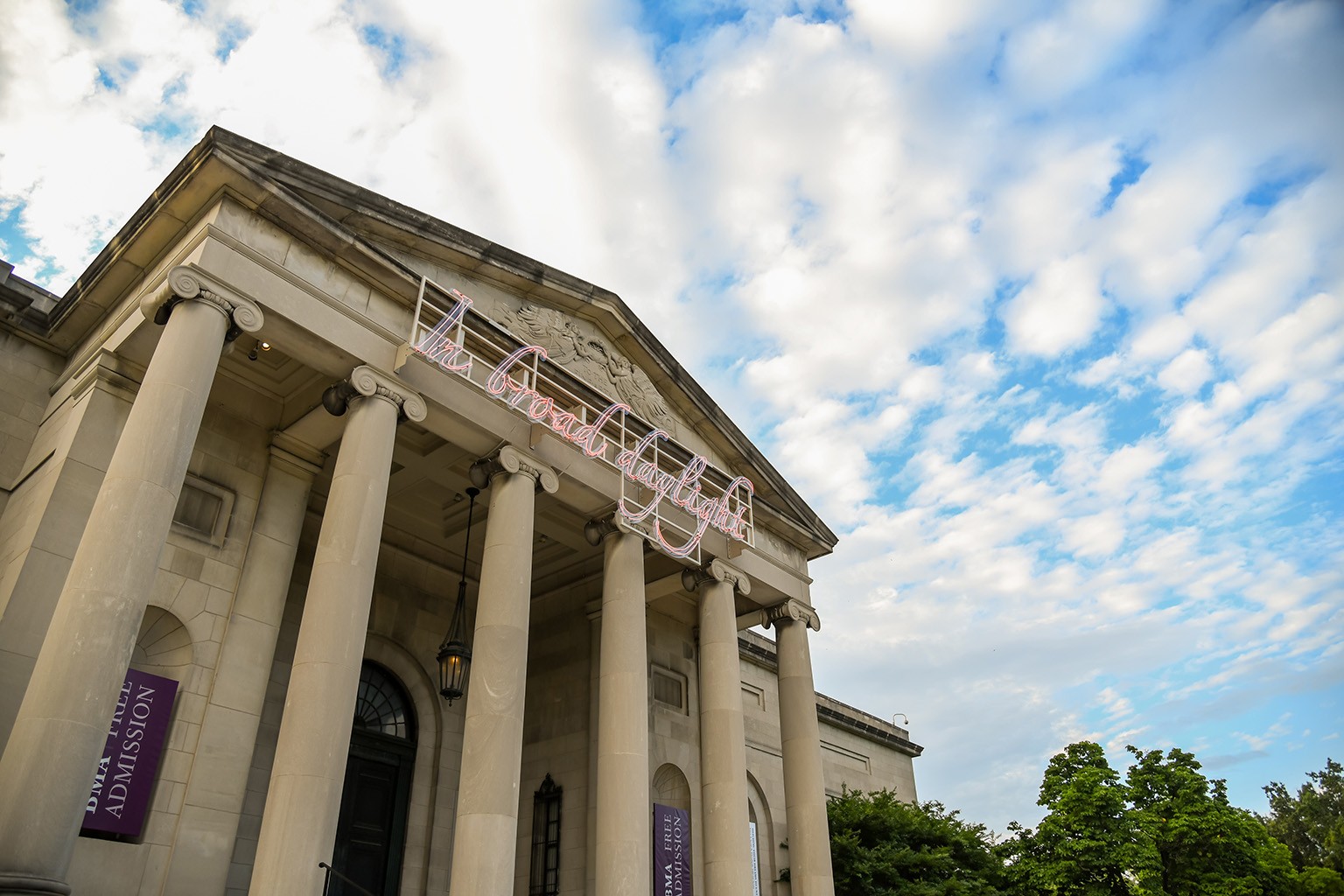
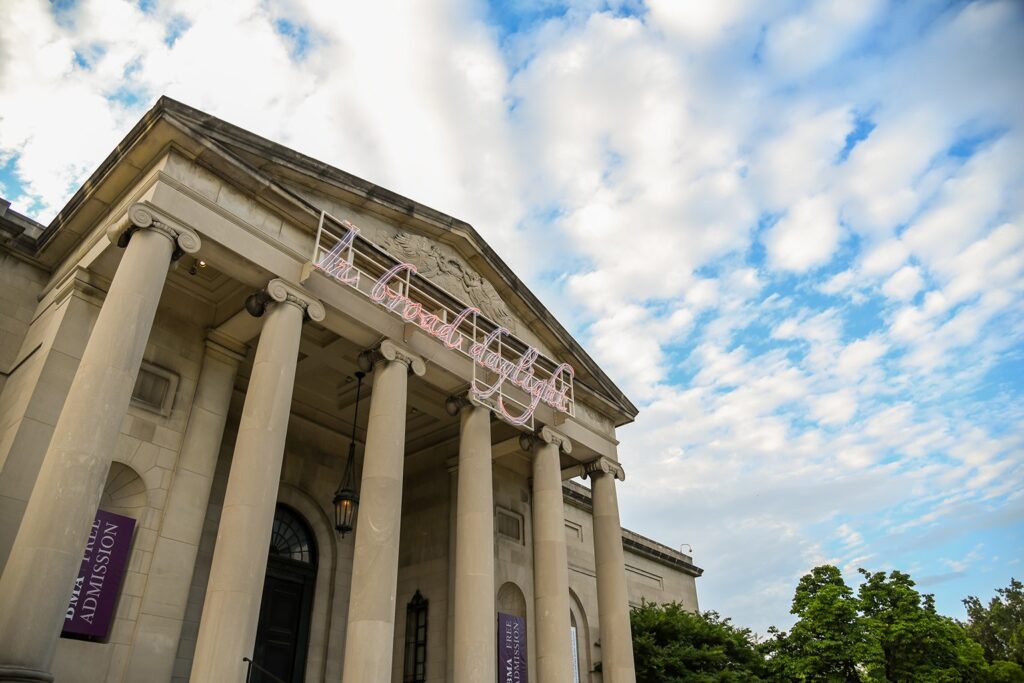
    Baltimore Museum sells a Warhol

    In America, several museums are placing some gemstones from their collections to collect liquidity to face the economic crisis due to the coronavirus. Among these is the Baltimore Museum of Art. The taboo of the sale of works for museums has inexorably collapsed this year. The cause? The Covid-19 pandemic that has ruined the finances of many museums.

    A new approach for American Museums

    It was the Association of Art Museum Directors (AAMD), the powerful organization of museum directors, that gave the go-ahead for sales, intending to avoid closings.

    For several weeks, however, no museum used this approach. The first was the Brooklyn Museum of Art, which sold twelve works at Sotheby’s. These included paintings by Lucas Cranach, Giovanni dal Ponte, Gustave Courbet, Camille Corot, Donato de ‘Bardi, and other influential authors of the past, to raise 40 million euros. And now, several other major institutions followed the New York museum. The Baltimore Museum of Art announced the sale of three paintings from the collection. The most valuable is a 1986 Andy Warhol’s Last Supper. The aim is to raise 65 million dollars.

    baltimore museum

    Then there is the Indianapolis Museum of Art, which places a canvas by Maurice de Vlaminck and works by French artists of the late nineteenth century on the market at Christie’s. And again, the Everson Museum in Syracuse will sell an important Red composition by Jackson Pollock estimated at between 12 and 18 million dollars. The work, from 1946, will be sold by Christie’s. The Laguna Art Museum in Laguna Beach sells an 80,000 dollar drawing by Matisse. At Christie’s, the Springfield Museum will sell a Picasso painting with an estimate between 3 and 5 million euros.

    Baltimore Museum sells the Last Supper

    Some museums, such as the Indianapolis Museum of Art, declared that they planned sales before the pandemic. In fact, it is legitimate for museums to sell works in the United States if the goal is to buy others to enrich the collection. But for others, the aim is precisely to prevent the crisis from hitting the museum.

    This was openly stated, for example, by the Baltimore Museum of Art. This included the three sales in a financial recovery plan called Endowment for the Future.

    Baltimore Museum sells the Last Supper

    The museum explained that the choice of the three paintings “was after careful evaluation by the curatorial team to ensure that the essential narrative can continue to be told with the same depth and richness. ” Of the 65 million that the Baltimore museum hopes to raise, 10 will go to the acquisitions fund. 500 thousand will be allocated to a plan for diversity, equity, accessibility, and inclusion, while the remaining 54.5 will be used to ensure the museum’s functioning.

  • After Miart 2020, a digital system for Art

    After Miart 2020, a digital system for Art

    From 9 to 13 September, there was the first virtual art fair in Italy. It happened on the occasion of Miart 2020, the international fair of modern and contemporary Art organized by Fiera Milano. For the first time, the fair was in a digital edition to meet the new context’s needs. Result: over 2 million interactions. The new format has in fact introduced a new interactive experience of “virtual stands.”


    The numbers of the Fair

    133 national and international exhibitors took part in this first digital edition, enriching the digital platform developed in collaboration with ArtShell with 1761 works. These covered four major thematic areas that have always distinguished the fair’s research path: modern, contemporary, emerging Art, and collectible design.

    195 were the online events, from the Milan Art Week appointments to those of the galleries. Those allowed the public to deepen in particular their knowledge of the artists and works on display.

    Miart 2020, a digital system for Art

    178,709 views for the work, 10,119 for the events and 7,693 for the insights, are significant numbers. Alongside 2,240,000 interactions, demonstrate in fact how much navigation has stimulated the interest of visitors.

    Through a communication system integrated into the platform – the first in the world to have a native chat modeled based on the most used instant messaging apps – exhibitors, artists, and professionals in the sector came into direct contact through one-to-one conversations. -one, groups, and thematic channels.

    Miart 2020 Digital Art Fair

    The new experience inaugurated by Miart offered the community of art professionals a real workspace, functional both to the creation of an immediate workflow, capable of responding to current needs dictated by smart working.

    The art market is undoubtedly changing paradigms in a digital key. The phenomenon accelerated in particular in the recent months because of the Covid-19 pandemic.

    Controlling digital channels will, therefore, be increasingly fundamental. According to a recent study in fact, 67% of players on the digital systems market for Art are sure that there will be even greater consolidation in the next five years.

    Check out our tips for buying Art online here: Buying Artwork online: 5 Costly Mistakes To Look for

  • Maurizio Cattelan: the irreverent artist turns 60

    Maurizio Cattelan: the irreverent artist turns 60

    Maurizio Cattelan born in 1960, celebrated his 60th birthday this week. He is the most irreverent and provocative Italian artist present in the panorama of contemporary art.

    Cattelan is ironic and provocative. His works have a strong emotional charge that attracts and produces a spontaneous and intense curiosity. His works get the media and public opinion talking: from America, the gold cabinet stolen to Comedian.


    Maurizio Cattelan’s career

    The artist attended the Academy of Fine Arts in Bologna, in the eighties. He began his career in Forlì, following the trends of Conceptual Art.

    In 1986 with a canvas marked by three gashes, in the manner of Lucio Fontana, he makes the “Z” of Zorro reappear. It will become the mark that he will affix to his works.

    Maurizio Cattelan: the irreverent artist turns 60

    Already from the first works, the artist shows the pleasure in combining figurative sculpture with performance. He often includes “happening” events, provocative breaking actions that will be his very personal style, deserving the definition of a contemporary art critic “.. .one of the greatest post-Dadaist and post-Duchampian artists”.

    The artist earns a strong response from the public and the art market with performances of a goliardic nature. In Milan, Cattelan sticks his gallery owner Massimo De Carlo to the wall with scotch tape and Emmanuel Perrotin, another gallery owner to spend a month disguised as a pink phallus.

    Maurizio Cattelan works

    A significant work in his career is Him, 2001. Maurizio Cattelan’s work is an ephebic sculpture of Hitler on his knees. The dictator is a symbol of the horror of the 1900s. In particular, he seems to be in prayer in the act of apologizing. Maurizio is in fact an attentive student of the past’s themes, transforming history into a puppet theater. 

    Cattelan is ironic and provocative. His works have a strong emotional charge that attracts and produces a spontaneous and intense curiosity.

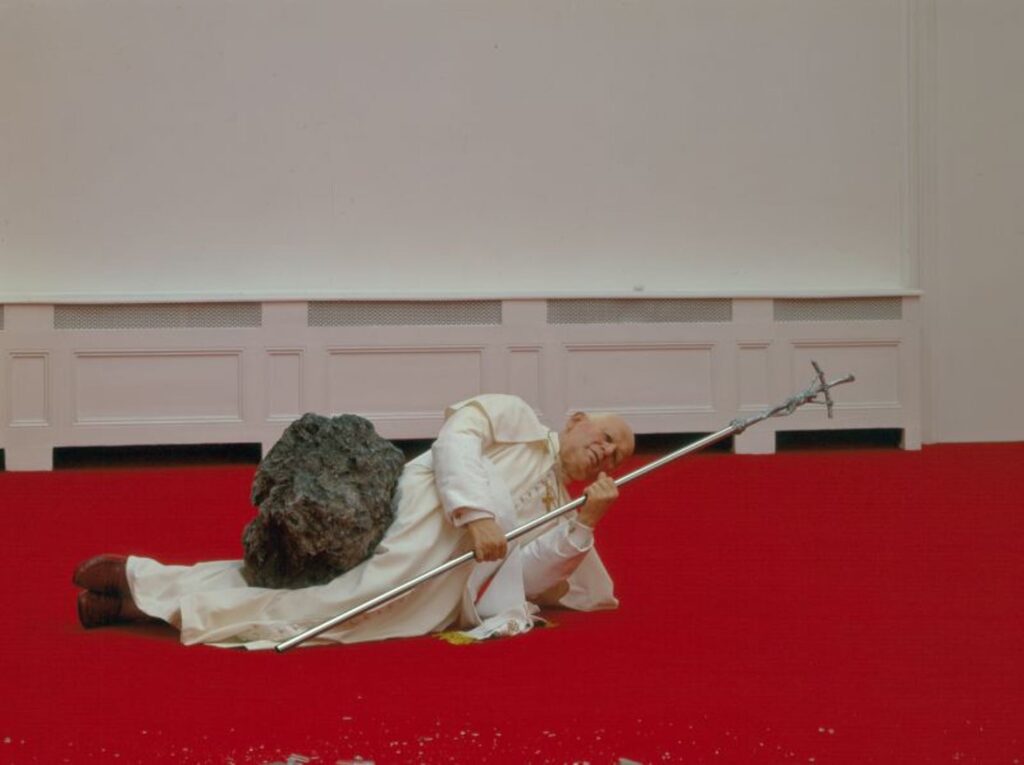
    Cattelan’s best-known work, La Nona Ora is a sculpture in latex, wax, fabric, leather shoes, and silver crosier. It depicts Pope John Paul II crushed to the ground by a large meteorite and surrounded by broken glass.

    After being at the center of much controversy, La Nona Ora, (The Ninth Hour) was exhibited at the Royal Academy in London and in Warsaw. After Christiès sold it in 2001 for a record of $ 886,000.

    the sculpture is a toilet bowl of 103 kg of 18 karat gold, fully functional. The work is surely a perfect example of satirical relational art. The toilet was stolen from Blenheim Palace in Oxford, where it was exhibited, but the work is part of the Solomon R. Guggenheim Museum collection in New York.

    Another interesting work is America, 2016.  In particular, the sculpture is a toilet bowl of 103 kg of 18 karat gold, fully functional. The work is surely a perfect example of satirical relational art. The toilet was stolen from Blenheim Palace in Oxford, where it was exhibited, but the work is part of the Solomon R. Guggenheim Museum collection in New York. The artist himself refused to provide an interpretation of his work.

    Cattelan’s famous banana

    In 2019, the “Comedian” exhibition represented by a simple banana (real) glued to the wall with adhesive tape caused a worldwide excitement. This was the artist’s umpteenth provocation, of course. However, the surprising thing is that this work was sold to a buyer for the insane sum of 120,000 dollars!

    In addition to the already exceptional fact, there was an even more surprising episode involving the artist David Datuna. The famous “banana” in fact was eaten at Art Basel in Miami Beach! With this expensive snack, Datuna ground on his Instagram profile 500 thousand views and the fame of “Hungry Artist.”

  • How to Care for Original Oil Paintings

    How to Care for Original Oil Paintings

    Many centuries have passed since oil paintings entered our homes. First, the prerogative of the nobles alone, then of the bourgeois, today, many have at least one representative of this form of art at home. Painting on canvas soon acquired significant importance, surpassing the classic tempera on panel. Much lighter than paintings on wooden support and more durable than those on metal, the painting on canvas made it possible to facilitate the furnishing of spaces thanks to its natural ease of placement and transport.


    Caring For Your Art

    The painting technique is that of oil. Thanks to its elasticity, the oil color is well suited to the movements of the canvas, aided by the preparation. This consists of a specific mixture, a binder represented by a protein glue that guarantees the amalgam elasticity once dry.

    A fundamental supporting element of the painting on canvas is the frame; a wooden structure on which the canvas is fixed and well stretched. Today it is common to see extensible frames, widespread since the nineteenth century, which guarantee the correct tension of the painting.

    The oil painting on canvas is resistant and fragile at the same time: it is elastic, but it can undergo permanent deformations; it is light and thin but not at all resistant to piercing objects.

    What can we do in our homes to minimize the damage that some unfavorable circumstances can cause to our canvas paintings?

    First of all, we will learn to recognize some symptoms in time. The classic “prevention is better than cure.”

    How to examine oil paintings 

    The first thing to check is that the canvas is well stretched on the frame. You need to tap the pictorial surface. If the picture will resonate even slightly, the tension will be sufficient. If on the contrary the canvas will not offer any resistance and will sway softly under our finger it will be necessary to write it down and make it known to the art restorer. Why does the canvas have to be stretched tight on the frame? Because the lack of this tension causes most of the damage that art restorers must then remedy.

    3 tips for oil paintings

    The first is not to put the paintings too close to heat sources, such as incandescent bulbs or radiators. The second is to let the framer leave at least 5 mm of play per side when putting a new frame on a painting on canvas. This to allow a possible expansion of the frame; the frame must never adhere to the sides of the painting. The third is to dust the paintings and their frames with the classic duvet. Do not use damp cloths, do not touch the ancient frames: the gilding is as beautiful as it is delicate.

    Discover incredible paintings on our gallery: RDN paintings

  • Marina Abramović between Performance Art and Maria Callas

    Marina Abramović between Performance Art and Maria Callas

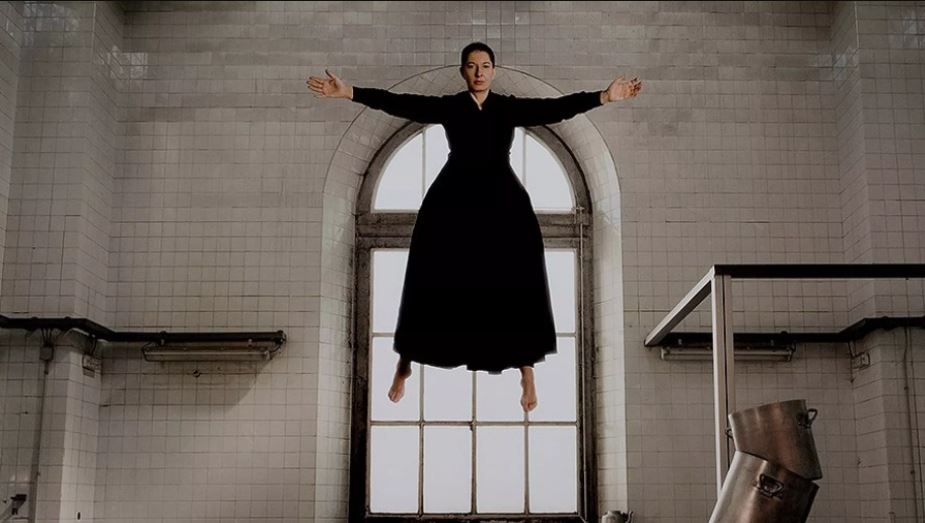
    Born in Belgrade in 1946, Marina Abramović is one of the most significant and internationally recognized artists. She is an undisputed protagonist in the most prestigious events, such as “Documenta” in Kassel and the Venice Biennale.


    Marina Abramović’s career

    She is a key figure in Body Art and one of the first performers. She is the “Grandmother of performance art”. Standing among pioneers of this methodology such as Bruce Nauman, Vito Acconci, Chris Burden and Gina Pane.

    After studying at the Belgrade Academy of Fine Arts (1965-72), Abramović began in the early 1970s to give life to her feverish performances. She began experimenting with the first sound environments and video installations.

    Born in Belgrade in 1946, Marina Abramović is one of the most significant and internationally recognized artists. She is an undisputed protagonist in the most prestigious events, such as "Documenta" in Kassel and the Venice Biennale.


    In 1976 she moved to Amsterdam and began a fruitful collaboration with the German artist Ulay. With him, she shared life and work until the end of the 1980s. Considered as a single entity, the two artists together created innovative and highly impactful performances. These focused in particular on the body and the close relationship of their actions.

    An artistic and loving partnership that ended with an equally spectacular and exciting performance (The Lovers) that saw them walk the Chinese wall from two opposite ends, until they meet in the center and say goodbye. From those years onwards, Marina Abramović devoted herself to an autobiographical art.

    “I am the object”


    Her is a social work that investigates not the autonomy of the work of art but that of the human being. Above all, she is constantly exploring the relationship between performer and audience. The artist has always believed in an art that investigates the needs of society. “Art without ethics is cosmetic.”

    In the performative activity, she uses the body as a medium and material for her artistic research. In particular, she experiments with physical limits and mental possibilities, even reaching masochistic actions.

    Among her best-known works we can include Rhythm 0 (Naples 1974), from the “Rhythms” series, where the artist offered her willless body to the spectators. They could use the 72 objects specially placed on the table on her. The show began delicately, and after became violent and uncontrolled. That to the point of placing a loaded gun in the artist’s hands.

    In Balkan Baroque, the artist is engaged in washing 1,500 bloody ox bones, a ritual of symbolic purification and reflection on a difficult historical moment in the former Yugoslavia. Presented at the XLVII Venice Biennale (1997), it won her the Golden Lion.

    Marina Abramović plays Maria Callas

    Marina Abramović plays Maria Callas


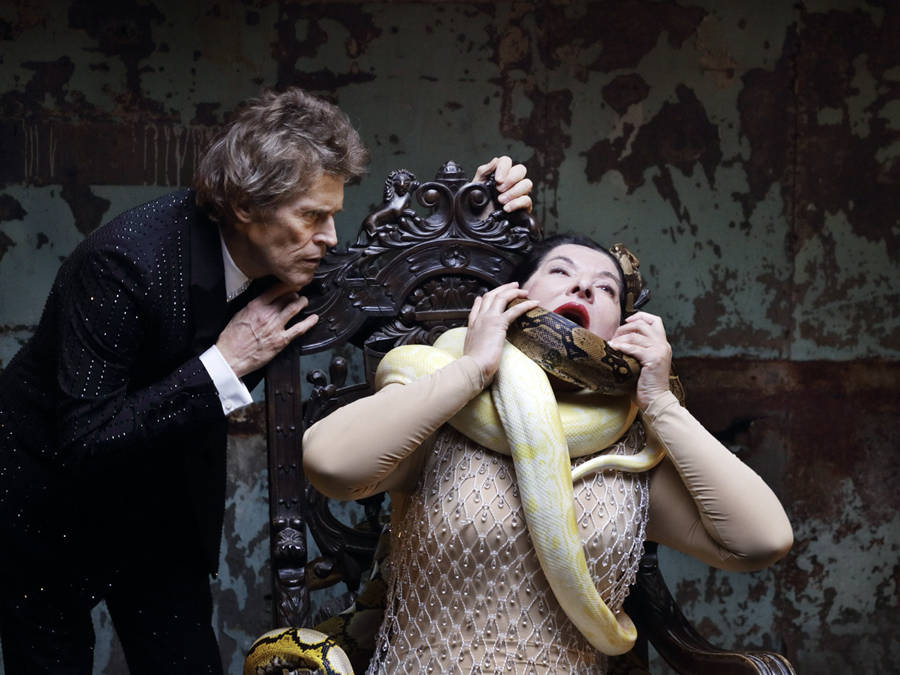
    Marina Abramović is now playing Maria Callas at the Bayerische Staatsoper in Munich. That’s the most important national opera house in the Bavarian state. 7 Deaths of Maria Callas, therefore, proposes the tragic events of 7 women interpreted at the time by Callas and now reinterpreted by Abramovic. In particular, these women are Tosca, Lucia, Cho Cho-san, Violetta, Carmen, Norma, and Desdemona.

    Seven dramatic icons of opera whose figures are enriched with a new complexity, born in this show-tribute. It is as if these characters lived a new, unprecedented life, resulting from the long-distance dialogue between Maria Callas and Marina Abramovic. She also designed the scenography, while the music is by the young composer Marko Nikodijević.

    The presence of the actor Willem Dafoe (who will play the role of the murderer) and the costume work by Riccardo Tisci, of the Burberry Maison, further enhance this new and brave project.

  • What is the Monumental Art?

    What is the Monumental Art?

    Monumental Art is a special fine arts section, characterized by the plastic or semantic load of the architectural work and its ideological content. The word “monumental” comes from the Latin “moneo“, which means “remember.” And no wonder why since this type of Art is one of the oldest on earth!


    The history of monumental creativity

    The roots of this type of architecture and painting go back to primitive society. The ancients then only learned to draw. Sure, they were awkwardly painted, there wasn’t an abundance of colors, but there was a meaning. It consisted of depicting ancient people about the forces of nature, their own life and various abilities.

    Monumental Art is a special fine arts section, characterized by the plastic or semantic load of the architectural work and its ideological content.

    The ancient world replaced primitive society, and monumental creativity also found its place there. This is what the surviving Egyptian sphinxes and pyramids tell us. In the Renaissance, the apogee of monumental architecture. Masterpieces such as David’s statue, the painting “The Creation of Adam” and the ceiling painting of the Sistine Chapel were born. All these works were created by the genius of his time – Michelangelo Buonarroti.

    Between the end of the 19th century and the beginning of the 20th, Art follows a new path. This is especially true of painting and is evident in the works of artists such as M. Vrubel, M. Denis and others. But the architecture was not forgotten, at that time sculptors like E. Bourdelle and A. Maillol work.

    This art form received the greatest development and recognition in the USSR. The Soviets’ country prepared Napoleonic plans for itself, and the impressive monuments and pedestals reflected his ideas in the best possible way. The imposing, tall and very tall statues reflect the workers’ audacity and fortitude.

    The complexity of Monumental Art

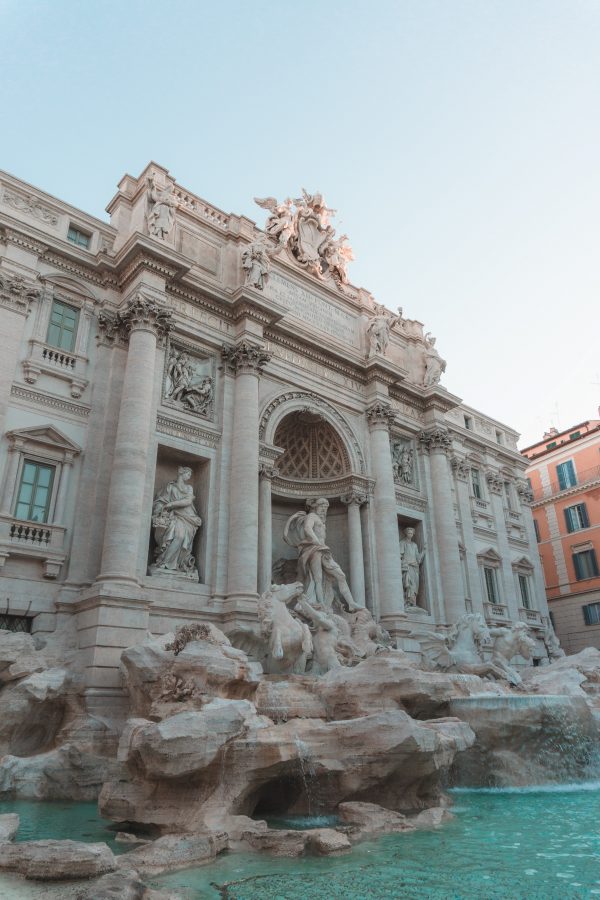
    Monumental Art includes architectural and pictorial works: mosaics, frescoes, monuments and busts, various sculptural and decorative compositions, stained glass windows, and even fountains.

    Monumental Art includes architectural and pictorial works: mosaics, frescoes, monuments and busts, various sculptural and decorative compositions, stained glass windows, and even fountains.

    Monumental Art is a complex and ambiguous thing. For all people, it evokes different feelings, for someone, it is a reason of pride. Someone feels perplexed: how could such work be done by an ordinary person, because there are so many small details in it? A different spectator will simply stop to admire the monuments of painting and architecture, both ancient and modern. Still, the objects of monumental Art will not leave anyone indifferent. This is because all the masters who have done something in this style share tremendous, remarkable, real talent, patience, and infinite love for their work.

  • A How-To Guide for Displaying Sculptures

    A How-To Guide for Displaying Sculptures

    Generaly, when it comes to the moment to furnish a home, one hardly thinks to use the sculptures to enhance the environment. There is the idea that a sculpture, even if of small size, does not fit well in a home environment. That happens probably because it is undoubtedly more common to find them in an important hall or in a specialized art gallery.
    In reality, however, sculptures can be appropriate accomplices to decorate the home and enhance the home environment. Obviously, the choice of furniture varies substantially according to one’s personal tastes, and in this respect, there are no “right or wrong” choices. However, there are a few rules to consider when displaying sculptures we chose.


    Displaying Sculptures following a few rules

    One of the first issues to consider when preparing to use sculptures as furnishing objects is our disposal space. If you have a large house with open spaces, then without a doubt, you can decide to buy and use sculptures of large scale, and place them for example in the corners of the house. However, be careful to avoid the “bazaar” effect only out of fear of emptiness. You would risk making the atmosphere too heavy and, among other things, making house cleaning extremely difficult.

    Obviously, the choice of furniture varies substantially according to one's personal tastes, and in this respect, there are no "right or wrong" choices. However, there are a few rules to consider when displaying sculptures we chose.
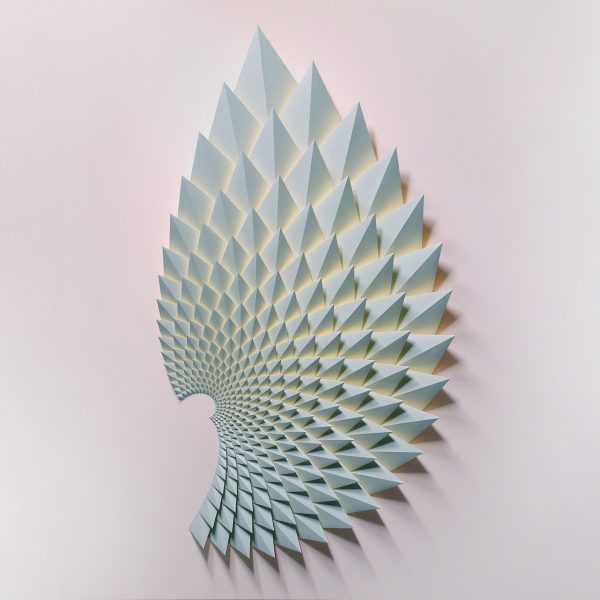
    Unholy 220 BY MATTHEW SHLIAN

    If you have limited spaces on the other hand, the best choice is to opt for more manageable but no less striking sculptures. These, can be placed on shelves or alternatively on top of furniture. In the hypothesis of using small sculptures, one could even dare to place the sculptures in a display case. This way they will be protected from dust and possible bumps. With a spot of light from above, it will be possible to recreate the most modern art galleries’ refined setting.

    Displaying Sculptures following a few rules
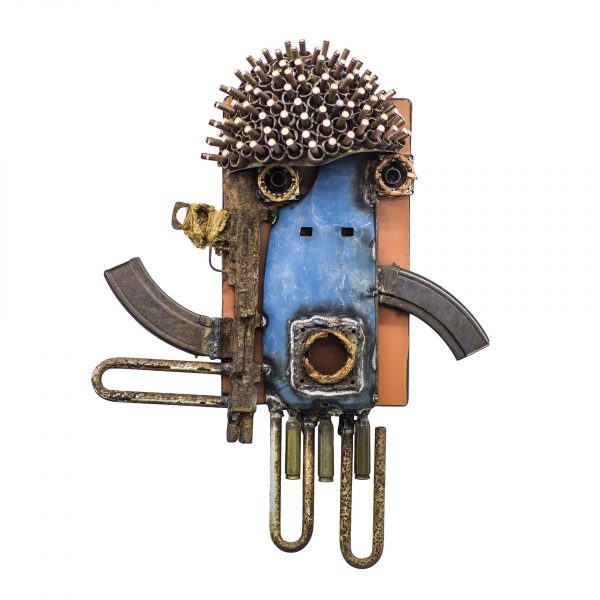
    GONÇALO MABUNDA, The concrete of naturalness

    Whether it’s large sculptures or whether you choose to enhance the environment with smaller sculptures, the important thing is to valorize them with a good light. You can place lamps or lanterns near the large sculptures. Possibly also sources of alternative lights, such as neon, which are particularly suitable for illuminating the sculptures inside the display cases can work.

    Choosing the right sculpture for decorating your home

    When you decide to furnish your home with a sculpture, it is important to place this in the right environment. To enhance the sculpture and give a touch of style and elegance to the house it is advisable to place the sculptures at the entrance or alternatively in the living room. Obviously always taking into account that the room’s color must be in harmony with the color of the statue.

    Choosing the right sculpture for decorating your home
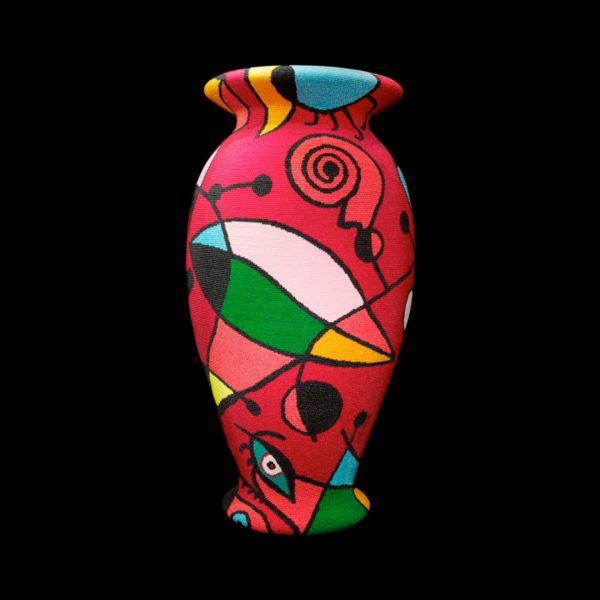
    Red Miro, DAVID MACH

    Suppose you have a green space, such as a garden. In that case, you can also place the statues in this environment. Obviously the choice of the sculpture and the position is strictly linked to one’s own aesthetic taste. However, since the object is a victim of bad weather, it is advisable to ensure that the statue’s material is suitable to be exhibited in outside spaces.

    Through these small tricks, it will be possible to transform your home into a small personal gallery, where friends and relatives can feel surrounded by the beauty of art as if they were at an exhibition.

    Discover the artworks of our gallery and begin displaying sculptures that will make your house unique: Sculptures RDN Arts

  • Keith Haring’s collection is heading to auction

    Keith Haring’s collection is heading to auction

    The Keith Haring Foundation honors the 30th anniversary after the artist’s death by putting on auction the Haring’s collection. All the incomes will be donated to The Center, the heart of New York’s LGBTQ community.

    On auction Keith Haring’s personal art collection

    «An artist is the spokesperson of a company at a precise historical moment. His perception of the world in which we all live determines his artistic language. It is a medium between “what is” and “what could be.” Keith Haring said.

    The Keith Haring Foundation honors the 30th anniversary after the artist's death by putting on auction the Haring's collection.

    And here, on the thirtieth anniversary of the artist’s death, the Keith Haring Foundation is organizing a charity auction with Sotheby’s. Dear Keith will take place entirely online from 24 September to 1 October, with an almost letter-like title.

    Harrison Tenzer, Head of Sotheby’s Contemporary Art Online Sales in New York, said: “The collection is extraordinarily autobiographical, and like any great heritage it is a window on the collector’s perspective”. In particular, his, is deeply imbued with life, with themes ranging from drugs, to AIDS, to discrimination.

    The works at auction come from the artist’s private collection. There are also the works of artists who have strongly inspired his own production. Among them, also Kenny Sharf, Andy Warhol and Jean-Michel Basquiat.

    Keith Haring’s collection is heading to auction
    Keith Haring, 1958–1990 Ignorance = Fear 1989 Poster 660 x 1141 mm Collection Noirmontartproduction, Paris

    On the other hand, the profits will be donated to The Center, heart of the New York LGBTQ community. “The Center,” according to Executive Director Glennda Testone, “embodies a lot of what Keith did: community, empowerment, young people, the support of our future. We are sure that this gift, in this historical period, is the right thing for this purpose ». Thirty years after his death, the leader of Street Art continues being a key figure.

    Art for everyone, Keith Haring

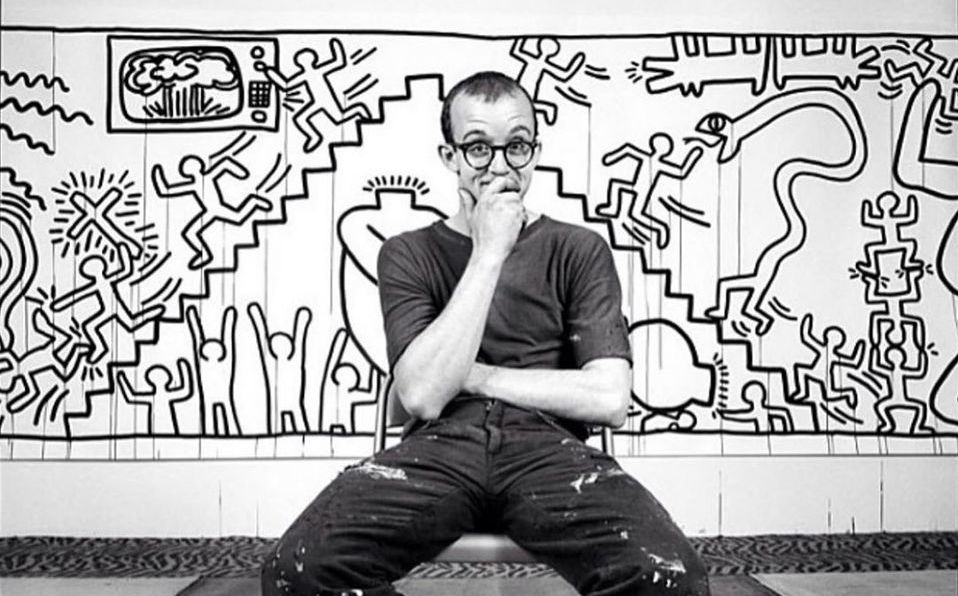
    Haring’s communication is very immediate. In particular, the artist uses simple shapes outlined by large black lines, stylized characters. All these elements remind of the Walt Disney comics and cartoons he loved as a boy.

    Haring's communication is very immediate. In particular, the artist uses simple shapes outlined by large black lines, stylized characters.

    His works represent refined street culture with a new urban language that does not go unnoticed; the international success of his works has, however, contributed to the proliferation of art forms in public spaces, spreading a wider artistic sensitivity.

    “It is increasingly clear to me that art is not an elitist activity for the appreciation of a few. Art is for everyone, and this is the goal I want to work for “.

    Haring believes that art can transform the world, as it attributes it a positive influence on men. Today his creations still continue catching everyone’s eyes on the market.

  • Discovering Contemporary Sculptors

    Discovering Contemporary Sculptors

    The sculpture has always been one of the noblest and most valuable artistic channels. Experimenting and creating exceptional results through the transformation of matter is a modus that has led to the creation of timeless works. But what is the path that contemporary sculptors are following today? And, above all, how is the concept of sculpture evolving?


    Contemporary sculptors: media explorers

    Once upon a time, marble was the ideal material for every sculptor. It’s enough to think about Canova, Michelangelo or Donatello. Today, however, contemporary sculptors do not stop at the use of a single material. Contemporary sculpture is, in fact, multifaceted. It does not follow the only aesthetic or hedonistic ideal, as Greek sculpture did. It often becomes communication and political medium, increasingly attentive to environmental issues.

    Today, however, contemporary sculptors do not stop at the use of a single material. Contemporary sculpture is, in fact, multifaceted
    Ghizlane Sahli, HISTOIRES DE TRIPES, 2018

    To all these new stimuli corresponds the experimentation of different media. Not only marble or wood but plastic, fabrics and – more and more often – recycled materials. Just think of one of the most creative minds of the contemporary art scene: the Portuguese artist Joana Vasconcelos. The artist uses her knowledge of embroidery as a distinctive feature of her production. In particular, some of her most renowned installations are composed purely of fabrics copiously put together and supported by metal structures.

    The messages of contemporary sculpture

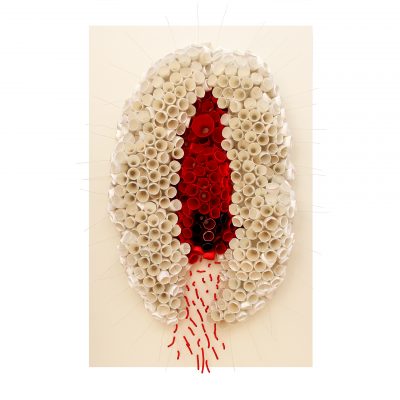
    Ghizlane Sahli, on the other hand, is an artist of Moroccan origin who has made of alveolar structures, her artistic language. The sculptress uses parts of recycled bottles covered with silk threads to create primordial structures that evoke corals and cellular elements. There are many artists today who put their art at the service of environmental awareness. Like Ghizlane Sahli, another great contemporary sculptress also focuses on these issues. 

    Ghizlane Sahli, on the other hand, is an artist of Moroccan origin who has made of alveolar structures, her artistic language. The sculptress uses parts of recycled bottles covered with silk threads to create primordial structures that evoke corals and cellular elements.
    Sokari Douglas Camp, KISSSS ME, 2014

    We are talking about Sokari Douglas Camp: award-winning artist protagonist of over 40 exhibitions worldwide. The English naturalized artist is originally Nigerian. In her works, Sokari Douglas Camp depicts the social and environmental effects of the pollution of the Niger River. The artist also responds to another need: she creates a lively and original bridge between Western and African culture. The typical motifs of the traditions in Baguma take on new connotations. Works such as “Primavara” are capable of combining timeless classicism (Botticelli’s Primavera inspires the work) with Kalabari themes, equally dear to the Nigerian artist.

    Identity and politics

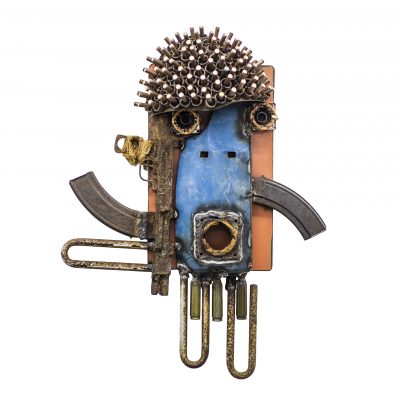
    Like Sokari Douglas Camp, Gonçalo Mabunda also makes his art a means of political denunciation. That of this artist is an extraordinary creative process. Mabunda uses old weapons found in his homeland, Mozambique, to create unique works. These works, aesthetically very appealing and representative of the artist’s cultural identity, are a powerful tool for denouncing the concept of war itself. In fact, Mozambique lived a bloody civil war. Mabunda has worked to transform the horrors of that war into beautiful art.

    Contemporary sculpture is a fascinating world that stimulates necessary reflections in all those who want to grasp its meaning!
    GONÇALO MABUNDA, The concrete of naturalness

    Contemporary sculptors have a lot to say and share. And they do it not only through particular aesthetic choices, but they do it through the materials, methodologies and ideas at the basis of their artistic concepts. Contemporary sculpture is a fascinating world that stimulates necessary reflections in all those who want to grasp its meaning!

    Discover some of the most talented contemporary sculptors in the dedicated area of our site: RDN Arts sculptors

Our Content.
Your Inbox

Join thousands of art lovers

Receive art news, market analysis and updates about new artists on the website

By subscribing you agree to receive RDN Arts emails. Unsubscribe at any time. Privacy Policy.